Why the EU is so much worse than when we left
Ten years on from the Brexit vote, Brussels is more meddlesome, authoritarian and anti-democratic than ever.

Want unlimited, ad-free access? Become a spiked supporter.
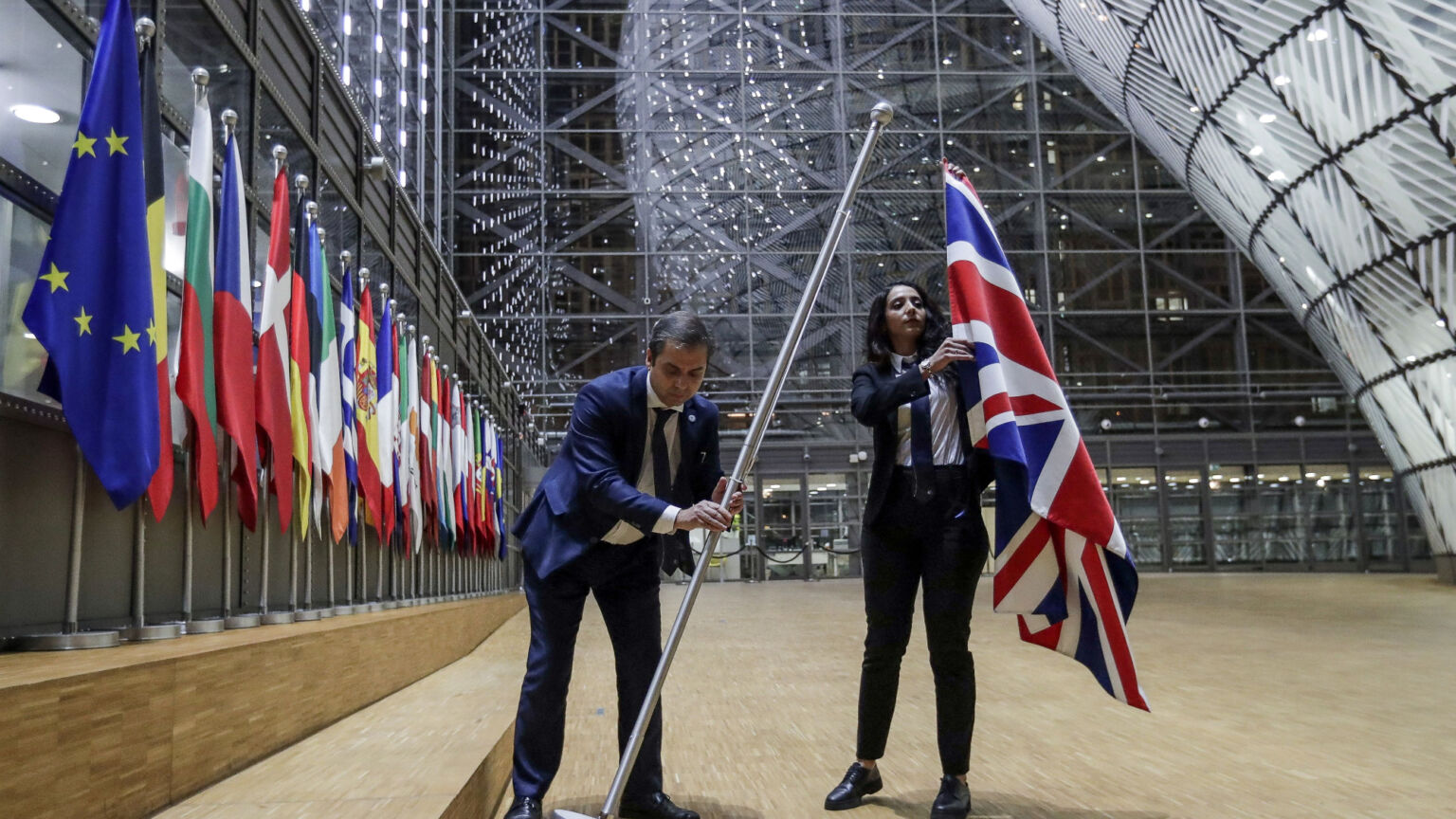
Ten years on from the vote to leave the European Union, the calls to reverse the referendum result are as loud as ever. We have been told incessantly that Brexit has been a catastrophe – supposedly wrecking the economy, tearing society apart and making Britain ungovernable. Apparently, our only chance of righting these alleged wrongs is to align ourselves more closely with Brussels and, ultimately, to retake our place in the EU as a full member-state. What is almost never discussed is what it is actually going on in the bloc that we’re being urged to rejoin.
Among Europhiles, there is some debate as to whether the terms of Britain’s membership would have to change, or whether they would look broadly similar to those in 2016. Could Britain lose its rebate from the EU budget (worth £8.9 billion in 2017)? Would we be forced to join the Schengen passport-free travel area – or even the Euro single currency?
Such things would be up for negotiation. But what is non-negotiable for EU member states is following EU directives and regulations. And these have become far more cumbersome and politically toxic over the past decade since we left. Without Britain to put the brakes on the Eurocrats’ worst excesses, everything that Brexiteers despised about Brussels – from its meddling in national affairs to its mismanagement of Europe’s economies – has been turbocharged. Rejoining the EU would be a far harder sell in 2026 than Remain ever was in 2016.
Here are five reasons why the EU is so much worse than when we left:
The EU could pick our prime ministers
A core argument for Brexit was that Britain’s laws should be made in Britain, by our elected representatives. EU laws, in contrast, are made largely by the unelected Eurocrats. Worse still, elected member-state governments that run into trouble can be overthrown and replaced by technocrats handpicked by the EU.
It was bad enough even prior to Brexit, when the EU ousted elected leaders during economic crises, such as Italy’s Silvio Berlusconi and Greece’s George Papandreou in 2011 amid the Eurozone debt crisis. Nowadays, the EU tends to act before a populist, Eurosceptic or ‘problematic’ leaders can form governments, most notably via the Digital Services Act 2022 and the comically misnamed Democracy Shield, both of which limit and shape the pre-election debate online.
EU institutions also work hard to cast certain candidates as risks to security or as foreign assets. In Romania, this resulted in the unprecedented cancellation of a presidential election in 2024. Although the decision to re-run the vote was technically taken by the Romanian courts, EU leaders made it clear that the Romanian case should be seen as a potential template for other elections. Former European commissioner Theirry Breton gleefully proposed that the same must happen wherever the populist right triumphs in Europe: ‘We did it in Romania and we will obviously do it in Germany if necessary’, he said on French TV. Rejoining the EU means submitting national democracy to EU control.
Meet the Euro-thoughtpolice
The UK is suffering from a crisis of free speech. Thirty people are arrested every day for ‘grossly offensive’ posts on social media. The Online Safety Act limits what Britons are able to access online. In Brexit Britain, these laws can at least be overturned – indeed, Reform UK has promised a Free Speech Act and to scrap the Online Safety Act to precisely this end.
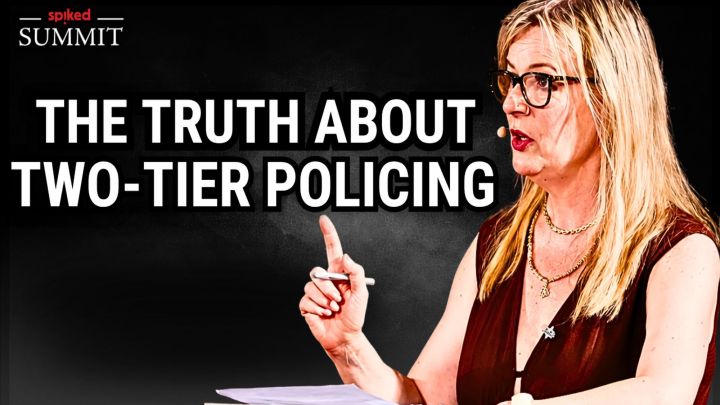
However, if the UK rejoined the EU, then we would have to contend with Europe’s thoughtpolice. All member states have been legally obliged to have laws that criminally sanction so-called hate speech since 2008. And since 2022, the EU itself has taken on a much greater role in regulating online speech. Under the Digital Services Act, social-media platforms can be compelled to censor anything deemed to be ‘hate speech’, ‘misinformation’, ‘disinformation’ or ‘illegal content’. Which content fits into these deliberately vague categories is decided by the European Commission, whose decisions are final and cannot be appealed. Our most precious liberty clearly wouldn’t be safe in the hands of the Brussels bureaucrats.
Net Zero would never end
As the mounting cost of Net Zero becomes impossible to deny, both Reform UK and the Tories have pledged to scrap Britain’s stringent eco-targets. Even PM-in-waiting Andy Burnham is weighing whether to restart drilling in the North Sea to kickstart economic growth. But if the UK rejoined the EU, it would be all but impossible to wriggle free from climate extremism.
The European Climate Law sets a legally binding Net Zero target, meaning all EU members are forced to prioritise the demands of eco-activists over their citizens’ living standards. Predictably, a popular ‘greenlash’ to these punishing rules is already building. In Italy, the EU’s green-homes directive prompted fury when the staggering €400 billion price tag became apparent. In France, opposition to eco-taxes morphed into the year-long revolt of the gilets jaunes. The German government succeeded in fending off a complete EU-wide ban on sales of petrol and diesel cars, although Germany’s car industry only last month warned that 50,000 jobs remain under threat from Brussels’ climate policy.
Few industries have been as battered by EU eco-insanity as agriculture. Since 2020, the EU’s Farm to Fork strategy has imposed exacting demands on farmers to reduce carbon emissions, nitrogen emissions, the use of fertilisers, pesticides and antimicrobials. EU directives aimed at creating more ‘sustainable’ agriculture have, in practice, led to farms closing en masse, workers being driven from the industry and proposals for the mass culling of farm animals. The Europe-wide farmers’ uprising of 2023-2024 may have watered down and delayed some of the most extreme anti-farming measures, but agriculture is not safe under Brussels’ green tyranny.
Britain would be borderless forever
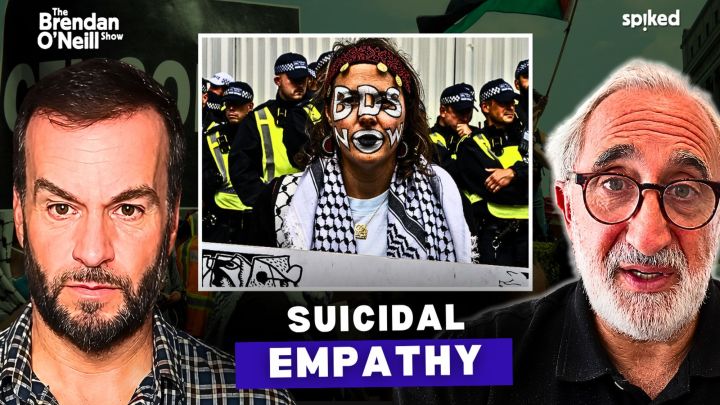
The Brexit campaign’s promise to ‘Take Back Control’ of Britain’s borders was infamously betrayed by Boris Johnson’s Conservatives, who immediately set about liberalising Britain’s immigration rules. During the so-called Boriswave, net migration peaked at 906,000 in 2023. As of September 2025, 2.6million people had migrated to the UK – roughly equivalent to the population of Birmingham.
Although some Remainers point to the Boriswave as proof of the folly of Brexit, migration also exploded in several EU member states around the same time. Germany, Spain and the Netherlands all experienced unprecedented spikes in immigration between 2021 and 2023, largely from outside of the EU, in response to Covid-related labour shortages.
The key difference is that, as an independent, sovereign country, the UK now has the right to choose its own course on immigration and failed policies can be reversed. In contrast, in the EU, because freedom of movement is a cornerstone of membership, every country is held hostage by every other member’s border policies. Angela Merkel’s open-border response to the 2015 migrant crisis, or Pedro Sánchez’s 2026 amnesty for a million or so illegal migrants in Spain, have had implications for all EU members. If Britain were still in the EU, might we now be talking about the coming ‘Sánchez-wave’?
The EU’s culture war
For a candidate country to join the EU, it has to fulfil certain criteria – namely, having institutions that respect the rule of law and human rights, a market economy and a functioning administrative state. Plus, it has to let men who claim to be women into women’s toilets and changing rooms.
As incredible as it sounds, the EU is currently urging candidate country Montenegro to pass a law allowing gender self-identification, as part of the accession process. Apparently, if you want to be a member of the bloc, you must remodel your society on ultra-woke lines.
As for existing member states, failure to toe the line on progressive ideology can lead to severe punishment. Hungary’s various ‘anti-LGBT’ laws were not only struck down by EU courts, but also led to unprecedented fines for the elected government in 2021. Among the laws said to be fundamentally at odds with Article 2 of the Treaty on European Union was a law banning the ‘promotion of gender transition’ to children. We have every reason to fear that TERF Island’s brave resistance to gender ideology would be rendered null and void should we ever crawl back to the EU.
Ten years on from the Leave vote, it could hardly be clearer: Brexit embodied the wisdom of the masses against the globalist establishment’s ever-madder delusions. We are incredibly lucky to have left.
Fraser Myers is deputy editor at spiked and host of the spiked podcast. Follow him on X: @FraserMyers.
Watch Brexit: a revolution betrayed?, spiked’s documentary on the 10-year anniversary of Brexit:
You’ve hit your monthly free article limit.
Support spiked and get unlimited access.
Support spiked and get unlimited access
spiked is funded by readers like you. Only 0.1% of regular readers currently support us. If just 1% did, we could grow our team and step up the fight for free speech and democracy.
Become a spiked supporter and enjoy unlimited, ad-free access, bonus content and exclusive events – while helping to keep independent journalism alive.
Monthly support makes the biggest difference. Thank you.

Comments
Want to join the conversation?
Only spiked supporters and patrons, who donate regularly to us, can comment on our articles.