The delusions of Restore Britain’s online fanboys
Why did they ever think they had a chance of winning the Makerfield by-election?
Want unlimited, ad-free access? Become a spiked supporter.
Expectation management in elections is important for momentum, but vast disappointment with bad results can kill off activists’ commitment to the cause.
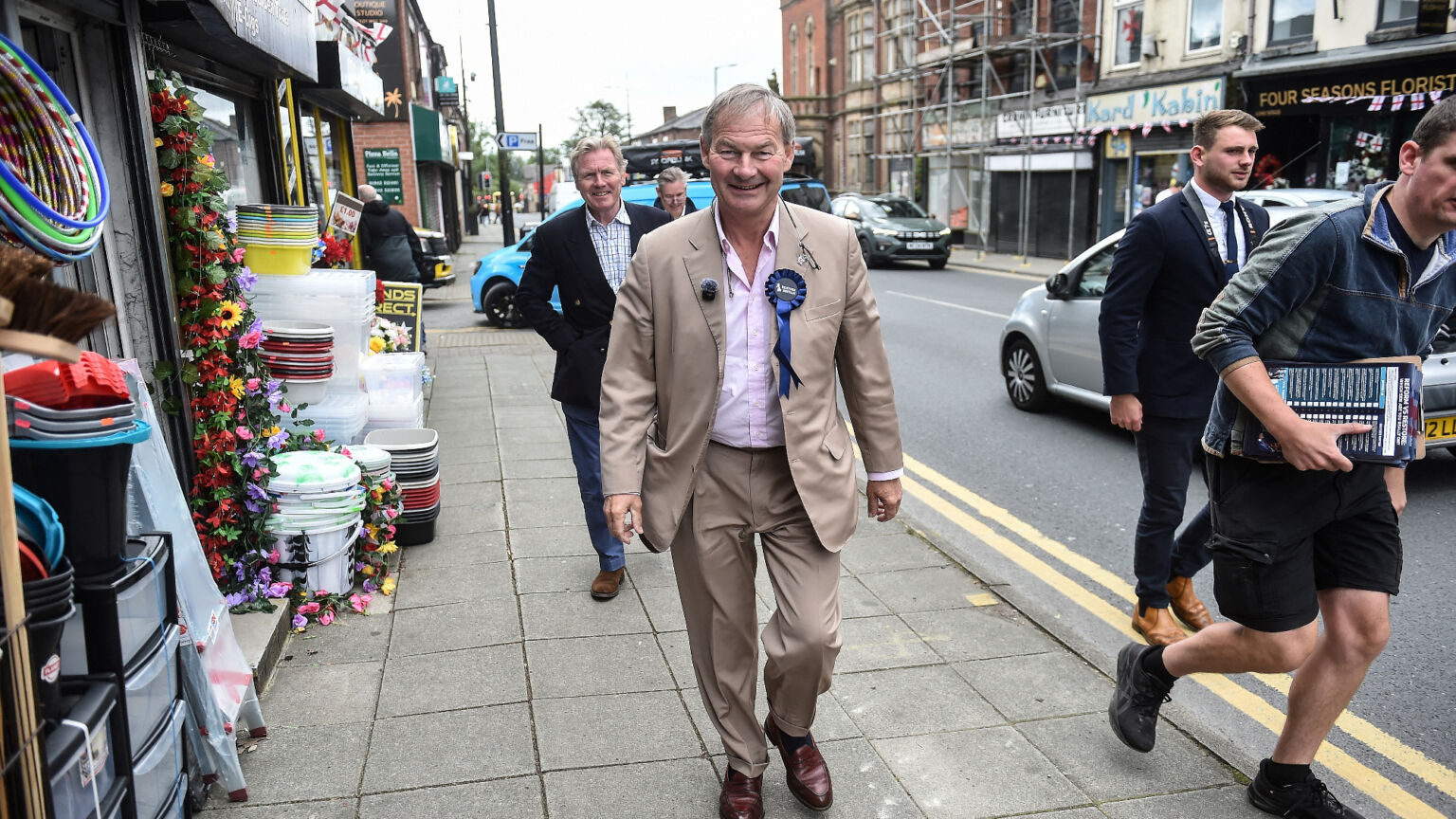
This is a lesson that is currently being learned the hard way by Restore Britain, the breakaway party formed by Great Yarmouth MP Rupert Lowe, after he defected from Reform UK. In the run-up to last Thursday’s by-election in Makerfield, there was an endless push to inflate the party’s popularity with voters.
The exaggerations began even before the by-election was announced. In May, Reform’s sister party, Great Yarmouth First, won all nine seats it stood for on Norfolk County Council. This was naturally celebrated by Lowe, with a post on X proclaiming that ‘History [had been] made’. No doubt it was a very strong result locally – but this would be incredibly difficult to emulate outside of Lowe’s home turf.
When it came to Makerfield, before Restore could rely on independent polls, supporters claimed their party had early momentum using bookies’ odds. One month out, Lowe announced on X: ‘[Restore’s odds] have tumbled from 50/1 to 9/1 over the weekend.’ Many Restore X accounts, including prominent Restore activists, spread and retweeted the good news. The Lotus Eaters – a Restore-backing podcast and YouTube channel – amplified these odds across various social-media channels, pushing the narrative that all the momentum on the right was behind Restore.
The betting odds were quickly (and quietly) dropped as a talking point when the first constituency polling came out, showing Restore on eight per cent. Restore would post about these polls while asking why the party received no media coverage. In fact, Restore was getting a lot of coverage for a minor party, all while refusing to allow its candidate, Rebecca Shepherd, to do any interviews. In one case, footage shows a Telegraph journalist requesting an interview from Lowe’s team, only to be rebuffed.
As more polls were released, Restore and its media team posted various pictures of Restore placards in gardens and windows around Makerfield. It must be said that, when I was out canvassing there, I saw more of these than I expected. However, I know other canvassers who went days without seeing them at all.
Generating a perception of public support is an understandable tactic, and one that all parties employ. However, Restore and its activists lifted expectations beyond what was reasonable. The Lotus Eaters released podcast segments with titles like ‘Makerfield will Change Everything’. Carl Benjamin, who founded the Lotus Eaters, insisted that Restore was ‘going to win’. Young Bob, a Restore social-media activist, published videos about how ‘overwhelmingly positive’ the reception had been in Makerfield. ‘Something is truly happening’, ‘There is nothing the British establishment can do’ and ‘Restore Britain is inevitable’, tweeted various pro-Restore accounts. This sort of sentiment was incessant.
As the by-election approached, Restore became increasingly desperate. There is a clip from the Lotus Eaters in which Benjamin claimed the party’s internal polling of 20 to 25 per cent ‘seems reasonable’. Dan Hodges of the Mail on Sunday was even being briefed that Restore was ‘in with a chance of catching Reform’.

There was some attempt to rein in expectations. Ben Habib, who recently closed his own breakaway party, Advance UK, to join Restore, stated on X that he would be impressed with five per cent in the by-election. Charlie Downes, campaigns director for Restore, made clear that many potential right-wing voters were going with Reform this time.
All this inevitably came crashing down when the results came in. Restore’s 6.8 per cent vote share was just below its polling average of seven per cent, leading to grimaces all round on one election-night livestream. The result left the party with fewer votes than the British National Party when it stood in Makerfield in the 2010 General Election.
On the morning after the by-election, Lowe wrote that it was ‘remarkable’ for Restore to have come third. This may well have been an impressive result for a new party, but it failed to match the earlier claims that Restore would be competitive with Reform – at least outside of Lowe’s Great Yarmouth base.
Restore activists are now largely going with the line that they did well in the circumstances. But others have sought to walk back their predictions. Benjamin has since claimed, ‘I expected us to come third’. Connor Tomlinson, who writes policy for Restore, even admitted it was possible that ‘more Restore canvassers were sent to the constituency than votes gained’.

Overall, the mood of Restore activists is one of obvious disappointment. That thousands of canvassers travelled vast distances for four weeks to Greater Manchester, only to get as few as 3,111 votes, does not bode well for a national campaign.
Restore Britain has been taught a harsh lesson – and its rivals are not going to let their activists forget it.
Peter Simpson is a writer and co-host of the Wolves of Westminster podcast.
You’ve hit your monthly free article limit.
Support spiked and get unlimited access.
Support spiked and get unlimited access
spiked is funded by readers like you. Only 0.1% of regular readers currently support us. If just 1% did, we could grow our team and step up the fight for free speech and democracy.
Become a spiked supporter and enjoy unlimited, ad-free access, bonus content and exclusive events – while helping to keep independent journalism alive.
Monthly support makes the biggest difference. Thank you.




Comments
Want to join the conversation?
Only spiked supporters and patrons, who donate regularly to us, can comment on our articles.