The battle for Brexit isn’t over
Former chief Brexit negotiator David Frost on why democrats cannot be complacent.
Want unlimited, ad-free access? Become a spiked supporter.
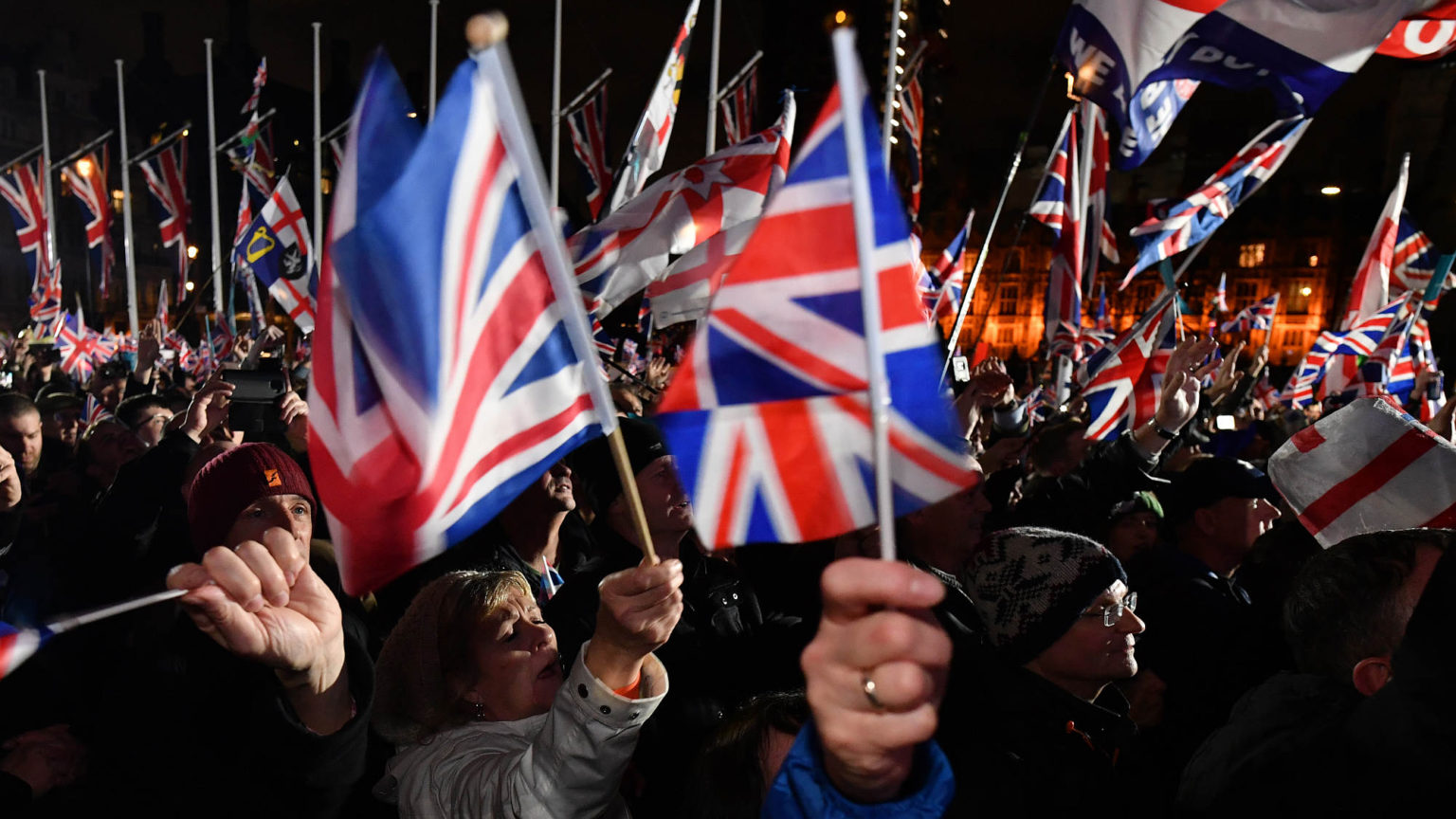
Ten years on from the UK’s referendum on membership of the European Union, it is easy to take Brexit as an established fact. You may strongly support it or you may want to undo it, as most in the Labour Party do, but you have to accept it’s a reality. Yes, there are some significant left-overs – notably, the fact that Northern Ireland is still in the EU Customs Union and the Single Market for goods. But basically it’s sorted. The exit bill is almost entirely paid. British ministers don’t spend their time trekking to Brussels any longer. Brexit got done.
But because we have got used to being outside the EU, it is easy to forget how close we came to never leaving at all. The constitutional madness of 2018-19, when titans like John Bercow, Alistair Burt and Jo Swinson stalked the land, has largely been sent down the memory-hole. It’s not surprising. I feel I’m getting PTSD myself when I talk about it, so I don’t find it at all surprising that the country wants to move on. But it is important to remember how close we came, for the main protagonists are still around.
David Cameron and George Osborne, for example. As prime minister, Cameron refused to allow his government to do any, even trivial, planning for a Leave vote, creating a Whitehall vacuum the day after, one filled by fearful civil servants who couldn’t imagine a life outside the EU. Let’s not forget either that they tried to rig the playing field by unsuccessfully trying to suspend the normal pre-poll purdah rules in 2015 and then by pushing out a government leaflet on the Remain case just before the spending limits cut in. And of course Osborne was the main spokesman for ‘Project Fear’, promising a recession and a punishment budget if we dared vote Leave – none of which materialised. All this, before we’d even voted.
What followed the decision to Leave must rank as one of the most disastrous periods of British policy since Lord North lost the American colonies. The EU immediately adjusted to the post-referendum world and saw Britain as a third country. We, however, tried to have it both ways, negotiating to leave while trying to be constructive in EU discussions. What clearer sign could there be that we were hedging in case we never had to leave at all?
Theresa May and her feeble negotiator, Olly Robbins, frozen like rabbits in the headlights as Jean-Claude Juncker’s and Michel Barnier’s Mercedes hurtled towards them, sold out on one thing after another – first the exit bill, then EU citizens’ rights in Britain, then, and most disastrously of all, Northern Ireland, making concessions that would eventually render May’s deal unratifiable. Businesses started to panic about the fearful spectre of a ‘No Deal’ Brexit. And Barnier started to remind her, famously, that ‘the clock is ticking’, as exit day started to approach.
While working with Boris Johnson, at the time foreign secretary but largely screened from exactly what was going on in the talks, my colleagues and I filled the time with our own black humour, repeating to each other the scene from Battle of Britain in which the British ambassador in Switzerland rebuffs a Nazi envoy offering peace terms, and afterwards turns to his wife to say, ‘The trouble is he’s right. We’re not ready. We’re playing for time. And it’s running out.’
May’s deal crashed and burned in early 2019. She might have rushed it through parliament, the usual tactic of British governments on EU matters, but she was too slow and her team too incompetent. Once everyone had time to read and digest it, it was obvious it would never pass. The crowning moment of absurdity came on 14 March, with a free vote on deferring exit day. Steve Barclay, then Brexit secretary, wound up the debate urging MPs to support the government and delay the exit – and then, quite rightly, voted against it himself.

And so came the peak of the crisis in 2019. Both sides decided to play to win rather than accept compromise. Thank goodness they did. Some sort of cobbled-together deal at this point would have left us under the EU’s thumb or, worse, still in the EU after all.
It is easy to forget now quite how serious all this was. Party discipline, the usual restraining force on an entirely sovereign parliament, was breaking down. Labour was in chaos, divided between a clearly Brexit-sympathetic Jeremy Corbyn and its progressive majority, led by Keir Starmer as Brexit spokesman. The speaker, John Bercow, and a small group of fanatical opponents of Brexit led by Dominic Grieve, overturned a hundred years of constitutional convention to decide that they, not the government, could determine parliament’s business. In an echo of the Civil War, parliament then decided to govern in its own right and take over the powers of the executive to conduct foreign relations, with first Yvette Cooper and Oliver Letwin, then Hilary Benn and Alistair Burt, sponsoring two successive bills preventing the government leaving the EU without a deal.
Thank goodness the Conservative Party, in a rare moment of wisdom in these 10 past inglorious years, saw sense and gave Boris, with Dominic Cummings and me, the powers to sort this out. We realised we had to do what we could to improve Theresa May’s deal, to deliver the referendum result, and sort out the rest afterwards. We largely achieved that. Sadly, the Benn-Burt Act, which we derisively renamed the ‘Surrender Act’, disastrously undermined our efforts by removing the ‘walk away’ option. Its sponsors and supporters are very largely responsible for the weaknesses in the Northern Ireland settlement – not that they will ever accept that.
It took a General Election in December 2019 to do the job in the end, but we got it done. Those who wanted a second referendum or, like Lib Dem leader Jo Swinson, simply hoped to undo the vote entirely, played to sweep the board and lost the lot.
Until now. Those who actually got Brexit done have departed, or been made to depart, the political scene. But most of the anti-heroes of this period still hold positions of esteem in the British establishment. David Cameron is still in the Lords and until recently was foreign secretary. George Osborne is chair of the British Museum and an adviser to OpenAI. Theresa May is in the Lords and regularly speaks against Conservative policy. Hilary Benn is Northern Ireland secretary. Yvette Cooper is foreign secretary. Dominic Grieve has just helped the Labour government by writing a report on Islamophobia for it. Alistair Burt is running Lancaster University. And, of course, Keir Starmer was prime minister up until this week, when he announced his resignation. Only poor John Bercow, who did so much to help them all, never got the expected post-speaker Lords seat and is reduced to campaigning for Andy Burnham to get a way back.
This is why Labour’s so-called EU reset is so dangerous. The people who never wanted Brexit are still around. Most of the establishment opposed it. They still hope, at a minimum, to retrieve something from the wreck of their ambitions, and ideally to set Britain on a gradual path to membership. The higher reaches of the civil service would happily see Britain back in. So would most EU leaders. We know that prime-minister-in-waiting Andy Burnham wants to rejoin, too. It could happen.
It’s going to take another effort of will to stop us sliding once again down this slope. The Rejoin fanatics must be stopped – and spiked readers, and the 17million who thought like them, may soon have to put down their ploughshares and get back into the fray.
David Frost, Lord Frost of Allenton, was chief Brexit negotiator and Europe adviser to prime minister Boris Johnson, 2019-2021.
You’ve hit your monthly free article limit.
Support spiked and get unlimited access.
Support spiked and get unlimited access
spiked is funded by readers like you. Only 0.1% of regular readers currently support us. If just 1% did, we could grow our team and step up the fight for free speech and democracy.
Become a spiked supporter and enjoy unlimited, ad-free access, bonus content and exclusive events – while helping to keep independent journalism alive.
Monthly support makes the biggest difference. Thank you.

Comments
Want to join the conversation?
Only spiked supporters and patrons, who donate regularly to us, can comment on our articles.