The EU remains an enemy of democracy
From Hungary to Romania, elections in Europe are now subjected to unprecedented meddling from Brussels.
Want unlimited, ad-free access? Become a spiked supporter.
Péter Magyar’s victory in Hungary has been greeted among Europe’s media and political elites with the kind of theatrical glee usually reserved for the fall of a tyrant. At last, they claim, democracy has returned to Hungary. At last, Hungary is ready to return to the embrace of the EU. At last, the long nationalist nightmare is over.
They desperately need a reality check. Outgoing prime minister Viktor Orbán’s 16-year-long reign did not rest on tanks, forged ballots or a palace coup. It rested on repeated free and fair democratic electoral victories. You may loathe Orbán. You may despise Fidesz. But to speak as if democracy has only now reappeared in Hungary is deeply mendacious.
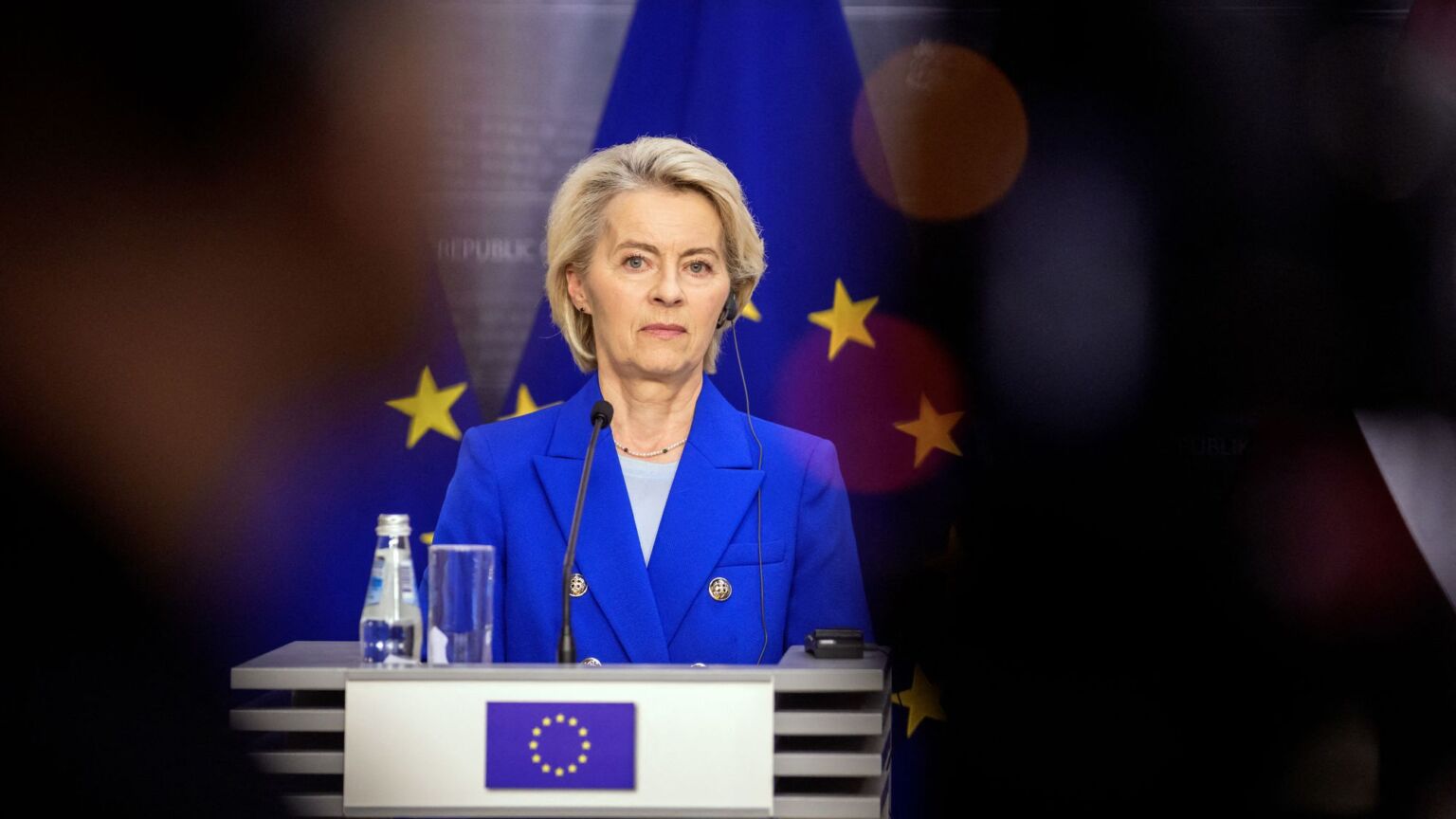
It’s pretty clear that the EU and its media cheerleaders only like democracy when the voters deliver the ‘correct’ outcome. Had Orbán won again, Ursula von der Leyen and friends would not have been hailing democracy in action. They would have reverted to type, instantly attacking the result, blaming fake news, disinformation and foreign interference, while talking up the supposed threats to European values and the risks to the rule of law.
Indeed, everything in the pre-election atmosphere pointed in precisely that direction. EU elites didn’t just oppose a possible Orbán victory. They attempted to pre-emptively delegitimise it, too. If Orbán had won, it would have been held up as proof that Hungarian democracy was malfunctioning. This, then, was the pretext for the European Commission, the EU’s executive body, to intervene in the election.
Under the Digital Services Act, Brussels has arrogated to itself the ability to monitor and manage any online ‘information space’ during elections. It calls this its new ‘Democracy Shield’. During the Hungarian election, the Commission activated a part of this ‘shield’, called the Rapid Response System, which allowed it to force media platforms to remove ‘flagged’ content without due process.
Of course, we have no idea what content was targeted or what effect it had. In all likelihood, it had little impact on the outcome of the election. But what’s important here is the fact that this process of monitoring and regulating the online information space took place at all, with little to no transparency or accountability.
The European Fact-Checking Standards Network, which forms part of Brussels’s censorship system, has openly boasted of its apparent success in the Hungarian elections. In a newsletter sent earlier this week, it announced that its members’ ‘pre- and real-time debunking’ of everything, from AI-generated images to manipulated videos, was ‘pivotal’. But pivotal how exactly? Which images and videos did it ‘debunk’ and why? It did not say.
The media silence over all this has been deafening. An unelected supranational bureaucracy has policed the conditions of democratic speech within a member state and no mainstream journalist has batted an eyelid.
‘The Managed Ballot’, a new report from MCC Brussels, sets out how the Romanian presidential election of 2024 and its re-run in 2025 set the precedent for what happened in Hungary. The first ballot in 2024, won by TikTokking right-wing populist Călin Georgescu, was annulled amid allegations of Russian meddling and suspicious social-media activity. The Commission used that first ballot to intensify its scrutiny of TikTok in particular and to build a broader election-monitoring framework under the Digital Services Act.
Whatever one thinks of the Romanian case itself, it established a political template for the EU – a model for influencing an election by creating a fog of suspicion, through claims of technological interference, long before any transparent public accounting has taken place. By the time the Hungarian election came around, the fact that the Commission had assumed the right to police social media no longer seemed shocking: it had become normalised.
It’s in response to this that MCC Brussels established the Democracy Interference Observatory (DIO). Its aim is to document and expose this new managerial interventionism for what it is. Too many among Europe’s political and media classes have opted for euphemism and evasion. They have called these acts of censorship ‘resilience’ and portrayed bureaucratic intrusion into elections as a means to ‘defend’ democracy. Our task in the DIO is to call things by their proper names. And in the Hungarian election, we did so to real effect, exposing Brussels’s attempts to police the boundaries of political contest, while mouthing pieties about freedom and pluralism.
The danger posed by the EU’s ‘democratic defence’ operation is only likely to intensify in the coming months and years, especially with major elections approaching in Spain, France and Italy in 2027. Brussels now has the machinery in place for future interventions.
The Russian-interference narrative has been crucial to the EU’s efforts. In both Romania and Hungary, it framed certain actors and electoral currents as the products of Russian influence. It deployed guilt-by-association tactics and relied on unnamed sources and unverified claims to sow suspicion. The point was not to be alert to possible threats – it was to delegitimise nationalist or populist opponents and taint any possible victory in advance. If enough moralising smog is pumped into the atmosphere before polling day, any unwanted result can later be met not with respect, but with procedural aggression. After what happened in Romania, when the result of the first ballot was annulled on grounds of Russian interference, who can say that fear is fanciful?
And yet here comes the most delicious irony of all. The man endlessly caricatured as Europe’s would-be authoritarian strongman behaved with more democratic dignity in defeat than many of his self-styled liberal critics have shown in victory. Viktor Orbán conceded quickly, and made no effort to cling to office. He accepted the verdict of the electorate, congratulated his opponent and moved on.
So much for the feverish insinuations that he would resist a Magyar victory by any means necessary. So much for the fantasy that only Brussels and its allied guardians stand between Europe and Orbánist barbarism. Orbán’s concession showed that democratic habits have become embedded in Hungarian political life – including among those the EU has spent years demonising and treating as politically semi-legitimate.
That is why the true victors here are not the Eurocrats, or the pompous establishment commentators celebrating the ‘restoration of decency’. The true victors are the Hungarian people, who turned out in huge numbers and delivered a clear verdict. That is what democracy looks like: citizens making a choice and political actors accepting it. The EU did not teach Hungary democracy. If anything, Hungary has much to teach Brussels.
After all, the EU’s governing philosophy remains profoundly suspicious of the demos. It still sees ordinary citizens as low-information, emotionally combustible and permanently vulnerable to ‘misinformation’. It still treats free speech less as the lifeblood of democratic life than as a dangerous channel through which the wrong passions and opinions might circulate. It still prefers managed politics to messy politics, supervised elections to free elections, approved narratives to open contestation. That worldview did not disappear because Brussels liked the Hungarian result.
The EU may be hailing democracy in the wake of Orbán’s defeat, but underneath the celebrations, there remains the same old technocratic arrogance, the same old fear of uncontrolled speech, the same old inability to trust the people. Today, Eurocrats are cheering voters in Hungary because they delivered the approved answer. But they could turn on voters in Spain or France or Italy tomorrow if they deliver the ‘wrong’ answer.
This is why the Democracy Interference Observatory is not closing shop. It is preparing for the next round. Because if Hungary has proved anything, it is that the battle in Europe is no longer simply between left and right, or liberal and conservative. It is between two visions of democracy – between those who support, and those who fear, the self-government of a free people.
Dr Norman Lewis is a visiting research fellow at MCC Brussels. His Substack is What a Piece of Work is Man!
spiked summit 2026 – SOLD OUT
Saturday 27 June 2026
10am-6pm, Saturday 27 June
Emmanuel Centre, London, SW1P 3DW
With Lionel Shriver, Brendan O’Neill, Katharine Birbalsingh, Toby Young, Allison Pearson, Paul Embery, Tom Slater, Andrew Doyle, Fiyaz Mughal and more
The spiked summit has now SOLD OUT. To join the waitlist, email:
[email protected]
£80 or £50 for supporters
You’ve hit your monthly free article limit.
Support spiked and get unlimited access.
Support spiked and get unlimited access
spiked is funded by readers like you. Only 0.1% of regular readers currently support us. If just 1% did, we could grow our team and step up the fight for free speech and democracy.
Become a spiked supporter and enjoy unlimited, ad-free access, bonus content and exclusive events – while helping to keep independent journalism alive.
Monthly support makes the biggest difference. Thank you.



Comments
Want to join the conversation?
Only spiked supporters and patrons, who donate regularly to us, can comment on our articles.