John Healey is fiddling with the price of pickles while Britain burns
This ‘steady as she goes’ budget ignores the looming threat of an economic crisis.

Want unlimited, ad-free access? Become a spiked supporter.
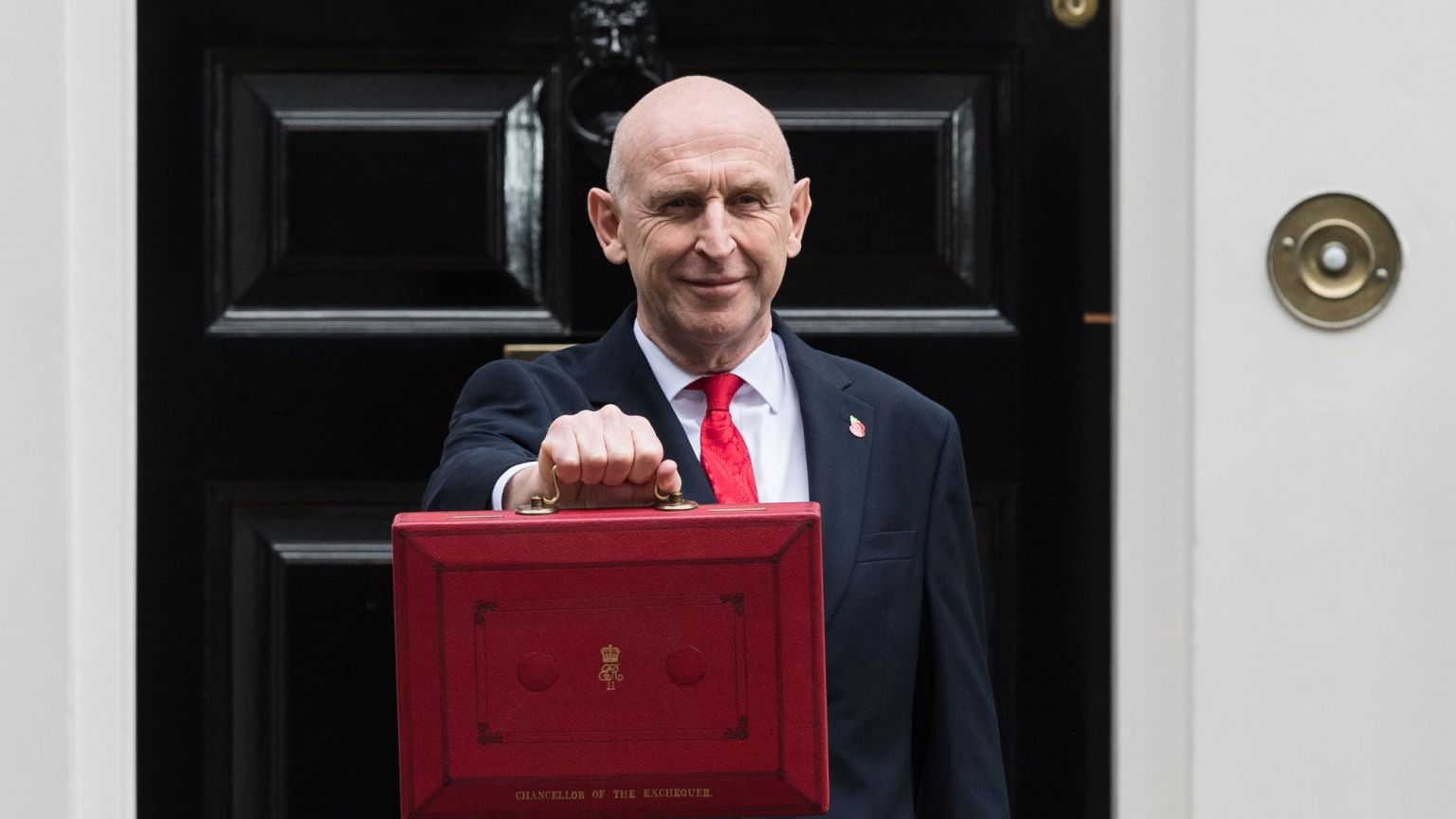
John Healey’s first budget had long been trailed as a ‘steady as she goes’ affair. So today was always going to be no-frills and policy-lite. Yet even by that low bar, the statement Healey delivered this afternoon at the despatch box was alarmingly threadbare.
After all, ‘steady as she goes’ might be an acceptable pose for the chancellor to strike if Britain were heading in the right direction – if, say, growth were ticking up, inflation were falling or stable, and our debts were under control. Yet according to today’s Office for Budget Responsibility report, the opposite is true. Growth is forecast to be slower, inflation will be steeper and debt will be higher in the next five years than they were expected to be back in March.
The chancellor insisted his budget would give ‘breathing space’ to households and businesses struggling under these conditions. And yes, there were a few handouts and giveaways of the kind we’ve been used to in the Andy Burnham era – 40p off marmalade, the £2 bus-fare cap extended, etc etc. In truth, the real ‘breathing space’ this budget affords is to the chancellor himself, as key questions on tax and spend have now been postponed. How Healey will fund his promised boost in defence spending will now be deferred to the spending review in the spring. We will also have to wait until next year to hear how Healey plans to get a grip on the welfare bill. There will be no new policy, the chancellor made clear, until Alan Milburn’s review on NEETs and Stephen Timms’s review of personal independence payments. Until then, the benefits bill can carry on climbing.
Needless to say, Britain simply cannot afford this delay and dither. Debt interest is now the fourth-largest item of UK government spending. The £125 billion annual interest bill costs us more than defence, policing and justice combined. Such high levels of indebtedness, combined with anaemic growth, could very easily make Britain a target for the so-called bond vigilantes. The interest rates lenders demand have reached levels not seen since the global financial crisis. Right now, only riot-stricken France looks as likely as the UK to be blown up by the bond markets. Yet you will have been hard-pressed to detect any sense of urgency on this from Healey. His policies, his speech and even his tone all gave away his complacency.
On the growth side of the ledger, Healey and his boss deserve a tiny bit of credit for allowing North Sea oil and gas to be exploited, which will deliver both energy security and income in tax receipts. Yet the internal Labour rows over the Jackdaw and Rosebank sites illustrate precisely why growth has been so difficult to come by. The chancellor made a Freudian slip when he praised energy secretary Miatta Fahnbulleh for ‘opposing’ the Jackdaw gas field – he meant to say ‘approving’. Reports suggest that Fahnbulleh, a known Net Zero fanatic, really does oppose new drilling and had to be overruled. In Labour circles, pro-growth policies are only ever pursued through gritted teeth. As if to spell this out, the chancellor made clear that he is ‘unshakably committed’ to the growth-destroying target of hitting ‘Net Zero by 2050’.
The growth-killing impact of Net Zero was also overlooked when Healey announced new rules on the construction of AI data centres. Under ‘Britain’s Data Centre Covenant’, firms will be required to invest locally, create jobs and protect water supplies, which sounds fair enough. What was left unsaid is that major firms like Microsoft and OpenAI have previously scrapped planned investments, even before such demands were made, citing Britain’s sky-high Net Zero-induced energy costs. The policies that are finishing off old industries, and strangling new ones at birth, are safe under this chancellor.
John Healey’s snore-inducing budget speech was alarmingly mismatched to the challenges of our time. Every pressing decision has been deferred and delayed. There are only so many times he can hit the snooze button.

Fraser Myers is deputy editor of spiked and host of the spiked podcast.
You’ve hit your monthly free article limit.
Support spiked and get unlimited access.
Support spiked and get unlimited access
spiked is funded by readers like you. Only 0.1% of regular readers currently support us. If just 1% did, we could grow our team and step up the fight for free speech and democracy.
Become a spiked supporter and enjoy unlimited, ad-free access, bonus content and exclusive events – while helping to keep independent journalism alive.
Monthly support makes the biggest difference. Thank you.




Comments
Want to join the conversation?
Only spiked supporters and patrons, who donate regularly to us, can comment on our articles.