The defenceless realm
We can’t fight a war. We can’t defend our borders. Britain is a nation in name only.
Want unlimited, ad-free access? Become a spiked supporter.
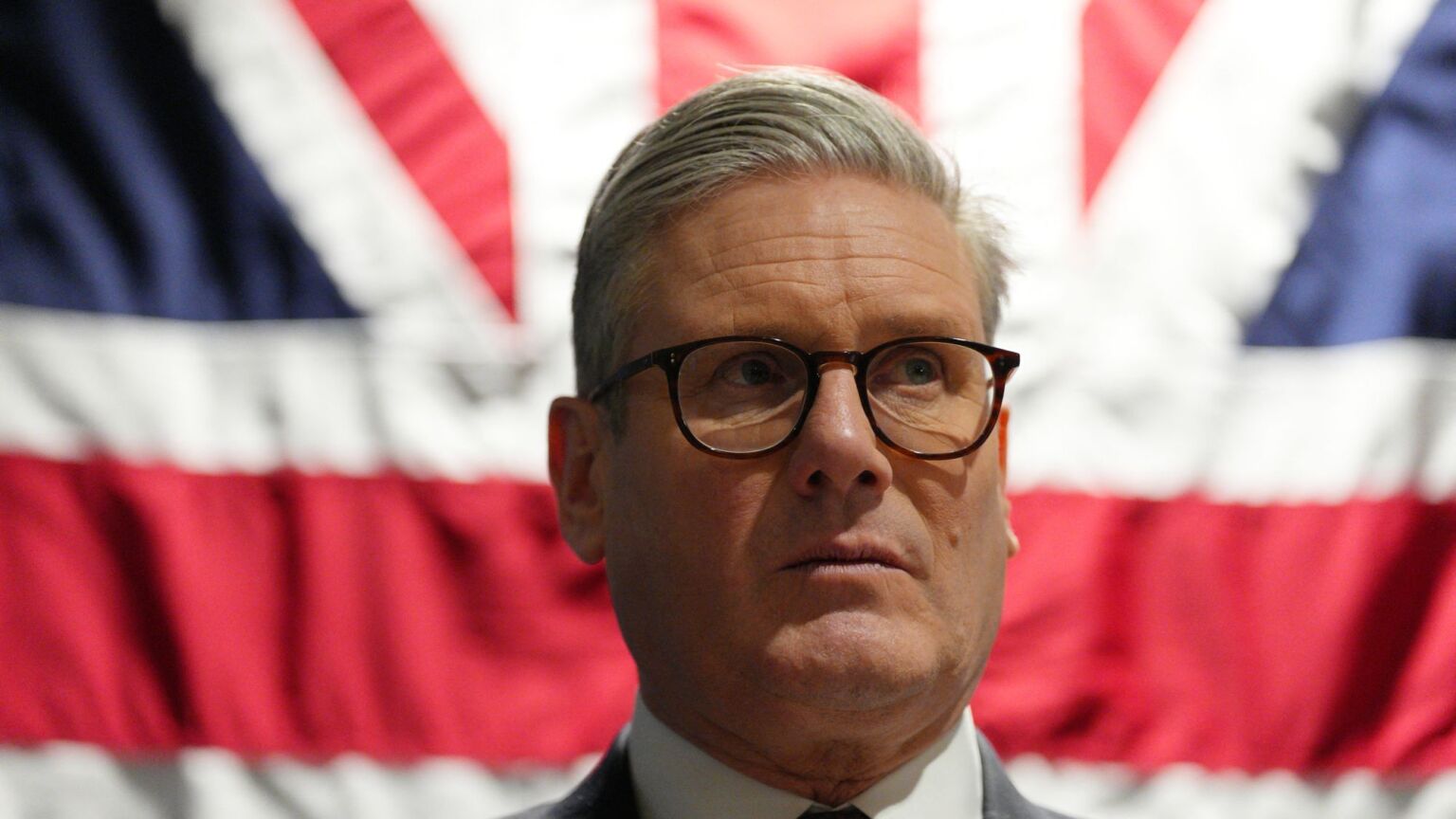
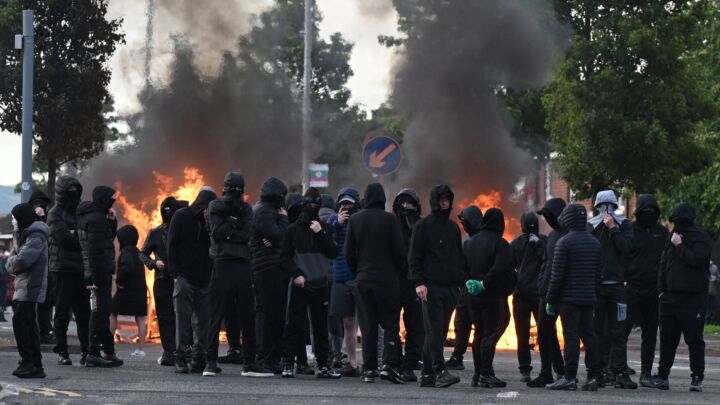
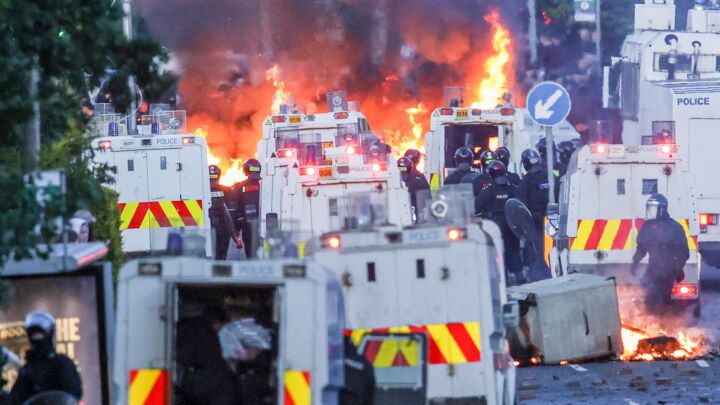
At first glance, they look like two distinct scandals. Fire and violence on the streets of Belfast following the vicious gouging of a local man’s eyes by a suspect from Sudan. And then the resignation of virtually the entire defence wing of Keir Starmer’s cabinet, including the secretary of state for defence, John Healey. Yet both that riotous fury and the polite but scathing resignations flow from the same toxic source – the almost total withering of our kingdom’s ability to defend itself from external menace.
The defence storm swirling around Sir Keir feels staggering. It is the most serious act yet in the tragicomedy of his government’s slow-motion unravelling. First Healey went, and as he did, he issued a stinging verdict on Starmer. You are ‘unable’, he said in his letter of resignation, ‘to commit the resources that the nation needs to defend the country at this time of rising threats’. He was followed by the armed forces minister, Al Carns. To send men to war without proper funding and equipment is a scandal, Carns said. ‘We ask soldiers to fight for this country. In return, we owe them the kit to do the job.’
This feels existential, not just for Starmer’s knackered administration but for the entire machinery of the state. And for us, the people that machinery is meant to defend. Just like that, Britain lost the minister in charge of securing the realm from foreign threats and the minister who oversees our fighting forces. Who’s protecting the kingdom? The gossip-lovers of the SW1 media class are folding the Healey / Carns walkout into the psychodrama of Starmer’s collapsing authority. It’s true these resignations could bring about the endgame for Sir Keir. But they raise a far more perilous prospect: that we are bearing grim witness to the endgame of British sovereignty.
The immediate cause of the defence establishment’s fury with Sir Keir is the question of funding. Healey lays into the Defence Investment Plan, the government’s 10-year blueprint for financing and modernising the military. The plan ‘falls well short of what is required for defence and the country at this dangerous time’, he says. With Starmer’s scraps, Britain will struggle to meet the target of raising our defence spending to 3.5 per cent of GDP, Healey writes. President Trump won’t be happy: he’s been pressing his European allies to stop feasting at the teat of America’s military prowess and raise their defence spending to four per cent of GDP.
Nothing better captures the fall of Britain than the fact we now spaff more cash on caring for people with ‘long-term health conditions’ than we do on training men and women to defend us from our foes. The Tony Blair Institute for Global Change reckons annual spending on health and disability benefits for working-age adults will rise to £73.4 billion by 2030. Our annual defence budget is currently £62 billion. Yes, a lot of disability spending goes on people who need it. But some doesn’t. A nation that spends more on the upkeep of the lethargic youth of the middle classes who TikTok about their ADHD than it does on men and women who are willing to risk life and limb for their compatriots is a nation in name only.
But this is more than a money problem. It isn’t just flagging cashflow that means our ruling classes can’t get a handle on defending the country. It’s also their own flagging belief in the very virtue of sovereignty, their shameful failure to recognise the people’s longing for security. Carns touches on this in his resignation letter. ‘National resilience’, he says, ‘is about more than defence in the narrow sense’. A ‘strong country’ is also one where ‘working people feel economically secure, public services function, energy is resilient [and] communities are stable’. And right now, he says, we have none of that.
He’s right. Millions of people feel not only that the nation is undefended but that they are, too. Their communities, their beliefs, their way of life – it feels like the fencing around all of it has been wilfully dismantled, exposing their daily existence to cultural and even physical assault. ‘Defence’ means more than a well-armed deterrent against foreign invasion. It’s also a living, breathing virtue in and of itself, the thing that gives citizens the confidence to act freely and authoritatively in their communities. Dismantle defence and you don’t only endanger the nation – you also fracture the foundations of everyday life.

This is why Belfast matters here. It’s reported that the knife-wielding suspect flew from Paris to Dublin and then hopped on a bus to Belfast where he was granted leave to remain. That’s a defence crisis, too. The erosion of our sovereign integrity by a political class drunk on the Kool-Aid of globalism has been disastrous for community life. Untold numbers of unvetted men from regressive cultures have been introduced to working-class communities. The result is tension, crime and atrocities like the gang rape on Brighton beach, the ‘grooming’ of girls in Doncaster and the attempted beheading in Belfast. The state’s failure to defend the realm is being paid for with the suffering of the working class.
This week, a man from Pakistan was sentenced for raping a ‘particularly vulnerable’ 18-year-old woman in a park in Nottinghamshire. He had lived in Italy, Germany and France before coming here and saying he needed asylum. And the state believed him. Not even a year later, he had carried out his vile rape. What are we doing? A nation whose patriotic songs remind us we once ‘ruled the waves’ now can’t even stop dinghies of the wretched from arriving on our shores. The state that helped to defeat the Third Reich takes weeks to get a ship to the Persian Gulf. A country that’s existed for a thousand years can’t protect its women from foreign men with ill intent. The social experiment of a globalist utopia has proven deadly. Time to end it.
Brendan O’Neill is spiked’s chief political writer and host of the spiked podcast, The Brendan O’Neill Show. Subscribe to the podcast here. His latest book – After the Pogrom: 7 October, Israel and the Crisis of Civilisation – is available to order on Amazon UK and Amazon US now. And find Brendan on Instagram: @burntoakboy.
spiked summit 2026 - SOLD OUT
10am-6pm, Saturday 27 June
Emmanuel Centre, London, SW1P 3DW
With Lionel Shriver, Brendan O'Neill, Katharine Birbalsingh, Toby Young, Allison Pearson, Paul Embery, Tom Slater, Andrew Doyle, Fiyaz Mughal and more
The spiked summit has now SOLD OUT. To join the waitlist, email:
[email protected]
£80 or £50 for supporters
You’ve hit your monthly free article limit.
Support spiked and get unlimited access.
Support spiked and get unlimited access
spiked is funded by readers like you. Only 0.1% of regular readers currently support us. If just 1% did, we could grow our team and step up the fight for free speech and democracy.
Become a spiked supporter and enjoy unlimited, ad-free access, bonus content and exclusive events – while helping to keep independent journalism alive.
Monthly support makes the biggest difference. Thank you.




Comments
Want to join the conversation?
Only spiked supporters and patrons, who donate regularly to us, can comment on our articles.