Why has Britain become a safe haven for the world’s most violent men?
The alleged beheading Belfast speaks to the insanity of the UK’s non-existent borders.
Want unlimited, ad-free access? Become a spiked supporter.
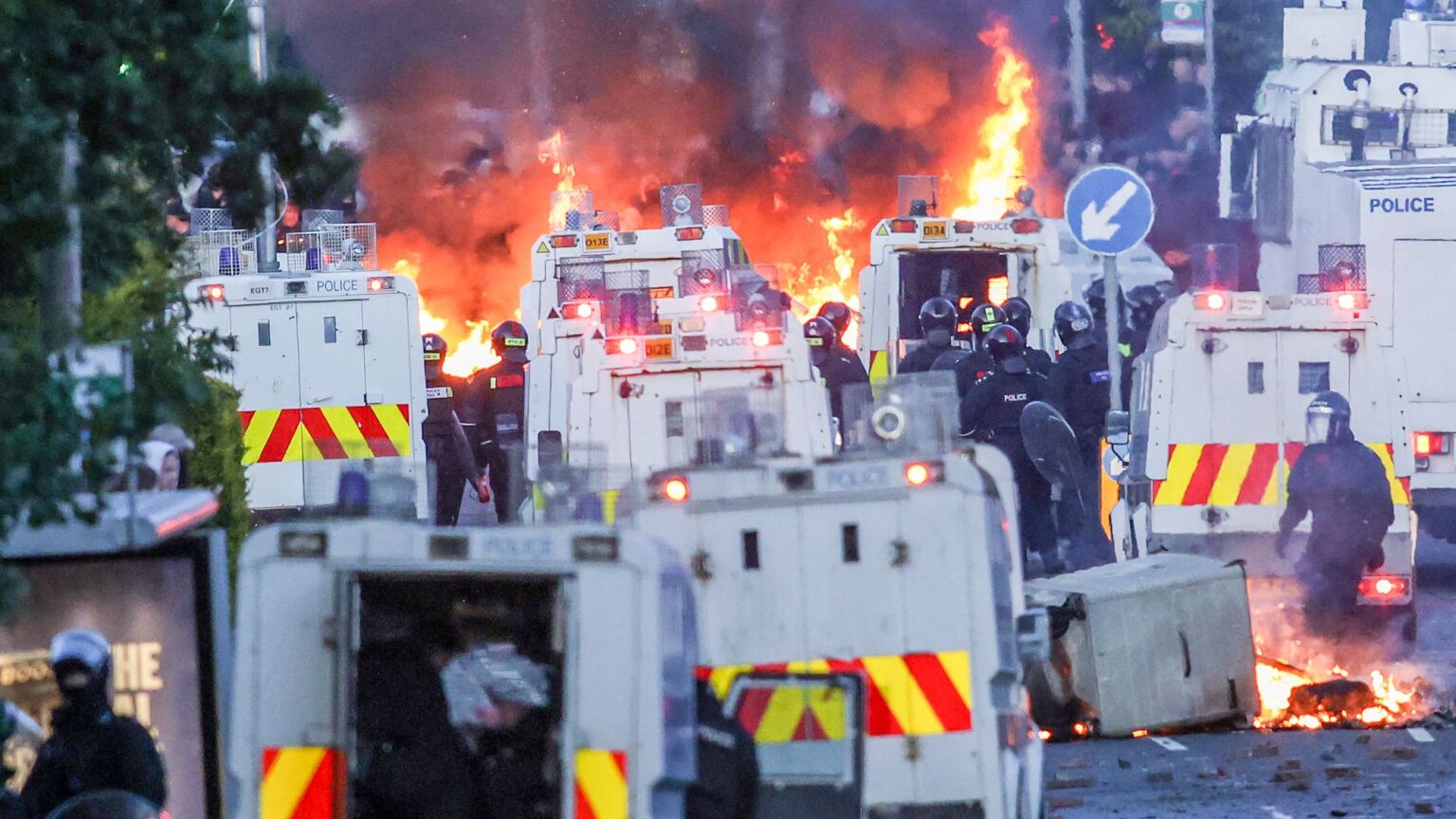
In Belfast on Monday night, a man in his 40s was subjected to a random and brutal knife attack. Incredibly, Stephen Ogilvie has survived, although not without the loss of one eye and severe damage to the other, along with serious injuries to his neck and back. He remains in a coma and in a critical condition.
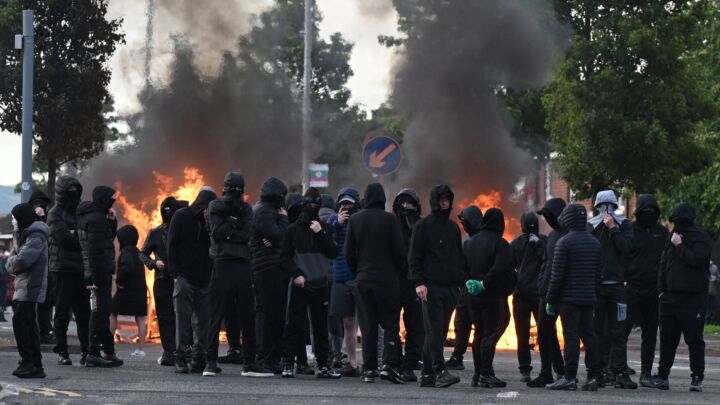
Graphic footage of the attack quickly spread online, accompanied by rumours that the suspect was an asylum seeker or refugee. At the Belfast Magistrates’ Court on Wednesday morning, after a night of rioting on the city’s streets, 30-year-old Sudanese refugee Hadi Alodid was charged on suspicion of attempted murder and remanded in custody.
There is much we still don’t know about the attack or the suspect. We do now know that Alodid is a Sudanese national. He travelled to Belfast in February 2023 from Dublin, having flown there from Paris. After crossing the border from the Republic of Ireland to the UK, he immediately lodged an asylum claim. Seven months later, in September 2023, Alodid was granted leave to remain until 2028, having been fast-tracked through the asylum system.
Much has been made of the fact that Alodid was able to enter Northern Ireland from the European Union – Paris, then Dublin to Belfast – by virtue of the Common Travel Area (CTA), which allows British and Irish nationals to move freely around the British Isles. It has been claimed that this is a ‘loophole’ or an ‘Achilles heel’ in the UK’s immigration system, which Alodid was able to take advantage of.
In truth, the CTA is a red herring. The real outrage is not that migrants can travel from Dublin to Belfast without encountering a border guard. It is that as soon as the suspect entered the UK, there was virtually no chance of him ever being made to leave – whether he had been granted asylum or not, and whatever rules, laws and policies might have been in place at the time.
Statistics for small-boat crossings, the means by which more than a third of asylum seekers reach the UK, bear this out. It is the longstanding position of the British government that refugees should claim asylum in the first safe country they reach. For the more than 200,000 people who have arrived in the UK after crossing the English Channel since 2018, that country was France or another European nation. Yet nearly every small boat arrival in the UK since that date has gone on to claim asylum, the majority successfully.
So why do asylum seekers fixate on the UK, rather than the other developed countries they’ve had to pass through to get here? The English language may be one factor. Another is undoubtedly the benefits afforded to asylum claimants when they arrive on British shores: all new arrivals are given accommodation at migrant hotels or houses of multiple occupation, at a cost to the British taxpayer last year of £2.7 billion. They are also provided with free healthcare and a weekly stipend, although this is admittedly meagre.

The biggest lure of all, though, is that they can be more or less certain that they will not be deported, regardless of whether they arrived in the UK legally, regardless of whether their asylum claim succeeds. Between 2018 and March 2026, 53,000 small boat arrivals had their asylum claims rejected, but only around 8,400 of these arrivals – roughly four per cent – were ‘returned’. And most of these returns were voluntary. In fact, according to Migration Watch UK, just 21 illegal immigrants were actually removed in that same period.
And no wonder. Unsuccessful asylum seekers can appeal any decision – as 80,000 did last year – and can remain in the UK as their case goes through the courts. If all else fails, illegal immigrants can simply sit tight. As parliament’s Public Accounts Committee recently found, the Home Office has effectively given up on keeping track of those whose asylum claims have been rejected.
No government has succeeded in strengthening the UK’s hopelessly feeble border since the small-boats crisis began in earnest. The Conservative government’s plan to relocate refugees in Rwanda soon hit judicial roadblocks after it was announced in 2022. The first of these was a decision by the Court of Appeal in June 2023 that quashed the government’s attempts to deport five men under the scheme. This was upheld by the Supreme Court in November of that year. Both rulings were based on the finding that Rwanda was not a ‘safe’ country for refugees or illegal immigrants to be sent to. To circumvent the courts, Rishi Sunak’s government introduced the Illegal Migration Act 2023, which aped Australia’s immigration policy by automatically rejecting asylum claims by those who arrived in the country illegally. But it was repealed by the current Labour government’s Border Security, Asylum and Immigration Act.
Prime minister Keir Starmer’s preferred ‘solution’ to illegal immigration instead was a ‘one in, one out’ deal with France, formally signed in August last year. It hasn’t been a success. The UK has received more immigrants from France than it has sent back. Some migrants who were returned to France have even made it back into the UK via the Channel. Needless to say, illegal crossings have continued at close to record pace.
So forget about the CTA. The real immigration ‘loophole’, ‘Achilles heel’ – or whatever you want to call it – is the fact that the British government first refuses to prevent illegal immigration, and then does nothing to remove illegal migrants once they have crossed the border. The financial cost of this failure is catastrophic – and its human cost incalculable.
Election after election, the British people have begged for a controlled immigration system – one in which they know who enters the country, and with clear rules over who stays and who doesn’t. Successive governments have promised this, only to fail more dismally than the last. It is by far the biggest concern of voters, yet it is the one the authorities refuse to get a grip on. As Belfast has so tragically shown us – this is not only unsustainable, it is highly combustible, too.
Hugo Timms is a staff writer at spiked.

spiked summit 2026 - SOLD OUT
10am-6pm, Saturday 27 June
Emmanuel Centre, London, SW1P 3DW
With Lionel Shriver, Brendan O'Neill, Katharine Birbalsingh, Toby Young, Allison Pearson, Paul Embery, Tom Slater, Andrew Doyle, Fiyaz Mughal and more
The spiked summit has now SOLD OUT. To join the waitlist, email:
[email protected]
£80 or £50 for supporters
You’ve hit your monthly free article limit.
Support spiked and get unlimited access.
Support spiked and get unlimited access
spiked is funded by readers like you. Only 0.1% of regular readers currently support us. If just 1% did, we could grow our team and step up the fight for free speech and democracy.
Become a spiked supporter and enjoy unlimited, ad-free access, bonus content and exclusive events – while helping to keep independent journalism alive.
Monthly support makes the biggest difference. Thank you.





Comments
Want to join the conversation?
Only spiked supporters and patrons, who donate regularly to us, can comment on our articles.