Why Belfast is burning
The racist rioting is indefensible – so is our elites’ determination to ignore the tensions caused by migration.
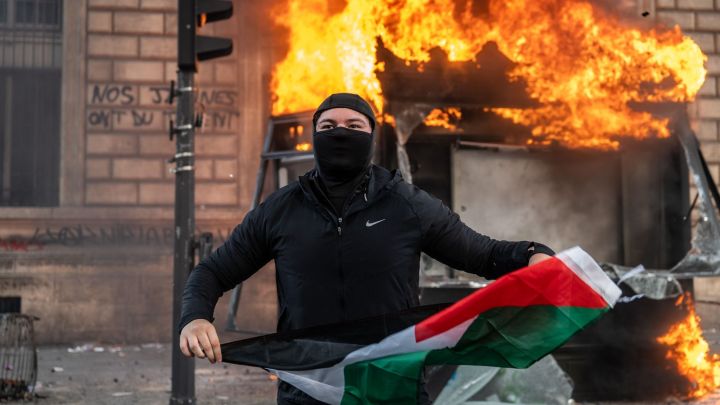
Read our latest coverage of the French riots here – paywall-free all of this week..
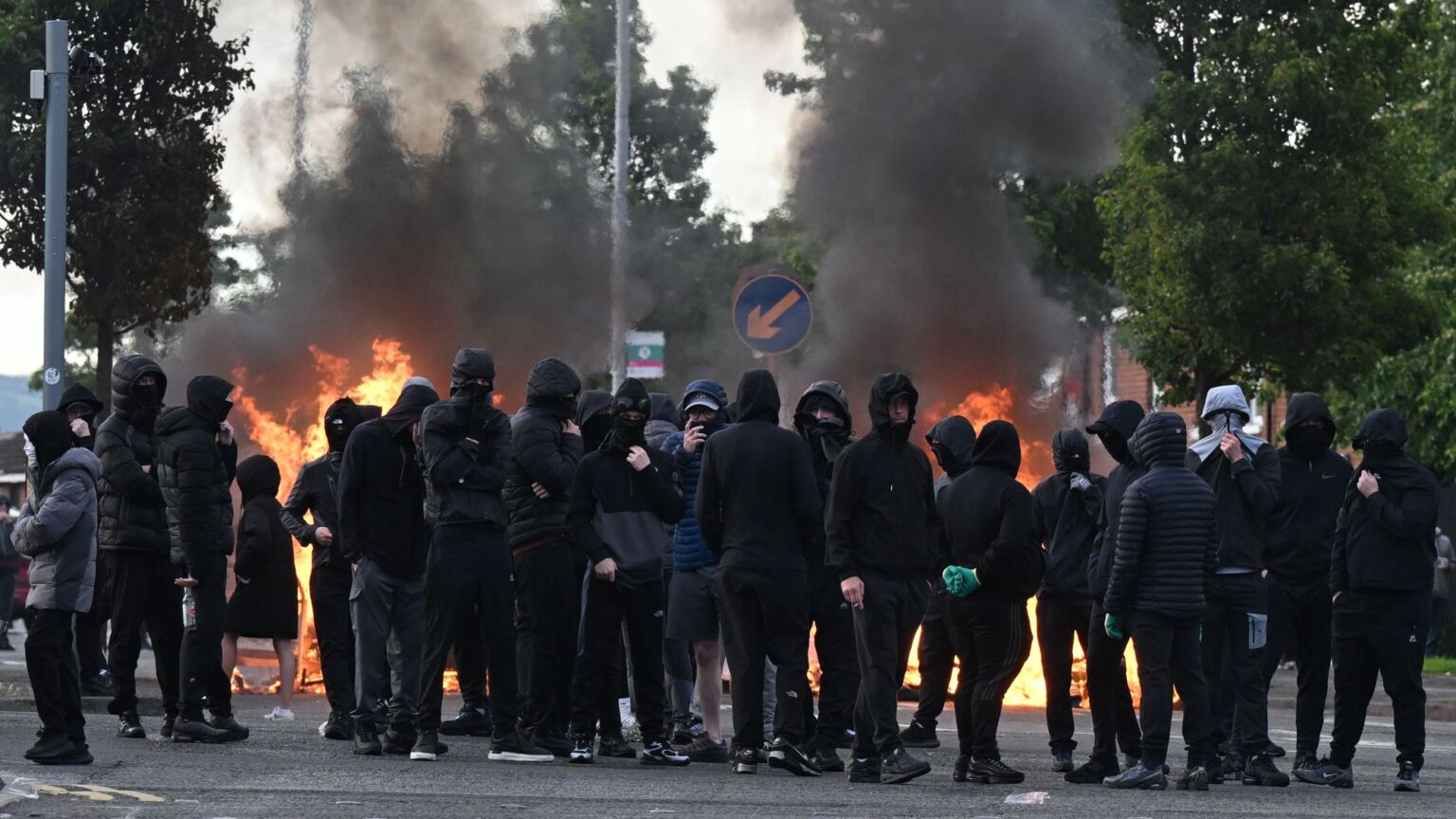
Belfast was in flames last night. Cars and buses were set ablaze. Flaming rubbish bins were used to create roadblocks. And most horrifying of all, masked men went door to door in the Northern Irish capital, demanding to know if ‘foreigners’ lived inside. Emergency services had to escort immigrant families from their burning homes.
These scenes of terror and carnage unfolded on the day that Hadi Alodid, a Sudanese migrant, was charged on suspicion of attempted murder, and, in a separate incident on the same day, threatening to kill an NHS radiologist. Viral footage from Monday night appears to show him swiping a knife at the victim, later identified as Stephen Ogilvie, seemingly attempting to behead him and gouge his eyes out. Alodid appeared in court this morning to hear his charges. Police are not seeking anyone else in connection with their investigation.
UK prime minister Keir Starmer has called the disorder ‘totally unjustified’. Northern Ireland’s first minister, Michelle O’Neill, has described it as ‘disgusting cowardice’. These condemnations are necessary and well merited. What we saw last night was racist mob violence. Innocent people – migrants, asylum seekers, anyone who looked sufficiently foreign or non-white – had their homes attacked and their cars destroyed. The suspect alone should have to answer for his actions through the justice system. No group should ever face collective punishment. And no mob should ever have the right to dispense justice through wanton violence.
These condemnations may be necessary, but by now they are utterly insufficient. After all, we are now familiar with the grim pattern. We see a horrific crime – usually committed by an illegal migrant (or suspected illegal migrant) – followed by protests that turn ugly or by thugs looking to kick off. Ballymena in County Antrim, Dublin in the Republic of Ireland, Knowsley in Merseyside – all have exploded in rioting in recent years, as longstanding tensions are brought to the boil by an unspeakable act.
Our leaders usually condemn the disorder and violence that follows, but will refuse to discuss the triggers in any depth. Anyone who asks what can be done about horrors like that inflicted on Stephen Ogilvie will be accused of stoking division, exploiting a tragedy and courting the far right.
But something can and must be done. It is simply no longer sustainable to force working-class communities to endure such levels of terror, to bear the brunt of the elites’ open-door experiment – to pay the ‘blood price’, as Brendan O’Neill describes it, of the establishment’s virtue-signalling. Practically every day brings new horrors that ordinary folk are simply expected to put up with. On the very same day as the Sudanese suspect was charged with attempted murder, four Afghan nationals appeared in court, all charged with the alleged rape of a Bristol schoolgirl. From gang rapes in Brighton and grooming gangs in Norwich to child rape in Warwickshire, countless British citizens continue to suffer at the hands of men who shouldn’t be here. Yet this barely seems to trouble our cloistered political class.
None of this is to defend those violent scenes in Belfast. Rioting is always nihilistic and self-destructive. Far from putting people’s concerns and anger over immigration on the political agenda, it provides the ideal excuse for them to be ignored once again. I can’t have been alone in detecting a palpable sigh of relief emanating from Westminster as soon as the first Belfast bus was set alight. Now the political class can move on from discussing the barbarism they have enabled and get back on to safer territory – railing against the ‘far right’, issuing calls to tackle ‘misinformation’, and posturing against ‘agitators’ who seek to ‘divide’ our otherwise peaceful, harmonious society. But these deflections cannot and will not work forever.

The rioting in Belfast will pass. Politicians’ attention will drift and the news cycle will move on. But the conditions that helped to fuel last night’s violence – the abandonment of working-class communities, the broken asylum system, the elite culture of denial and deflection – will persist. Until they are addressed openly and honestly, there will almost certainly be another Belfast.
Fraser Myers is deputy editor at spiked and host of the spiked podcast. Follow him on X: @FraserMyers
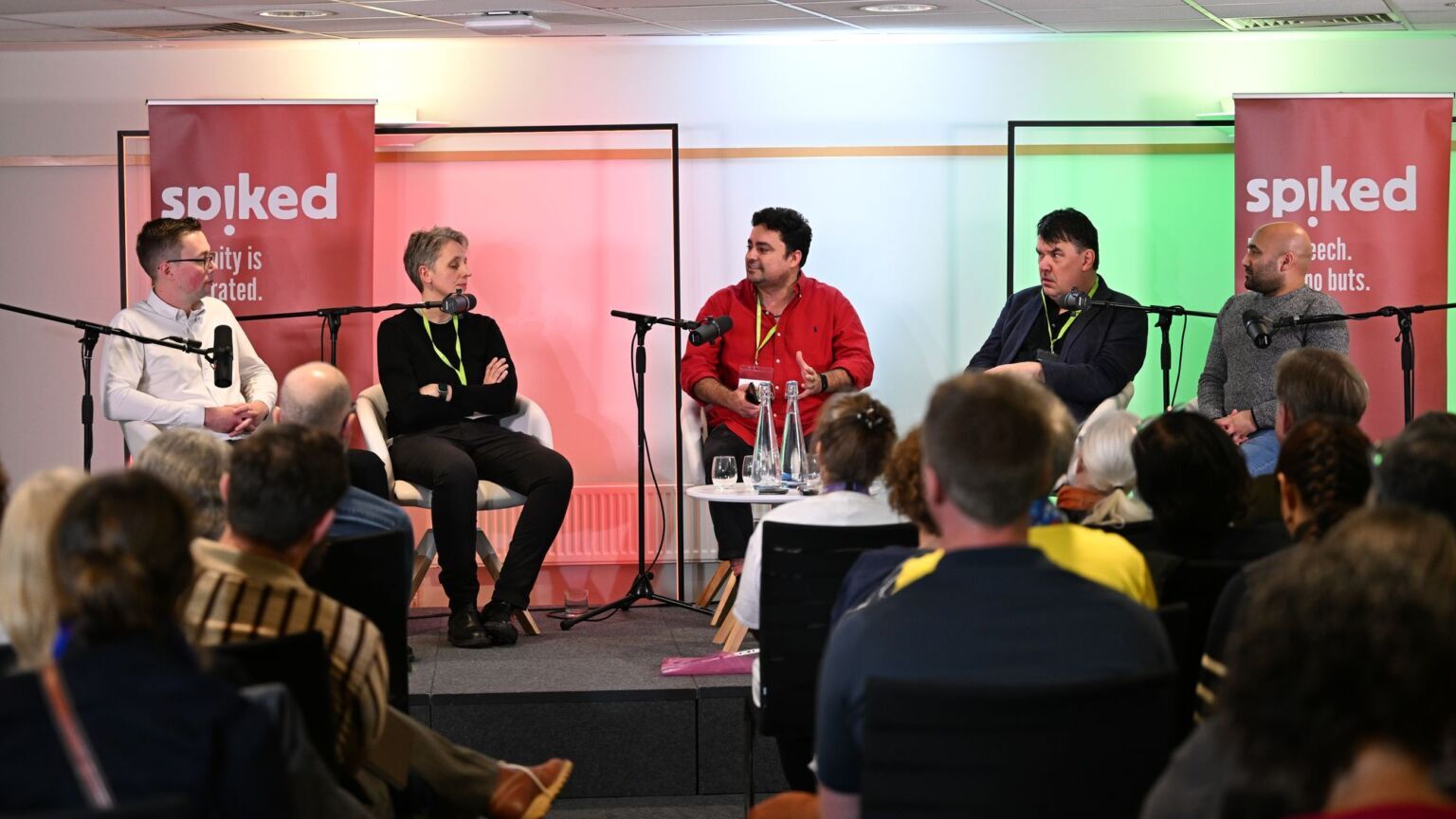
spiked summit 2026 – SOLD OUT
Saturday 27 June 2026
10am-6pm, Saturday 27 June
Emmanuel Centre, London, SW1P 3DW
With Lionel Shriver, Brendan O’Neill, Katharine Birbalsingh, Toby Young, Allison Pearson, Paul Embery, Tom Slater, Andrew Doyle, Fiyaz Mughal and more
The spiked summit has now SOLD OUT. To join the waitlist, email:
[email protected]
£80 or £50 for supporters
You’ve hit your monthly free article limit.
Support spiked and get unlimited access.
Support spiked and get unlimited access
spiked is funded by readers like you. Only 0.1% of regular readers currently support us. If just 1% did, we could grow our team and step up the fight for free speech and democracy.
Become a spiked supporter and enjoy unlimited, ad-free access, bonus content and exclusive events – while helping to keep independent journalism alive.
Monthly support makes the biggest difference. Thank you.


Comments
Want to join the conversation?
Only spiked supporters and patrons, who donate regularly to us, can comment on our articles.