Starmer has failed in his first duty to the nation
John Healey’s resignation has exposed the sorry state of Britain’s armed forces.
Want unlimited, ad-free access? Become a spiked supporter.
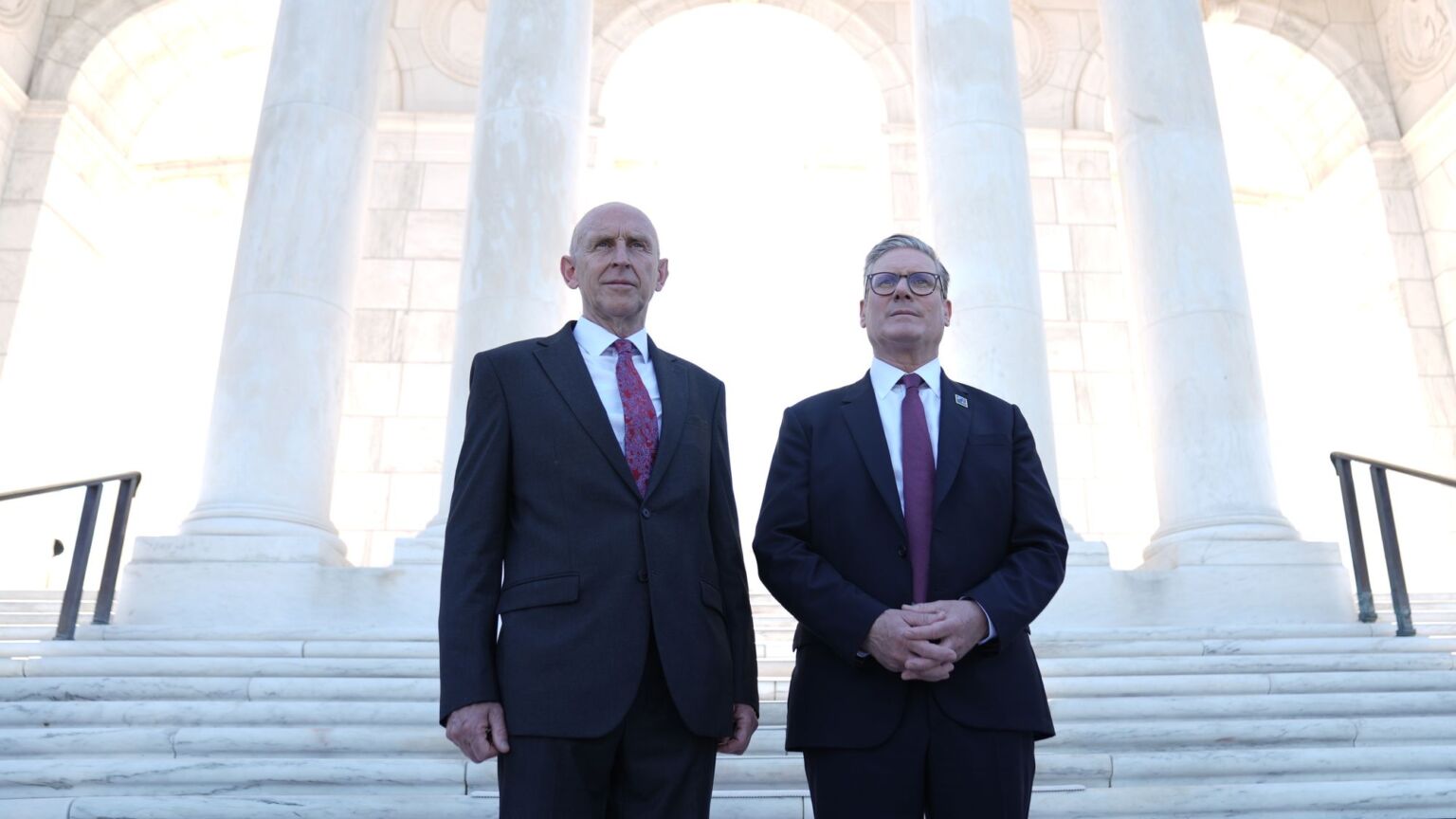
John Healey has done something unfashionable for a politician in our times: he has resigned, not over a sex scandal, a briefing war or a manufactured media row, but over a matter of substance. The now former UK defence secretary says the government will not properly fund the defence of the realm. He is correct, and he deserves commendation for upholding such high principles.
Healey’s resignation is an indictment of Keir Starmer’s government. The Defence Investment Plan (DIP) was meant to be the moment when Starmer’s solemn talk about a dangerous world would be turned into hard commitments: defined funding for ships, missiles, drones, air defence, munitions stockpiles, personnel and industrial capacity. Instead, Healey says he was shown a settlement that would limit spending to just 2.68 per cent of GDP by 2030, short of the three per cent he judged necessary, and a mere 0.08 percentage-point increase over four years.
There is no mystery about why the money is missing. Starmer and chancellor Rachel Reeves bottled welfare reform. Last year, facing a Labour backbench revolt, the government gutted its planned savings from sickness and disability benefits of £5 billion annually. The u-turn meant the reforms would no longer save taxpayers any money and had shredded the margin Reeves needed to meet her fiscal rules.
This is the basic arithmetic of government. You cannot fund a swollen welfare state, an unreformed NHS, Net Zero, debt interest and national defence all at once. In the real world, priorities must be set. Labour has chosen welfare dependency over military readiness. It has chosen to appease backbenchers over the first responsibility of any government – to protect its people.
Starmer is not solely to blame for this sorry state of affairs. Britain’s armed forces have been hollowed out over many years. The Cameron-Osborne austerity settlement began a long era of strategic negligence. The 2010 Strategic Defence and Security Review cut defence spending by eight per cent. A military that cannot sustain combat is nothing more than an advertising campaign masquerading as an army. And that is what we are left with.
The Ajax tank farce is emblematic of the sickness. The programme was supposed to deliver a modern, armoured reconnaissance vehicle. Instead, it has become a monument to defence dysfunction – years late, billions wasted, the tanks plagued by defects so serious soldiers were harmed in training. Ajax was expected to enter service in 2017. The tanks are now expected to be operational – at best – by 2028.
The Ministry of Defence excels at producing acronyms, reviews and procurement frameworks, yet struggles to deliver fighting power at speed and scale. A 2023 Defence Committee report on the procurement system described it as bureaucratic, slow, poorly accountable and in need of comprehensive reform. Britain has talented officials, engineers and service personnel. It lacks a governing class willing to make hard choices, enforce accountability and accept that defence exists to deter enemies and, if necessary, win wars.
The delayed DIP has turned that failure into a national humiliation. The Public Accounts Committee warned this week that the delay had undermined Britain’s credibility with allies and weakened its ability to deter adversaries.

It will take far more than speeches to make forces combat-ready. Defence companies cannot invest on the basis of ministerial mood music – they need hard commitments. Our NATO allies cannot plan around such vagueness, either.
This is why Healey deserves respect for his resignation. He did not fix the system. He did not reverse the hollowing out. He presided over part of the drift. Yet when finally confronted with an underfunded plan, he refused to front it. So too has Al Carns, the armed forces minister. In his resignation statement – made on the same day as Healey’s – Carns said: ‘We ask soldiers to fight for this country. In return, we owe them the kit to do the job.’
The chief of the defence staff and his subordinate generals, admirals and air marshals should follow suit. Leadership demands accountability, and senior leadership in the Ministry of Defence should take Healey’s example as a lesson; otherwise, nothing will change.
Britain’s defence establishment now faces a brutal question: does the state still believe national defence is its first duty? At present, the answer is not good. The armed forces are too small, too thinly resourced and procurement is poor.
John Healey’s departure has exposed the truth. Britain lacks a Ministry of Defence, a Treasury, or a defence policy worthy of the threats we face.
Andrew Fox is a retired Parachute Regiment officer, a senior fellow at the Henry Jackson Society, and co-host of The Brink podcast.

spiked summit 2026 - SOLD OUT
10am-6pm, Saturday 27 June
Emmanuel Centre, London, SW1P 3DW
With Lionel Shriver, Brendan O'Neill, Katharine Birbalsingh, Toby Young, Allison Pearson, Paul Embery, Tom Slater, Andrew Doyle, Fiyaz Mughal and more
The spiked summit has now SOLD OUT. To join the waitlist, email:
[email protected]
£80 or £50 for supporters
You’ve hit your monthly free article limit.
Support spiked and get unlimited access.
Support spiked and get unlimited access
spiked is funded by readers like you. Only 0.1% of regular readers currently support us. If just 1% did, we could grow our team and step up the fight for free speech and democracy.
Become a spiked supporter and enjoy unlimited, ad-free access, bonus content and exclusive events – while helping to keep independent journalism alive.
Monthly support makes the biggest difference. Thank you.





Comments
Want to join the conversation?
Only spiked supporters and patrons, who donate regularly to us, can comment on our articles.