The Henry Nowak horror reveals the cruelty of racial thinking
Decades of institutional ‘anti-racism’ have undermined equality and poisoned race relations.
Want unlimited, ad-free access? Become a spiked supporter.
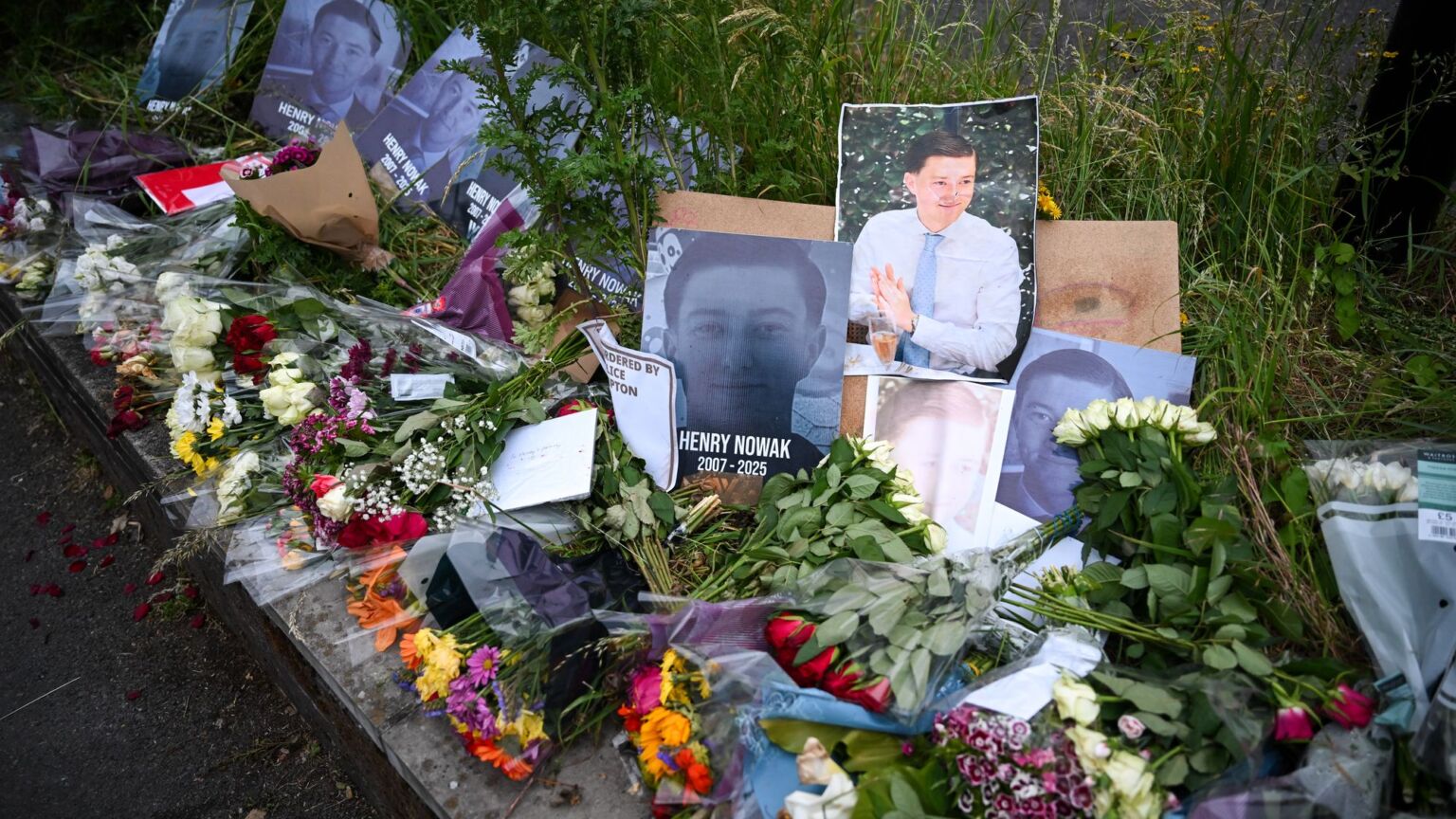
In the aftermath of Henry Nowak’s murder, many commentators have agreed that serious questions need to be asked about the influence of race-based diversity training within British policing. Invariably, this concession is followed by a familiar caveat. Whatever mistakes may have been made in the Nowak case, in treating him as a perpetrator of racism rather than a victim of violent crime, we are reminded that black people are still stopped and searched at far higher rates than white people.
The implication is clear. The pursuit of racial equity may sometimes produce errors or excesses, but the underlying project remains necessary because the statistics prove that racial disadvantage persists.
This argument has become so familiar that few people stop to examine its assumptions. Yet the limits of this framework are becoming increasingly obvious. At a time when anti-Semitism is a growing feature of British public life, it is striking how little such developments feature in discussions dominated by the language of disproportionality and equity. Some forms of prejudice fit comfortably within that framework – others do not.
But what exactly do the oft-quoted stop-and-search figures show? We are typically presented with a comparison between ‘black people’ and ‘white people’, as if these were coherent social groups whose members share broadly similar experiences.
Yet, as British writer Kenan Malik observed almost 20 years ago, racial categories often conceal more than they reveal. Minority populations are not homogeneous entities. They are divided by class, sex, age, locality and culture as much as any other population. Yet modern anti-racism increasingly encourages us to treat race as the decisive explanatory factor. Disparities are no longer viewed as phenomena requiring explanation. They become evidence of racism in themselves.
This way of thinking did not emerge from nowhere. The decisive turning point was the 1997 Macpherson Inquiry into the murder of Stephen Lawrence. The inquiry began as an examination of the police incompetence that had marred the Met’s investigation. But as the aristocrat Sir William Macpherson listened to a stream of race experts relate their experience, he became convinced that little had changed. A submission to the inquiry by one academic stated, ‘institutional racism in this sense is in fact pervasive throughout the culture and institutions of the whole of British society, and is in no way specific to the police service’. And so Macpherson formed the view that racism was the affliction of us all, whether we know it or not.
Macpherson encouraged institutions to see unequal outcomes as evidence of institutional racism and to treat disproportionality itself as evidence of discrimination. As such, the Macpherson principles became fertile soil on which American imports like Black Lives Matter and critical race theory could flourish decades later.

Perhaps the most influential expression of this shift was Macpherson’s definition of a racist incident as ‘any incident perceived to be racist by the victim or any other person’. The intention was understandable. Police forces had often failed to take allegations of racism seriously. But the effect was to blur the distinction between allegation and fact. Incidents were increasingly recorded according to perceptions.
The influence of this approach spread rapidly beyond policing. Through the amended Race Relations Act in 2000 and subsequent guidance, schools were encouraged to record racist incidents and promote anti-racist awareness. Teachers found themselves reporting playground disputes through racial frameworks that would previously have seemed extraordinary. Across the public sector, race increasingly became the preferred language through which social problems were understood.
The consequences were not always benign. Initiatives intended to reduce racism often encouraged people to think more consciously in racial terms. Children were encouraged to understand themselves through ethnic identities. Educational difficulties were increasingly interpreted through the language of racial disadvantage. Public institutions became more obsessed with racial categories than ever before.
What began as Sir William Macpherson’s attempt to combat legitimate racism in the 1980s gradually evolved into a culture of racial thinking. The Henry Nowak case should prompt us to ask whether that culture has now reached its limits.

The crucial question is not whether Britain suffers from ‘anti-white racism’, as claimed by some commentators. Britain remains one of the most tolerant and ethnically integrated societies in the world. Nor is the question whether racism has vanished altogether. The question is whether ethnicity and racism have become the default explanations for social disparities, institutional failures and human behaviour, and whether we have become so accustomed to viewing society through racial categories that we struggle to see anything else.
The tragedy of Henry Nowak suggests that we should be wary of replacing one form of racial thinking with another. If the answer to anti-racist identity politics is a competing white identity politics, then nothing fundamental has changed. We remain trapped within the same intellectual framework.
The alternative is older, simpler and ultimately more radical. It is to return to the universal principle that people should be judged as individuals rather than as representatives of racial groups. Equal treatment before the law. Equal dignity as citizens. And a willingness to investigate disparities without prejudging their causes.
The lesson of Henry Nowak is not that Britain needs a different racial settlement. It is that Britain needs the confidence to move beyond racial thinking altogether.
Adrian Hart is the author of That’s Racist!: How the Regulation of Speech and Thought Divides Us All.

spiked summit 2026
10am-5pm, Saturday 27 June
Emmanuel Centre, London, SW1P 3DW
With Lionel Shriver, Brendan O'Neill, Katharine Birbalsingh, Toby Young, Allison Pearson, Paul Embery, Tom Slater, Andrew Doyle, Fiyaz Mughal and more
Become a spiked supporter to get a discounted ticket
£80 or £50 for supporters
You’ve hit your monthly free article limit.
Support spiked and get unlimited access.
Support spiked and get unlimited access
spiked is funded by readers like you. Only 0.1% of regular readers currently support us. If just 1% did, we could grow our team and step up the fight for free speech and democracy.
Become a spiked supporter and enjoy unlimited, ad-free access, bonus content and exclusive events – while helping to keep independent journalism alive.
Monthly support makes the biggest difference. Thank you.






Comments
Want to join the conversation?
Only spiked supporters and patrons, who donate regularly to us, can comment on our articles.