Robert Pattinson will make Bond dangerous again
Few other stars could play 007 as Ian Fleming intended – cold, predatory and unmistakably British.
Want unlimited, ad-free access? Become a spiked supporter.
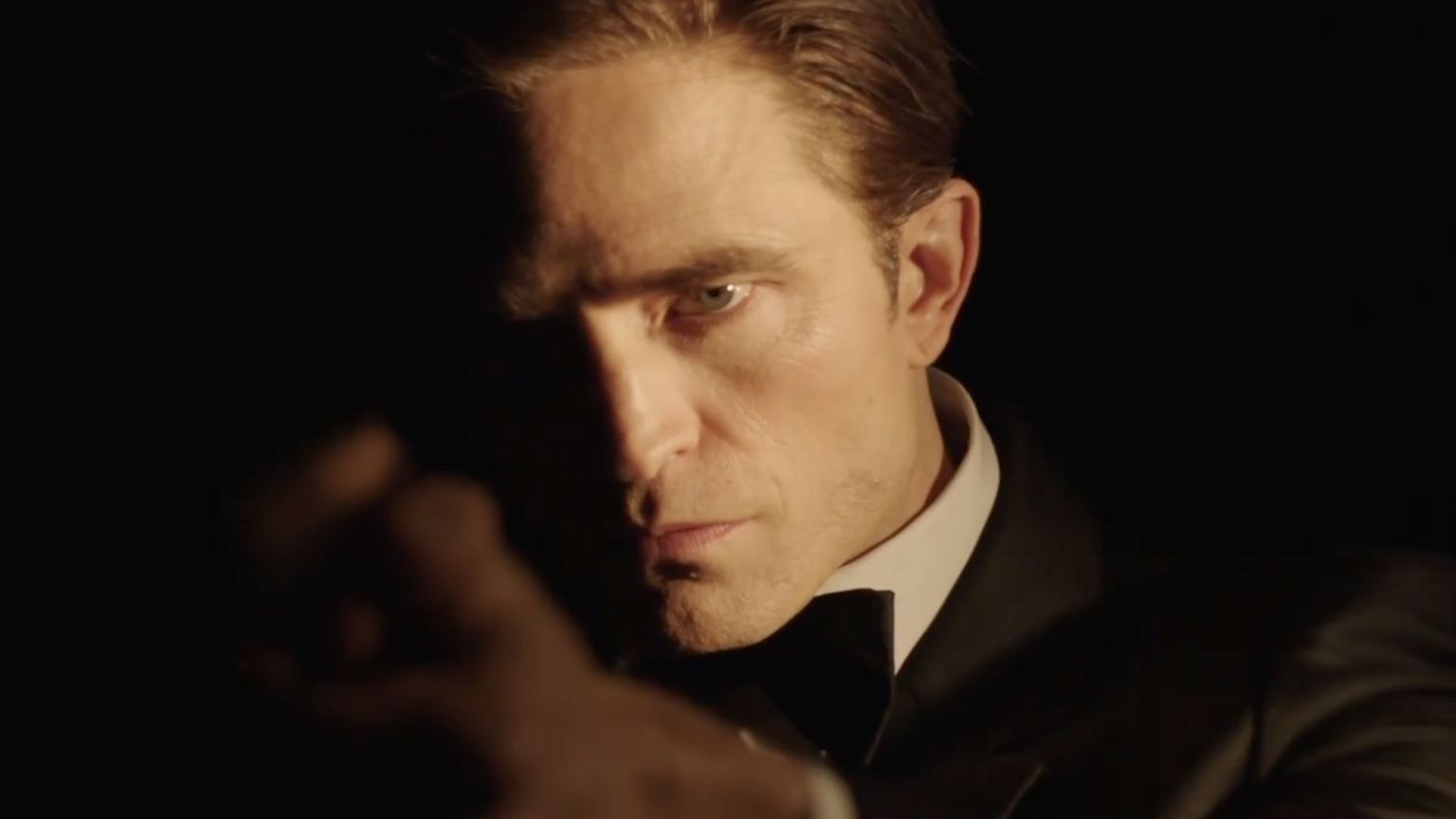
Britain has a new James Bond. On Monday afternoon, the famous billboard on London’s Piccadilly Circus showed a moodily lit Robert Pattinson in a dinner jacket, gun in hand, presumably heading – very deliberately – into danger.
Nobody is ever up there on screen at that special junction by accident. It is the Britain of tea towels and tourist snaps, the spot where the UK shows the world the picture it has of itself. Bond is part of that picture, and the new man will decide how it looks. Never has a casting mattered so much, and the people behind Bond know it.
Robert Pattinson is a big, promising step in the right direction for the new franchise. He has the potential to be a great James Bond. Popular reaction seems, on the whole, broadly enthusiastic. But to really see why Pattinson has so much potential, we need to remind ourselves who Bond really is, and why Pattinson the actor fits the character so well.
It is easy to forget that James Bond is a unique kind of film character. Very few characters define a whole genre and get franchises named after them. Bond has endured and survived many changes: the actor, the cars, the gadgets, the decades. But some aspects of Bond are foundational. They cannot change without fundamentally changing the character himself. Bond has three irreducible qualities that cannot be altered or wished away: king and country, masculinity and Britishness. King and country is why he kills: the licence that turns violence into duty. Masculinity is how he does it: the body, command and sexual authority that allow him to do what he does. Britishness is who he is while he does it: the reserve, irony and taste that make him unmistakable.
The luxury, the cars, the women and the martinis – these fripperies only really mean something with the right foundations in place. Every Bond actor has represented a different interpretation of the core themes. Sean Connery leaned into them. Roger Moore played with them. Timothy Dalton stripped them back to their violence. Pierce Brosnan smoothed them into spectacle. Daniel Craig ironised and ultimately killed them. Any new interpretation cannot avoid them – it has to decide what to do with Bond’s core qualities.
The arguments over the casting of Bond are really arguments over whether these qualities can still be taken seriously. This is especially so now, with culture-war arguments so entrenched in public life. While one camp wants to elevate Bond as something almost bigger than he is, a symbol of a proud Britain, the other wants him to be apologised for, retired or rendered unrecognisible.
In the fight over what Bond symbolises, what gets lost is the kind of man he is. But this is the question that needs to be posed properly in order to understand the kind of actor who is best placed to play him. What kind of human being needs to go on screen to embody Bond’s irreducible qualities?
Bond’s creator, Ian Fleming, understood the nature of his creation. Bond is essentially cold. He called Bond ‘absolutely non-political’, an instrument of whatever government was in power. He chose a dull name for him because he wanted an anonymous instrument. Bond has no opinions, only an employer. His coldness is etched into his body and face. Fleming gives him ‘dark, rather cruel good looks’. In Casino Royale, we get the measure of Bond through his sleeping face, ‘with the warmth and humour of his eyes extinguished, his features relapsed into a taciturn mask, ironical, brutal and cold’. Charm is something Bond puts on like a suit. He does not lack feelings, he treats them as a hazard. In Goldfinger, he calls regret ‘unprofessional’.
It is this special kind of coldness that Pattinson is uniquely placed to supply. And this is because of the unique way he comes across on screen. Whoever he plays, Robert Pattinson plays a version of the same type – the fallen angel, an inhuman outsider who performs humanity as a form of seduction. He can’t help but do this. He will always seem this way because of his astonishing looks and the particular kind of calculation that happens behind his eyes.
Rather than being a liability or baggage, Pattinson’s previous roles help us imagine and understand every character he plays. Edward Cullen in Twilight defined Pattinson’s type forever. It is the purest demonstration of how he appears on screen. He is an immortal predator pretending to be a boyfriend, whose stiffness and solemnity make him feel like a creature rehearsing humanity. This is what Pattinson – and only Pattinson – can bring to roles. He plays people who are not normal but are instead performing normality.
This is real suavity, in the truest sense of assumed manners. It also happens to be Bond’s technique. Bond can charm a room because it is needed for work, and drop the charm the moment the room is empty. It is true predator behaviour, truly dangerous. Bond dissembles, draws you in, then dispenses with you. Pattinson specialises in this also. In Good Time, Pattinson’s Connie Nikas talks his way through one room after another, every smile a tool. We watch the machinery at work.

Pattinson has a second, less-obvious qualification when it comes to being Bond. He is entirely comfortable being an object of scrutiny and not giving a damn about it. In the films, Bond is constantly looked at and ogled. Connery in the swimming trunks, Craig walking out of the sea – the franchise has always known that audiences want to watch Bond as much as be him. Few actors have lived this more fully and more personally than Pattinson, who became an object of mass desire in his early twenties. He did not respond to these extraordinary circumstances by trying to be liked. Rather, he spent the next decade trying to neutralise the phenomenon. He did it by working with David Cronenberg, the Safdie brothers, Robert Eggers – any director who, rather than idolising him, made his face weird, a problem to be managed. Being looked at without being affected by it is exactly the mode in which Bond operates.
Of course, everything now depends on the film itself. We know the director, Denis Villeneuve, does spectacle and dark, twisting plots. He can also turn complicated books like Dune into commercially successful films. What will he do with Bond?
The choice of Pattinson, and with it the kind of Bond he will be, is suggestive and surprisingly old-school. It suggests that, somehow, the Britishness, masculinity and king and country will be played out as they should be. He has the potential, at least, to be magnificent. He can be British without being cosy, masculine without being friendly and dangerous without being explained. He can embody and carry all three core qualities.
Done right, the next film will give us a man with everything we admire and should not quite want, protected by the state, made desirable by style. These are old-fashioned ideas by today’s standards, positively dangerous. Maybe an old-school, traditional, dangerous James Bond will be the boldest, freshest choice.
Maren Thom is co-host of the Performance Anxiety podcast.
You’ve hit your monthly free article limit.
Support spiked and get unlimited access.
spiked is even better on the app
Read, watch and listen to spiked wherever you are. Our brand-new app brings everything together, with ad-free reading, audio articles and offline access.
Become a spiked supporter to unlock exclusive app access, unlimited articles, bonus podcasts, discounts and special events.
Monthly support makes the biggest difference. Thank you.


Comments
Want to join the conversation?
Only spiked supporters and patrons, who donate regularly to us, can comment on our articles.