This is not a ‘student protest’ – it’s an intifada against France
The teens burning schools, assaulting police and glorifying Islamist terrorists are not protesting about class sizes.
Want unlimited, ad-free access? Become a spiked supporter.
‘In the name of Allah, we can kill them all!’, screams a masked student rioter named ‘Yanis’. He was filmed standing on top of a car, gesturing to the 10 or so police officers struggling to contain a restless crowd of teenagers. His chilling cry is met with cheers and exultation from the students outside the Honoré de Balzac high school near Paris. ‘Yanis, the voice of reason’ reads the subtitle on the now viral video of the speech.
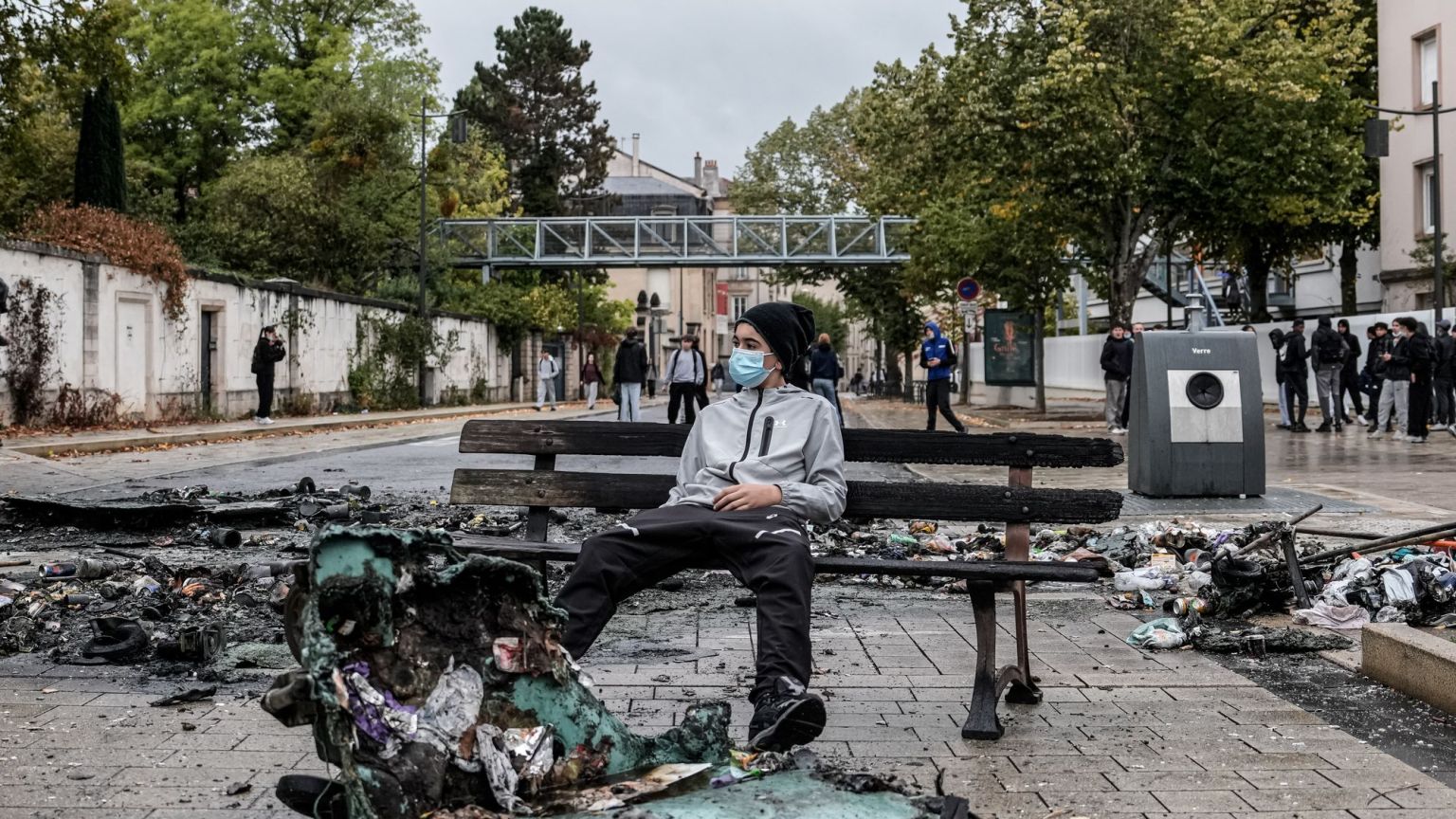
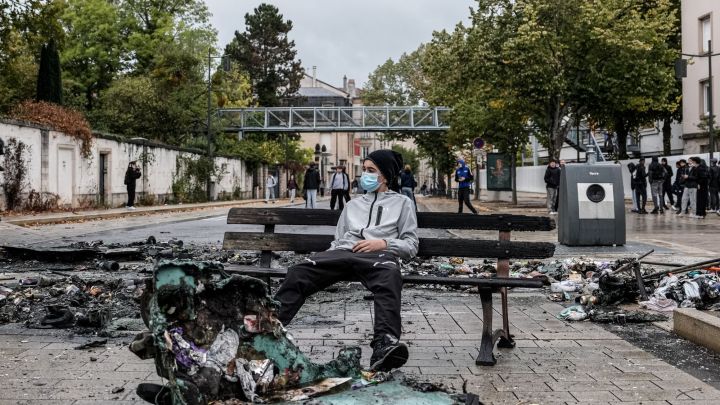
This is just one of the many unnerving scenes from what have euphemistically been dubbed the French ‘school protests’. Since 18 September, when protests broke out at a school in the Parisian banlieue of Créteil, teenagers and young adults have been engaging in some of the worst rioting the country has endured in decades. At least a third of French high schools have been closed or disrupted in some way. More than 6,000 people, overwhelmingly minors, have been arrested. Around a thousand people have been injured, three-quarters of them police officers. With the rioting showing no signs of stopping, and with more organised protests involving teachers and trade unions planned for the coming days and weeks, the unrest is certain to surpass the damage and destruction caused by comparable unrest in 2023 and 2005.
Nevertheless, the delusion persists that these are merely protests – and even ‘peaceful’ ones at that. Judging by much of the coverage, the international mainstream media might as well be broadcasting from a parallel universe. Reports from the likes of the BBC and Sky News have tended to focus on the problems in French schools, from dilapidated classrooms and packed lesson timetables to teacher absences and the hated new system for university applications. No doubt these are valid concerns that have animated many earnest students, as well as the thousands of teachers and trade unionists who have been striking in solidarity with the teenagers. But this surely cannot explain the displays of nihilism and violence that have taken over the streets.
Was it really a lack of school funding that led a masked 15-year-old in Marseille to use a lighter and an aerosol to set fire to a woman’s face? Was it frustrations over the school timetable that led some protesters to arm themselves with knives, baseball bats, Molotov cocktails and hydrochloric acid? And what of the crumbling classrooms? As French prime minister Sébastien Lecornu wryly observed in parliament this week, ‘Burning down a high school does not improve the state of high-school buildings’. Ironically, one of the first schools to go up in flames was the plush Lycée Nelson Mandela in Nantes, built at a cost of €54million as recently as 2014. Most of the rioting has taken place in and around schools in the troubled banlieues, which actually get more funding on average under the French system.
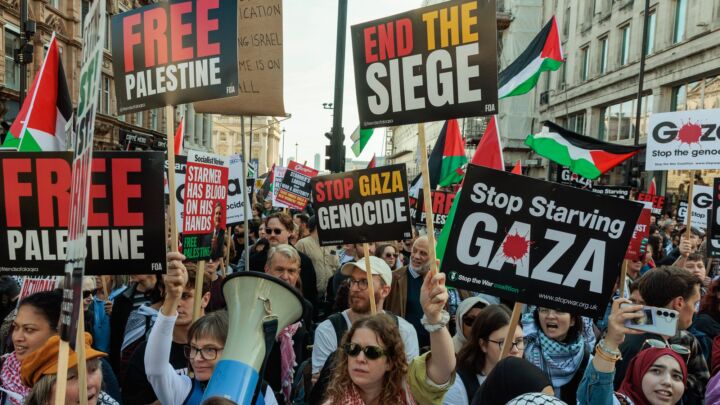
Complaints about school conditions also cannot explain why so many rioters choose to drape themselves in the flags and symbols of foreign countries – including the Algerian, Moroccan and (inevitably) Palestinian flags, often with a keffiyeh face covering. While the gilets jaunes protests of 2018 and 2019 would usually feature a sea of national and regional flags, the tricolore has been notably absent in the past few weeks’ clashes. It seems that whatever is on their passports, the racially diverse crowds are united in their rejection of French identity. French Republican values, whether they are deemed ‘oppressive’, ‘colonialist’ or ‘kafir’, are similarly treated with suspicion by the ‘new France’ of youths and second- and third-generation migrants.
Yanis’s threat to ‘kill’ the police ‘in the name of Allah’ also points to an Islamist element in this unrest. The rap song ‘M*R*H’ by Boro700 has become the unofficial anthem of the blockades. Its title refers to Mohamed Merah, the French-Algerian terrorist who murdered three unarmed soldiers, a rabbi and three children at a Jewish school, one of whom he grabbed by the hair to shoot her in the head at point-blank range. The opening lyrics reference the November 2015 Paris attacks, which killed 130 innocents, most of them at the Bataclan theatre:
‘I ain’t scared of hell, the pact’s still on, who but Allah can stop me? / Bataclan, playing dead, lie down, I’m gonna shoot you in the eye.’
A large, mixed-race group of teenage boys in the Loire Valley filmed themselves rapping along to every word. On Tuesday, a group of teens – this time all white and mostly girls – broke into the Church of St Hilaire in the Vendée, and began rapping to ‘M*R*H’ as it blared out of a portable speaker. It would be pushing it to claim that radical Islam is the main motive for these disturbances, but it is increasingly the script that young French people reach for when expressing opposition to, if not outright hatred for, their own society. As the white girls in the Catholic church chanting ‘Who but Allah can stop me?’ illustrates, that goes for Muslims and non-Muslims alike.
What is unfolding in France is far more troubling, and far more existential, than a mere protest over school funding or a row over classroom sizes. This is not a demand for better ‘education’ as a route into French society, but a rejection of that society and its values. It is an intifada against French civilisation itself. The sooner France wakes up to this reality, the sooner it can begin to repair the damage.
Fraser Myers is deputy editor of spiked and host of the spiked podcast.
Support spiked and get unlimited access
spiked is funded by readers like you. Only 0.1% of regular readers currently support us. If just 1% did, we could grow our team and step up the fight for free speech and democracy.
Become a spiked supporter and enjoy unlimited, ad-free access, bonus content and exclusive events – while helping to keep independent journalism alive.
Monthly support makes the biggest difference. Thank you.
Comments
Want to join the conversation?
Only spiked supporters and patrons, who donate regularly to us, can comment on our articles.