Does James Bond make any sense in woke, broken Britain?
The nation 007 is enlisted to defend has seen far better days.
Want unlimited, ad-free access? Become a spiked supporter.
‘A civilisation begins by myth and ends in doubt; a theoretical doubt which, once it turns against itself, becomes quite practical.’
– Emil Cioran.
‘I’m James Bastard Bond!’
– Bob Mortimer.
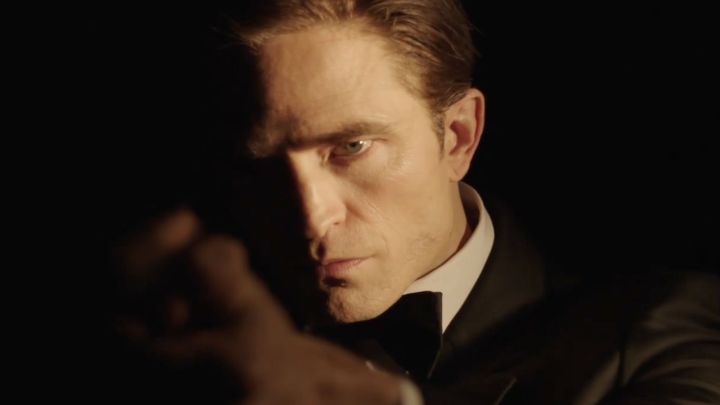
James Bond – a mythical figure whose spirit has been hovering, doubtfully, in heaven’s clearing house since he called in a missile strike on his own head at the end of the inaccurately / dishonestly / optimistically titled No Time to Die five years ago – is to be reincarnated after all, in the reassuringly clean-cut form of Robert Pattinson.
As I was perhaps not the first to remark, this is at least a deftly wry nod to Pattinson’s still-defining role as one of the undead in the Twilight franchise. Who better than a vampire to return from the tomb, immaculately attired in evening dress and very slightly old-fashioned manners?
Bond reveals are big moments. No other casting roulette wheel excites so much speculation. Not the new Doctor, not the new pope, not who gets to be British prime minister after the one the electorate voted for, not even the new manager of Man Utd. The casting of Bond is the defining statement of intent for a generation.
It’s not really a question of ‘who’, of course, so much as ‘what’. Will Bond be of traditional British stock – handsome, rugged, masculine? Or black, burnished and bronze? Or even female, two-spirit or otherkin?
Or perhaps Bond could be an entirely post-human entity. One that has escaped its Albert Embankment sandbox into the vast mycelium web of chips and wires, where all the real villainy takes place now. An agent capable of such untraceable elimination of its targets that having a licence to kill is moot, not to say antiquated, quaint.
In that regard, for all the earnest discussion generated by suggestions such as Mr Dua Lipa and The Bloke Out of Slow Horses, the unveiling of Robert P as Bond 7.00 feels like a very reassuring choice. Bond remains a luxury brand. And, judging by my local focus group of the target demographic (N=1, Matilda Evans, 22), it’s a choice that should play well with the youngsters, too.
Sadly, of course, a few lingering hopefuls such as Henry Cavill, Tom Hardy and Idris Elba must now quietly gather their remaining chips, depart the table and accept that, like Withnail and I’s Uncle Monty, they will never play the Dane of MI6. Acceptable collateral, as I can imagine Ralph Fiennes agreeing, after the briefest of pauses.
Those who hoped to see a ‘bolder’ (ie, more tiresome) choice will be disappointed. But most of us can live with it. Bond no longer smokes, but at least he doesn’t vape. He remains squarely in the established mould. The bigger question, of course, is whether Great Britain itself does, too.
It might be argued that it doesn’t matter. Seb Milbank argues this, persuasively, in the Critic, pointing out that ’twas ever thus. Even before Dr No was released, Britain had suffered the defining postwar humiliation of the Suez crisis, and Bond has been flying on dreams and denial ever since.
Certainly, in the year when I saw my first Bond in the cinema, 1977’s The Spy Who Loved Me, Britain was in a sorry state. Our most clear and present danger, our primary enemy in the real world, was the distinctly parochial (if US-funded) IRA. Easy to say from this remove, perhaps, but they were a shabby crew with whom Bond would surely have thought it beneath his dignity to bandy bon mots. They were better suited to The Long Good Friday – a film that was a pint of stale bitter flung into the face of the ponce with the vodka martini – and were embodied in its final scene by none other than Pierce Brosnan.
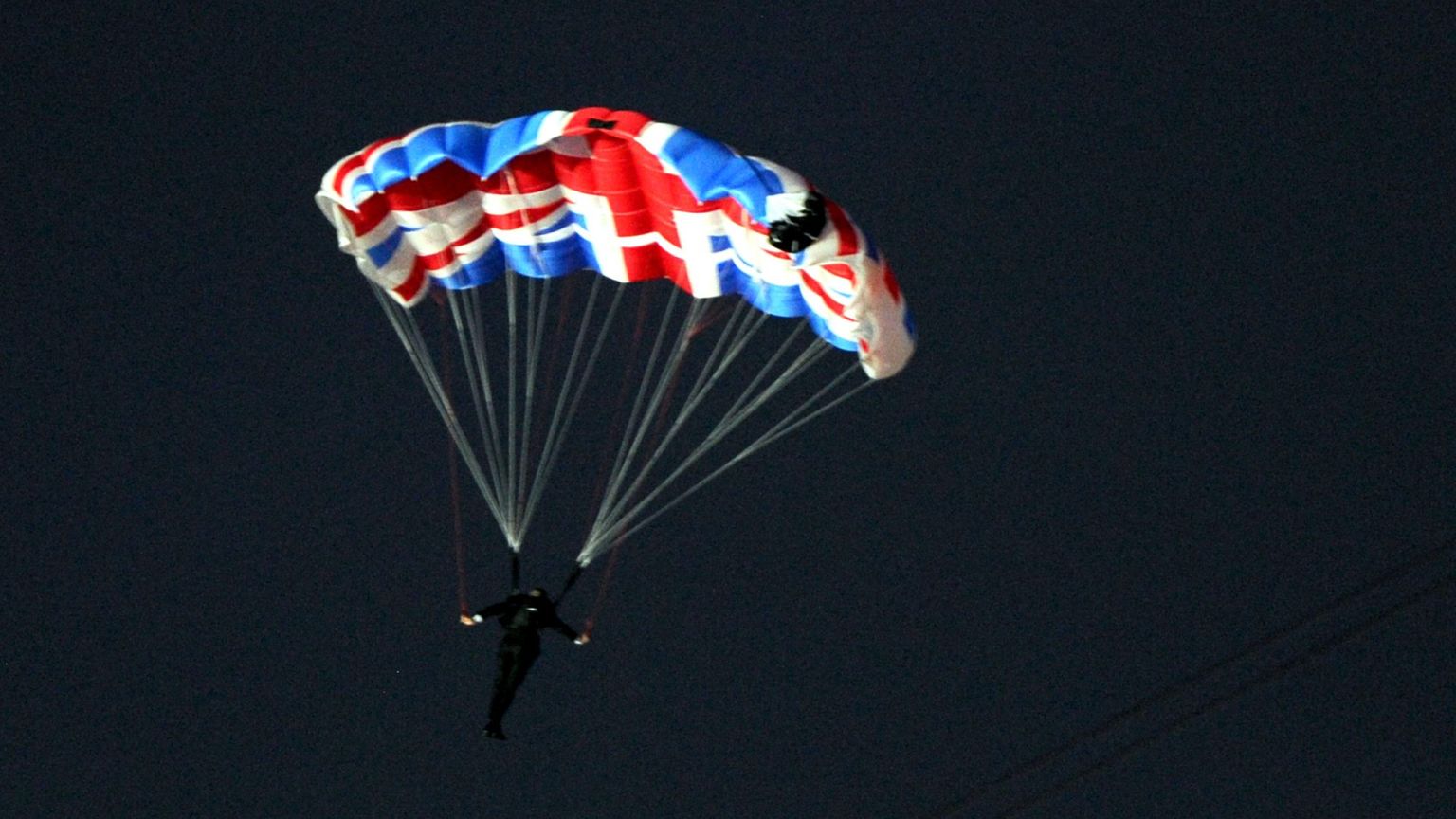
Did this matter to 12-year-old me, in 1977? No. In the opening sequence, at the moment when Bond skied off a cliff and into the silence, into the void, and we held our breath as he jettisoned his skis, turning in the wind in his yellow jumpsuit and cherry-red backpack like a human sycamore seed, this mattered not a jot. And when his chute finally billowed open to display the greatest flag the world has ever known, he received the biggest cheer I’ve heard or ever hope to hear in a provincial Odeon. All my cinematic adventures since have been measured against this exultant flourish of sheer British élan, not to mention, later, Esprit.

But in 1977, we knew who the big bad wolves were. NATO was still viable, crucial even, not yet like a WhatsApp group that has long outlived the stag party it was contrived to coordinate. It made sense. True, there was some disagreement within my circle as to which version of ‘God Save the Queen’ was the correct response to the Silver Jubilee. But at least we had David Owen as foreign secretary. You could imagine him making a call to Bond and not embarrassing himself.
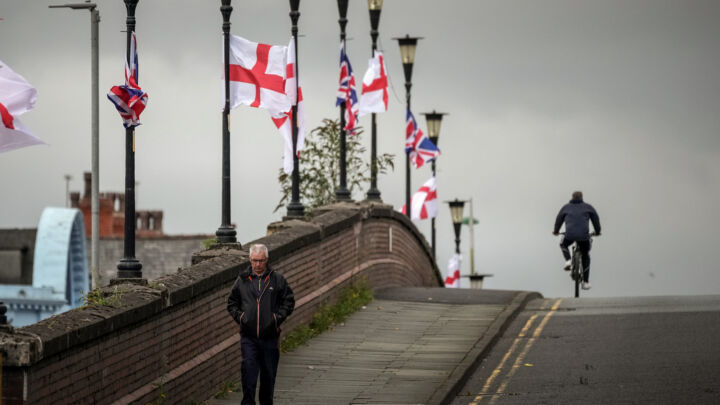
Now we have Ed Miliband at the (rather than ‘being told to’) FO, and the main enemies of the state are those who would confound the government’s determination to disencumber itself of any surviving overseas territories, bases, borders or pride.
None of which makes Bond impossible today, of course. Nor has he ever been a stranger to concerns ‘higher up’ that he is a dinosaur, his methods and attitudes antediluvian, his type no longer wanted or needed. That’s almost his default – his job is to disprove it. But it will be interesting to see how much of our wretched circumstances, our diminished standing, Bond (as agent or as franchise) is willing to confront.
The circular irony is that soft power is virtually the only kind Britain still has, and Bond arguably still its greatest avatar. That the films have to both contain this world, this reality, and to create a plausible yet uplifting settlement while still fortifying it and extending its reach is the kind of cultural Möbius strip that makes them so fascinating.
But the world, of course, is not enough. He’d better have cars, guns and girls, too. And he’d better not vape.
Simon Evans is a spiked columnist and stand-up comedian.
You’ve hit your monthly free article limit.
Support spiked and get unlimited access.
spiked is even better on the app
Read, watch and listen to spiked wherever you are. Our brand-new app brings everything together, with ad-free reading, audio articles and offline access.
Become a spiked supporter to unlock exclusive app access, unlimited articles, bonus podcasts, discounts and special events.
Monthly support makes the biggest difference. Thank you.



Comments
Want to join the conversation?
Only spiked supporters and patrons, who donate regularly to us, can comment on our articles.