Germans deserve answers after the Leipzig car attack
Fatal car rammings are now a depressingly common feature of modern German life.
Want unlimited, ad-free access? Become a spiked supporter.
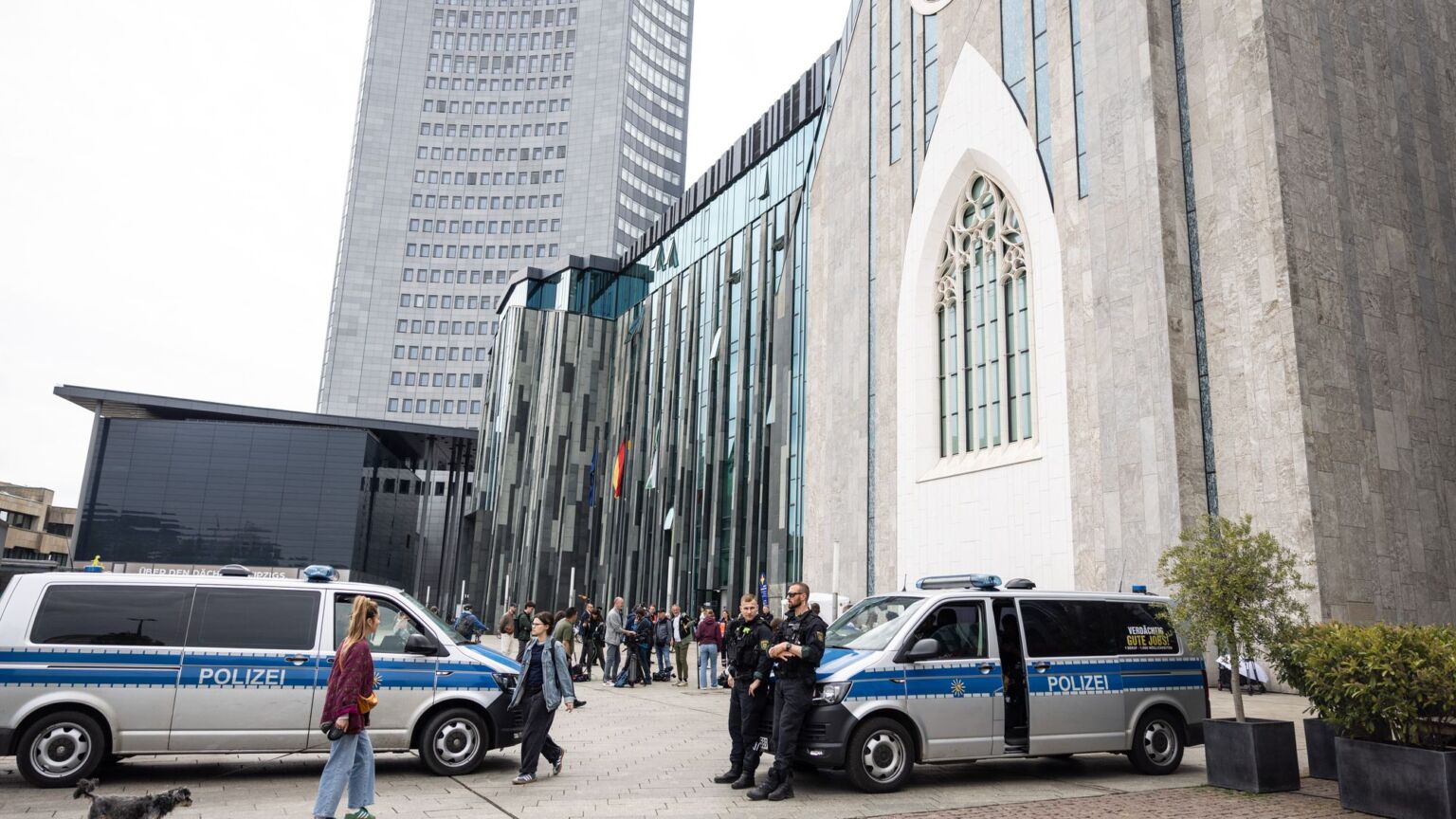
Monday afternoon’s car attack in a pedestrian zone in Leipzig – a city celebrated for its Bach choir and its proud history of pro-democracy demonstrations before the fall of the Berlin Wall – has left two people dead and dozens injured. A 63-year-old woman and a 77-year-old man were killed, while three others are in a serious condition.
The suspect, a 33-year-old man born and raised in Leipzig, was arrested at the scene. Authorities were swift to announce he had no terrorist affiliations – a declaration greeted by some commentators almost as a relief. But the relief is premature. The hard questions are only just beginning.
Reports indicate he was known to police and had been discharged from a psychiatric clinic just days before the attack. One is compelled to ask: did doctors fail to perceive the danger this man posed?
Describing the perpetrator as a ‘lone wolf’ is probably accurate. But the lone-wolf framing, repeated after attack after attack, has begun to obscure a more troubling picture. Something has gone badly wrong – not just in individual cases, but also in the systems meant to prevent them. How has Germany turned into a place in which such violence has become so common? Consider the record of vehicle-ramming attacks alone:
December 2016, Berlin: A 24-year-old Tunisian Islamist and asylum seeker drove a truck into a Christmas market, killing 12.
New Year’s Eve 2018, Bottrop: A 50-year-old German man, suffering from paranoid schizophrenia, deliberately drove into pedestrians – many of them Syrian and Afghan refugees – injuring four.
April 2018, Münster: A 48-year-old German drove a minibus into a crowd near the Kiepenkerl monument. Two were killed.

February 2020, Volkmarsen: A 29-year-old man drove into carnival spectators, injuring 30.
August 2020, Berlin: A 30-year-old Iraqi asylum seeker and Islamist drove into motorcyclists on a Berlin motorway, seriously injuring three.
December 2020, Trier: A 51-year-old German drove an SUV through a busy pedestrian zone, killing five.
June 2022, Berlin: A 29-year-old man with dual German-Armenian citizenship drove into a school group on an outing, killing the teacher and injuring 17 others.
December 2024, Magdeburg: A 50-year-old Saudi asylum seeker drove a BMW at speed into a Christmas market, killing six. He had previously come to the attention of authorities multiple times for threats and aggressive behaviour.

This list is not exhaustive. It covers only vehicle attacks – it says nothing of the numerous knife assaults and other violent incidents in public spaces.
The prevalence of mental illness among these perpetrators is neither reassuring nor, in itself, an adequate explanation. After all, mental illness has always existed.
There is no quick and easy answer to what has gone wrong in recent years (other countries have also had similar attacks, although Germany seems to be particularly plagued). But one aspect does stand out: the apparent inability – or unwillingness – of institutions to act on the warning signs placed before them.
Time and again, the pattern is the same: the authorities had prior knowledge. Time and again, they failed to act.
Take the example of the Magdeburg case. The attacker, Taleb al-Abdulmohsen, had worked as a psychiatrist for years – it emerged only after the massacre that he had obtained his qualifications using forged certificates. As far back as April 2013, he had telephoned the Medical Association of Mecklenburg-Western Pomerania threatening an attack, in a dispute over the recognition of his specialist training results. Yet, in 2015, the local-health authority granted him a full practising license. Colleagues, aware of his habit of consulting Google to make diagnoses, reportedly called him ‘Dr Google’. That such a man was then deployed in a prison remains a scandal that has never been properly addressed.
Germany’s vast, state-funded psychiatric sector has expanded enormously in recent decades. Today, approximately €4.6 billion is spent on psychotherapy annually, representing an increase of around 83 per cent in the past 10 years. The number of counsellors and therapists rose by about 19 per cent from 2015 to 2019. Growth at that scale ought to mean improved outcomes. Evidently, more money and more therapists are not enough.
The German public has a right to safety. It also has a right to an honest accounting of what has gone wrong – not in one case, but across a pattern of cases spanning nearly a decade.
After so many tragedies, it is no longer acceptable for authorities to treat each new attack as an isolated, unavoidable misfortune. Leipzig must not be allowed to become just another entry in a list that should never have grown this long. The public’s questions must be answered.
Sabine Beppler-Spahl is spiked’s Germany correspondent.

spiked summit 2026 – SOLD OUT
Saturday 27 June 2026
10am-6pm, Saturday 27 June
Emmanuel Centre, London, SW1P 3DW
With Lionel Shriver, Brendan O’Neill, Katharine Birbalsingh, Toby Young, Allison Pearson, Paul Embery, Tom Slater, Andrew Doyle, Fiyaz Mughal and more
The spiked summit has now SOLD OUT. To join the waitlist, email:
[email protected]
£80 or £50 for supporters
You’ve hit your monthly free article limit.
Support spiked and get unlimited access.
Support spiked and get unlimited access
spiked is funded by readers like you. Only 0.1% of regular readers currently support us. If just 1% did, we could grow our team and step up the fight for free speech and democracy.
Become a spiked supporter and enjoy unlimited, ad-free access, bonus content and exclusive events – while helping to keep independent journalism alive.
Monthly support makes the biggest difference. Thank you.






Comments
Want to join the conversation?
Only spiked supporters and patrons, who donate regularly to us, can comment on our articles.