The tyranny of ‘public health’ knows no bounds
Literally anything can now be branded a public-health issue by puritan campaigners.
Want unlimited, ad-free access? Become a spiked supporter.
If I had an arch-enemy, I think it would be somebody like Beccy Cooper, the Labour MP for Worthing West. The very first line of her website contains some guff inspired by The Spirit Level and she says that she is ‘passionate about preventative health’ (sic). I have a feeling that we would not get along.
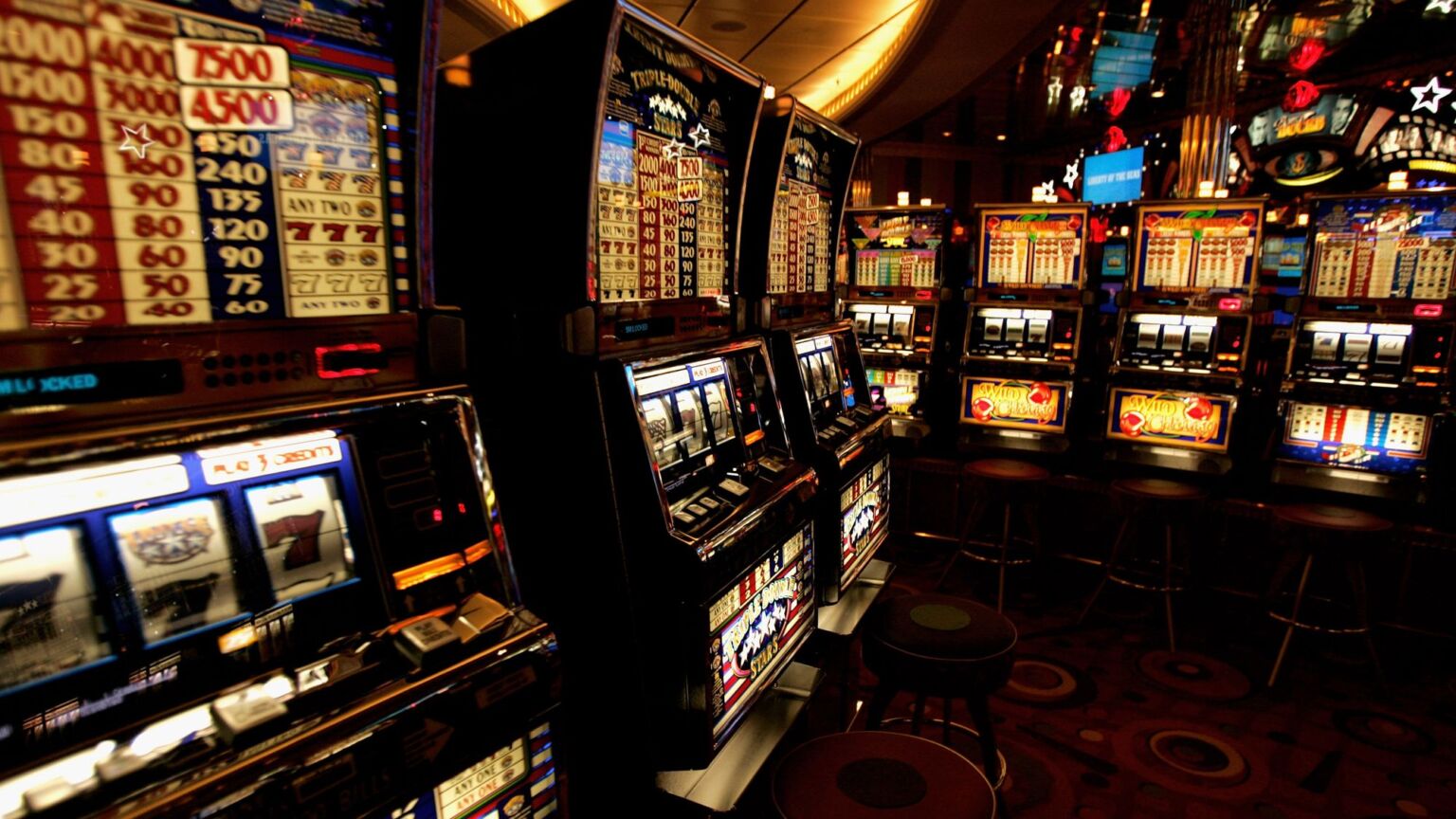
Cooper used to be a junior doctor – which is bad enough – but then became a ‘public-health doctor’ and is now a politician. Where will this downward spiral end? In the House of Lords probably, for she has already mastered the pious rhetoric and snooty authoritarianism that is so prevalent in that place. Last week, at a Westminster Hall debate about gambling advertising organised by Peers for Gambling Reform, Cooper called for responsibility for gambling oversight to be transferred from the Department for Culture, Media and Sport (DCMS) to the Department of Health and Social Care (DHSC). Why? Because ‘gambling advertising should be understood as a public-health issue’, apparently.
But is gambling, let alone gambling advertising, a public-health issue in any meaningful sense? Traditionally, a public-health problem was something that damaged or threatened the health of a large number of people without their consent and could only be addressed through collective action. Industrial pollution, cholera in the water supply, infectious disease, that kind of thing. If you walk around infected with SARS, it affects me in a way that you walking around with obesity doesn’t. That is what makes it a public-health issue rather than a mere lifestyle choice. A collective decision has to be made over how much pollution a factory can pump out. Decisions over what to eat and whether to smoke, vape, drink or gamble can be made by the individual. There is no need for other people to get involved because it is, bluntly, none of their business.
Over time, ‘public health’ has been redefined to include activities like smoking and it is now virtually a catch-all term. In an article titled ‘What isn’t public health?’, Samuel Brookfield, who rejoices under the job title of ‘casual senior principal social scientist’ at the University of Queensland’s School of Public Health, argues that anything can be considered to be a public-health issue. He is not alone. Crime, racism, climate change, inflation, trade deals, loneliness, abortion, democracy and inequality have all been described as public-health issues. When SNP leader John Swinney announced his ludicrous plan to cap the price of food recently, he admitted that, under the terms of devolution, he ‘cannot normally set prices at the till’. However, nutrition ‘is a public-health issue – and I have public-health powers’.
As we saw during the pandemic, politicians can get away with nearly anything so long as it involves ‘public health’. The magic words have been used to get carve-outs from trade deals and secure legal exemptions in domestic and international courts. If the generational tobacco sales ban is ever taken to the Supreme Court on the grounds that it involves blatant age discrimination, it will probably get a pass for being a ‘public health’ measure. Scotland’s minimum pricing for alcohol clearly breached EU trade rules, but judges turned a blind eye for the same reason.
Brookfield gets to the nub of it when he writes that ‘when something becomes designated a public-health issue, we are giving implicit license for politically shaped and state-based institutions to intervene. Public-health language can be used to provoke government action.’ Little wonder, then, that every freedom-hating crank and single-issue killjoy is keen to attach the term ‘public health’ to their cause.
But why should the rest of us go along with this charade? If your definition of public health is so broad that it encompasses everything that could potentially have a direct or indirect effect on the health of somebody somewhere, then everything can be described as a public-health issue, but what is the point? If everything is a public-health issue, there can be no such thing as a public-health expert. Expertise requires specialised knowledge of a narrow field. A problem doesn’t become easier to solve just by putting it under the umbrella of ‘public health’. What do they teach people in schools of public health that makes them better equipped to solve every social and economic problem than anyone else?
Similarly, what do civil servants at the Department of Health know about gambling that the people at DCMS don’t? What expertise do they have on the three key licensing objectives of preventing gambling from being a source of crime, ensuring fair and open play, and protecting children and vulnerable people? At a push, they might have some ideas about how to protect the ‘vulnerable’, but they would be no more than the usual sledgehammer tactics of taxing and banning. ‘Public health’ academics have shown themselves to be hilariously out of their depth when they attempt to transfer their supposed wisdom to the world of gambling. If they can’t borrow a trick from the anti-smoking lobby, they don’t know what to do.
My would-be nemesis, Beccy Cooper, only wants gambling to be overseen by the Department of Health because she thinks that if gambling advertising were under the control of ‘public-health doctors’ like her, they would ban it. They probably would. When campaigners call for a ‘public health approach’ to something, they usually mean that it should be banned. But this is just opportunism and should not be taken seriously by serious people. Gambling is not a public-health issue by any sane definition and never will be.
Christopher Snowdon is director of lifestyle economics at the Institute of Economic Affairs and the co-host of Last Orders, spiked’s nanny-state podcast.
spiked summit 2026 – SOLD OUT
Saturday 27 June 2026
10am-6pm, Saturday 27 June
Emmanuel Centre, London, SW1P 3DW
With Lionel Shriver, Brendan O’Neill, Katharine Birbalsingh, Toby Young, Allison Pearson, Paul Embery, Tom Slater, Andrew Doyle, Fiyaz Mughal and more
The spiked summit has now SOLD OUT. To join the waitlist, email:
[email protected]
£80 or £50 for supporters
You’ve hit your monthly free article limit.
Support spiked and get unlimited access.
Support spiked and get unlimited access
spiked is funded by readers like you. Only 0.1% of regular readers currently support us. If just 1% did, we could grow our team and step up the fight for free speech and democracy.
Become a spiked supporter and enjoy unlimited, ad-free access, bonus content and exclusive events – while helping to keep independent journalism alive.
Monthly support makes the biggest difference. Thank you.

Comments
Want to join the conversation?
Only spiked supporters and patrons, who donate regularly to us, can comment on our articles.