The left has fallen right into Reform’s trap
The fury over the ‘Vote Green, get illegal migrants’ policy reveals the staggering hypocrisy of the virtue-signalling set.

Want unlimited, ad-free access? Become a spiked supporter.
I want to be honest with you, because I think you deserve that. When I first heard about Reform UK’s new ‘Vote Green, Get Illegals’ policy – the plan to put migrant detention centres in Green-held constituencies rather than Reform ones – my instinctive reaction was discomfort. Real discomfort. I sat with it. I turned it over. I talked it through with friends, with colleagues. Because that is what you do when something troubles you, rather than simply reaching for the nearest banner and marching.
And what I found, when I sat with it long enough, was that my discomfort was pointing in entirely the wrong direction.
Reform’s plan, announced over the weekend by party chairman Zia Yusuf and leader Nigel Farage, is straightforward: a future Reform government would build detention centres capable of holding at least 24,000 illegal immigrants awaiting deportation. No such facility will be placed in any Reform-held constituency or council area. Green seats and councils, whose constituents voted for what the Green Party calls ‘a world without borders’, will be prioritised for detention centres. Reform has already published a draft Mass Deportation Detention Act. It means business.
The reaction has been, and I say this as someone who tries very hard to take other people’s feelings seriously, extraordinarily overwrought. The word ‘dystopian’ has been used so many times this week that it has lost whatever meaning it once had. The left has reached, with impressive reflex speed, for comparisons that I will not dignify by repeating. I understand why people feel strongly. I genuinely do. Strong feelings about where people live, about community, about safety – these are not irrational. They are, in fact, exactly the point.
What I find harder to understand, and this is where I have had to really interrogate my own instinct to be fair to everyone in the room, is the complaint from Rupert Lowe’s direction. Lowe, who now leads the Restore Britain party (having departed Reform in some acrimony), called the policy ‘petty nonsense’. He accused Reform of ‘vindictively target[ing] Brits in potential Green constituencies’. I have read this several times, because I wanted to make sure I was being fair to him. But Lowe’s own published proposals speak of making conditions so deliberately harsh that migrants leave voluntarily. His objection is not that Reform is being too tough. It is something more personal than that, and I think most reading this will recognise the dynamic: it is the complaint of someone who wanted a fight on his own terms, furious that someone else has set the agenda.
But here is the question I cannot stop asking, and it is not a comfortable one: who has been living with the consequences of our immigration policy up to now, and did anyone ask them how they felt about it? Because I know the answer, and it troubles me more than any detention centre ever could.
Those women and men who noticed, who raised their hands and said, quietly at first and then less quietly, that something in their street or their town or their child’s school had changed in ways nobody had prepared them for, were not treated with the seriousness their observations deserved. They were instead managed. They were reassured. They were, in the particular way that our political culture has perfected over 30 years, made to feel that their anxiety was the problem. The mothers tracking pressure on GP appointments, the women on night shifts noticing the changed texture of their neighbourhoods, the daughters trying to navigate social housing for elderly parents in areas absorbing numbers nobody had thought to mention: their experience was real. Their discomfort was not a personality defect.
‘Refugees Welcome’ signs, meanwhile, have long appeared in windows of houses in postcodes where no refugees were being sent. The consensus in favour of open borders was built by people whose daily lives were not affected by it. I do not say this in bitterness – I say it because it is simply, plainly true, and pretending otherwise has been doing real harm to real people for a very long time.

I worry about things. That is not something I apologise for. And what I worry about, when I think about this policy, is not the Green voter in a comfortable suburb who will write a strongly worded letter, and man a street stall. It is the woman in a town that has been absorbing dispersed asylum seekers through hotels and HMOs (houses in multiple occupation) for years – without consultation, without notice, without so much as a community meeting. The chaos of the status quo is not neutral. It is not kind. It has consequences, and those consequences have been falling on the people least able to make them stop.
Secure detention before orderly deportation is not, whatever this week’s headlines suggest, a form of cruelty. It is a form of clarity. It is the managed, legal and humane alternative to the sprawling and unaccountable system we have been living with. It is not ‘barbarism’ to detain people who have broken the law – it is administration. The barbarism has been the pretence that the current system is working.
And should democratic choices carry consequences? I think, if we are honest with ourselves, the answer has to be yes. We accept it everywhere else. We accept that communities voting for development get development, that those who choose certain policies inherit their results. The Greens have been entirely transparent about what they want: more asylum seekers and no borders. That is their honest position and voters are free to choose it. But the idea that you can vote for a borderless world and be wholly shielded from its practical consequences – the holding facilities and the processing centres – asks rather a lot of those who voted differently.
I have spoken this week with Reform members in areas their party doesn’t yet control. I expected anxiety. I found something closer to practicality – several have even written to suggest local former Royal Air Force bases they felt would be appropriate. People are more resilient, and more reasonable, than the people who claim to speak for them tend to assume.
I did not come to this position easily. I sat with my discomfort, as I said at the start, and I took it seriously. But sometimes what feels uncomfortable is simply the sensation of something true pressing against something we would prefer not to examine. The fury of the response to this policy has been, in the end, the most persuasive argument for it. Those who have spent 30 years ensuring that the consequences of their choices fell on other people are not well placed to lecture the rest of us about fairness.
I think you know that. I think you’ve known it for a while.
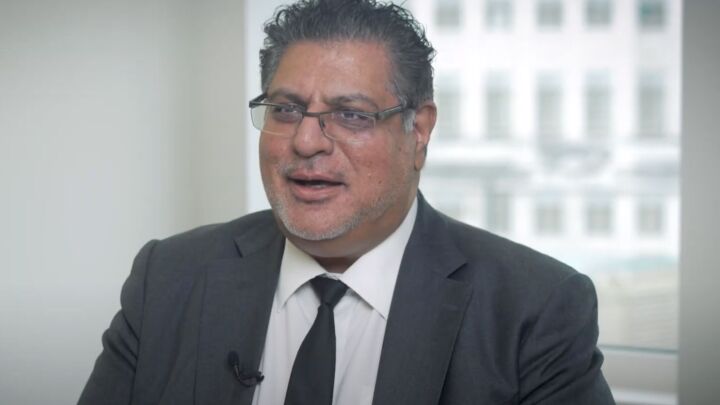
Gawain Towler is a commentator and an elected board member of Reform UK.
You’ve hit your monthly free article limit.
Support spiked and get unlimited access.
Support spiked and get unlimited access
spiked is funded by readers like you. Only 0.1% of regular readers currently support us. If just 1% did, we could grow our team and step up the fight for free speech and democracy.
Become a spiked supporter and enjoy unlimited, ad-free access, bonus content and exclusive events – while helping to keep independent journalism alive.
Monthly support makes the biggest difference. Thank you.


Comments
Want to join the conversation?
Only spiked supporters and patrons, who donate regularly to us, can comment on our articles.