Why the Danes do it better
Britons have a lot to learn from our plain-speaking, confident and civic-minded Nordic cousins.
Want unlimited, ad-free access? Become a spiked supporter.
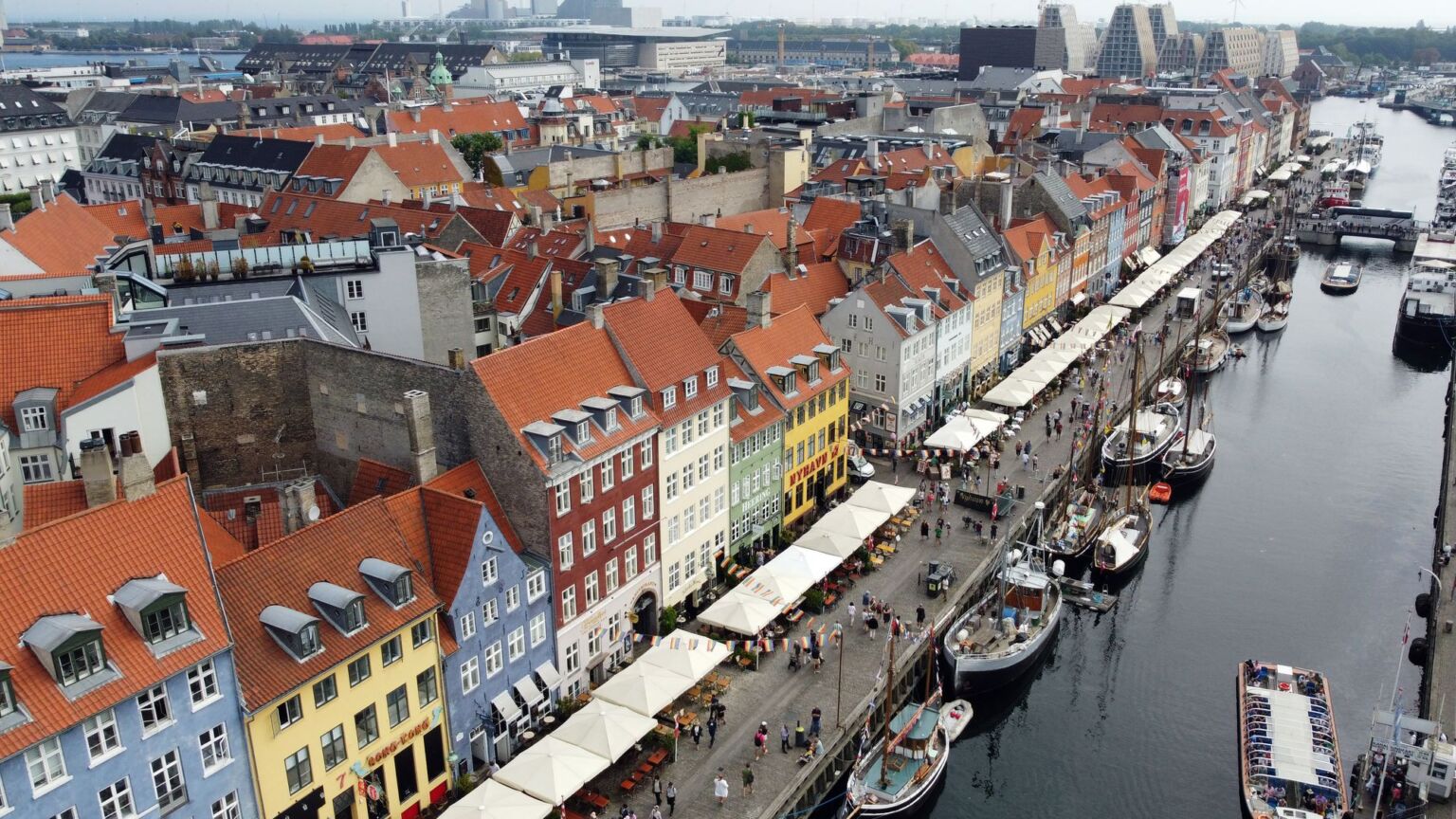
I spent a good while living in Denmark last year, and something struck me pretty much straight away. I would see it in cafés, in museums, in swing parks with my daughter, on the trains, even queuing at a supermarket checkout… everywhere. They carry themselves differently, the Danes. They seem to glide about, elf-like, tall and composed and utterly at ease with themselves. They speak plainly, and if they laugh, it is without checking themselves. They didn’t seem to be performing a version of who they thought they should be. They simply were, and it was beautiful to see.
Obviously, this is a generalisation. But it’s one that holds up. I spent ages looking for exceptions and didn’t find much at all to dissuade me from my thesis.
The contrast was sharp when we came back to the UK. Danes dress better, keep themselves trim and fit, and all seem to glow with good health. But there’s more to it than aesthetics. Here in the UK, we lack confidence. We suffer from a habit of apology that goes beyond politeness into something deeper – a cringing self-abasement. People hedge their statements. They second-guess their right to speak. Identity – whether national, cultural or even personal – is often handled as though it were something faintly embarrassing.
We have a cultural reflex towards self-abnegation. It’s not humility in the classical sense, which can be virtuous. Rather, it’s an ingrained reluctance to stand squarely as oneself. We are wary of appearing too certain, too rooted, too at ease in our own skin. And that wariness, repeated across millions of small interactions, becomes a national mood. We are collectively ashamed of ourselves.
There is a moral framework underpinning all of this. I like to speak of it in terms of original sin – a moral stain passed down irrespective of individual action. Today, our tendency towards taking on original sin persists in a different form, unwittingly peddled by (predominantly) atheistic, humanistic leftists. As a humanistic lefty type, I’ve often suffered with it myself.
Original sin, these days, appears in the language of white guilt, of masculine guilt, of colonial guilt, of middle-class embarrassment – categories of responsibility that are pretty much entirely inherited.
History is far from irrelevant and I’m not arguing that past injustices should be ignored. It’s just that the burden has shifted into the realm of identity. We are embarrassed to be ourselves because we are made to be ashamed of our culture. And now this shame, this guilt, has become a part of us. The result is a culture in which people feel obliged to justify themselves (or, worse, apologise for themselves) above and before anything else.
Denmark, by contrast, seems largely free of this kind of collective shame. It’s far from a flawless society, of course, and the Vikings weren’t exactly progressive. It has its own tensions and its own historical dark points. But there is a noticeable absence of this constant moral self-interrogation at the level of the individual. Self-abnegation as a form of penance is entirely lacking.

A couple of things rise out of this. Firstly (and no doubt fuelled by a relatively homogenous culture), there is a great sense of community in Denmark. There, you can belong to a culture without needing to apologise for it.
Secondly, you have the self-possession I fell in love with almost instantly. They do not anxiously scan their own words for hidden transgressions; nor do they cringe away from anything. They are rarely preoccupied with how they might be seen. As a result, they are happier (Copenhagen, where I was staying, was voted the happiest city in the world while I was out there), more stable, and more at ease in the world.
Material conditions matter, of course. Denmark has high taxation but good public provision; things are expensive, but people are well paid. They have a good work-life balance and a healthy approach to things like leisure activities, diet and exercise. However, the psychological atmosphere in which people live is also important.
In the UK, the whiter, more middle class, more male, more straight and cisgendered and all of that you are, the weightier the pressure of inherited moral debt. In progressive intellectual parlance, it’s sort of the inverse of intersectionality: the fewer things that make you appear disadvantaged, the more you must cringe and apologise for just existing. Public discourse is often paralysed by fear of saying the wrong thing. Identity fractures along lines of suspicion and defensiveness. Even once-ordinary and historically and geographically normal expressions of belonging – pride in place, in culture and shared history – are often fraught and frowned upon. We are always somehow compromised and must all live under a cloud of shame.

None of this is an argument for amnesia. History matters and moral seriousness certainly matters. If they didn’t, I wouldn’t have bothered writing this piece. But there is a difference between understanding the past and internalising it as a permanent condition of guilt. There is a difference between seeing distant forebears’ crimes and being punished for them yourself. The former can lead to wisdom, while the latter tends only to erode confidence and distort relationships between people.
Danes, in their unassuming, self-confident way, show that a society does not need to organise itself around inherited guilt in order to be decent, fair or humane. Self-possession is not arrogance. It isn’t denial or the elevation of oneself over ones’ neighbours. It is simply the necessary condition of being able to live among others, to do so standing as yourself – and for your group to do so standing as itself – without apology.
James Dixon is a Glasgow-based novelist, poet and playwright.

spiked summit 2026 – SOLD OUT
Saturday 27 June 2026
10am-6pm, Saturday 27 June
Emmanuel Centre, London, SW1P 3DW
With Lionel Shriver, Brendan O’Neill, Katharine Birbalsingh, Toby Young, Allison Pearson, Paul Embery, Tom Slater, Andrew Doyle, Fiyaz Mughal and more
The spiked summit has now SOLD OUT. To join the waitlist, email:
[email protected]
£80 or £50 for supporters
You’ve hit your monthly free article limit.
Support spiked and get unlimited access.
Support spiked and get unlimited access
spiked is funded by readers like you. Only 0.1% of regular readers currently support us. If just 1% did, we could grow our team and step up the fight for free speech and democracy.
Become a spiked supporter and enjoy unlimited, ad-free access, bonus content and exclusive events – while helping to keep independent journalism alive.
Monthly support makes the biggest difference. Thank you.



Comments
Want to join the conversation?
Only spiked supporters and patrons, who donate regularly to us, can comment on our articles.