Long-read
Twitter and the 20-year struggle for free speech online
A platform that once boasted about its free-speech credentials unleashed an unprecedented wave of censorship.
Want unlimited, ad-free access? Become a spiked supporter.
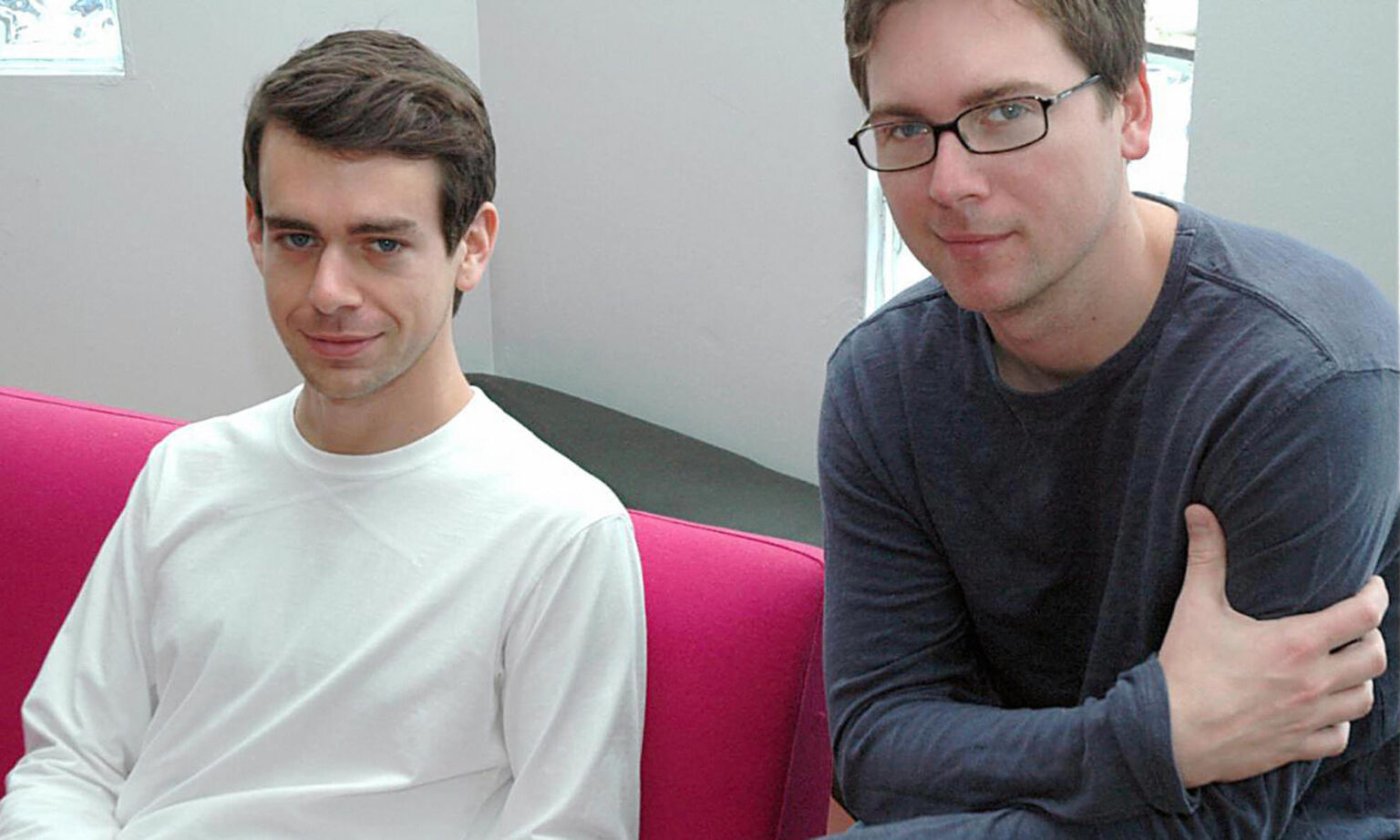
‘Just setting up my Twttr’, wrote Jack Dorsey, the co-founder and CEO of Twitter, on 21 March 2006. This was the first ever tweet, posted 20 years ago this week. The story of Twitter – now X, and now owned by the tech billionaire, Elon Musk – is really the story of the battle for free speech. It’s the story of an elite which professes to be liberal, tolerant and democratic, but reveals itself to be censorious, authoritarian and deeply contemptuous of the masses.
When Dorsey and his colleagues first launched the ‘microblogging’ service (initially known as Twttr), they expected it to be used mostly for connecting with friends and for posting inconsequential ephemera, usually about one’s private life or whatever thoughts popped into one’s head. Co-founder Biz Stone recalls his phone buzzing in the early days of Twitter, and seeing the kind of post that was typical for the time: ‘Evan Williams is wine tasting in Napa.’ Little did they know that, within just a few years of its founding, Twitter would soon assume a central role in political life across the world.
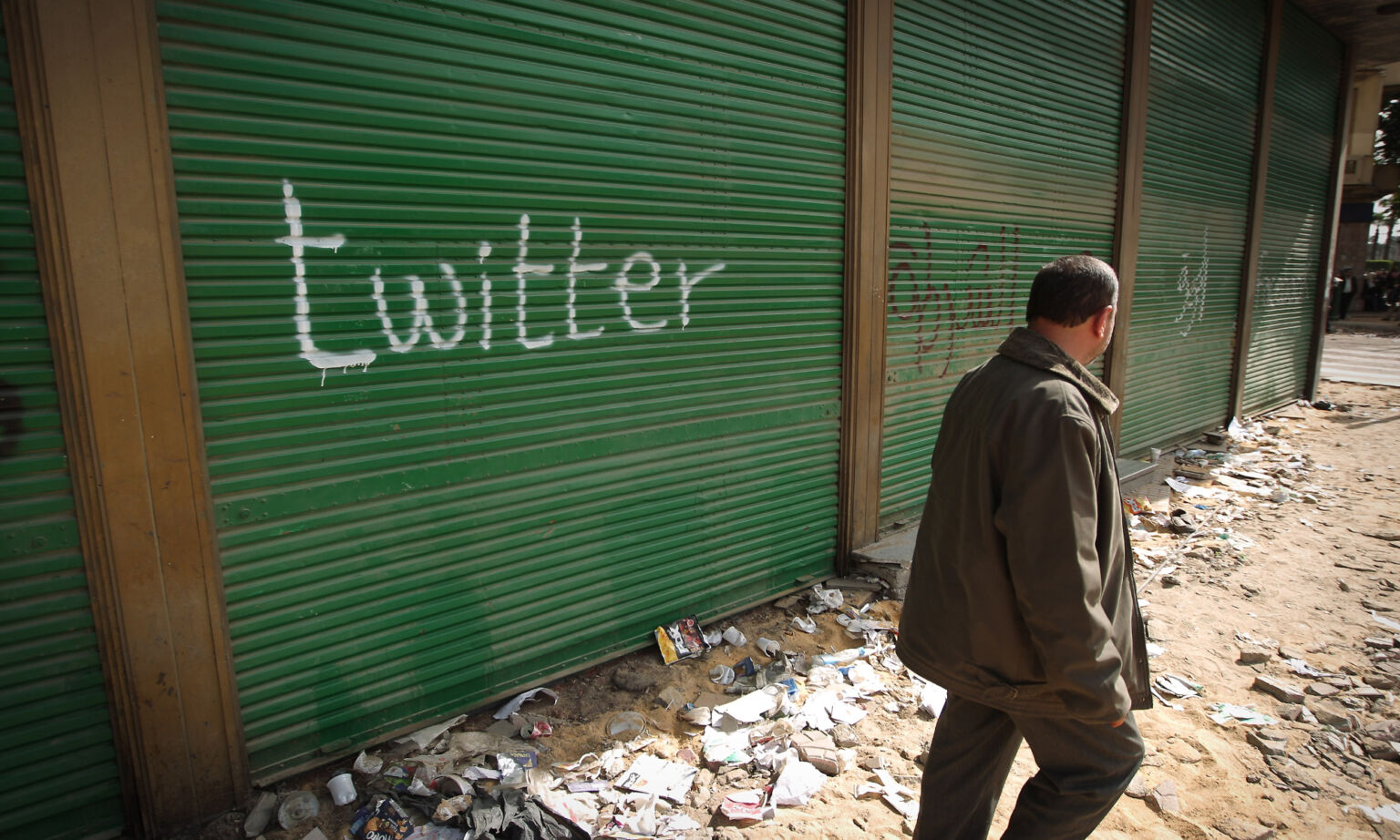
In 2009, allegations of vote-rigging in the Iranian elections sparked what were, at the time, the largest protests against the Islamic Republic since its founding in 1979. The so-called Green Movement used Twitter to coordinate its protests. From 2010 to 2012, Twitter, alongside Facebook and YouTube, played a major role in documenting and encouraging the Arab Spring in Egypt, Tunisia, Libya and beyond. In 2011, Chinese artist Ai Weiwei used Twitter to accuse the Chinese Communist Party of illegally detaining him and other dissidents. Twitter, it seemed, was on the ‘right side of history’. The free, open internet seemed to be allowing people to challenge tyrannical regimes, spreading democracy and liberalism around the world.
In America, the platforms was similarly hailed as a force for progress. In 2008, Barack Obama’s Twitter account became the most-followed in the world. In 2011, he became the first US president to host a Twitter town hall, where he fielded questions from random Twitter users. Twitter’s execs were only too happy to embrace this new role as the world’s ‘digital town square’, where users would be empowered to speak their minds, organise politically and push for change.
In the early 2010s, then, Twitter seemed to be at the forefront of promoting freedom of speech, both domestically and internationally. The company certainly seemed to warm to its role as a champion of free-speech absolutism. ‘We are the free-speech wing of the free-speech party’, declared then CEO Dick Costolo in 2011. This became a kind of unofficial company mission statement. Tony Wang, the UK general manager, repeated the exact same phrase in 2012.
However, only a few years after Costolo’s comments, Twitter began qualifying its support for freedom of expression. It was coming under growing state pressure to start censoring users’ posts and moderate the platform. In 2014, it launched a crackdown on accounts linked to ISIS, particularly in the wake of the murder of American journalist James Foley, livestreamed by jihadists on YouTube. It then began meting out suspensions for clear violations of privacy and for ‘doxxing’ – that is, publishing someone’s private email address or phone number without permission. And then, in May 2016, Twitter, alongside other major social-media firms, signed the European Union’s ‘code of conduct’ on hate speech, pledging to remove ‘racist’ or ‘xenophobic’ speech within 24 hours of being alerted to the content.
At this stage, however, censorship was still limited. The key moment in Twitter’s transition from the free-speech wing of the free-speech party into the opponent of both arrived in late 2016, with the election of Donald Trump. Trump’s victory, following hot on the heels of the UK’s vote for Brexit earlier that year, brought the long-stewing populist revolt out into the open for the first time. On both sides of the Atlantic, alarmed political and cultural elites turned on the public. They argued that Trump and Brexit voters had fallen prey to disinformation, Russian interference and hate speech online. That, in effect, social-media platforms were too free, that they had been allowing too much uninhibited free expression, be it from Russian trolls or homegrown hate-mongers. Twitter was now under unprecedented pressure from within and without to clamp down on its users.
From 2016 onwards, Twitter management expanded the platform’s posting rules, and more strictly enforced them. Membership of or association with anything deemed an ‘extremist’ group (including non-violent groups) became grounds for permanent suspension. This led to a mass purge of far-right, alt-right and white-supremacist accounts. Racism, homophobia and transphobia could also result in lifetime bans. Inevitably, this reached far beyond genuine bigots. In 2018, Canadian feminist Meghan Murphy was banned for life for ‘misgendering’ a trans activist who had taken several beauticians to court for refusing to wax his balls. Murphy was booted off Twitter simply for saying nothing more than the words: ‘Yeah, it’s him.’
By the mid-to-late 2010s, Twitter was eager to distance itself from its earlier free-speech advocacy. That slogan, ‘the free-speech wing of the free-speech party’, was publicly repudiated. ‘It was never a mission of the company. It was never a descriptor of the company that we gave ourselves. It was a joke’, Jack Dorsey insisted in 2018. Twitter’s attitude to free speech, he said, had now ‘evolved’. ‘Freedom of expression’, he had apparently come to realise, ‘may adversely impact other fundamental human rights’. Safety, Dorsey said, would be the new priority for Twitter. Naturally, that would mean curtailing its users’ freedom of expression.
Twitter attempted to present the post-2016 clampdown on free expression as politically neutral. But users’ experience told a different story. The various rules and codes of conduct seemed far more likely to catch out right-leaning accounts. And even when posts were not explicitly removed, and users not suspended, many suspected that the reach of populist and pro-Trump commentators was being limited behind the scenes.
Twitter emphatically denied this at the time. In 2018, Twitter’s head of legal policy and trust, Vijaya Gadde, and head of product Kayvon Beykpour, said: ‘We do not shadow ban, and we certainly don’t shadow ban based on political viewpoints or ideology.’ Yet it seemed pretty clear that that was precisely what Twitter was doing. Certain conservative or right-wing users, unbeknownst to them, would not appear in searches and their tweets were blocked from trending. Twitter claimed that this was ‘visibility filtering’, not shadow banning, although the precise distinction was never clear.
If the populist revolt fuelled Twitter’s censor-happy turn, the Covid pandemic entrenched it. From early 2020 onwards,Twitter seemed to refashion itself as the Ministry of Truth. Whatever the platform considered to be mis- or disinformation was now recast as life-threatening and duly censored. Often, accounts were shadow banned or posts were deleted not for spreading outright medical falsehoods, but simply for disagreeing with government Covid policies, from lockdowns to vaccine mandates. Speculating that Covid-19 may have leaked from a lab in Wuhan – a claim that Western security services now believe to be true, and which has no obvious implications for people’s health in any case – was enough to lead to suspension.
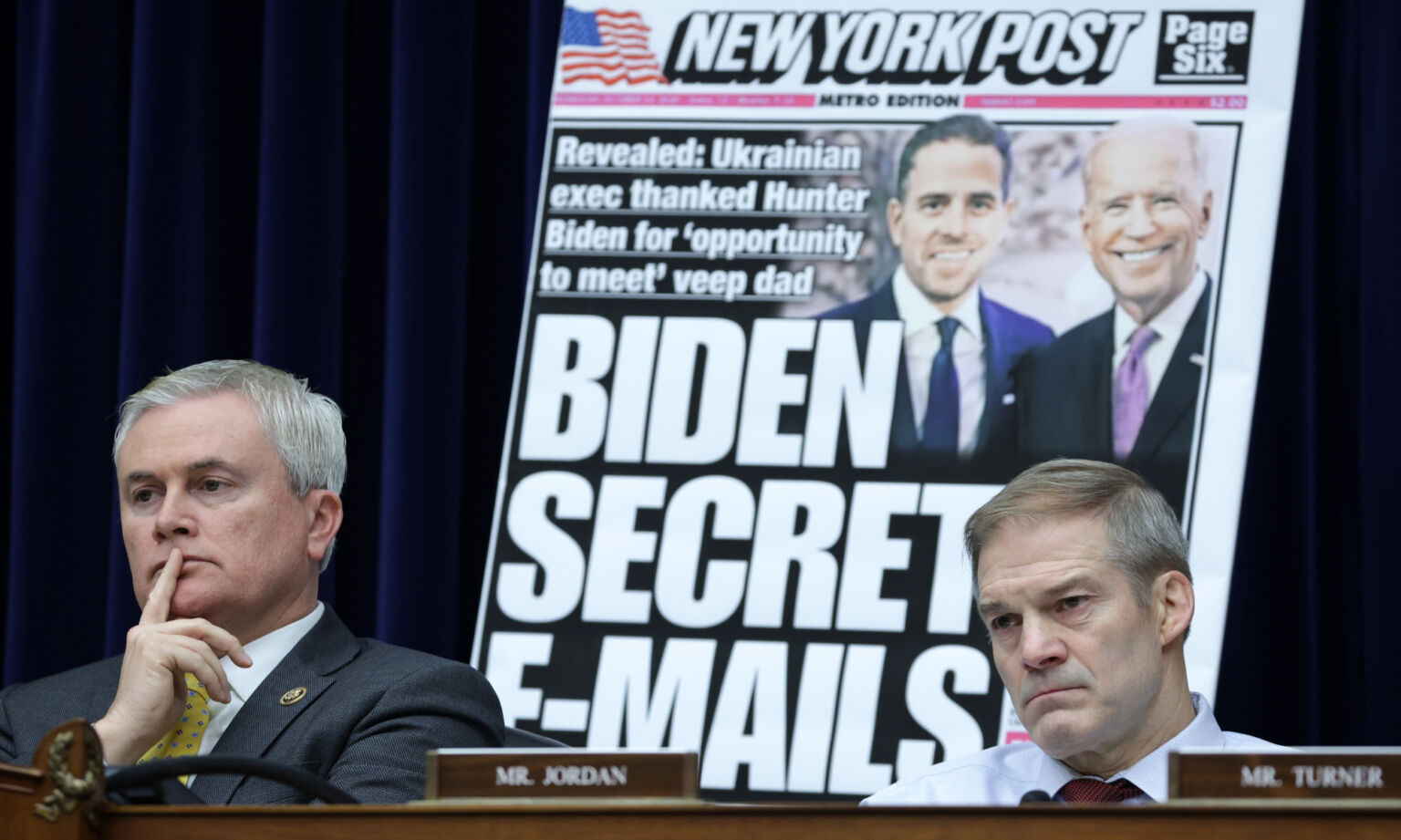
In the run-up to the 2020 presidential election, the partisan bias of the Twitter’s management became impossible to ignore. A now infamous exposé by the New York Post, published a few weeks before election day, alleged that Joe Biden was embroiled in his son’s dodgy dealings in Ukraine. Post journalists had gained access to Hunter Biden’s laptop and to his private emails. The story was true, based on observable facts. But had it been allowed to spread, it may have jeopardised the elite’s efforts to have Donald Trump removed from office.
The Hunter Biden article was almost immediately censored by Twitter. Publicly, Twitter claimed the Post had violated its ‘hacked materials’ policy. Former spooks wrote an open letter declaring the laptop story to be based on Russian disinformation, despite never seeing, let alone providing, any evidence to back up the claim. In an apparent act of ‘caution’, Twitter locked the New York Post’s account and stopped other users from sharing the article in private messages. Trump went on to lose the election.
What happened in January 2021 could be seen as the logical conclusion to Twitter’s politically partisan censorship regime. It finally moved to silence Donald Trump himself, the liberal elites’ public enemy No1, the man whose improbable political rise had convinced them of the apparent necessity of speech controls in the first place. On 8 January, two days after the Capitol riots, when Trump’s supporters sought to prevent the certification of Joe Biden’s election victory, Donald Trump himself, still at that point the sitting US president, was permanently suspended from Twitter.
Even Twitter CEO Dorsey let it be known that he was unnerved by this unprecedented exercise of power. He feared that silencing an elected leader ‘sets a precedent’ that is ‘dangerous’. But he was overruled by activist staff and management. He resigned later that year. The official reason for banning Trump was that he’d ‘incited’ violence ahead of the Capitol ‘insurrection’. Privately, Twitter staff admitted that none of the president’s tweets on that day actually violated the platform’s rules.
Needless to say, the campaign to ban Trump from social media began long before 2021. Trump’s opponents had long decried his use of Twitter to circumvent the gatekeepers of the mainstream media in the run-up to the election, and to promote his agenda while in office – Trump tweeted more than 26,000 times in his first term, until he was permanently suspended. In 2017, Keith Ellison, deputy chair of the Democratic National Committee, said the quiet part out loud, and explicitly called for the president to be banned from tweeting, calling him a ‘social-media bully’. In the same year, a rogue Twitter employee, on his last day at work, deactivated Trump’s account in a fit of pique, taking it offline for just 11 minutes.
In the end, the ban on Trump would prove to be a Pyrrhic victory for the liberal elites. Booting an elected US president off Twitter drew attention to the depth and extent of censorship on the platform. A year after Trump’s ‘permanent suspension’, Elon Musk, then the world’s richest man, began his acquisition of Twitter. His stated aim was to turn it into ‘the platform for free speech around the globe’. This would not only entail a sharp reduction in content moderation, but also an amnesty of previously banned Twitter accounts – including President Trump’s.
After completing the purchase of Twitter, Musk invited a group of journalists to look into the old regime’s internal communications and policies. He had suspected that staff were ‘pressing the thumb hard in favour of the left’. ‘On the left, you could get away with death threats’, he said. ‘On the right, you could get suspended for retweeting a Trump rally.’ The Twitter Files, the first tranche of which were published in December 2022, proved his suspicions broadly correct.
The Twitter Files not only exposed a political bias in the real-life Ministry of Truth, they also exposed how decisions on who or what to censor were not bound by any formal rules or codes. The New York Post’s Hunter Biden laptop story, for instance, was throttled despite a Twitter spokesman privately admitting he was ‘struggling to understand the policy basis for marking this as unsafe’. The extent of Twitter’s hidden blacklists were also revealed for the first time. Among those shadow banned was the late Charlie Kirk, whose tweets were placed under the category ‘do not amplify’. More alarming still, content-removal decisions were often made in conjunction with federal agencies, especially during the Biden administration. This was a clear infringement of the US First Amendment, which forbids government from censoring the expression of views.
Arguably, what was most shocking about the Twitter Files was not what they revealed, but how the liberal establishment reacted to them. Indeed, many had long suspected that Twitter and other platforms had engaged in industrial-scale censorship, in concert with political elites and the state. Yet this irrefutable evidence of Twitter’s activity, not to mention its efforts to interfere in a presidential election, were greeted with a shrug. What one federal judge described as ‘the most massive attack against free speech in United States history’ was allowed to pass quietly into history.
Horrifyingly, those dark ages of social-media speech control are viewed by many elites as a bygone golden age. Since Musk remade Twitter, rebranded as X in 2023, in his image, liberals have deserted the platform en masse – mostly to the woke bubble that is Bluesky – and have demanded that brands and advertisers do the same. The same liberal elites who at the beginning of the 2010s hailed the open internet, and Twitter in particular, as a tool of democracy, now fear that looser content moderation will deliver us to global tyranny. As one hysteric put it, a platform more inclined towards free speech, would be ‘the dream of every dictator, strongman, demagogue and modern-day robber baron’. Which will be news to history’s dictators and demagogues who have, without exception, sought to curtail free speech, not liberate it.
Musk’s X fails to live up to its owner’s professed ‘free-speech absolutism’. Journalists have been suspended for sharing publicly available flight data on Musk’s private jet. X users have been threatened with suspension for using the trans-activist term ‘cisgender’, which Musk deems to be a slur. All of which underscores the folly of allowing one billionaire, or one company, the power to decide the fate of free speech online.
Nevertheless, as far as free speech is concerned, modern-day X is undoubtedly an improvement on pre-Musk Twitter. That was a platform that throttled opponents of woke, and banned the literal sitting democratically elected president. Twenty years on from Twitter’s founding, we must never repeat this experiment in censorship again.
Fraser Myers is deputy editor at spiked and host of the spiked podcast. Follow him on X: @FraserMyers.
You’ve hit your monthly free article limit.
Support spiked and get unlimited access.
Support spiked and get unlimited access
spiked is funded by readers like you. Only 0.1% of regular readers currently support us. If just 1% did, we could grow our team and step up the fight for free speech and democracy.
Become a spiked supporter and enjoy unlimited, ad-free access, bonus content and exclusive events – while helping to keep independent journalism alive.
Monthly support makes the biggest difference. Thank you.

Comments
Want to join the conversation?
Only spiked supporters and patrons, who donate regularly to us, can comment on our articles.