Comedy doesn’t need another #MeToo witch-hunt
Predators like Russell Brand are the exception, not the norm.
Want unlimited, ad-free access? Become a spiked supporter.
When the #MeToo movement swept across Britain nearly a decade ago, it was embraced on the comedy circuit with an energy not often seen in people who routinely get out of bed at lunchtime.
For a while, if you were a female comedian, it became the done thing to trawl your intimate past for something unpleasant to bring to the discussion. You were encouraged to write about it on social media without really saying what had happened, but making sure everyone knew you were very upset. If you were a male act, your job was to listen and repent.
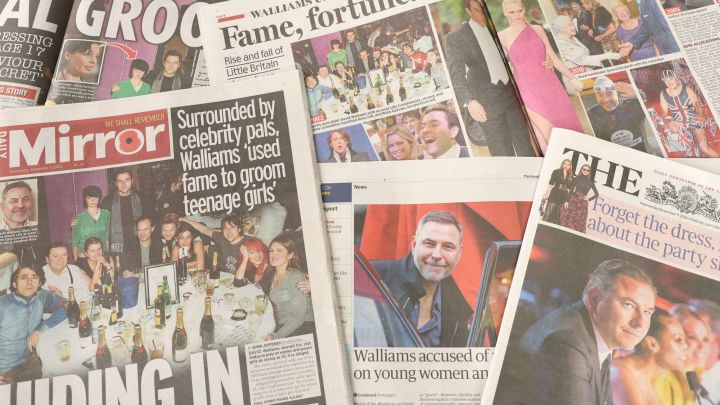
Russell Brand’s crimes were appalling. The allegations surrounding David Walliams are deeply troubling. It is hardly surprising that they have rocked Britain’s comedy scene. Calls for a ‘reckoning’ with the men in the industry have now become deafening. But we cannot let the misconduct of a minority of prominent comedians obscure another uncomfortable truth – namely, that comedy has already had its #MeToo moment and the results were not pretty.
In the late 2010s, the comedy circuit became a place where rumour could pass for evidence, reputations could be destroyed by hearsay and people were expected to demonstrate their moral credentials by joining in. It felt like a sordid harvest festival. You didn’t have to offer much, but any offering was strongly encouraged. For those of us lucky enough to feel that we didn’t have a tin of abuse beans at the back of the cupboard, there was no #NotMeActually hashtag. And woe betide anyone who said as much.
I remember a friend sharing a post in a Facebook group called the Comedy Collective, listing the everyday, helpful things decent men on the circuit had done to keep her safe – like driving miles out of their way late at night or walking her home through the Meadows, a large park in Edinburgh, during the Fringe Festival. She was immediately met with a sharp, public retort from a fellow female act: ‘This is sounding a bit #NotAllMen isn’t it?’
Well, er, yeah? Because the vast majority of men in comedy are not predators. But a collective madness took over. There was a sense that we were at war. And in war, you give the authorities more power. You sacrifice due process for safety.
Potentially problematic men were singled out and described as ‘creepy’ or ‘a bit dodgy’ behind their backs, often accompanied by a raised eyebrow rather than a clear, explicit account of what they had done. Of course, I accept that sexual assault is serious – that’s why it is rightly criminalised – and my heart breaks for victims. At the same time, the unsubstantiated accusation I heard more than any other was that someone had ‘made a woman uncomfortable’.
What is one to make of that without context? Stilettos make women uncomfortable. So do crash diets and hangovers. Asking for clarity on what a man had actually done or evidence that he did it was branded ‘victim-blaming’.
The most ridiculous anecdote that sticks in my mind was someone accusing a man of being ‘problematic’ because he had kept a woman talking for too long at a venue bar, causing her to miss her train home. Are you kidding me? She was an adult – she needed a watch, not a social movement.
I remember standing in a crowded, wood-panelled pub in Holborn with three other comics, trying to get served. The conversation turned to a prominent comedian. ‘You know he’s a rapist, right?’, I was told. ‘I don’t know that. How do you know it?’, I asked. ‘No, but I mean, you know, he is…’ ‘Based on what?’ ‘He just is.’
I tried again: ‘Imagine I’ve never heard of him. Imagine I’ve never met anyone from the London comedy circuit, imagine I’ve been in a coma for 10 years, and imagine I’m from Mars. What would you need to tell me, as evidence, to prove this?’ ‘Well, he just is.’

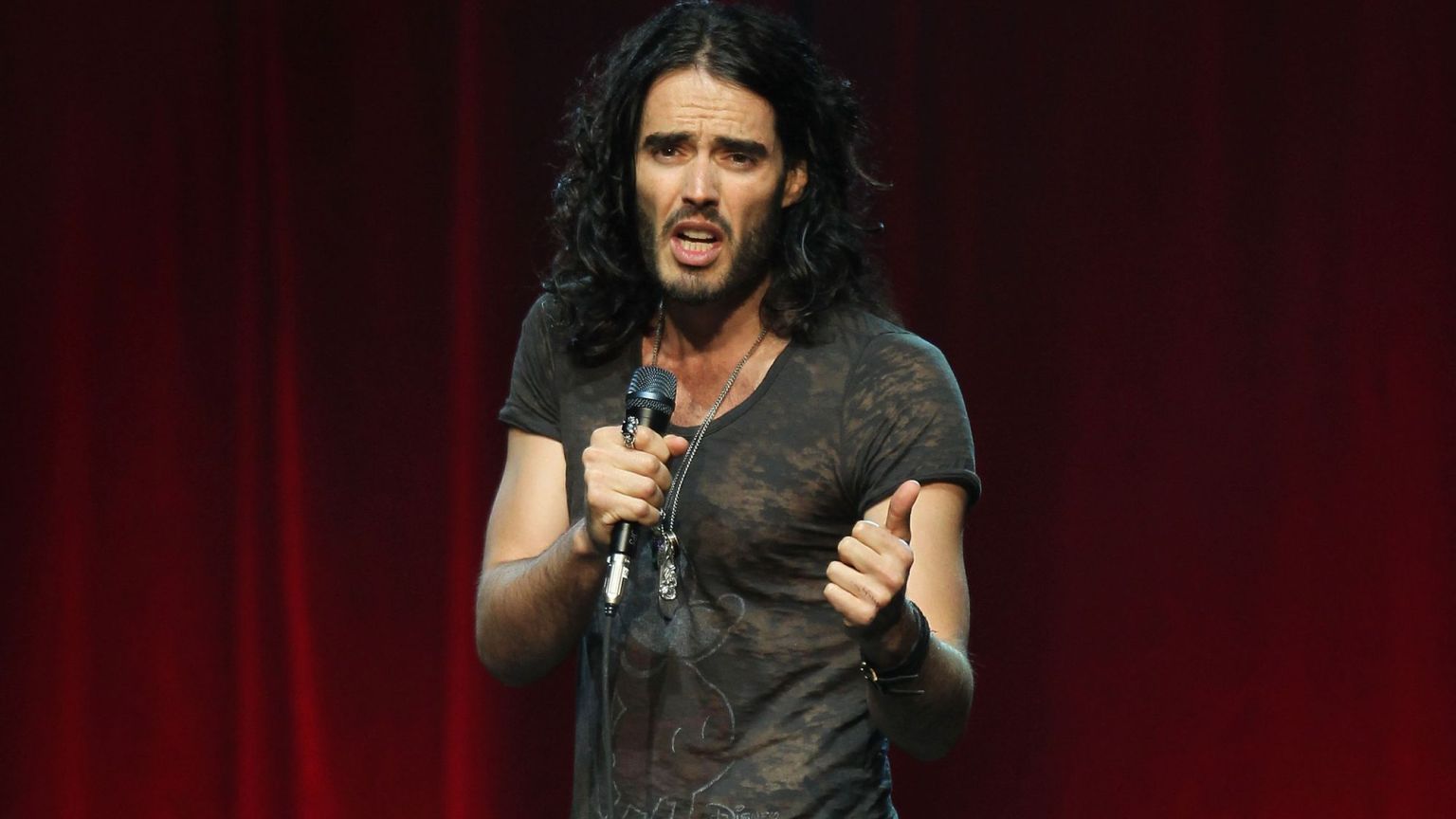
The comedian in question, it turns out, was Russell Brand. Nearly a decade later, a jury has heard the evidence and found Brand guilty of one count of rape and three counts of sexual assault. But I maintain that, at that moment, neither my mate nor I knew that he was a rapist. I’ve personally never met him. And if my mate has, he didn’t mention it.
Many men accused of wrongdoing will never face a trial, but nor will those who are innocent ever have the opportunity to clear their names. In the late 2010s, I had countless conversations like the one about Brand. People I had previously assumed sane revealed a total lack of interest in the concept of innocence until proven guilty.
At some point, a group of comedians took it upon themselves to create ‘THE LIST’, a colour-coded spreadsheet circulated to warn promoters about serial ‘uncomfortable-makers’. An ‘Amber Alert’ denoted people who might ‘cause a problem’, a category so staggeringly broad it included anyone who had ‘remained passive in the knowledge that an associate has been known to be abusive’. A ‘Red Alert’ was reserved for those deemed ‘toxic to the environment’. The list wasn’t a police investigation or a criminal process. It was an informal system of reputational punishment, circulated among people who could offer work to jobbing comedians.
None of this is to deny that the movement brought genuine abuses out into the open. Women had been mistreated, sometimes terribly, and there were indeed men in the scene who deserved to be called out. But the existence of genuine predators does not validate every accusation, every rumour or every punishment administered in their name.
There were undoubtedly things about the comedy circuit that needed to change. But there was also collateral damage. For a start, I found out that a lot of people I know are morons. That was heartbreaking.
When ordinary social interactions are viewed through the prism of suspicion, when men are encouraged to see themselves and each other as potential predators, and women are encouraged to see men as potential threats, something is lost. At a time of relationship drought, rising social isolation and a loneliness epidemic, we should be wary of making the distance between men and women any wider.
Cressida Wetton is a comedian and TV producer.
You’ve hit your monthly free article limit.
Support spiked and get unlimited access.
spiked is even better on the app
Read, watch and listen to spiked wherever you are. Our brand-new app brings everything together, with ad-free reading, audio articles and offline access.
Become a spiked supporter to unlock exclusive app access, unlimited articles, bonus podcasts, discounts and special events.
Monthly support makes the biggest difference. Thank you.

Comments
Want to join the conversation?
Only spiked supporters and patrons, who donate regularly to us, can comment on our articles.