Beware the moral panic over Brand and Walliams
The government is being urged to ‘do something’ about any relationship that gives the commentariat ‘the ick’.
Want unlimited, ad-free access? Become a spiked supporter.
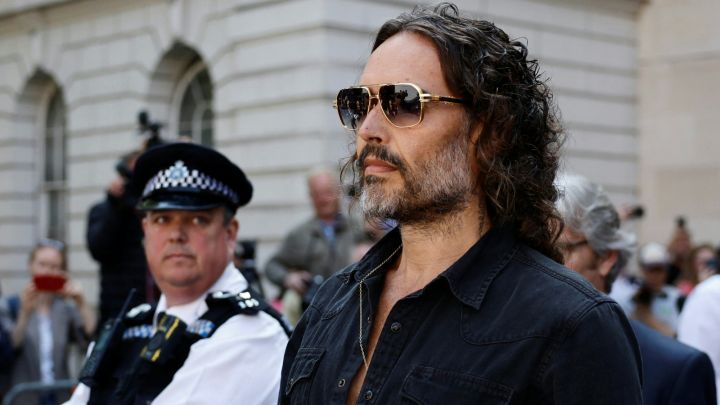
Those fearing that the grim coverage of Russell Brand’s sex crimes could precipitate a moral panic will not have been reassured by subsequent developments.
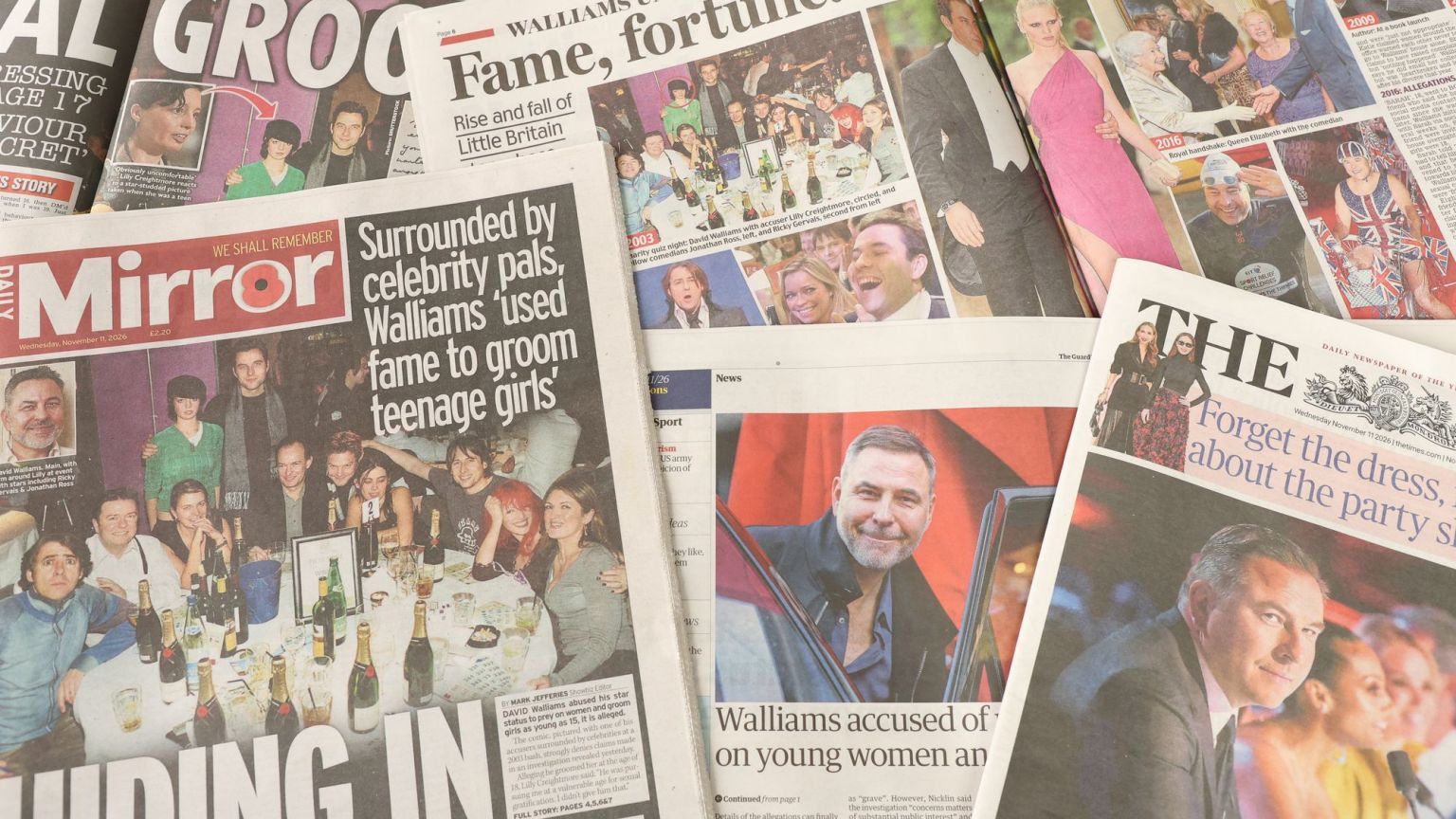
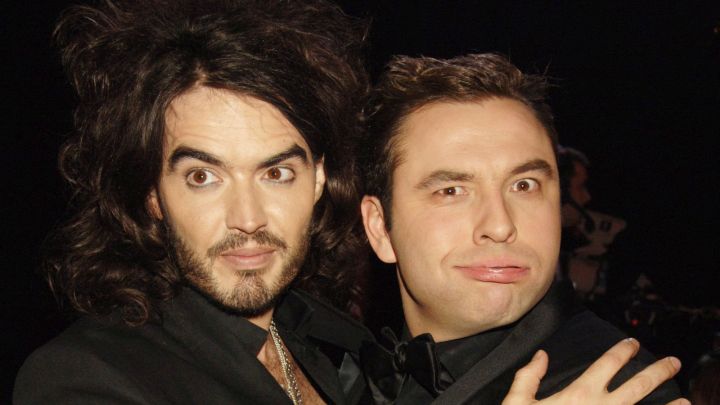
That’s because as soon as Brand had been locked up, the troubling allegations about David Walliams’s relationships with young women were finally published, after a long legal dispute, by the Guardian and ITN. The Walliams story had been an injunction-encased blister desperate to burst for a while. But the fact it exploded into the public realm just days after Brand had been found guilty of assorted sex crimes has fuelled a general sense of something rotten in the state of showbiz.
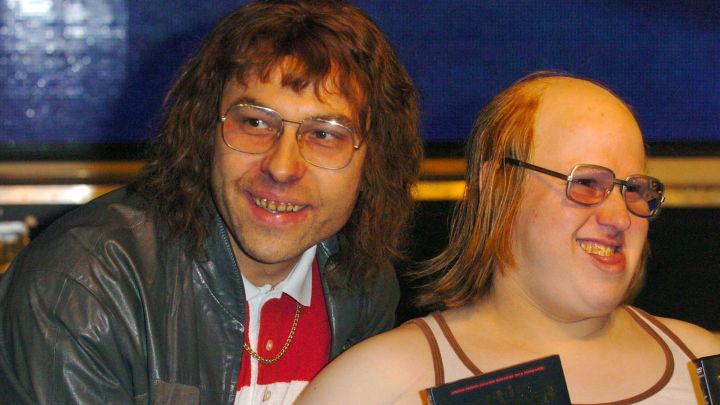
It is still early days, and who knows what further misdeeds the Walliams whistleblowing will flush out. But so far the accusations have proven to be somewhat sub-Epstein, it must surely be admitted. The reports seem to amount to a clutch of various unsavoury anecdotes, few if any meeting the threshold for litigation. The one exception is an allegation concerning a 15-year-old girl, whose top Walliams is said to have lifted up so that he could kiss her breasts. But beyond this, the claims centre on notes forwarded to young, but ‘legal’ models he’d glimpsed (with his shifty little eyes) at lingerie shows; tales of tarnished charity, such as the offer of a ‘place’ to crash, made to a young damsel while she was between houses, whom he then tried to steer into his own bed; and some disturbing but already public footage of Walliams on his own Instagram account, gallivanting around at children’s book-signing events in urgent need of a sturdy codpiece.
These revelations, however, have clearly not satisfied the whetted appetite of the gossiping fearmongers. They are convinced that British light entertainment – or whatever squalid subsidiary thereof Brand practised in – has still not had the ‘reckoning’ that #MeToo demanded, and is harbouring regiments of rapists and abusers.
The BBC has certainly joined in. Determined to put clear blue water between itself and Walliams and Brand, both of whom it employed and worked with at various points, the Beeb is using this sordid affair as a moment of ‘historic realignment’.
In some of the hardest-hitting journalism since Phillip Schofield earnestly presented then PM David Cameron with a legible list of ‘well-known’ paedophiles in positions of authority over a decade ago, a woman was invited on to BBC Two’s Newsnight to share group-chat messages in which other women ask each other about the safety of travelling in a car with certain male comedians – names redacted, natch – and discuss their respective ‘creepiness’. Incredibly, Victoria Derbyshire appeared to treat this interview as constituting valuable testimony of some kind, rather than the emptiest kind of tittle-tattle imaginable.
On Monday, in The Times, Claire Cohen – no stranger to blundering into complex cases of alleged sexual misconduct – raised the bar for deranged ‘go in there and make it about you’ wagon-hitching. She penned a piece about an occasion when an older ‘pop star’ failed to make a move on her, despite her being perched on the edge of his bed. She had, she says, always assumed this was because he realised that at 22, she was too young for him. Now, she says, she thinks the opposite was the case – namely, that she was already too old. Or Claire – stay with me here – maybe, just maybe, this incident has no bearing on the current discussion at all? Just a thought.
And so inevitably comes the demand that someone – ideally parliament – do something. This is despite the substantial raft of legislation that already exists to protect young women and girls from predators of one kind or another. And so, in the desperate need to assuage a general sense of outrage about Walliams’s behaviour, a conversation has now started about creating new laws that he would have broken – particularly laws around the age gap between otherwise consenting participants.

The BBC’s Breakfast show gave a platform to Layla Stone, founder of the campaign group Close the Consent Gap – an odd name that almost suggests precisely the opposite of what she seems to want. ‘Men’, she warns, ‘are well aware of where the law is at present… they often wait’. Well, isn’t that what Stone herself wants? That, after all, is the whole point of an age-of-consent law, staggered or otherwise?
My view, for what it’s worth, is that if the current age is proving too low to protect girls, then by all means let’s raise it. But introducing some sort of logarithmic scale, taking into account the age gap, disparity of wealth, privilege, celebrity status, upper-body strength and general ‘ickiness’, perhaps on a newly approved Sarkar–Whately Scale, is surely not viable.
Obviously, treating this argument with the contempt it deserves risks appearing to have contempt for actual victims of sexual assault, grooming or worse. But this is just the sort of knee-jerk reaction you always get after high-profile cases, such as Brand and Walliams, when the general feeling is ‘he can’t keep getting away with it’. It will always make bad law.
A candidate for the greatest American man of letters of the 20th century would be – in my humble opinion – Will Durant. His magnum opus, the 11-volume The Story of Civilisation, was published over the course of his long life, most of it written in collaboration with his wife, Ariel. As a result of their success, they were jointly awarded the Pulitzer Prize for General Nonfiction in 1968 and the Presidential Medal of Freedom in 1977.

Ariel met her future husband when she was a student at Ferrer Modern School in New York City. He was then a teacher at the school, but resigned his post to marry Ariel. At the time of the wedding, on 31 October 1913, Ariel was 15 and Will Durant was nearly 28 years old.
It was a different time, of course, compared with the early 21st century in which Brand and Walliams practised their scandalous outrages. Such a marriage was legal then. But did Durant’s interest in their daughter give her parents, Ethel and Joseph Kaufman, the ick? Online resources are silent and Will and Ariel’s joint autobiography is over £100 second-hand, so I cannot say. But their union lasted 68 years and they died within a fortnight of each other, so along with their astounding professional accomplishments, I am tempted to say the marriage was a success.
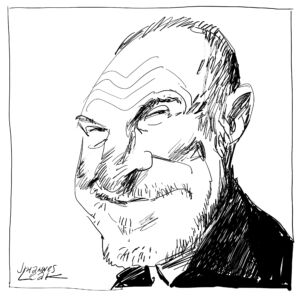
Age and maturity do not have a conveniently reliable correlation. And nor do age difference and nobility of intent. Thankfully, we have a judiciary in whom we trust to take into account such criteria as age and asymmetry when sentencing. If the law was broken, they can then decide what to take into account when passing a sentence. God knows, their decisions often go against my instincts. But it is, to paraphrase Churchill, the worst kind of judicial system, except for all the others that have been tried. And you cannot, I think, make a relationship a crime, just because it gives you the ick.
Simon Evans is a spiked columnist and stand-up comedian.
You’ve hit your monthly free article limit.
Support spiked and get unlimited access.
spiked is even better on the app
Read, watch and listen to spiked wherever you are. Our brand-new app brings everything together, with ad-free reading, audio articles and offline access.
Become a spiked supporter to unlock exclusive app access, unlimited articles, bonus podcasts, discounts and special events.
Monthly support makes the biggest difference. Thank you.



Comments
Want to join the conversation?
Only spiked supporters and patrons, who donate regularly to us, can comment on our articles.