Long-read
Gen Z’s identity crisis
The young adults who were raised during the culture wars are struggling to grow up.
Want unlimited, ad-free access? Become a spiked supporter.
‘It is impossible to have any kind of relationship with young people as a parent, teacher, or colleague without being aware that something disturbing is going on.’
It is this sense of intergenerational unease that Jennie Bristow and Ellie Lee set out to investigate in their new book, Growing Up in the Culture Wars: Identity and Generational Conflict. Drawing on years of sociological research, as well as their own experience as university teachers and parents, Bristow and Lee offer an account of a generation whose transition into adulthood is taking place against a backdrop of profound cultural fragmentation.
They certainly don’t shy away from the scale of the task. The book takes on the myriad issues and events that have affected Generation Z, from the polarisation of political and cultural life to the Covid pandemic to social media to the failings of the education system. Questions of gender, race, sexuality, national identity and political belonging sit alongside more intimate concerns about family relationships, work, sex and parenthood. They are all understood in the context of a wider crisis in the way society transmits its values and expectations from one generation to the next.
Naturally, any discussion of Gen Z’s coming of age must engage with the influence of identity politics. Bristow and Lee argue that the ever-deepening personalisation of the political over the past few decades, as broader social bonds dissolve, has had profound consequences. Politics has now become a means through which young people express their identities, that is, their inner sense of themselves. It makes political disagreements very difficult.
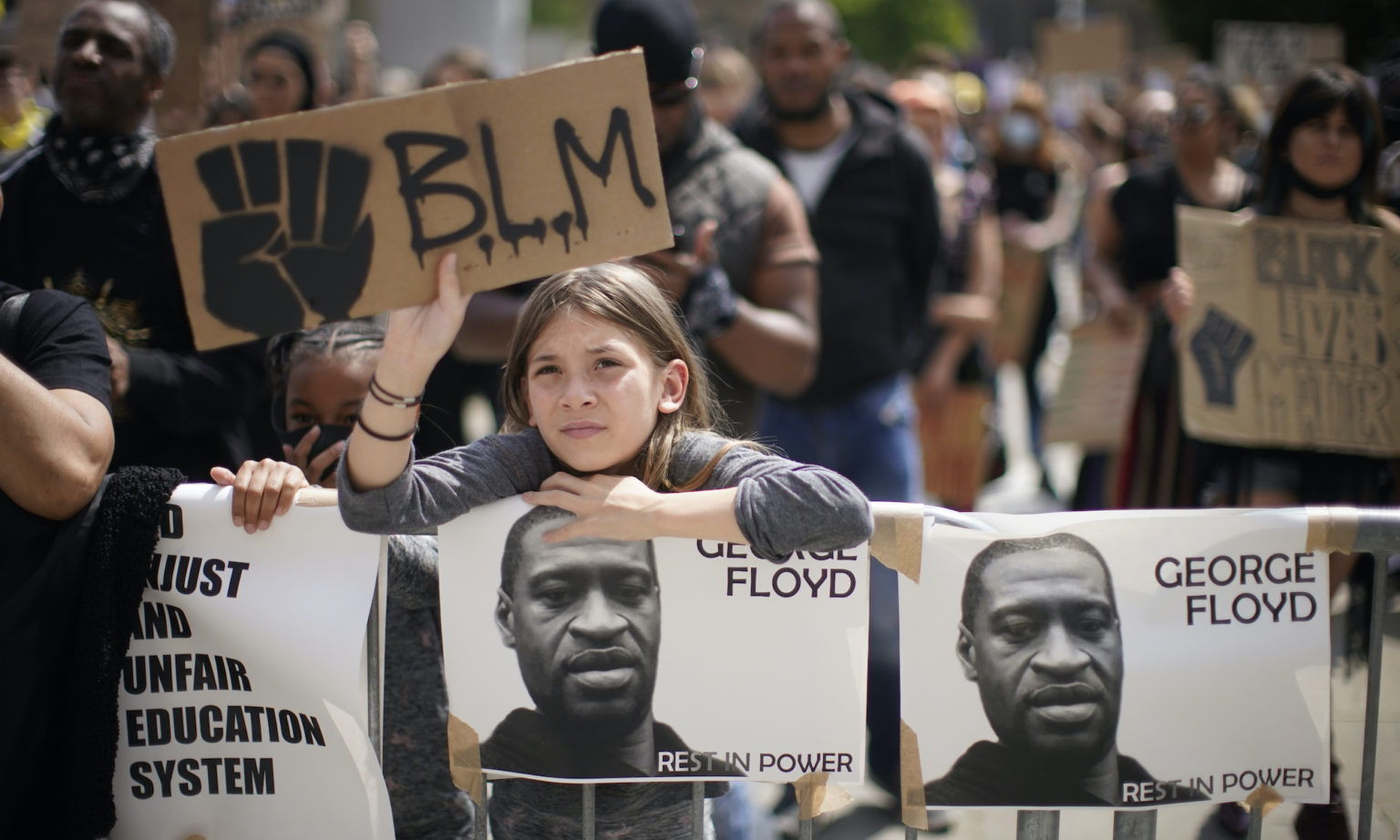
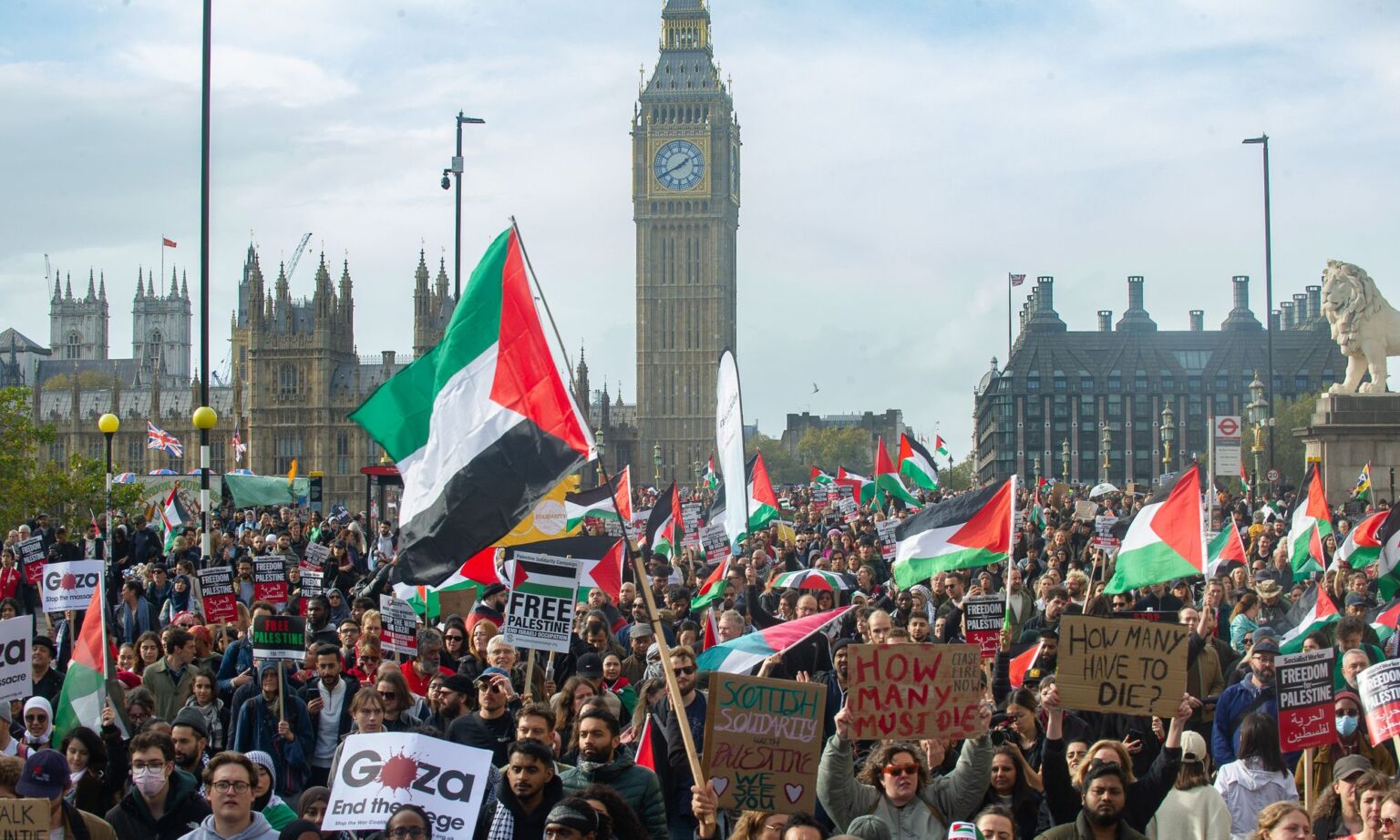
As a ‘Zoomer’ myself, I know this is a tension that most in my generational cohort will have been acutely aware of at some point or other. Your opinions – or, God forbid, your lack of opinions – on various social movements, including Black Lives Matter, gender identity or the Israel-Palestine conflict, have come to indicate more than just a difference in viewpoint; they have become shorthand for judging a person’s character.
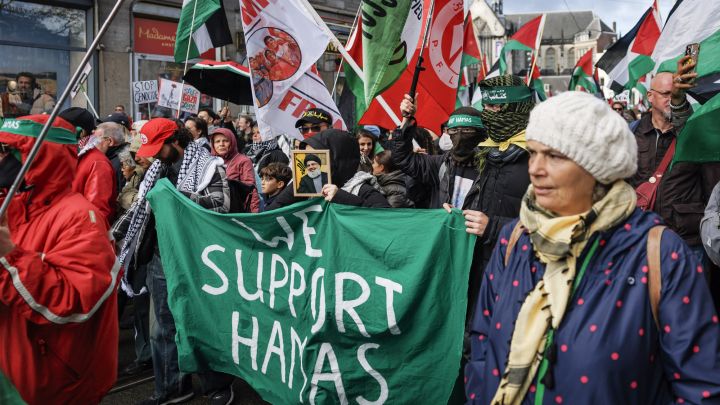
Just last week, on a night out, a young man spontaneously struck up a conversation with me on events in Gaza. Things quickly deteriorated. ‘I think it’s absolutely disgusting that you’ve just said that’, he said, appalled, when I expressed concern about the sexual violence that Hamas perpetrated against Israeli women during the October 7 attacks. ‘Sorry, but some things are just reprehensible in my view.’ Not five minutes earlier, the same young man had cheerfully uttered the phrase ‘Up Hamas’.
Interestingly, when I later told a female friend of the incident, her response was to gently probe for what I might have said to ‘provoke’ the young man’s outburst. ‘You’ve got to remember that it’s not just politics for everyone’, she advised me.
Some will recall similar statements from circa 2020 – ‘If you think Black Lives Matter is a political statement, then you’re part of the problem’, or ‘the time for discussion is over’ and variations thereof. It is precisely this intense personalisation of the political that Bristow and Lee point out has got us into trouble – so many young people use political positions to express themselves, they experience critical interrogation of their positions as an attack on the core of their very being.
The ramifications run deep. When ostensible political disagreement becomes so intensely personal, it becomes considerably harder to maintain relationships across ideological divides. How many young people, I wonder, have encouraged one another to disown family members who vote differently to them? How many friendships have ended over a war in the Middle East? Family members, friends and colleagues are no longer simply people with whom we disagree, but potential representatives of something we find objectionable. Bristow and Lee’s concern is that this increasingly emotional understanding of public life spills into the private sphere, weakening everyday relationships and the potential for social solidarity that follows. The problem then is not simply that Gen Z has inherited a particularly divisive political landscape – it has also inherited fewer spaces in which disputes can be worked through without becoming permanent ruptures.
Growing Up in the Culture Wars offers particularly astute commentary on the higher-education system. Bristow and Lee argue that universities are no longer performing their socialising functions effectively. Instead, education is now increasingly shaped by a suspicion of inherited knowledge and historical traditions, while approaches such as ‘decolonising’ or ‘queering’ the curriculum reflect a tendency to understand the past as little more than a long sequence of injustices.
It is a view that resonates with me and many of my recently graduated peers. At my own university, the English department insisted that decolonisation should ‘permeate every part of the curriculum’. In practice, this meant virtually all modules were re-centred on questions of racial identity, often through the lens of critical race theory. The central question presented by every text was always the same: who is the oppressor and who is the oppressed?
Bristow and Lee succeed in putting their finger on something that I often struggle to articulate to those who haven’t been to university in the past decade. The bigger problem, over and above trigger warnings and generic ‘woke signalling’, is that young people are continually taught that people in the past were near enough universally wrong or misguided. This one-sided presentation of history and cultural traditions serves to demoralise young people in the present and deprive them of optimism.
It is here that we arrive at one of the central concerns put forward by Growing Up in the Culture Wars – the growth of a profound historical pessimism which has fed a much broader sense of disillusionment among young people, not only with the society they inhabit but also with its future prospects. Indeed, it is no great leap to question whether a generation taught to regard the past as fundamentally oppressive, and the resultant present as irredeemably flawed, may struggle to imagine and build something better.

Inadvertently or not, Zoomers have long been encouraged to look at history as essentially over. While the ills of the past continue to ‘infect’ the present, the future is an equally bleak and scary place. Geopolitical disorder, climate change and rapidly developing AI technologies are presented to us with life-threatening urgency. The cumulative effect can be paralysing. Gen Z has developed an acute consciousness of everything that might go wrong, coupled with an uncertainty about what, if anything, an individual can do about it.
It’s little wonder that Gen Z is so susceptible to TikTok-style conspiracy theories. After the 2024 Atlantic hurricane that caused such destruction in Barbados, I remember a friend of mine scrolling past a 20-second Instagram video claiming the US was manipulating weather patterns in the Atlantic. ‘I’d believe it’, she shrugged, before scrolling to the next video.
And you know what? I get it. There is something strangely comforting about the idea that the world is run by a tiny number of shadowy, all-powerful figures against whom no ordinary person would stand a chance. At least it offers an explanation. This cabal is undoubtedly the same one that staged the Moon landing, orchestrated 9/11 and pulled the strings during the Epstein scandal. It is, of course, considerably less glamorous – and perhaps much more destabilising – to accept that the world can fall apart through a combination of human error, bureaucratic failure, political greed and institutional incompetence. Conspiracy theories offer the seductive promise of order in a world that increasingly feels beyond our control.
Using the work of psychologist Jean Twenge, Lee and Bristow describe this phenomenon as a belief in an ‘external locus of control’. This is the conviction that one’s circumstances and future are determined less by personal choices than by powerful external forces. Conspiracy theories make real, complex and often terrifying issues wildly simple. Hierarchies of privilege sort painful injustices into a binary, quantifiable system. But of course, if the past is understood principally as a history of injustice, and the present as a system fundamentally stacked against the individual, what grounds are there for optimism about the future?
This is a sobering reality, particularly when considered alongside the wider uncertainty surrounding Gen Zers becoming adults. Yet it also raises an important question about where legitimate criticism of social inequalities ends and a more pervasive sense of fatalism begins. Today’s young people are not entering the same world as their parents did at their age. As Bristow and Lee note:
‘For all the talk about the range of choices open to young people today – travel the world, experiment with their personal identities, or enjoy an extended adolescence of consumerism and play – in many ways their lives are remarkably constrained… Extended periods of education, rocketing housing costs and insecure employment mean that, for many, the experience is not one of freewheeling freedom so much as of debt and insecurity.’
There is, then, a distinction to be made between encouraging young people to take responsibility for their futures and pretending that the obstacles in their way do not exist. Bristow and Lee convincingly argue that the challenge is not to deny the very real difficulties facing Gen Z, but to resist treating these difficulties as insuperable obstacles.
None of this is to let Generation X and older Millennials off the hook. Extending their argument beyond the classroom and into the family home, Bristow and Lee examine how parents, too, have played a role in Gen Z’s discontent.
They show how the proliferation of ‘parenting experts’ and therapeutic approaches to childrearing has left many adults far less confident in their own authority, and increasingly reluctant to impose boundaries or make judgements that might be perceived as ‘harmful’ to their children. The consequences are significant – in attempting to protect young people from discomfort and uncertainty, adults may inadvertently deprive their children of the stability, expectations and guidance necessary to navigate the adult world.
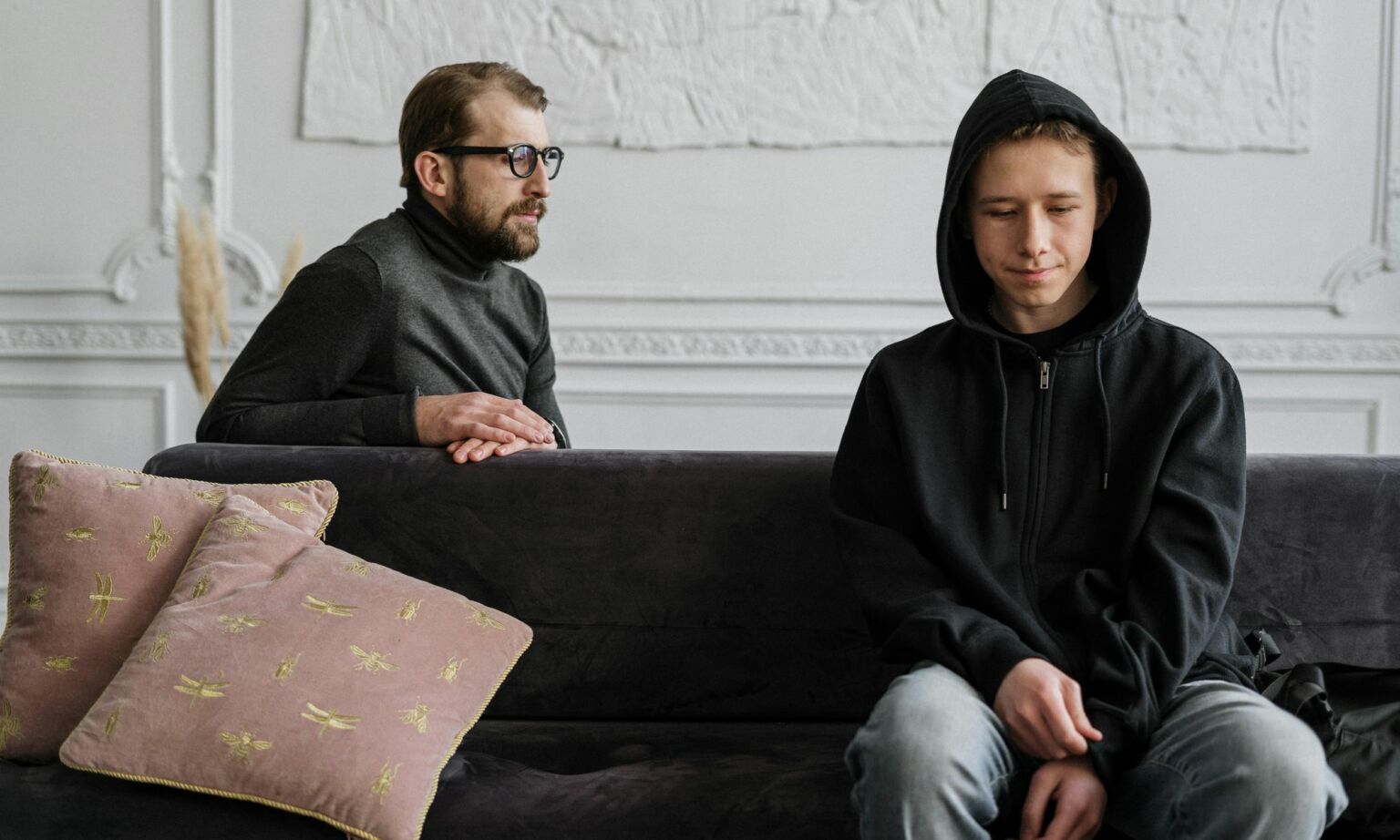
Of course, the world in which today’s Generation X parents were raised – or at least that collective impression of the world – has largely disappeared. In the Seventies and Eighties, children would have played out in the street until dinner. Now that they’re adults, many bite their nails over the prospect of their own children walking unaccompanied to the corner shop. Such ‘helicopter parenting’ often seems to go hand-in-hand with being remarkably lenient when it comes to dealing with bad behaviour. As Bristow and Lee put it:
‘For the past three decades, Anglo-American culture around children has been based on a kind of magical thinking: if we practise “gentle” or “positive” parenting – a form of discipline modelled on the woolly principle of “be nice” – our kids will mirror this behaviour, making the world a kinder and happier place. Unsurprisingly, positive parenting in practice turns out to make parents more frustrated and children more badly behaved, and also to inflate their interpretation of a harsh word or a quick smack, which becomes a deep, lasting wound rather than something to learn from and shrug off.’
Bristow and Lee draw a vital connection here between the contemporary demonisation of the past – or ‘the old ways’ of doing things – and the rejection of intergenerational knowledge:
‘Part of the condition of being young is that you are self-obsessed, you don’t know very much, and you have a lot of feelings. This is not to decry the intensity and authenticity of young people’s emotions, or the creativity and energy that these bring to culture and politics… But these contributions are tempered by their interaction with established ways of thinking about and doing things – in short, their socialisation by older generations into the norms of society.’
And yet, perhaps as a result of their own social conditioning, or in some instances their own poor experiences, a significant proportion of Gen Xers have opted not to raise their children in the same way that they themselves were raised. Phrases like ‘back in my day’ or ‘never did me any harm’ are now ironically associated with practices that do, in fact, cause harm to young people. Indeed, it now seems as if a substantial proportion of what was once normal practice among parents is now considered toxic, such as raising one’s voice to tell off a naughty child, or refusing to validate and affirm ‘big feelings’.
Growing Up in the Culture Wars is particularly alert to a culture in which different generations ‘are incited to view each other as mutually incomprehensible and somehow problematic’. With slogans like ‘Okay, boomer’ (often accompanied by a dismissive eyeroll) becoming commonplace, or the cultural pushback against any authority deemed too ‘stale’, ‘pale’ or ‘male’, it is perhaps unsurprising that parents and teachers have lost confidence in their roles. As a by-product of viewing the past as universally corrupt, we have perhaps developed a sense that members of Gen Z have nothing to learn from their elders.
This is where Bristow and Lee’s notion of society’s disintegrating ‘thick ties’ comes into play. Thick ties are characterised as the strong bonds between children and the adults in their lives. While such bonds still exist, they have been consistently devalued, with young people now under significant pressure ‘to downplay these relationships and obligations, in deference to politicised, performative forms of thought and behaviour’.
This erosion of thick ties has privileged young people’s individual self-expression at the expense of parental relationships and authority. In recent years, we have seen this cultural shift play out in several UK schools that adopted a policy of referring to students as their chosen gender identity without notifying parents. The national discussion regarding ‘social-media curfews’ for under-16s highlights the same tension, whereby parents are increasingly expected to allow the state to make judgement calls on their behalf.
Then there’s the impact of this social fragmentation on Gen Zers’ own emerging relationship with parenthood. Young adults are increasingly ambivalent about having children. This, Bristow and Lee argue, cannot be understood solely in terms of economic insecurity – it should also be considered against a cultural backdrop in which family life has been devalued.
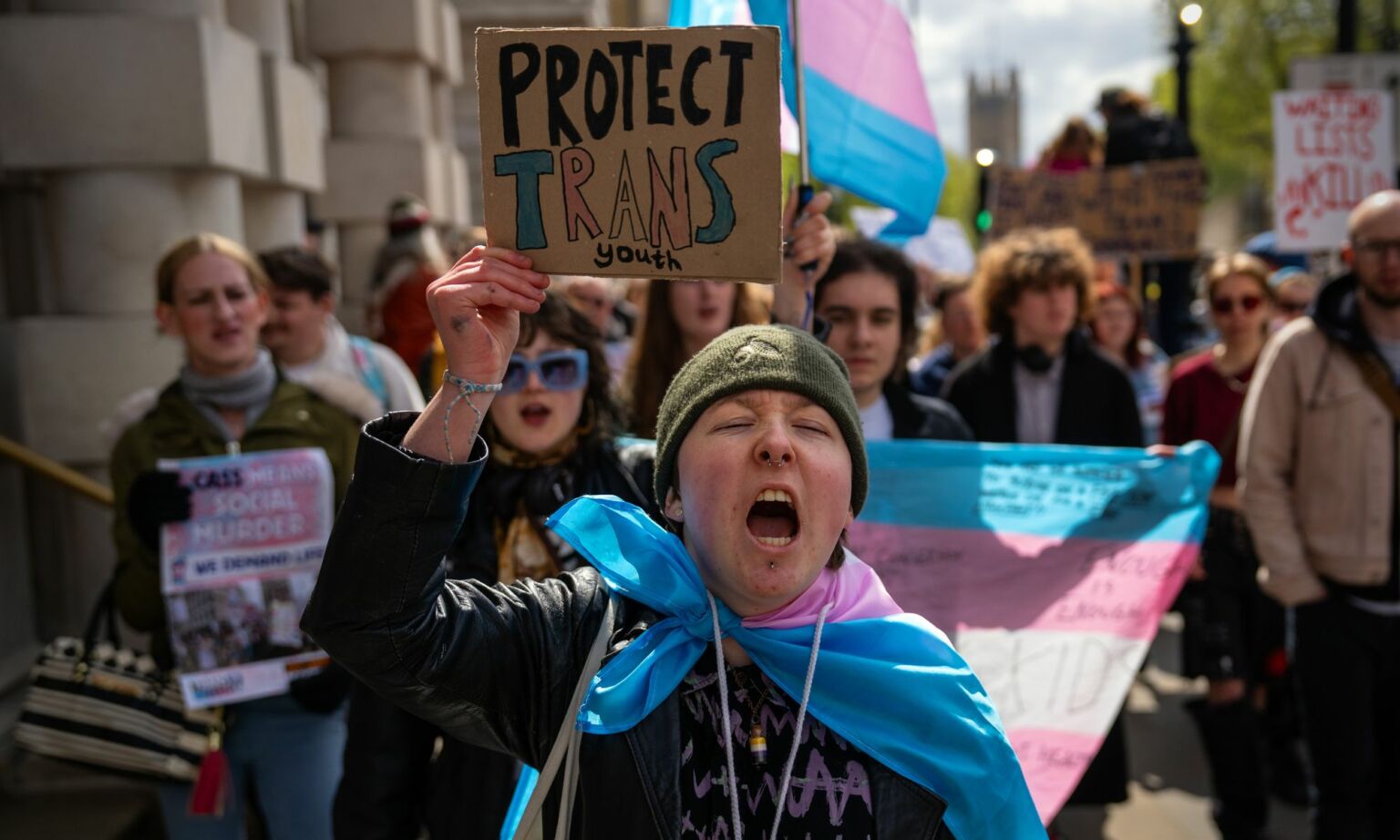
Gen Zers discuss the prospect of taking on the responsibilities of a family with considerable apprehension. They see it in terms of the negative impact it would have on their personal freedom and finances as well as the environmental consequences. The sense of purpose and continuity that having children brings barely figures. Addressing declining enthusiasm for parenthood requires more than simply improving the practical and financial conditions in which people raise children. As Bristow and Lee argue, it also requires forging a cultural environment in which the prospect of building a family is something to look forward to again, rather than yet another source of anxiety.
Gen Zers’ problems are becoming all too apparent. Born between 1997 and 2012, the Gen Z cohort as a whole is now approaching adulthood. In the technical sense, at least. Bristow and Lee identify work, sex and politics as three fundamental dimensions through which young people develop their adult identity. Unfortunately, each dimension has been compromised by the contemporary preoccupation with individual identity.
In the workplace, the expectation that employment should provide a sense of personal fulfilment above all else risks obscuring its more fundamental role: providing financial independence from one’s parents, a degree of structure and a place within wider society. There is something to be said for Bristow and Lee’s defence of the rather unfashionable idea that work need not be a source of constant self-actualisation to be worthwhile. For a generation raised on the promise that we should all ‘do what we love’, the reality of having to earn a living at the expense of that can, for some, come as something of a disappointment.
The discussion of sex and relationships is perhaps more contentious. Bristow and Lee question whether contemporary understandings of gender and sexuality have become so centred on individual self-definition that they risk neglecting the relational dimensions of adult life. Their distinction between identity as self-presentation and sexuality as an orientation towards another person is an interesting one, particularly in a culture where dating increasingly takes place through apps, personal preferences are meticulously curated and potential partners can begin to resemble items on a shopping list. To what extent, I wonder, has the emphasis on knowing and asserting exactly who we are made us less comfortable with the compromises, uncertainties and mutual responsibilities that intimacy will at some point involve? This is not to suggest that greater sexual freedom or the ability to define one’s own identity are definitively incompatible with meaningful relationships. But it raises a question about whether we have become better at articulating our individual needs than at navigating the needs of other people.
That said, the material realities of contemporary life are clearly impacting Gen Zers’ attitude to adulthood. For a generation navigating an increasingly precarious housing market, financial insecurity and an uncertain employment landscape, the traditional milestones of adulthood – financial independence, homeownership, stable relationships and becoming parents – can feel increasingly remote. Perhaps, then, the question is not simply whether young people are struggling to embrace the responsibilities of adulthood, but whether the conditions that once made those responsibilities attainable have fundamentally changed. Cultural uncertainty and material insecurity may in fact reinforce one another. This raises a question that sits somewhat beyond the central argument of Growing Up in the Culture Wars: are young people reluctant to grow up, or are they coming of age in a world that offers them fewer opportunities to do so?
Bristow and Lee are careful to distance themselves from the idea that a retreat into conservatism would provide a neat answer to Gen Z’s problems. ‘Not least’, they suggest, because conservatives ‘seem rather confused about what, exactly, they are trying to conserve’. This is a welcome refusal to allow the culture war to continue dictating the terms of the debate. While the left can be guilty of looking at society’s traditions and bonds as things to be dismantled wholesale, the right is equally susceptible to the idealisation of a more coherent era – one that perhaps never truly existed, at least not at one singular point in time. Neither the right nor the left offers a particularly convincing response to the complexities of contemporary life for young people. What Bristow and Lee advocate instead is something more demanding: a restoration of intergenerational solidarity, intellectual openness and the capacity to disagree without grouping ourselves into opposing camps.
Growing Up in the Culture Wars does a remarkable job of providing a coherent account of what can, at times, feel like a series of unrelated generational issues and anxieties. Certainly, when people of my parents’ generation ask me to distill what the ‘problem’ with Gen Z is into a sentence or two, I’ve often found myself unable to single out one in particular. Bristow and Lee allow us to conceive of the troubles of my generation as a crisis, above all, of agency.
I know far too many young people who remain convinced, even into their mid-twenties, that they are not yet fully realised actors in the world. They feel things happen to them, rather than believing themselves to be people capable of making things happen. This sense of powerlessness can become self-fulfilling: those who believe the odds are irreversibly stacked against them may become less inclined to exercise the agency necessary to change their circumstances.
This is not to suggest that young people’s anxieties are misplaced in every circumstance – the economic and political realities of coming of age today are considerable, and cultural optimism alone won’t make getting on the property ladder less of an uphill struggle, or employment more secure. But there is a difference between recognising the hard realities of the world we have inherited, and becoming so consumed by them that we adopt a kind of learned helplessness.
Growing Up in the Culture Wars is a reminder that growing up has always involved learning to negotiate the world as it is, while developing the confidence to imagine what it might become. That requires disagreement, certainly, but also real-life relationships, and the belief that Gen Zers need not be prisoners of the current cultural moment. We still, for all our reservations and fears, have a future to make.
Growing Up in the Culture Wars: Identity and Generational Conflict, by Jennie Bristow and Ellie Lee, is published by Polity.
Georgina Mumford is a London-based writer.
You’ve hit your monthly free article limit.
Support spiked and get unlimited access.
Support spiked and get unlimited access
spiked is funded by readers like you. Only 0.1% of regular readers currently support us. If just 1% did, we could grow our team and step up the fight for free speech and democracy.
Become a spiked supporter and enjoy unlimited, ad-free access, bonus content and exclusive events – while helping to keep independent journalism alive.
Monthly support makes the biggest difference. Thank you.


Comments
Want to join the conversation?
Only spiked supporters and patrons, who donate regularly to us, can comment on our articles.