Long-read
Nottingham: a case study in state failure
Deindustrialisation, Labour Party dominance and lethally incompetent public services have brought the city to its knees.
Want unlimited, ad-free access? Become a spiked supporter.
We often say politics is failing people – that parties have lost touch, institutions are distant and public trust is collapsing. But what does that failure look like when it is no longer abstract? What does it mean when that failure leaves people ignored, harmed and bereaved?
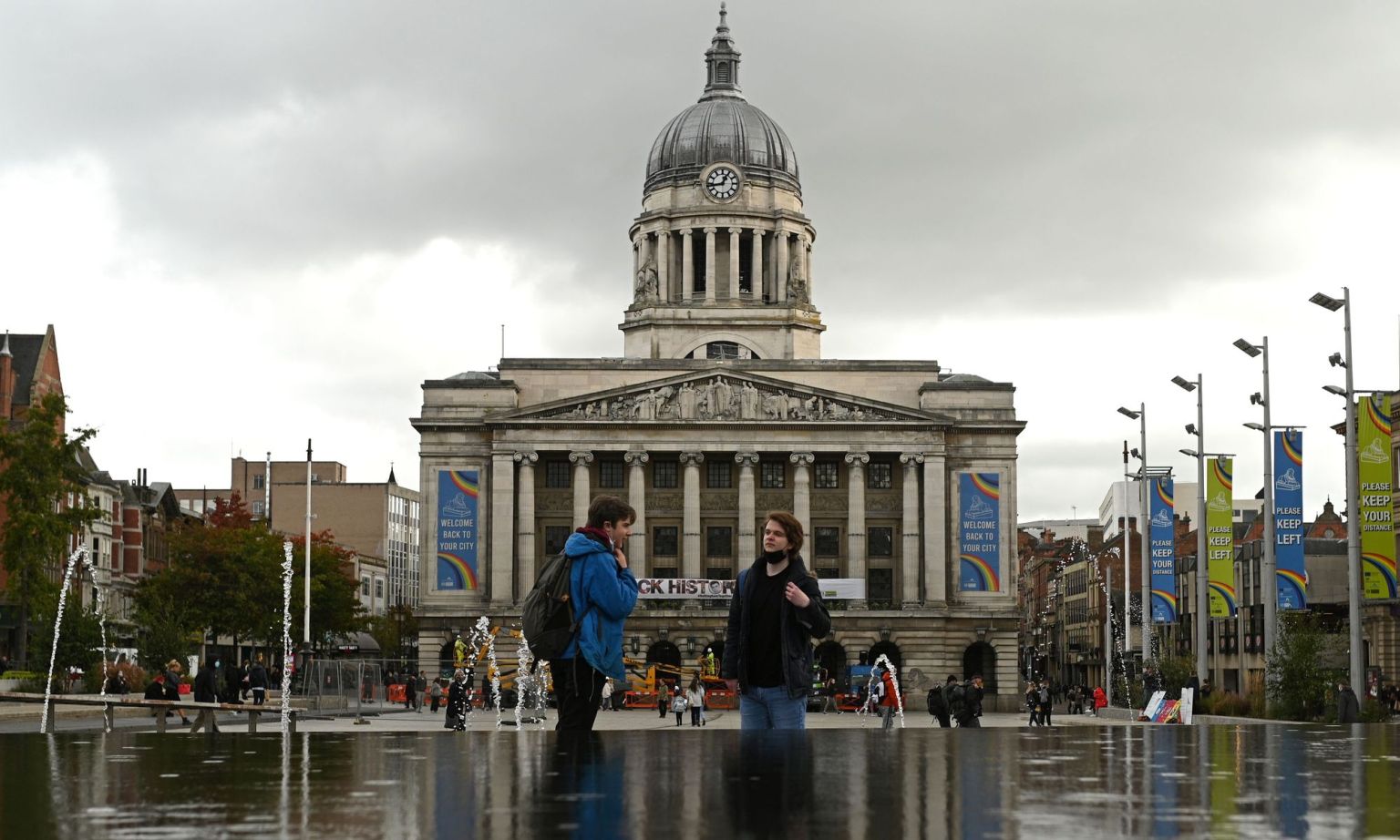
I want to write about Nottingham, my home city, as a case study of that failure. I am extremely proud that I come from Nottinghamshire and that Nottingham has been my home. I hold the people of Nottingham in my heart. They are my family, a community that raised me with love and with grit. I wish there were no basis for writing about Nottingham as a failed city. But the evidence now has to be laid out clearly.
This is not a polemic or a knee-jerk reaction to recent atrocities. It is an attempt to explain how Nottingham has been hollowed out by years of deindustrialisation, and damaged by one-party political dominance and public institutions that have too often protected themselves rather than the people they are meant to serve.
At the centre of this piece are three innocent people: Grace O’Malley-Kumar and Barnaby Webber (both 19 years old), and Ian Coates (65 years old).
Grace and Barnaby came to Nottingham to study, to live, to grow into their futures. Grace would almost certainly have gone on to train as a doctor and care for the people of Nottingham. Barnaby was a bright, energetic young man who would have had so much to give our city if he had wanted to stay with us. Ian was a Nottingham man in his bones who had already given a lifetime of care, love and hope to this city. He worked at Huntingdon Primary School in St Ann’s, the school my son attended, in a community I lived in and later wrote about in Getting By: Estates, Class and Culture in Austerity Britain (2015).
On 13 June 2023, Nottingham sacrificed the best of us to the worst of us. Grace, Barnaby and Ian were murdered by Valdo Calocane, a man not known to any of them, who had been diagnosed with paranoid schizophrenia. Their names must never become footnotes in a story about bureaucracy. They were loved people, with families, futures and communities around them.
In the early hours of that morning, Calocane waited near a road in Radford, an area that houses thousands of students from Nottingham’s two universities. Grace and Barnaby were walking home after a night out. Barnaby was attacked first. Grace tried to fight back and save her friend; she too was killed.
Calocane then walked through a built-up part of Nottingham for around an hour before encountering Ian Coates on his way to work. Ian was murdered and left on the street. Calocane stole his van and drove into the city centre, deliberately running people over. Survivors, including Wayne Birkett and Sharon Miller, were left with life-changing injuries. This is the bare outline of the case. Everything we now know is only due to the fact the families of Grace, Barnaby and Ian, along with the two survivors, Wayne and Sharon, refused to be quiet. Like so many families today caught up in horrific incidents like this one, they were first managed, briefed and contained. The families believe Nottinghamshire Police tried to divide them early on, including by suggesting Ian’s family should not contact Grace’s or Barnaby’s. They found one another anyway, built solidarity and fought together for answers.

Over the past three years, the families have joined what Dr Sanjoy Kumar, Grace’s father, described to me as ‘the club that no one wants to be in’. Together, they have exposed missed warnings, weak accountability and a culture in which institutions appeared more concerned with process, reputation and liability than with the truth.
The Nottingham Inquiry was established in April 2025 to investigate the Nottingham attacks by Valdo Calocane, including mental-health management, police actions, risk assessments, criminal-justice decisions and emergency responses. Watching the inquiry and listening to the families speak publicly made one thing impossible to ignore: this was not one single mistake, but a catastrophic collapse of responsibility built from missed warnings, poor communication, institutional defensiveness and failures of care.
Calocane was known to mental-health services and had a history of distressing and violent behaviour involving students, members of the public and police officers. There were concerns about medication, treatment, risk assessment and follow-up. There was also a warrant for his arrest, which was outstanding at the time of the attacks. The system came into contact repeatedly with danger but failed to act with either the alacrity or seriousness required.
The evidence heard by the inquiry has been damning. Mental-health services missed warnings, discharged Calocane despite serious concern, and failed to act urgently on non-compliance with medication and episodes of violence. The families have pointed to warnings from professionals that were not followed through, and to a wider culture where risk was managed on paper rather than faced in reality. The inquiry also revealed that more than 150 staff at Nottingham University Hospitals NHS Trust inappropriately accessed the private medical records of Grace, Barnaby and Ian. Even in death, the victims and their families were failed.

The police failures were just as serious. Nottinghamshire and Leicestershire Police failed to execute an arrest warrant that had been active for months after Calocane assaulted a police officer. The families have accused Nottinghamshire Police of poor investigation, lack of transparency and withholding crucial information. Ian Coates’s body was left at the crime scene for 15 hours; his family were given false information, and sensitive footage connected to the victims’ final moments was accessed by police officers and civilian staff. Again and again, the families describe not only institutional failure, but also a failure of basic human decency.
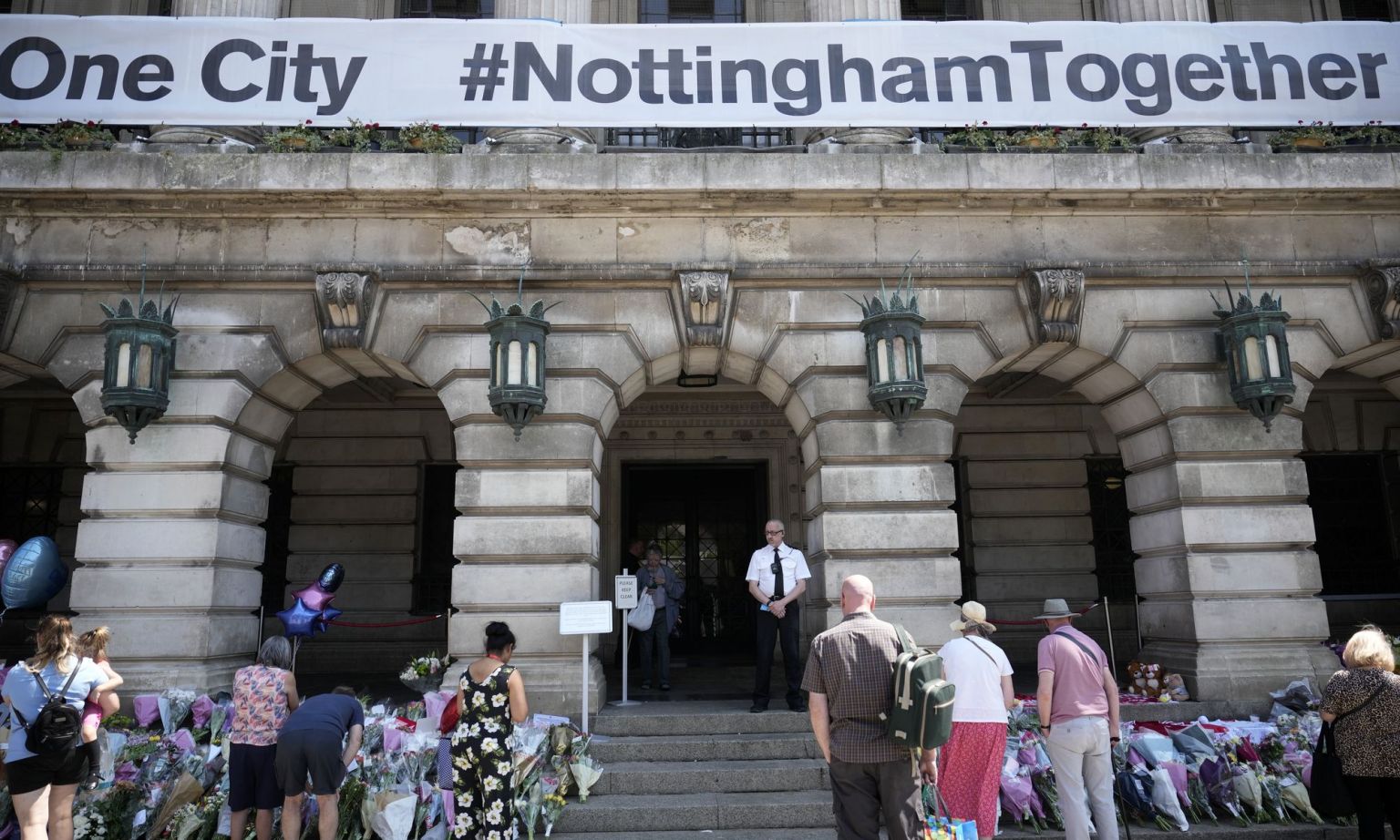
Nottingham University, the Crown Prosecution Service (CPS) and the wider criminal-justice system have also faced criticism. Questions remain about what was known, what was shared and what action was taken as Calocane’s behaviour escalated. The families strongly condemned the CPS’s hasty decision to accept Calocane’s manslaughter pleas on the grounds of diminished responsibility – a decision that meant Calocane’s pleas were untested in an open court. There was a clear lack of communication, candour, curiosity and duty between the university, the police, the NHS and the criminal-justice system. In July 2026, Northumbria Police launched a formal criminal inquiry into Nottinghamshire Healthcare NHS Foundation Trust, investigating possible corporate manslaughter and gross negligence.
Every institution failed in its duty. In September this year, during closing submissions, another shock emerged: Nottinghamshire Police had found handwritten bomb-making recipes and notes from Calocane but withheld the evidence for more than three years, failing to disclose it to the CPS, psychiatric experts or the inquiry team. When the police counsel argued that the attacks were not reasonably foreseeable or preventable, the families heard an institution refusing to be held accountable for its structural incompetence.
The maternity-care scandal
It would be convenient for Nottingham’s institutions and local political class to present the Calocane case as a one-off – unforeseeable, exceptional, impossible to prevent. But the failures exposed by the Nottingham Inquiry sit alongside another scandal running through the same city and health system: the Nottingham maternity-care scandal.
The independent review, led by senior midwife Donna Ockenden, became the largest investigation into maternity services in NHS history. Examining care at Queen’s Medical Centre and Nottingham City Hospital, both run by Nottingham University Hospitals NHS Trust, it uncovered a devastating pattern of clinical failure, ignored warnings, poor leadership and families’ concerns being dismissed when they tried to speak out.
Thousands of cases were reviewed. Mothers and babies were harmed or died in circumstances where different care could have changed the outcome. The failures included poor fetal monitoring, missed signs of distress, delays in escalation, bullying and toxicity, and racism towards black mothers whose pain was too often dismissed. In total, the inquiry identified 162 deaths and 358 serious injuries to mothers and babies.
Some of the most disturbing evidence concerned what happened after patients’ deaths. Babies were not treated with dignity, mortuary care broke down and families were left with further trauma. Nottingham University Hospitals NHS Trust was fined after a Care Quality Commission prosecution connected to avoidable newborn deaths, and Nottinghamshire Police’s Operation Perth is examining possible criminal liability. Families are still campaigning for a statutory public inquiry because they do not believe those at the top have been properly held to account.
This matters because Nottingham’s story is not only about one man, one morning or one institution. It is also about a civic culture in which warnings were missed, families were patronised, dignity was breached and accountability delayed.
Nottingham is a failed city not because its people have failed, but because state institutions have repeatedly failed to protect them, listen to them and tell the truth.
A structural failure
The institutional failure I am laying out here did not begin this decade. Nottingham’s crisis is deeper and older than one terrible morning, one broken NHS trust or one failing service. The city has developed a political and institutional culture in which power is too concentrated, criticism is treated as a threat, and failure is managed rather than confronted. That defensive institutional culture does real harm to victims, families and the public.
The evidence is not hard to find. It’s there in the Independent Inquiry into Child Sexual Abuse, which exposed the decades-long failure of Nottingham’s local authorities to protect children in their care. From the 1970s into the 2000s, Nottinghamshire Council and Nottingham City Council oversaw children’s homes and foster-care set-ups in which violence and sexual abuse were rife. According to the inquiry, between the 1970s and 2019, 16 residential staff were convicted of sexual abuse of children in their care, and 10 foster carers were convicted of sexual abuse of their foster children. The response of Nottinghamshire Police was deemed inadequate by the inquiry.
Then there’s Robin Hood Energy. Launched in 2015, this was Nottingham City Council’s vanity project, one that was praised by Labour leaders, including Jeremy Corbyn. It collapsed in 2020, leaving more than £53million in unpaid corporate debts and costing local taxpayers approximately £38million. Auditors described catastrophic governance failures and ‘institutional blindness’.
The political response was revealing. Labour MPs in Nottinghamshire blamed Conservative austerity for the closure of essential services, while saying far less about Robin Hood Energy itself. In December 2021, another scandal began to emerge: up to £40million of ring-fenced housing money had been unlawfully used for general council services. That misallocation triggered the council’s first Section 114 notice – issued when expenditure exceeds income – and deepened the financial crisis that led to full bankruptcy in November 2023.
Nottingham’s three Labour MPs, Nadia Whittome, Alex Norris and Lilian Greenwood, issued coordinated statements focused heavily on central-government cuts under the Tories, but they said little about Robin Hood Energy or the Labour councillors responsible. They fell silent as libraries closed, council houses were sold off and residents were left to live with the consequences.
These scandals are not the same and should not be collapsed into one simple story. Child abuse, maternity deaths, financial mismanagement and failures in mental-health care each have their own victims, histories and institutions responsible. But together they reveal a pattern: public bodies too comfortable with themselves, too defensive of their reputations and too insulated from the people they serve. Politicians stay silent because the incompetent are on their team, and ordinary people are harmed.
Nottingham is a city with pride, creativity and a long working-class history. That is precisely why these failures matter. To call Nottingham a failed city is not to insult the people who live here. It is to accuse the systems that have let them down while continuing to speak in the language of progress, partnership and civic pride.
Seen together, these scandals speak of a political and institutional culture where accountability has too often arrived only after collapse: warnings, denial, review, apology and promises of lessons learned. By then the damage has already been done. Families have buried children. Tenants have lived in homes they should not have had to tolerate. Workers have been pushed out or ignored. Residents have watched services shrink while senior leaders explain failure in the language of process.
Economic decline
Employment matters because work is not just about wages. Work shapes power, confidence, identity and whether ordinary people feel able to challenge authority. In Nottingham, the nature of the job market has changed significantly in recent decades.
This was once a city of large industrial employers – Boots, Raleigh, John Player and so on – and significant industries in lace, hosiery and the wider coal-mining sector. These provided solid working-class jobs, and the city had an independent working-class strength that came with them.

From the 1980s onwards, that world was broken apart. Automation, global competition, deindustrialisation and political choices stripped away much of Nottingham’s manufacturing base. Jobs disappeared at John Player, Raleigh and across Nottinghamshire’s coalfields. Nottingham, internationally famous for lace, no longer makes a single trim. Secure industrial work was replaced by a fragmented economy of services, retail, hospitality, logistics, call centres, universities, councils and healthcare.
That shift changed Nottingham politically as well as economically. When a city loses its industrial employers, trade-union strength and independent working-class organisation, it becomes more dependent on the institutions that remain. Today the NHS, universities, councils, social care and public-sector bodies are among the city’s biggest employers. Together they employ 36 per cent of the population, and on average 30 per cent of working-age people are economically inactive. Thousands of people are therefore dependent for employment or state subsidy on the same organisations implicated in repeated and catastrophic failures.
That is why institutional failure in Nottingham has such a particular character. Many now depend on the council for housing, on the NHS for care, on universities for work, and on public bodies for contracts, grants or professional status. In that kind of city, criticism carries risk. People know who has power, who signs things off, and who can make you unemployable or invisible.
At the same time, Nottingham remains a low-wage city, with too many people in insecure, part-time or poorly paid work. A large student population and a service-heavy economy can hide working poverty. Behind the language of regeneration and growth are families juggling rent, bills, childcare, transport and debt. For many residents, the city’s economy has not delivered dignity or stability.
A low-wage, institutionally dependent city is easier to manage than it is for residents to challenge. If you rely on the same small civic world for your job, housing, research funding, charity grant or professional standing, dissent becomes harder. The result is not always open censorship. More often it is silence, caution and self-protection.
This is the soil in which Nottingham’s political monoculture has grown. Deindustrialisation weakened independent working-class power; low wages weakened independence; and the growth of public-sector dependency increased the reach of local state institutions. Many people inside those institutions work hard and care deeply. But the structure matters. When too much economic, political and moral authority sits in too few hands, failure is more easily hidden and less easily challenged.
A political cabal
Nottingham has been dominated by the Labour Party for decades. This isn’t to say that one party alone explains every failure, nor that every councillor, official or public servant is personally responsible for every scandal. The problem is that long-term political dominance can produce a closed culture, with councillors, MPs, public bodies, charities, boards and civic organisations becoming difficult to question from the outside. This is not a conspiracy theory. It is an argument against a political monoculture, looking at what happens when power circulates within the same networks for too long.
I know the constituency of Nottingham East well. I lived on the St Ann’s council estate for 23 years and carried out long-term academic research there, beginning with my PhD at the University of Nottingham and continuing into Getting By. From that position, I watched local politics operate not as an open contest of ideas, but as a managed system of loyalty, selection and control.
Labour has controlled Nottingham City Council continuously since 1991 and holds the city’s parliamentary seats. Nottingham is also part of the East Midlands Combined County Authority, now led by a Labour mayor. This does not automatically make the city corrupt or incompetent. But uninterrupted dominance changes the atmosphere of local politics. Opposition becomes weaker, internal scrutiny becomes riskier and the same names, networks and assumptions begin to circulate through the civic system.
When one party governs for more than three decades, it can start to confuse the city with itself. The party machine, the council, the voluntary sector, local boards, public bodies and parliamentary offices become intertwined. People who want influence, employment, funding or political advancement learn which loyalties matter, which criticisms are tolerated and which questions are best left unasked.
This is what I mean by a political cabal. It’s not a gathering in a secret room or a single plot. It’s a form of closed power characterised by informal understandings, patronage, safe-seat management, public appointments, factional loyalties and a civic class often more accountable to itself than to residents. When a political culture becomes a machine, people learn what not to say. Over time, that produces institutional blindness: the refusal to see what is plainly in front of you.
Nottingham East demonstrates the problem clearly because it is such a safe Labour seat. Since 1992, the constituency has only returned Labour MPs. Its mix of students, public-sector workers, private renters and working-class communities makes it electorally secure. Safe seats can produce complacency. They can become prizes within party politics, places where selection matters more than persuasion.
The 2010 selection in Nottingham East mattered for that reason. When John Heppell announced his retirement close to the General Election, there was little time for a full local process. The national party intervened and Chris Leslie was selected. At the time, I was researching local politics in St Ann’s and following a working-class woman from the estate who had been elected as a Labour councillor. What I saw was a political culture where loyalty to council leadership and factional balance mattered deeply. The understanding, as I saw it, was that the MP would look to Westminster while the city was left largely to the council leadership.
I see little evidence that the structure has changed over the past 15 or so years. When Chris Leslie left Labour, the next selection again reflected national party management more than any local democratic contest. Nadia Whittome was selected from an all-woman, BAME shortlist; Neghat Khan, now leader of the council, was also on that list. This is not a personal criticism of these individuals. It is that Nottingham East, like the wider city, has remained politically safe while the city has moved from scandal to scandal. When Nottingham needed fierce local scrutiny, too much political energy appeared to be directed elsewhere.
This matters because political safety can become a civic danger. If elected representatives know they are unlikely to lose power, and if public bodies know scrutiny will remain muted or internalised, then failure becomes easier to absorb. Apologies are made, reviews are commissioned, reports are published and the same networks survive. Residents are then asked to trust the very systems that have repeatedly failed them.
The deaths of Grace, Barnaby and Ian demand more than sympathy. They demand honesty. They demand a willingness to ask why so many agencies failed, why families had to fight so hard for answers, and why Nottingham’s institutions have so often been embroiled in scandal.
If Nottingham is to recover, it must begin by telling the truth about itself. It must stop hiding behind civic branding, party loyalty, safe seats and unchallenged local power and bureaucratic language. It must put families and residents at the centre of public life. And it must accept that accountability is not an attack on the city – it is the only way to save it.
Lisa McKenzie is a working-class academic.
You’ve hit your monthly free article limit.
Support spiked and get unlimited access.
Support spiked and get unlimited access
spiked is funded by readers like you. Only 0.1% of regular readers currently support us. If just 1% did, we could grow our team and step up the fight for free speech and democracy.
Become a spiked supporter and enjoy unlimited, ad-free access, bonus content and exclusive events – while helping to keep independent journalism alive.
Monthly support makes the biggest difference. Thank you.



Comments
Want to join the conversation?
Only spiked supporters and patrons, who donate regularly to us, can comment on our articles.