Long-read
AI is ushering in a techno-feudal future
The tech oligarchs have spied an opportunity to consolidate their economic and political power.
Want unlimited, ad-free access? Become a spiked supporter.
The private dinner enjoyed by Chinese president Xi Jinping, US president Donald Trump and leading figures from the world of Big Tech was portrayed by the press as the oligarchs paying obeisance to political power. But the press, as usual, got it wrong: the real powers were not the politicians but those controlling the handful of companies that dominate not only America but also much of the world outside China’s sphere of influence.
These elite tech companies are far more powerful than Trump or any state apart from China. Apple, Microsoft, Meta and Amazon are individually all worth more than Italy, Canada, Brazil, Russia or Mexico. More importantly, these companies increasingly dominate information flows, much of Hollywood and, most disturbingly, have gained an unprecedented hold on society, particularly among younger generations.
Our era is marked by a shift in geopolitical influence from governments towards a handful of elite tech firms which, as National Affairs notes, constitute ‘new superpowers’ on the global stage. One writer predicts that AI will become ‘the third superpower’, but, at least in the democratic West, the ‘leaders’ in executive office don’t call the shots. The relationship between the oligarchs and the political elite more closely resembles that between the barons and King John at Runnymede – although there’s no contemporary Magna Carta in the offing.
A clearly cowed Trump has called for light-touch supervision of AI, which no doubt pleases most of the oligarchs. They fear that a strong executive could hamper their drive for supreme power and ever more gargantuan profits. Some big AI companies may emerge as new elite players, but many are largely owned by the existing tech oligarchies. As one analyst noted recently in MIT Technology Review: ‘There is no AI without Big Tech.’
The financial stakes in AI are enormous. PricewaterhouseCoopers estimates that AI technologies will add $15.7 trillion to the global economy by 2030. When the stock bubble inevitably bursts, the established big players, with their already guaranteed income streams, are most likely to stay at the top. The barons still rule.
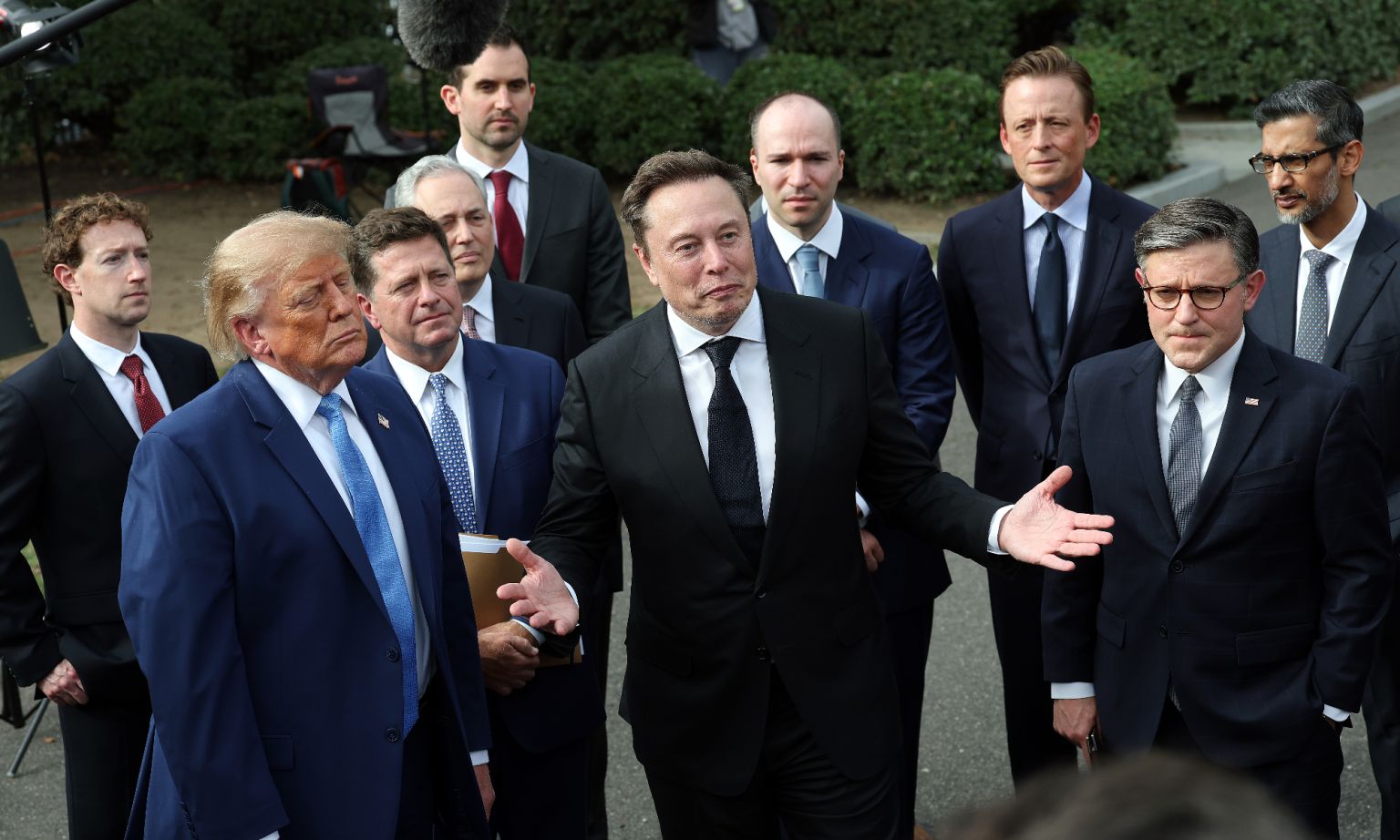
Since Donald Trump’s return to the White House, the mainstream press has turned on the tech elite, bewailing what it perceives as an alliance between right-leaning ‘tech bros’ and a president whom they both loathe and fear. But anyone familiar with the politics of Silicon Valley and its Puget Sound doppelgänger should know that, with the exception of some defence- and space-related firms (SpaceX, Palantir and Anduril), the industry’s predominant political leaning remains Democratic.

This year, almost all contributions from employees at firms such as Meta, Google and Amazon have gone to the Democrats. Employees at leading AI firms have so far given $2million to Democrats, almost 10 times as much as they have given to the GOP. Even if the CEOs think differently, notes Jim Wunderman, former head of the Bay Area Council, they feel compelled to go along because they ‘fear their employees’. In New York, too, many employees at these firms back figures such as New York mayor Zohran Mamdani, whose belief in competition seems little different from that of the oligarchs.
History offers compelling evidence. During the Obama years, Google executives frequented the White House so often that some labelled it ‘the Android Administration’. In 2020, with Trump in the White House, virtually the entire tech industry backed efforts to replace Dr Demento with the already frail Joe Biden. Democrats rarely objected to the monopolistic practices of their favoured tech moguls.
In all probability, the Democrats will offer something that empowers the current tech oligarchy through a lethal combination of corporate and state power. This was the model favoured by the Biden administration. Free-market competition, generally the best means of preventing an excessive concentration of power, will give way to AI-empowered oligopolies capable of eliminating competition with what have been described as ‘algorithmic firing squads’. Society’s defence against AI will come not from people appointed by elected officials but from self-appointed experts, as Anthropic’s Dario Amodei and others suggest.
In California, the tech oligarchy’s great bastion, firms such as OpenAI and Anthropic have maintained close links with the Democrats, even as some of their representatives savage them in the press. Sam Altman recently praised governor Gavin Newsom as ‘thoughtful’ on AI. Anthropic’s recent $850,000 contribution to the California Democratic Party – the company’s first contribution to any statewide political party – suggests that Silicon Valley’s broader shift to the right during Trump 2.0 is likely to be short-lived.

The agenda of the AI elite stands in stark contradiction to the one long favoured by traditional liberals and social democrats, which aimed to empower and enrich the middle and working classes. That is not the agenda of the AI nabobs. Anthropic’s Dario Amodei calls his algorithms ‘machines of loving grace’, whose main job is to advance what one sceptic calls ‘the obsoleting project’ of replacing human labour with AI.
Of course, not all non-elite work will disappear. According to a senior Anthropic executive, humans may still find work in ‘grounds maintenance, like food and serving, personal care, personal service’. That is, until robots are put to work providing these services. Most of hoi polloi will be reduced to serf-like status, subsidised by the state to keep them from destitution.
The winners will not be the suddenly redundant working and middle classes but the technocratic elites and their investors. These firms are essentially indifferent to the values and aspirations of most people currently alive. The tech entrepreneur Rony Alvovitz, who speaks with these people frequently, noted in a recent Feudal Future podcast, which I co-host with Marshall Toplansky, that AI developers are purposely creating fearsome agents akin to the rampaging dinosaurs of Jurassic Park. As he described their thinking: ‘We’re going to build the most dangerous things in the world, but because we’re smarter than you and only us, only this handful of super smart genius Übermenschen can build these monsters and the other Übermenschen can build the cages.’
Alvovitz essentially described a group of sociopaths being granted unprecedented power over humanity, while mega-profits subsidise their luxurious lifestyles. Their beloved ’agents’ will not only provide ‘a general labour substitute for humans’, as Amodei suggests, but also replace us in virtually every task the geek mind can imagine. Amodei adds: ‘It cannot be more than a few years before AI is better than humans at essentially everything.’ That means everything that can be quantified and is not subject to the premonitions, emotions or attachments that make us uniquely sentient.
There is even a tendency among the oligarchs to suggest that they and their creations will soon rule over us – and that they should. This is too much even for Elon Musk. When the SpaceX supremo raised concerns about AI and the future of humanity, Larry Page, Google’s co-founder, accused him of being a ‘speciesist’ because he was supposedly too concerned about the fate of Homo sapiens in Page’s imagined ‘digital utopia’. This vision of AI-driven prosperity is also embraced by many libertarian apologists, who denounce ‘AI Luddites’. Some 80 reporters appear to be on the oligarchic payroll through organisations such as the Tarbell Centre for AI Journalism.
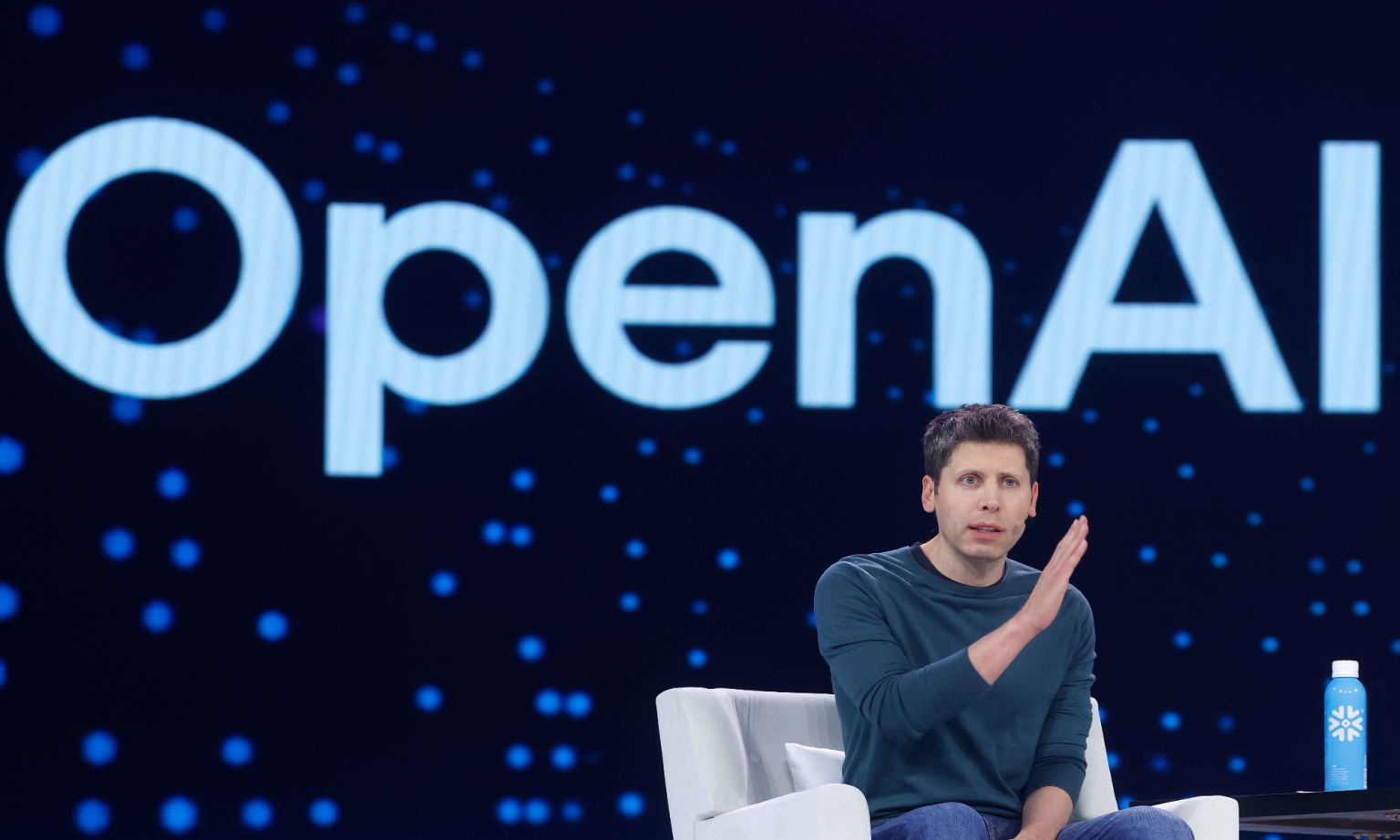
To many in the AI field, humanity needs to merge with and follow its lovingly assembled agents. OpenAI’s Sam Altman sees his bots as a ‘super assistant’ for every aspect of life, supplanting the roles once played by parents, friends, teachers, ministers and neighbours. AI is being presented as a source of ideal companions for children. Mark Zuckerberg believes human contact can be replaced by properly customised bots in his Metaverse.
AI pioneer Richard Sutton spoke for some of his fellow visionaries when he suggested that it was natural for whichever being was ’smartest’ to be the ‘most powerful’. ‘I don’t think there’s anything sacred about human DNA’, says Sutton, an eminent AI researcher at the University of Alberta who won the Turing Award, the highest honour in computer science. As he put it:
‘There are many species – most of them go extinct eventually. We are the most interesting part of the universe right now. But might there come a time when we’re no longer the most interesting part? I can imagine that.’
As early as the 1960s, futurist Michael Polanyi foresaw the emergence of a ‘republic of science’, a world designed by technologists. Even tech workers can become victims of this transformation, as demonstrated by the wave of massive layoffs, including in AI departments, as algorithms evolve on their own. Meanwhile, profits at the big tech firms have risen towards record levels.
This vision of the future is not widely embraced. Pew notes that the proportion of Americans who view AI positively has fallen from 18 to 10 per cent since 2021, while the proportion worried about its effects has risen from 37 to 50 per cent. According to one recent survey, more than two-thirds of young people consider the leading figures in the AI boom – Amodei, Musk, Zuckerberg, Altman and others – to be ‘supervillains’.
But can ordinary people restrain the digital elite’s bid for total control? The AI elites envisage their agents dominating and directing our lives. They even seek, some accounts allege, to control our access to the past. Anthropic has taken it upon itself to digitise rare and out-of-print books to feed their AI programmes and then destroy the originals. In the end, we could be forced to access historical artefacts and rare essays only through the lens provided by the oligarchs.
The idea of human equality, so deeply entrenched in modern religious and liberal ideals, is widely rejected by the tech elite. Some tech-oriented thinkers, such as Curtis Yarvin, embrace an essentially autocratic political system, including the idea of monarchy and rule by educated Übermenschen. Call it neo-feudalism or techno-feudalism; it amounts to much the same thing. Futurists such as Yuval Noah Harari envisage a future in which ‘a small and privileged elite of upgraded humans’ gain control of society and use genetic engineering to cement their offspring’s superior status.
The efforts to redesign humans and replace their labour with machines are intrinsically ‘dehumanising’, noted the late British chief rabbi, Jonathan Sacks. The engineer’s mindset operates mechanically, he argued, through detachment and analysis, breaking wholes down into their constituent parts. What we once called society is left in tatters.
The widespread opposition to data centres, not only in deep-blue California but across the country, including among Republicans, demonstrates a grassroots rebellion against the oligarchs’ imperatives. As energy analyst Robert Bryce points out, rejections of data-centre proposals have risen from nine in 2024 to 48 last year and 70 in the first quarter of this year.
The recent attacks on Sam Altman’s San Francisco mansion revealed a similar anti-corporate sentiment that increasingly shapes our political culture. The vast majority of Americans see billionaires and tech executives as the people who wield the most power in society – far more than political elites, Hollywood, the military or law enforcement.
The radical alternative – Bernie Sanders’s statist proposal that the US government take a 50 per cent stake in AI firms – is unlikely to see the light of day. But some regulation is no doubt needed, for example, to manage the costs of data centres. Measures are also needed to keep competition alive and prevent AI’s already left-leaning bias from becoming further entrenched.
Perhaps the best solution, suggests AI pioneer Alvovitz, lies in introducing regulations that require AI systems to be tested for safety and security. As one of the pioneers of robotic surgery, he has worked with federal regulators on safety- and health-related issues. He favours regulation by a neutral, legally accountable body rather than by self-appointed experts or privately hired tech specialists. (Many of the latter, he argues, appear to be on the autism spectrum and are often socially awkward men who struggle to relate to the opposite sex.)
Right now, we stand on the cusp of an ‘inversion’ in which, rather than shaping technology, we are shaped by it. Instead of a society shaped by parents and neighbours, we could surrender our historical memory, our ability to raise our offspring and even our ability to earn a decent living, all to serve a small technocratic elite – one that most Americans fear and that they rightly believe the government may be unwilling to constrain.
As is often the case, California points towards a particularly feudal future. Once a bastion of upward mobility, my home state has become increasingly unequal, according to a recent report by Joint Venture Silicon Valley. The top 0.001 per cent of Valley residents have 12 times the wealth of the bottom 50 per cent. Overall, AI is making America, and California in particular, ever richer, as recent economic trends demonstrate. Yet wealth and power are already distributed highly unequally, and that inequality is likely to worsen considerably, as California already shows.
Arguably, the biggest danger lies in the ability of tech firms, empowered by AI, to addict an entire generation to technological fixes. After all, this is a generation that uses AI to manage personal relationships and navigate social interactions. Almost two in five dating break-ups involve the use of AI, making it ‘the third wheel’ in these relationships. According to a Rasmussen survey, some 40 per cent of young people even want to hand control of the government over to AI.
The priority is not to destroy the machines, which are often useful, but to avoid nurturing a geek aristocracy. Humans need to demand not only adequate regulation but also the dismantling of the already excessively powerful tech oligopolies. The alternative is neo-feudalism on steroids, with most people reduced to little more than digital serfs.
Joel Kotkin is a spiked columnist, the presidential fellow in urban futures at Chapman University and executive director of the Urban Reform Institute. He is the author of The Coming of Neo-Feudalism, published by Encounter Books.
You’ve hit your monthly free article limit.
Support spiked and get unlimited access.
Support spiked and get unlimited access
spiked is funded by readers like you. Only 0.1% of regular readers currently support us. If just 1% did, we could grow our team and step up the fight for free speech and democracy.
Become a spiked supporter and enjoy unlimited, ad-free access, bonus content and exclusive events – while helping to keep independent journalism alive.
Monthly support makes the biggest difference. Thank you.



Comments
Want to join the conversation?
Only spiked supporters and patrons, who donate regularly to us, can comment on our articles.