Long-read
The ‘Third Worldist’ roots of the Islamo-left alliance
The New Left of the 1960s paved the way for the cult of Palestinianism and its war against the West.
Want unlimited, ad-free access? Become a spiked supporter.
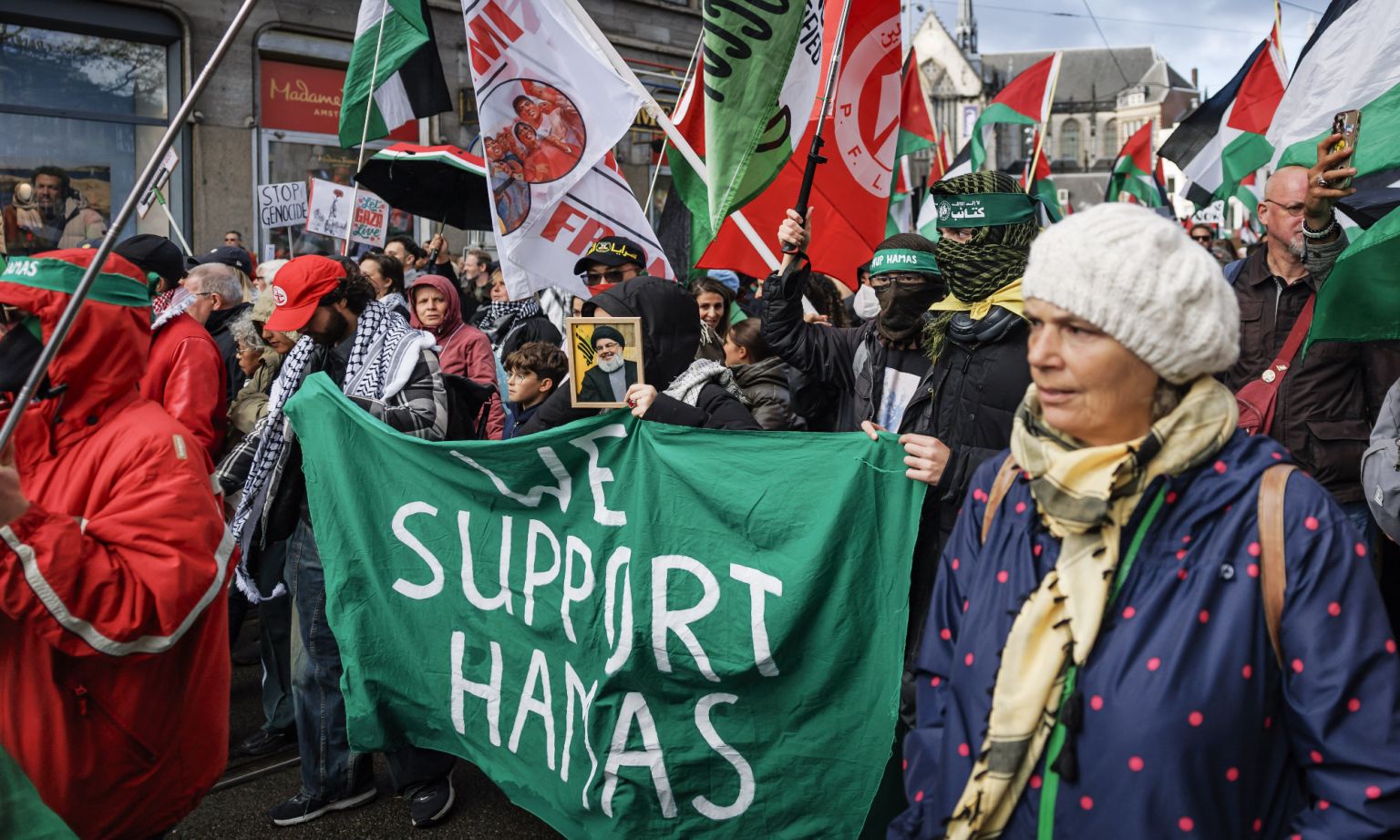
Just three days after the third anniversary of Hamas’s pogrom in southern Israel, the Islamo-left was once again on the march in central London. Amid barely veiled anti-Semitic chants of ‘Zionist scum’ or ‘From the river to the sea…’, onlookers could also hear, ‘In our thousands, in our millions we are all Palestinians’. This little ditty serenaded the keffiyeh-clad protesters as they threw insults at counter-protesters and trampled on poppy wreaths laid at the foot of a Battle of Britain memorial.
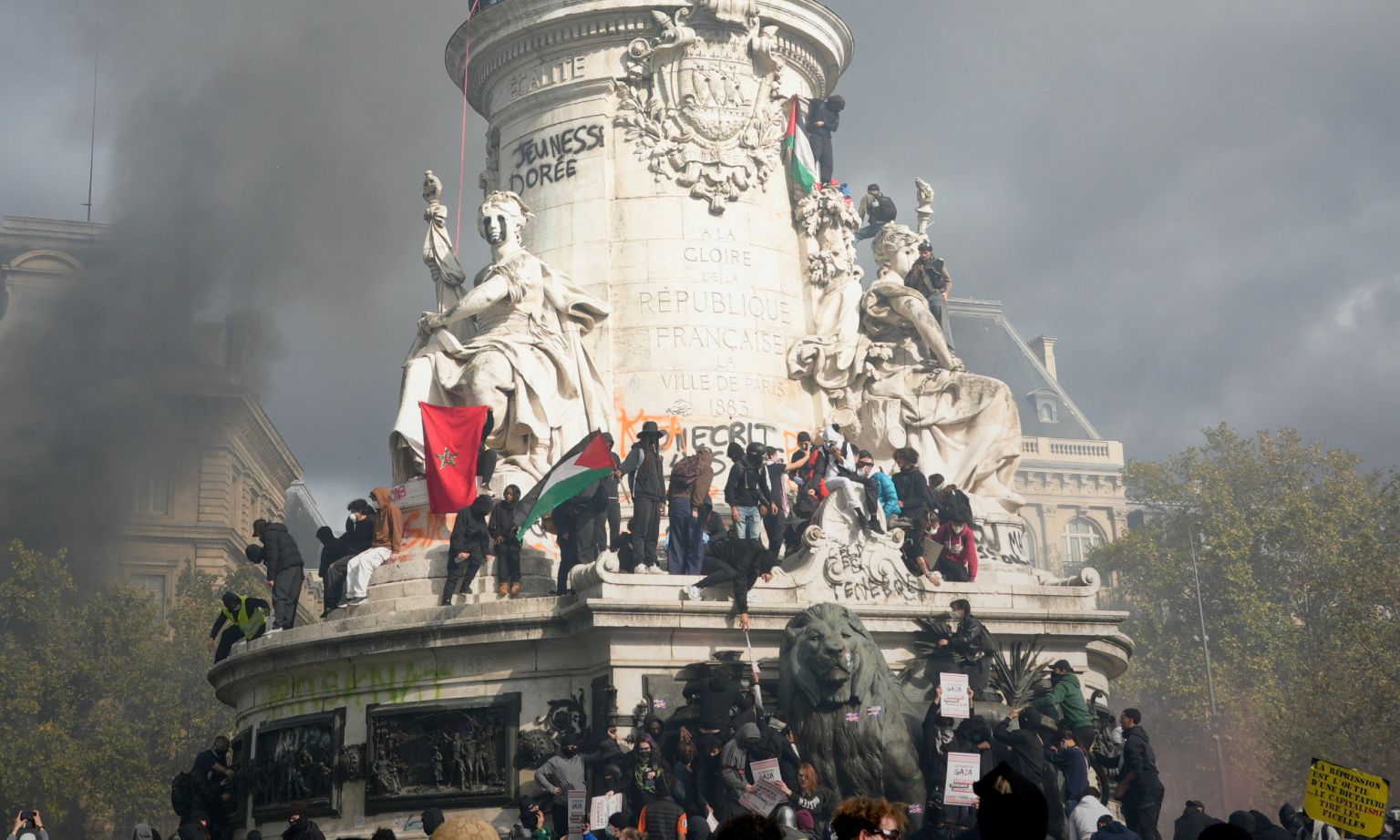
A week later, the Islamo-left was to the fore once again during the protests-cum-riots that continue to engulf urban France. As cars burned and tear gas scorched the Parisian air, a Palestine flag was raised over the statue of Marianne, an abiding symbol of the French Republic.
These two scenes, a week apart, capture well the essential worldview of Islamo-leftists. They combine a near-total identification with the cause of Palestine with a near-total estrangement from their own societies and their culture and heritage. They wilfully efface and sometimes desecrate symbols of the nation in which they live in the name of a nation that doesn’t exist.
They will claim that they are protesting against Israel or the actions of its government – an monomaniacal obsession that is troubling in itself. But they are ultimately protesting against us, against our societies and even our broader civilisational heritage. Clinging ever-more tightly to that free-floating signifier of virtue, ‘Palestine’, the Islamo-left is seeking nothing less than the poppy-trampling, Marianne-effacing ‘decolonisation’ of Western society in general.
This reactionary alliance of middle-class ‘progressives’ and de facto Islamists has been a long time in the making. What we’re seeing, in short, is the culmination of the ‘radical’ left’s decades-long degeneration, its descent into reactionary identitarianism and anti-Westernism – a process that has ultimately led it into a grim coupling with Islamism. These are now two parties bonded by their shared animosity towards modernity, united in their war on the legacy of the Enlightenment, and currently channelling all this ideological energy into hatred of the world’s only Jewish state.
To understand this degeneration, it is necessary to look at the development of the New Left during the 1950s and 1960s. For it was then that young radicals, profoundly disillusioned by both liberal capitalism, which lacked the moral resources to justify itself, and the existing left-wing alternatives, began looking outside their societies for their salvation. This led them to embrace the independence and anti-colonial movements of what they conceived as the Third World.
Emerging in and around the rapidly expanding postwar university system, the New Left was a complex phenomenon. Sometimes merging with the broader countercultural revolt against the stuffy moralism and picket-fenced conservatism of the immediate postwar era, it was principally a student-heavy, upper-middle-class rejection of the orthodoxies and institutions of the established social-democratic and Communist left. In Western Europe, where Communist parties were dominant, this disillusionment was especially acute. And with good reason. Whatever anti-fascist moral lustre still clung to Communism in the 1950s, it had been dealt a severe blow by the events of 1956. That was the year that Soviet tanks rolled into Budapest to violently crush the Hungarian Revolution, and Soviet leader Nikita Khrushchev gave his ‘secret speech’, which partially acknowledged the vast crimes of the Stalin era.
In part, the New Left reckoning with the established left was politically and intellectually necessary. As its organisations, journals and publishing houses flourished, dissident Marxist and other radical thinkers, such as Georg Lukács or Karl Korsch, were brought into the Western public sphere for the first time. New ways of thinking about and critiquing society emerged. In so many ways, it was a vibrant, politically creative moment.
Yet while there was much to appreciate in the New Left’s attempt to think beyond the sclerotic organisations of the established left, its social and intellectual trajectory was less positive. As some of these largely haute bourgeois thinkers and activists attempted to forge a new radicalism, they also tended to conflate the organisations and parties of the established left, be they reformist or Communist, with the working class itself. From their credentialled perches, some even started to portray the Western working classes as complicit in maintaining the liberal capitalist societies they were busy criticising – the proles were seen as too comfortable, too conservative and, therefore, insufficiently revolutionary.
This borderline antagonism towards the supposedly indolent Western masses was palpable in some of the slogans and sentiments of 1960s radicalism. Radical activists took to the streets in the US to condemn 'Pig Amerika', while the German émigré and New Left guru, Herbert Marcuse, was busy casting the working class as the stupefied product of consumerism. ‘They find their soul in their automobile, hi-fi set, split-level home, kitchen equipment’, he wrote in One-Dimensional Man (1964): ‘It is a good way of life – much better than before, and as a good way of life, it militates against qualitative change.’ In other words, the working class had it too good.

The New Left’s turn against Western society and its slow-motion abandonment of class politics had profound intellectual ramifications. From its conception during the French Revolution, the left had always been at the vanguard of Enlightenment thought, a radical opposition to bourgeois reaction during the 19th century through socialism and Marxism. The left, like its classical Enlightenment forebears, was concerned with enlarging our capacity to understand and control our environment. It was equally concerned with autonomy and the realisation of collective and individual self-government – concerns informed by the growth of working-class organisation and power.
The New Left’s estrangement from class politics went hand in hand with ‘the cultural turn’ towards identity politics. Above all, it involved a turn towards a distinctly counter-Enlightenment tradition of thought. There was plenty of resistance to this shift among significant figures on the New Left, writ large in works such as EP Thompson’s The Poverty of Theory. But there’s little doubt that influential New Left-era thinkers, especially in France, drew most of their inspiration from those who sought to diminish or even dethrone human reason, from the protests of the Romantics to reactionaries like Friedrich Nietzsche or the card-carrying Nazi Martin Heidegger – the ‘unavoidable’ thinker as the New Left-adjacent Jacques Derrida described him. Even those associated with the New Left who still invoked Marx, like French Communist intellectual Louis Althusser, emptied his work of its ‘Hegelian’ or humanist-centred content.
Many on the New Left used these deeply reactionary, counter-Enlightenment thinkers to ruthlessly critique post-Enlightenment modernity – or even the post-Socratic West, in Heidegger’s case. And like much of the counterculture more broadly, the New Left tended to damn all those living within Western society too, as conformist victims – the duped members of the ‘society of the spectacle’. They reduced Westerners to mere ‘bearers’ of ‘relations of production’, in Althusser’s words, or cast them, Matrix-like, as effects of structures or systems of power forever beyond their control.
Here we come to one of the key moments in understanding the development of what would become the Islamo-left. With the turn away from domestic class politics, large parts of the New Left simultaneously embraced the ‘Third World’ – a term coined in 1952 by French demographer Alfred Sauvy to designate the Third Estate-like revolutionary force emerging in the colonial and the post-colonial sphere. In this reading, the Third World, from Vietnam to China to Cuba to Algeria, was set to challenge the established capitalist and Communist powers of the first and second worlds.
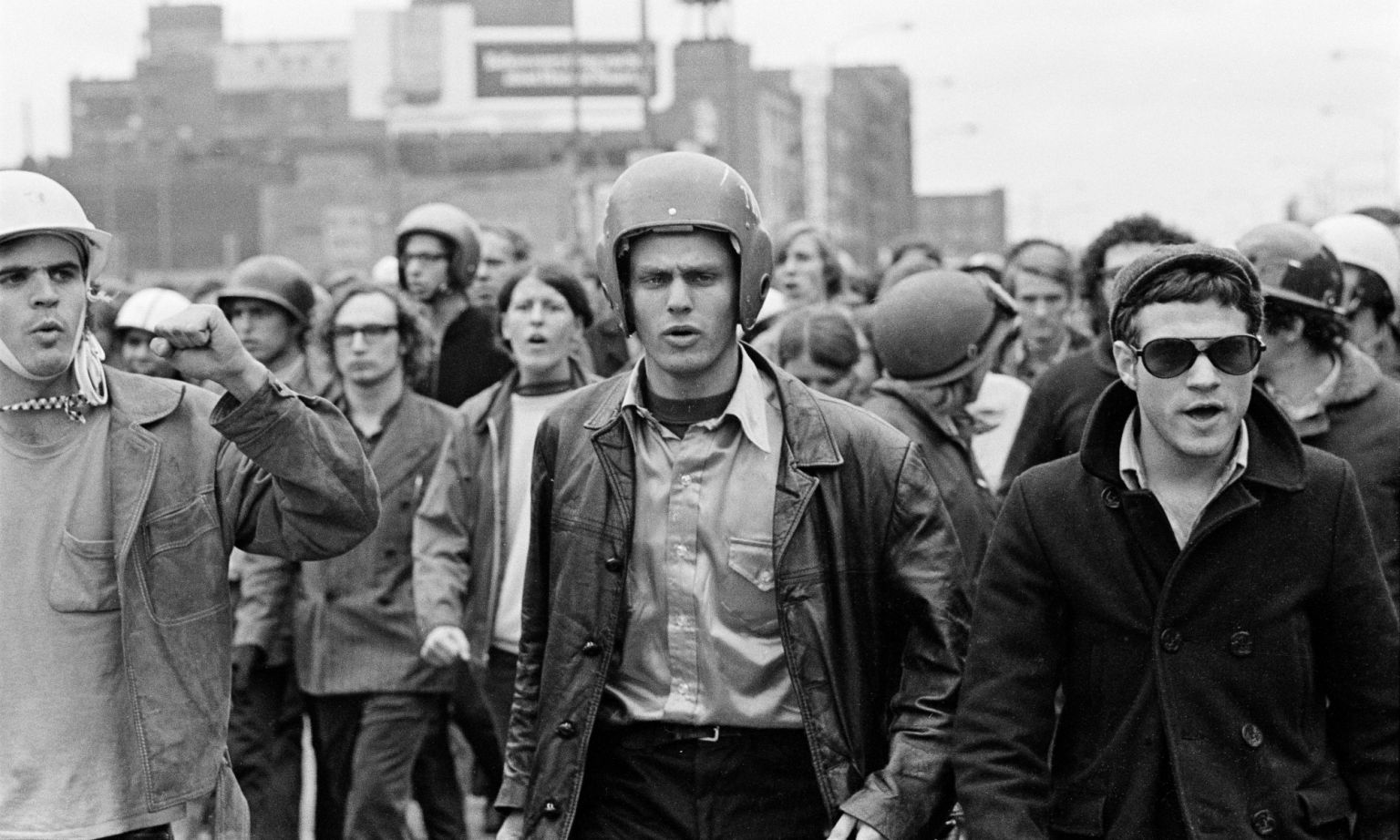
In part, the New Left’s Third Worldism built on traditional left-wing anti-imperialism – that expression of political solidarity with colonised peoples in their fight for the same freedom and autonomy enjoyed by people in North America and Europe. No doubt many left-wingers were still classically anti-imperialist. But there were elements to the New Left’s relationship with the decolonising postwar world that were new. For some, their Third Worldism was based less on class solidarity than on cultural identity – that is, on an almost psychological identification with the radically ‘other’, precisely because the Third World was not the West. As one American radical wrote of Fidel Castro’s Cuba in the late 1960s: ‘We look to Cuba not only because of what we sense Cuba to be, but because of what the United States is not… we needed to tie our fates to someone, somewhere in the world, who was seizing the chances for a humane society.’
There were modernist, interwar antecedents to this identification with the anti-Western and often the anti-modern, too. Think of ‘primitivism’, that modernist celebration of people and ways of life deemed closer to nature. Or think of the French Surrealists of the 1920s, who threw their lot in with the Berbers after a French colonial intervention in Morocco in 1925. ‘We profoundly hope that revolutions, wars, colonial insurrections, will annihilate this Western civilisation’, ran one of the Surrealists’ innumerable manifestos.
Elements of the New Left took this to another level. The Third World was effectively conjured up as the means by which the West might be de-Westernised and saved from itself. This is captured well by Jean-Paul Sartre’s infamous preface to the so-called ‘bible of decolonisation’, Frantz Fanon’s The Wretched of the Earth (1961). Going far beyond anything Fanon actually wrote (The Wretched of the Earth was principally a radically humanist work about and on national liberation), Sartre hailed the rise of the Third World for exposing Western ideas of humanism, liberty and equality as ‘an ideology of lies’. From this perspective, independence movements, from Cuba to Algeria, were simultaneously in the process of purging the West of itself – exposing Europe and America’s grand heritage as no more than a ‘justification for pillage’. ‘We in Europe, too, are being decolonised’, concluded Sartre, ‘that is to say that the settler in every one of us is being savagely rooted out’.
Sartre may have got carried away with his own rhetorical brilliance – after all, his political affiliations and sympathies seemed to be in perpetual motion throughout his life. But many other New Leftist elements seemed thoroughly committed to embracing the Third Worldist ‘other’ as the gravedigger of the West. In ways that anticipate the contemporary leftist identification with Islamism, New Left Third Worldists tended to recast themselves as alien ‘others’ within their own societies. In America, anti-Vietnam War protesters filled the streets chanting, ‘Ho, Ho, Ho Chi Minh, the NLF is gonna win’. Elsewhere, Cuban revolutionary Che Guevara became an icon to be emulated, while upper-class Parisian radical Régis Debray transformed Guevara’s guerrilla exploits into a voluntarist model (‘focoism’) for revolutionary action throughout the West and beyond in Revolution in the Revolution? (1967) – a model taken to terroristic extremes by the West German Red Army Faction, Italy’s Red Brigades and America’s Weather Underground. As the politics of Third Worldism streamed through the New Left, this also supercharged racial identity politics among minorities – it’s no coincidence that black separatist movements began flourishing in late-1960s America.
It was in the Third Worldist context, too, that Palestine first began to emerge as what it is today – the anti-Western rallying cry of today’s Islamo-left.
Israel’s crushing military victory over its Arab neighbours in 1967 was pivotal. Until then, the old-left view of Israel as a worthy cause, a product of the anti-colonial struggles of the early 20th century, still just about held. But after the Six-Day War, all that changed. Firstly, Palestinian groups, like the Yasser Arafat-led Palestine Liberation Organisation (PLO) and the new Popular Front for the Liberation of Palestine (PFLP), reacted to the military failure of pan-Arab nationalism by pushing their own Palestinian nationalism. With the backing of the Chinese Communist Party, they promoted Palestine, through international conferences and global diplomacy, as an explicitly Third Worldist cause. Hence, from the late 1960s on, Palestine slowly became the focal point for Western New Leftist activism – and ultimately the nexus between Islamism and leftism. Indeed, just as Che Guevara in his beret became the symbol of New Left Third Worldism during the 1960s and 1970s, so PFLP plane hijacker Leila Khaled in her keffiyeh has become the symbol of Third Worldism’s contemporary Palestine-centred iteration.
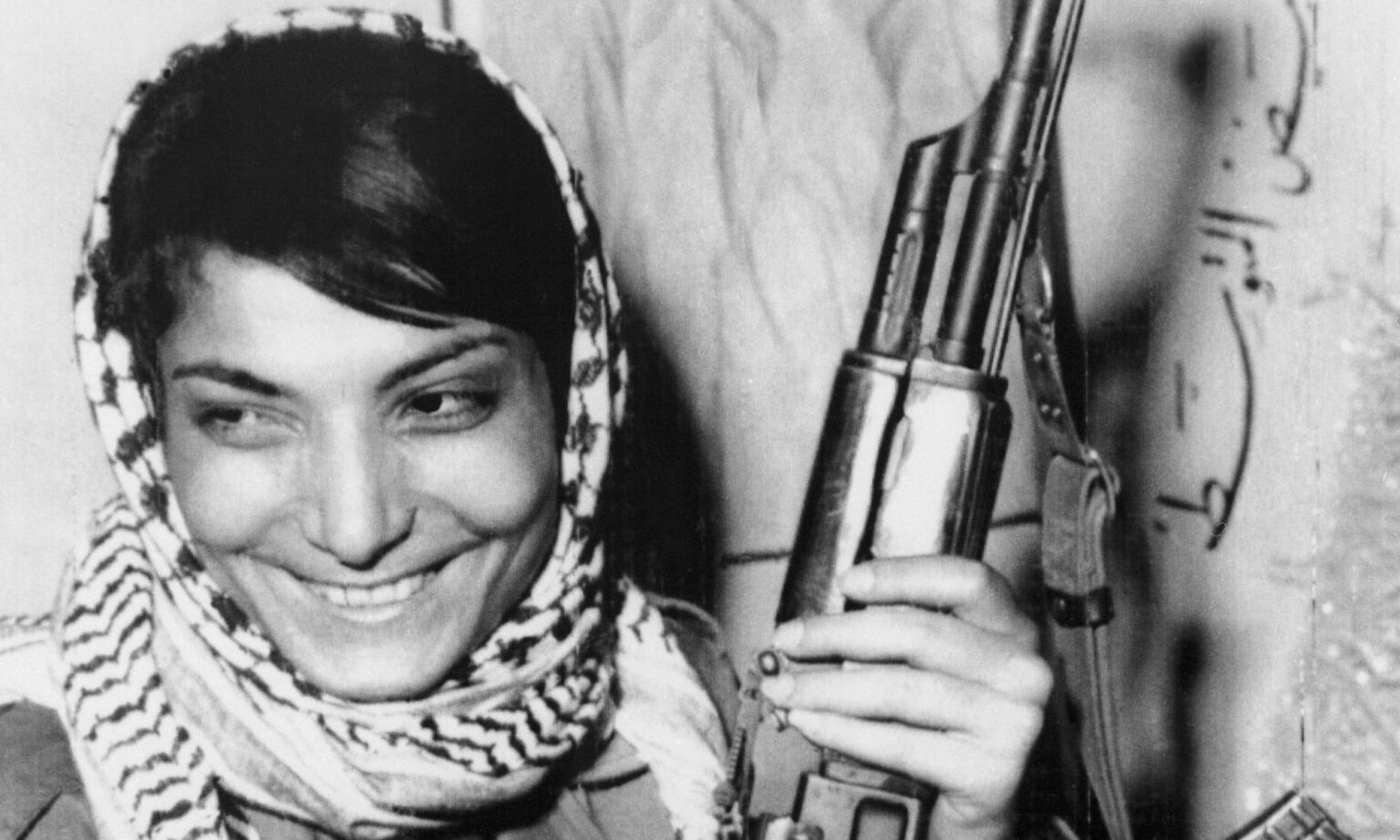
Secondly, with the re-conception of Palestine as a Third Worldist rather than pan-Arabist cause, Israel was recast as the bridgehead of the Western enemy. Indeed, the construction of Israel as a projection of Anglo-European colonialism, an embodiment of Western evil, was first given its lasting descriptor in 1967, in Maxime Rodinson’s ‘Israel, A Colonial Settler State?’. This was published in a special edition of the journal Sartre himself co-edited, Les Temps Modernes, just as the Six-Day War was ending.
As the 1970s progressed, Third Worldist enthusiasms increasingly ran up against the reality of the post-colonial world, much of which was still in hock economically and politically to the Cold War superpowers. The idea of the Third World as a coherent revolutionary bloc, so central to the New Leftist imagination, was difficult to maintain in the face of petro-fuelled Middle Eastern states, fledgling Southeast Asian ‘Tiger’ economies and Latin American dictatorships.
But New Leftist Third Worldism didn’t ebb away. It slowly but surely retreated and entrenched itself in the New Left’s natural home – the Western academy. The undeniably brilliant literary professor Edward Said, the author of Orientalism (1978) and sometime speech-writer for Yasser Arafat, unwittingly and regretfully founded a discipline infused with Third Worldist sentiments, in the shape of post-colonial studies. More broadly, the humanities as a whole became a battleground, as young-ish radical academics, raised on a diet of the New Left’s counter-Enlightenment Third Worldism, set about their disciplines as if they were taking on the imperialist enemy itself.
At the same time, Palestine, abstract and unsullied by post-colonial reality, began to consolidate itself as the Third Worldist cause of the left – helped in no small part by Said’s own The Question of Palestine (1979).
While all this was happening in leftist spaces in the West, Islamism had been rising as a force in the Middle East and the Arab world since the defeat of largely secular pan-Arab nationalism in 1967. And it was towards the end of the 1970s that Western leftists and Islamists first tentatively began their fateful dalliance – that is, during the Iranian Revolution in 1979.
From its inception with the Muslim Brotherhood in British-occupied Egypt in the 1920s, Islamism was effectively a repurposing of fundamentalist Islam as a political ideology – an -ism to rival liberalism and Communism. Thoroughly and violently anti-Western, its critique of the West drew as much from Western sources as it did from the Koran. The Brotherhood’s leading members drank from the well of European counter-Enlightenment thought, from the early Romantic critique of Enlightenment rationalism to Nietzsche and Oswald Spengler’s Decline of the West. It was and is, in essence, a radical counter-Enlightenment movement that posits Islam as the reactionary, revolutionary answer to a decadent, godless West. A vanguardist struggle for ‘the moral purification of society’, as Sayyid Qutb, Islamism’s most influential ideologue, had it. A project to construct an Islamic state over which Allah was sovereign, and all accepted their ‘total submission to Allah alone’.
The Iranian Revolution drew simultaneously on Islamism and various strands of leftism, not least that of the charismatic, Sorbonne-educated Ali Shariati, who, as a sociology professor in 1960s and 1970s Tehran, delivered packed-out lectures combining Sartre and Fanon with Shia mysticism to mesmerising effect. Other left-wing groups, such as the Marxist Tudeh Party, were more tactical. They loathed the Islamist agenda, but shared a common aim with its advocates in the shape of overthrowing the repressive regime of the Shah. Likewise, the revolution’s leading figure, Ayatollah Khomeini, may have been a brutal Islamist, but he had begun peppering his speeches with references to ‘the wretched of the Earth’ and other distinctly New Leftish jargon.
When the weak, tyrannical Shah fell in 1979, few in the West shed many tears. But a few among the New Left went further. They recognised aspects of their own thinking in the revolutionary brew served up by Khomeini and his henchmen. They glimpsed an elective affinity between their own anti-Western worldview and that of the Islamists then coming to power. They even shared a similar immersion in distinctly counter-Enlightenment traditions of thought – including denunciations of the West’s materialism and its elevation of human reason.
One European radical even put his support down on record. French philosopher Michel Foucault infamously backed the establishment of an Islamic state because he thought it would provide a ‘spiritual dimension’ to societies trapped in what Max Weber had called the ‘iron cage of rationality’. Not that Foucault’s support lasted long. The Ayatollah Khomeini’s murderous post-revolution clampdown on the actual Iranian left, not to mention his regime’s treatment of women, disabused Western leftists of those illusions – if only, as we now know, temporarily.
The Islamo-left starts to form properly from the late 1980s onwards. It was a process aided in no small measure by the influence of New Leftist identity politics on public life, institutionalised in Britain as ‘multiculturalism’. This effectively encouraged people to think of themselves, indeed to identify themselves, as members of particular cultural, religious or ethnic groups, fuelling these groups’ competitive demands for ‘recognition’ from the state. This created the climate for ‘the Muslim’ to flourish as a victim-group identity. It encouraged the transformation of Western Muslims’ hitherto private, religious affairs into a very public, monolithic political identity that needed ‘recognition’ and ‘respect’ – a cause often represented by hardline and even Islamist-inclined groups. As demonstrated by the left’s cowardly refusal to back Satanic Verses author Salman Rushdie, after Khomeini issued a fatwa against him in 1989, an identitarian focus on ‘respecting’ Muslims effectively justified Islamist demands.
By the 1990s, a firmly post-class, Third Worldist left, disoriented by the collapse of the Soviet Union and the end of the Cold War, was ready for a closer relationship with Islamists. There were doubts hanging over from the Iranian Revolution. But they didn’t last long. In Britain, a Socialist Workers Party essay from 1994, called The Prophet and the Proletariat, argued that although Iran-backed Hezbollah and Muslim Brotherhood spin-off Hamas had certain ‘fascist’ tendencies, they also expressed ‘a feeling of revolt [that] could be tapped for progressive purposes’.
After 9/11, the Stop the War movement of the 2000s consolidated the fledgling relationship between sections of the Third Worldist left and actual Islamists. They marched hand in hand at anti-Iraq War marches, while pushing a pernicious form of Islamic identity politics, turning Muslims into little more than identikit victims of ‘Western imperialism’ abroad and racism at home.
Meanwhile, the academy, long colonised by Third Worldism and counter-Enlightenment anti-Westernism, became an increasingly important vehicle for the dissemination of Islamo-leftist sentiment. In the early 2000s, fashionable Italian Marxist Antonio Negri and his American collaborator, Michael Hardt, were praising Islamism for ‘its refusal of modernity as a weapon of Euro-American hegemony’. And then of course there was vogue-ish American philosopher Judith Butler, who in 2006 said: ‘Understanding Hamas [and] Hezbollah as social movements that are progressive, that are on the left, that are part of a global left, is extremely important.’
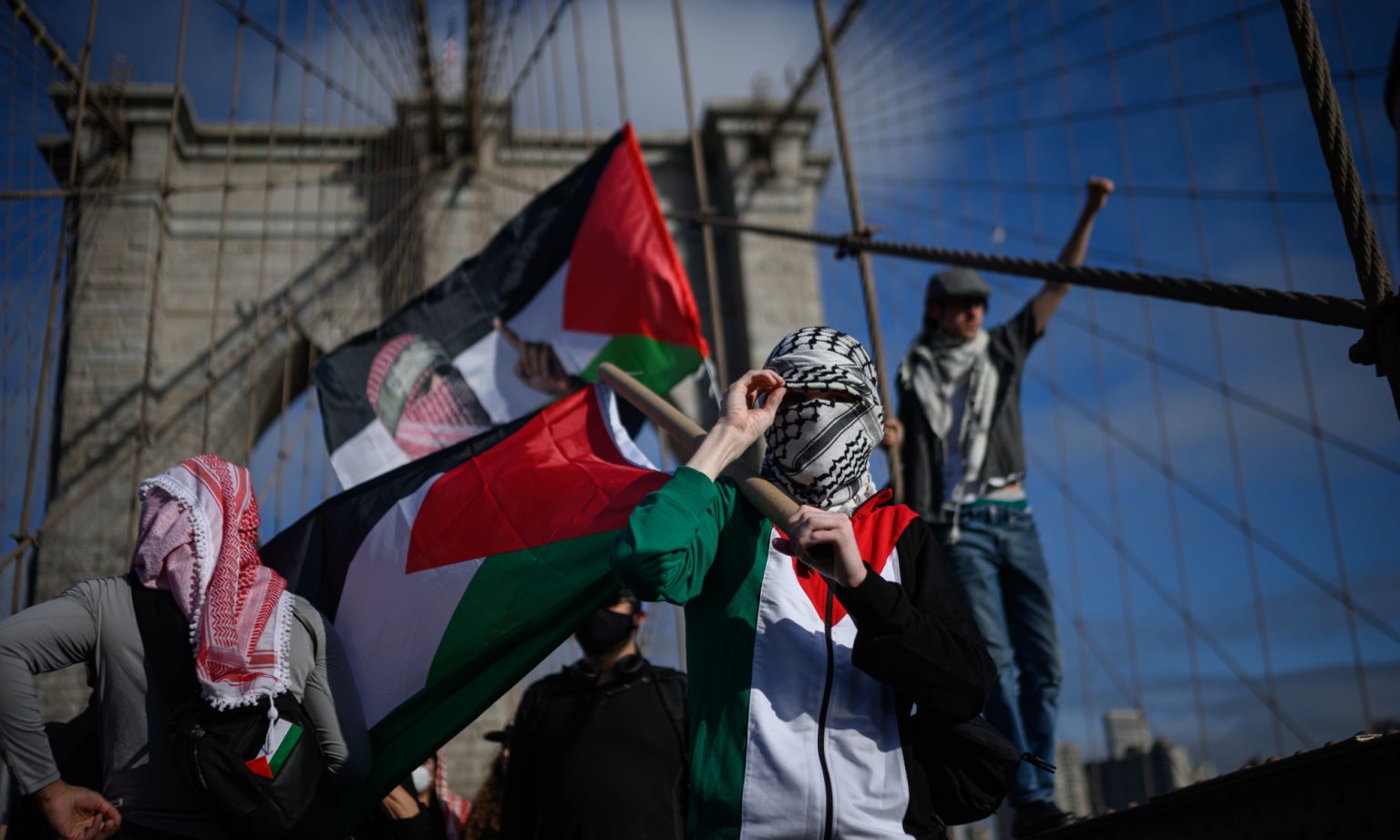
In Britain, it was a message taken to the heart of parliamentary politics by that veteran of the 1970s left and later Labour Party leader, Jeremy Corbyn. At a conference in Qatar in 2012, he described talks given by Palestinian militants, including Husam Badran, a former head of Hamas’s military operations, as ‘fascinating and electrifying’. Before that, in 2009, he ‘invited friends from Hamas to come and speak’ in the UK parliament, and described Hamas as an ‘organisation that is dedicated towards the good of the Palestinian people and long-term peace and social justice and political justice in the whole region’ – which is one way of describing a group that demands submission to Allah, throws gays off tall buildings and is sworn to the extermination of Jewry. As Labour leader, he oversaw a party conference in 2018, in which a conference hall of delegates raised the flag of Palestine – an act of classic Third Worldist identification with the idealised, anti-Western ‘other’.
Today, in the aftermath of 7 October, Third Worldism’s latest incarnation, Islamo-leftism, has flourished and grown through Western institutional life, like a particularly virulent strain of Japanese knotweed. University campuses now hum with anti-Israel, pro-Hamas sentiment. Many leftist political parties, including the Green Party of England and Wales, and La France Insoumise, are now Islamo-leftist formations. More broadly, our cultural elites swim all too comfortably in Islamo-leftist waters, routinely demonising Israel, denouncing modernity and identifying themselves with ‘Palestine’.
These are dispiriting times. The Islamo-left has grown mighty in soil tilled by the New Left and cultivated by successive generations of university-based or university-adjacent bourgeois leftists. So committed are they to their anti-Western, counter-Enlightenment modes of thought that they struggle to see the problem with Islamism. And now, thanks to a combination of poisonous identity politics and the demographic growth of Islam in the West, these heirs to the New Left stand alongside an assertive, politicised Muslim constituency in their own societies. The result is something deeply sinister: an anti-Western coalition at the heart of the West. Third Worldism, in all its blood-splattered nihilism, has well and truly come home.
Tim Black is associate editor of spiked.
You’ve hit your monthly free article limit.
Support spiked and get unlimited access.
Support spiked and get unlimited access
spiked is funded by readers like you. Only 0.1% of regular readers currently support us. If just 1% did, we could grow our team and step up the fight for free speech and democracy.
Become a spiked supporter and enjoy unlimited, ad-free access, bonus content and exclusive events – while helping to keep independent journalism alive.
Monthly support makes the biggest difference. Thank you.



Comments
Want to join the conversation?
Only spiked supporters and patrons, who donate regularly to us, can comment on our articles.