Michel Houellebecq must not be silenced
The French novelist is facing prosecution – again – for daring to criticise Islam.

Want unlimited, ad-free access? Become a spiked supporter.
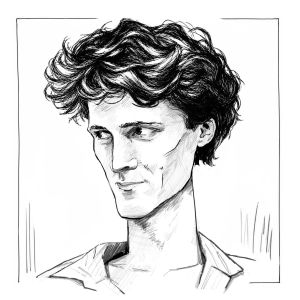
They’re trying to silence Michel Houellebecq again. On Tuesday, a court in Paris formally charged the French novelist over an interview he gave in 2022 in which he allegedly incited ‘discrimination, hatred or violence’. You can take a wild guess as to whom he might have offended.
Having written about Islam and mass immigration for three decades, Houellebecq is a well-known critic of both. The experience of France – and indeed his own – in recent years hasn’t led to any softening of his views. Speaking to the philosopher Michel Onfray, in a conversation later published in Front Populaire in 2022, Houellebecq predicted ‘shootings in mosques, in cafés frequented by Muslims, in short, Bataclans in reverse’, when parts of France ‘come under Islamist control’. He said that French people don’t want Muslims to assimilate so much as to ‘stop stealing’ and ‘[stop] assaulting’ people. Another ‘good solution’, he said, was for Muslims to leave France.
This interview – in which Houellebecq also called the great replacement theory a ‘statistical’ fact – attracted plenty of controversy at the time. French progressives and Muslim groups were quick to condemn his remarks. The head of Paris’s Grand Mosque, Chems-Eddine Hafiz, was the first to file charges against Houellebecq, although he dropped them after a conversation with the novelist. Still, two groups – the Movement Against Racism and for Friendship Between Peoples, and the Union of French Mosques – remained plaintiffs in the case. ‘Freedom of expression is fundamental, but it cannot justify everything’, Najwa El Haite, a lawyer for the Union of French Mosques, said this week after the investigation was launched.
This isn’t the first time Houellebecq has faced criminal charges for his broadsides against Islam. In 2002, he was tried for inciting racial hatred after he described Islam as ‘the most stupid of all religions’. Four Muslim organisations – including the World Islamic League, the National Federation of French Muslims, the Lyon Mosque and Paris’s Grand Mosque – initiated the legal action. ‘He is deliberately insulting, he uses obscene words which are intolerable’, said Dalil Boubakeur of the Grand Mosque. ‘Let him take full responsibility for them.’
Mercifully, Boubakeur didn’t get his wish. Houellebecq was acquitted and continued to exercise his freedom to criticise Islam. Although not even he could have predicted the cost of doing so. In 2015, he required 24-hour police protection after the publication of his novel, Submission. In a tragic irony, this dystopian satire about an Islamist takeover of France was released on the same day that 12 people at the satirical magazine Charlie Hebdo were murdered by two Islamic terrorists for having published a caricature of the Prophet Muhammad. Police feared that Houellebecq could be next.
Houellebecq cancelled his book tours and spent months in hiding. None of this stopped the book from selling more than 650,000 copies in France, before its English translation had even been released. Clearly, many people were interested in what he had to say. By now, we should all know why.
Submission is set in an atmosphere of societal decay, the fag-end of decades of failed integration and mass immigration. Pitched battles take place on the streets of France between right-wing groups and their ethnic adversaries. Marine Le Pen seems destined for the presidency. To stop her in her tracks, the establishment gets into bed with the Islamists. The centre-left, centre-right and the newly formed Muslim Fraternity combine to block a populist majority. The protagonist’s young Jewish girlfriend and her family, concerned about growing anti-Semitism, emigrate to Israel. Does any of that sound familiar?
Eleven years later, we are witnessing gangs of unintegrated French youths, draped in Palestinian and Algerian flags, shatter symbols of the French Republic while chanting songs celebrating anti-Semitic terrorists. We have seen repeated attempts by the French and European political establishment to ban Le Pen from running for the presidency on what appear to be politically trumped-up charges – an even more extreme development than Houellebecq had imagined. We might even draw loose parallels between the Islamic sectarianism of left-wing firebrand Jean-Luc Mélenchon, who promises to destroy the ‘all white, all ugly’ France of the past, with the Muslim Fraternity’s Mohammed Ben Abbes of Submission. Houellebecq is called Europe’s ‘prophet of doom’ for a reason.
Many will feel that Houellebecq flew too close to the Sun in his 2022 interview. In fact, the writer himself regretted his comments – he later described them as ‘clumsy’ and naive. Yet there is something deeply ominous about a writer, particularly one as celebrated as Houellebecq, finding himself in court for expressing a controversial opinion. Once upon a time, expressing strong opinions was simply what writers did.
Even if Michel Houellebecq is acquitted, champions of free speech will have little to celebrate. A society whose most celebrated writer is constantly defending himself from Islamic grievances – whether by lawyers or armed police – has already lost a crucial battle.
Hugo Timms is a staff writer at spiked.
You’ve hit your monthly free article limit.
Support spiked and get unlimited access.
Support spiked and get unlimited access
spiked is funded by readers like you. Only 0.1% of regular readers currently support us. If just 1% did, we could grow our team and step up the fight for free speech and democracy.
Become a spiked supporter and enjoy unlimited, ad-free access, bonus content and exclusive events – while helping to keep independent journalism alive.
Monthly support makes the biggest difference. Thank you.

Comments
Want to join the conversation?
Only spiked supporters and patrons, who donate regularly to us, can comment on our articles.