Why Trump got the bloodbath he deserved
The president abandoned the voters who put him in power.
Want unlimited, ad-free access? Become a spiked supporter.
Well, that was a bloodbath.
Going into the midterm elections, expectations were that the Republicans would lose majority control of Congress – almost certainly the House of Representatives and probably the Senate. The history of the midterms suggests the US president’s party will lose (only three presidents in the past century have overcome that trend), especially if the president is unpopular – and Trump is certainly unpopular. The polls also predicted the Democrats would win.
Even with all that, the extent of the Republican defeat still feels surprising and more sweeping than expected. Many cited prior elections in which polls undercounted Republicans, but in the event of yesterday’s elections, if anything, the polls underestimated support for the Democrats. As of going to press, the Democrats have grabbed clear majorities: a 228 to 139 seat advantage in the House and a 54-44 edge in the Senate.
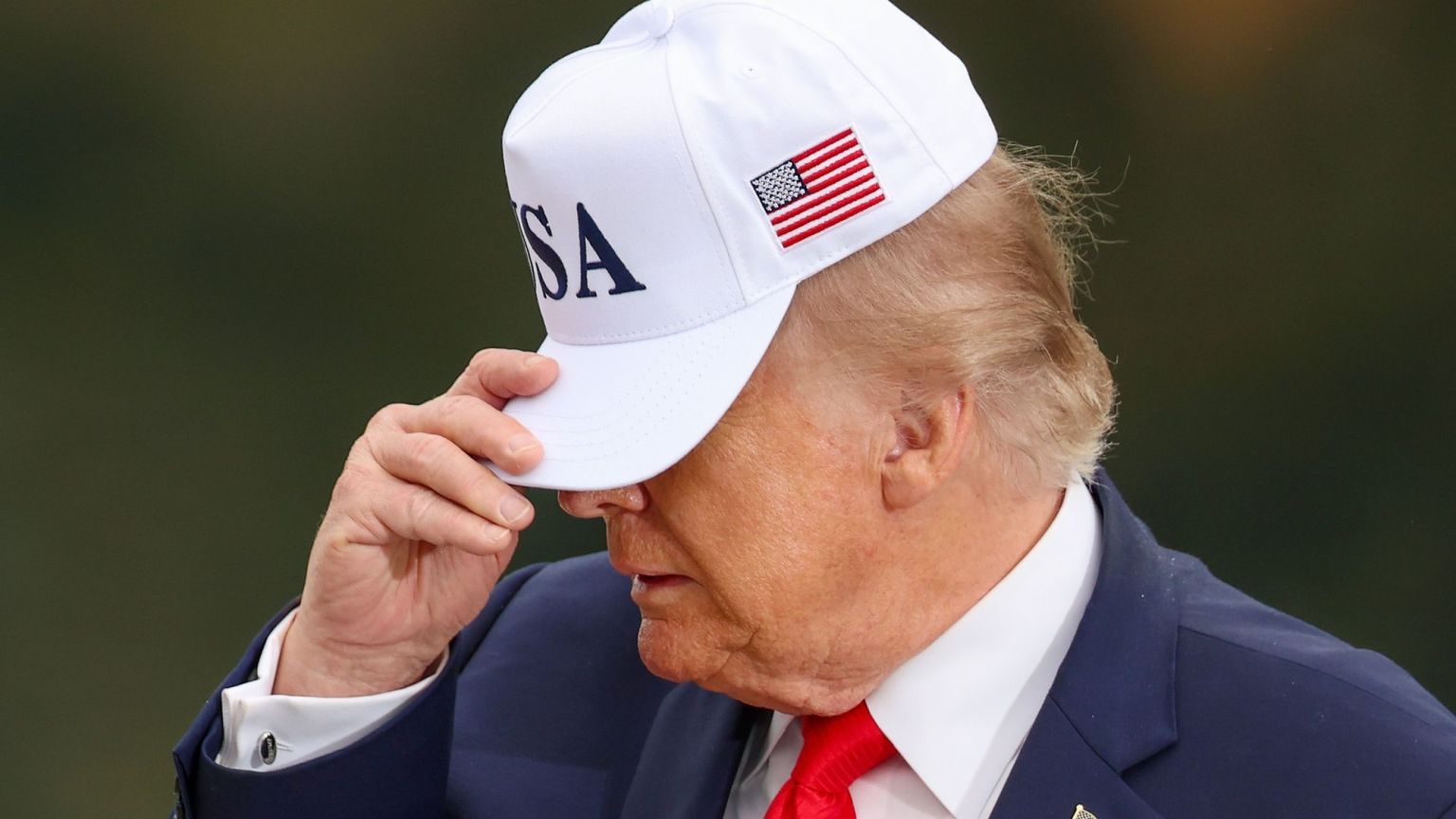
The result was a strong rebuke to President Trump. ‘Pretend I’m on the ballot’, said Trump, as he held rallies across the country. Yes, that’s what many did yesterday – they saw the midterms as a referendum on Trump, and they voted to give him a bloody nose.
It was no big mystery what they didn’t like about Trump and his party. As exit polls showed, inflation, gas prices and the cost of living were top of mind. And voters blamed Trump for their unhappy circumstances, drawing a straight line between his policy choices – tariffs and the Iran war – and the tough cost-of-living situation they face. Whiffs of corruption (like the Qatari jet and Trump family deals) and bizarre preoccupations (like the ballroom and reflecting pool) just added to the sense that the president and his party are not focussed on people’s everyday concerns.
Some Republican losses were stunning. The Democrats won Senate seats in once-reliably red states, including Texas, South Carolina, Kansas and Iowa. The shellacking in Texas was gobsmacking. A state considered deeply conservative, the home to cowboys and oil-drillers, elected uber-woke Democrat James Talarico, who defeated Republican Ken Paxton in the Senate race by a massive margin (likely 12 percentage points). Not only that, incumbent Texas governor Greg Abbott (a Republican) – who everyone thought would win re-election easily – lost decisively to Democrat Gina Hinojosa (by a likely seven points). If Paxton’s loss was the only major Republican loss in Texas, it could have been put down to Paxton being a terrible, scandal-ridden candidate. But Abbott losing as well, by such a substantial margin, showed that this was a sweeping, state-wide and nation-wide backlash against Republicans.
It did not help that the Republicans ran with a number of poor-quality candidates. One was Paxton, as mentioned. Another was Darline Graham – sister of deceased senator Lindsey Graham – who couldn’t hold her brother’s Senate seat. But even when it comes to candidate quality, Trump can be blamed – both Paxton and Graham were handpicked by the president.
Democrats had a simple message: life for many is not affordable, and Trump is to blame. On the defensive, Republicans generally had weak arguments. Starting from Trump on down, they often appeared dismissive of Americans’ concerns about affordability and prices at the pump, claiming the economy was booming, so what’s the worry? Republicans were trying to get voters to consider what Democrats did in the past (‘Inflation was worse under Biden!’), or what the Democrats might do in the future (‘If you think gas prices are bad now, just wait until the Green New Deal comes in!’). But they didn’t have a good answer for what is happening in the present, under Republican rule.
The Republicans also seemed to mishandle woke cultural issues, as when they interjected (correct) arguments against gender ideology into campaigns. Take their response to Talarico in Texas, whom Republicans called ‘Tala-freako’. Yes, it was easy to ridicule his crazy statements he made in the past, such as ‘god is non-binary’ and his claim that there are six biological sexes. But, when you do not have an answer on bread-and-butter issues, bringing up gender as Republicans did made it look like they were trying to change the subject and dodge hard questions.
The midterms showed that the electoral coalition Trump built in 2024, which was underpinned by working-class support, had not been consolidated. Trump took his voters for granted and didn’t deliver for them these past two years, and so many were willing to switch to the Democrats this year. Exit polls found big swings away from Republicans among Latinos (especially men), younger voters (18- to 29-year-olds) and suburbanites. Trump also managed to piss off rural voters, once an electoral strength, with tariffs and higher diesel-fuel prices – and many responded by either not turning up or voting Democrat.
What will these results mean for American politics going forward? If the past is any guide, the Democrats are likely to misinterpret the results and assume they have a mandate to push for their favoured policies, like open borders, green austerity and attacking Israel. However, in reality, they have no such mandate: the election is much more a defeat for Trump and the Republicans than a victory for the Democrats. Obsessed with pushing an anti-Trump message, they forgot to present substantial alternatives. Democrats mentioned ‘affordability’ every other word, but rarely followed up with any meaningful ideas on how to address the issue; instead, they fell back on rhetoric against ‘billionaires’, which is no solution.
Most likely, Democrats will pass some legislation, but Trump will veto it, and they won’t have the votes to overturn his veto. So, their bills are likely to end up being symbolic gestures, rather than producing actual results. For his part, Trump is likely to continue his use of executive orders, which he has used at a record pace: his 292 so far in his second term alone exceeds the total signed by George W Bush and Barack Obama across their two terms. Trump has had little use for Congress up to now when it comes to passing legislation, so that will continue.

Where the Democrats appear to be focussing their energies is on investigating Trump and the Republicans – holding out the possibility of a third Trump impeachment. They appear to be salivating at the prospect of reprisals. One Democrat representative had a two-word response to the midterms on X: ‘Lawyer up’. The partisan fighting could get ugly. And while such attacks on Trump will fire up the Democratic base, they are unlikely to win over support from the broader population, who will still look for politicians (of both parties) to focus on their needs.
Don’t expect Trump to own up and take responsibility for this massive loss. His immediate reaction seemed to deflect blame, saying on Truth Social: ‘I wasn’t on the Ballot and if I was, we would have won IN A LANDSLIDE!’ You wonder if some Republicans might now find some courage to speak out and criticise Trump. For months, many privately expressed concerns that the president needed to pivot and start focussing on people’s living standards – but that pivot never happened. Now, as the party failed to stand up to Trump and his excesses, the American people have served that rebuke. Live by Trump, die by Trump.
Trump and the Republicans deserved this massive defeat. They failed to address the issues that directly impact working-class Americans. The American people are looking for better living standards, social stability and political leadership, and they are not getting it from Trump and his party. It’s only been about two years since Trump began his second term, but Americans are not patient, especially with presidents who are more excited by reflecting pools and renaming lakes than by their everyday concerns.
Sean Collins is a writer based in New York. Visit his blog, The American Situation.
You’ve hit your monthly free article limit.
Support spiked and get unlimited access.
Support spiked and get unlimited access
spiked is funded by readers like you. Only 0.1% of regular readers currently support us. If just 1% did, we could grow our team and step up the fight for free speech and democracy.
Become a spiked supporter and enjoy unlimited, ad-free access, bonus content and exclusive events – while helping to keep independent journalism alive.
Monthly support makes the biggest difference. Thank you.





Comments
Want to join the conversation?
Only spiked supporters and patrons, who donate regularly to us, can comment on our articles.