Why Latinos turned on Trump
The Republicans have squandered the chance to forge a post-racial future for America.

Want unlimited, ad-free access? Become a spiked supporter.
The phrase ‘success has a thousand fathers, but failure is an orphan’ is a well-known proverb. And when it comes to the wipeout of Donald Trump last week, the blame game has as many padres as a medieval monastery.
US vice-president JD Vance – appealing to his preferred base of ‘heritage Americans’, those who can trace their roots to the early republic – essentially blamed the Iran war and America’s ties to Israel, much like his close buddy, Tucker Carlson. The mainstream libertarian Republican press has its own favourite explanations: Trump’s chaotic tariff policies, which certainly hurt voters in border states.
But the big enchilada was the loss of Latinos. In 2024, Republicans were polling close to parity among Latin American voters. In 2026, the Democrats are winning by two to one. The blame here is clear: Trump’s all-out assault on all undocumented immigrants, a policy somehow never mentioned by Vance, much as he fails to mention corruption. This disastrous policy could ramp up under the anti-immigrant zealot Stephen Miller, Trump’s unfortunate choice for his new chief of staff.
In 2024, Latino voters generally supported Trump’s initial policies of securing the border and arresting undocumented felons. What they were never going to support was taking out largely innocent, hard-working migrants, who are also their neighbours. The botched immigration crackdown has managed not only to alienate Latinos, but also most Americans, turning Trump’s best issue into one of his worst.
Last year, I directed a project at the Civitas Institute at the University of Texas and found opposition to the activities of ICE (Immigration and Customs Enforcement) was fairly universal, even among Republican-leaning participants. National poll data also show Latinos are far less in favour of the current ICE drive against non-criminal undocumented immigrants than most Americans. Some 65 per cent of Latinos think Trump has overreached on immigration.
In one particularly poignant focus group in the Californian city of Riverside, each of the panel’s 11 members described their concerns over the break-up of hard-working and law-abiding families. Yet for all their concern, at the end of the day, when we asked them if they were optimistic about the future, all 11 enthusiastically said ‘yes’.
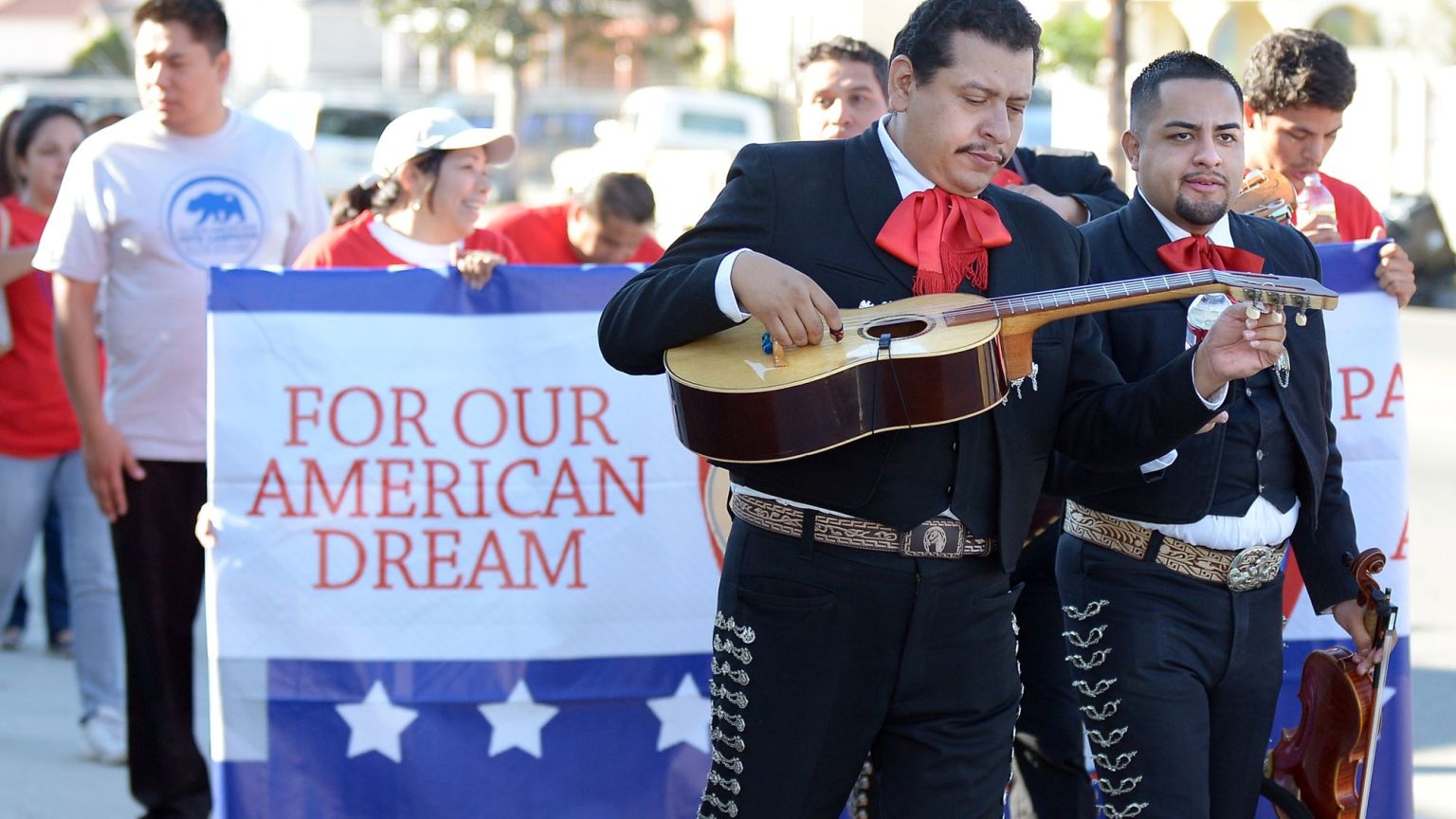
The progressive attempt to paint Latinos and other immigrants as primarily loyal to la raza is simply wrong. The Civitas study polled Latinos nationwide and found a population that largely wants what most Americans desire: a good wage, a single-family house, good schools and public safety. The thing they care least about is living with people who look like them.
Critically, Latinos are more optimistic than white Americans. Latinos still believe in and cherish the American Dream, and a majority believe they can still achieve it. They are, if anything, more ‘American’ in work ethic and religious faith than Vance’s ‘heritage Americans’. And, unlike Minnesota’s Somali community, they do not seek to bring Islamism to America, as Latinos overwhelmingly reflect the essentially Christian values of most Americans.
Rather than Vance’s ‘heritage Americans’, Latinos, along with Asians, will define the post-racial American future. Their combined share of the US population is now a quarter, but should rise to one-third by 2050.
The growth of the Latino population will play a huge role in America’s economic future. In 2022, the US Latino GDP reached $3.7 trillion and is now the world’s fifth-largest. In 1990, according to the Bureau of Labor Statistics, Latinos accounted for approximately 10.7million workers. By 2020, this had grown to 29 million, and is projected to reach nearly 35.9million by 2030. Between 2020 and 2030, Latinos will account for 78 per cent of new US workers. Overall, the Latino share of the workforce is expected to double to nearly 30 per cent by 2060.
Much of this growth comes from small businesses – ironically the traditional GOP bulwark. Latino business owners in 2019 employed 2.9million workers, and sales in Latino-owned businesses totalled more than $620 billion. Today, Latinos start more businesses per capita than any other US racial or ethnic group.

Even as they have deserted Republicans, Latinos share many values – notably on cultural issues – that align with mainstream Republican positions. But they tend to be further left of centre on economic issues.
Yet their overall goals are more typically American than the left might imagine. Latino households want to live in safe communities. They are also among the least likely ethnic groups to support cuts to police funding. Among self-described Latino liberals, nearly 60 per cent oppose defunding the police, far more than white liberals (27 per cent) and black liberals (44 per cent). Latinos also boast some of the highest rates of voluntary enlistment and military service. They represent the fastest-growing population in the military, making up about 20 per cent of all active-duty personnel. The number of police officers who are Latino increased from eight per cent in 1997 to 14 per cent in 2020.
In economic terms, the red-state model certainly retains some appeal. Our study found that Latinos generally do better in states – like Texas – that have grown in manufacturing, energy, construction and logistics – fields in which they are overrepresented. They also benefit from lower housing prices created by market-oriented zoning policies. Latino homeownership rates in Texas are 14 points higher than in the Golden State.
Overall, Latinos in Texas make $10,000 more per capita than their California counterparts. They also fare better in many Midwestern and Plains states, such as Minnesota, Illinois, Iowa and Nebraska.
Latino influence increasingly extends well beyond the south-west. In 2000, Latinos made up more than 20 per cent of the population in four states. Today, they account for more than 20 per cent in eight states. By 2030, the Census Bureau projects that Latinos will account for 22 per cent of the national population. They are transforming even the most iconic traditionally Anglo areas, including Nashville, America’s country-music capital. As recently as 2000, less than three per cent of metro Nashville’s population was Latino, but by 2020, that percentage had more than tripled.
All this suggests that the Vance strategy of focusing on ‘heritage Americans’ is doomed. The vast majority of Americans – apart from African and Native Americans – actually trace their roots to the two great immigration waves: one in the late 19th and early 20th centuries, and the other after 1965.
Vance’s nativism – the idea that ‘people whose ancestors fought in the Civil War have a hell of a lot more claim over America’ – has little appeal to those whose parents or grandparents crossed the border, entered at Ellis Island, like my family, or immigrated by jet more recently to LAX or JFK. It is an assured way to make the Democrats a permanent ruling party.
Attacking Latinos is also a losing political strategy. California already provides a cautionary tale. Proposition 187 in 1994 – which sought to ban illegal immigrants from accessing non-emergency healthcare and other state services – helped Republican Pete Wilson defeat Democrat Kathleen Brown. But the aftershocks have proven disastrous. The Latino vote increased by 184 per cent between 2000 and 2020, and a once highly competitive state has become a one-party one, where Democrats win with margins of victory regularly ranging from 10 to 30 points. By 2018, the California Latino vote had reached 3.3million, nearly doubling its election turnout from 2014, with the turnout rate of Latino voting-age citizens increasing from 25 per cent to 43 per cent over the same period.
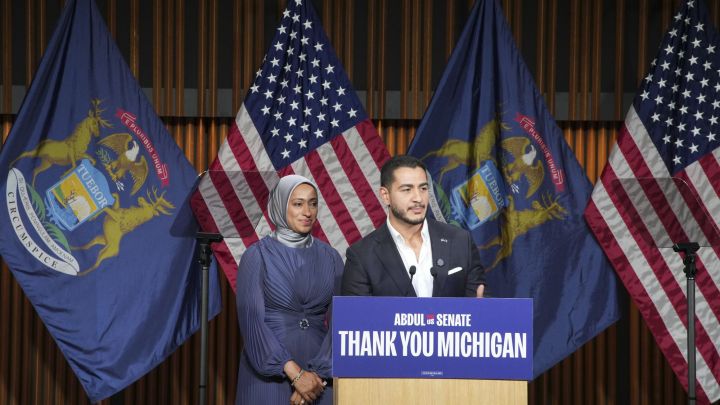
Alienating Latinos bit Republicans hard last week. This was most evident in Texas, where Latinos constitute 40 per cent of the population. Texas’s economic growth may have benefited Latinos. But racist dog whistles from Republican candidates like Bo French, running for a state-railroad-commissioner post, in addition to ICE overreach and the awfulness of Senate nominee Ken Paxton, drove them into the arms of the Democrats. This phenomenon cost the Republicans numerous state and federal seats in Latino-dominated South Texas, reversing all their gains made in 2024.
Latino voters also helped turn Arizona, for the first time in 60 years, into an all-Democratic state, one where Republicans once did respectably. Latinos in the state shifted 25 points towards the Democrats compared with 2024, much as occurred throughout the country. Latino voters also increased Democratic margins in reliably blue states like California, New York, New Jersey and Illinois. What have long been difficult states for Republicans now seem to be on the verge of becoming impossible.
Right-wing commentators have often seen Latino cultural views as fundamentally conservative, making them natural allies of the fundamentalist cultural wing of the Republican Party. And, to be sure, Latinos, particularly immigrants, tend to be more conservative on such issues as abortion, family and religious adherence than Democrats.
But if Republicans want to compete for these winnable voters, they have to stop listening to the likes of Tucker Carlson, JD Vance and Stephen Miller. It starts with recognising that America, unlike Britain, Japan or much of Europe, does not base its national identity on ethnic identity, but on an embrace of constitutional principles such as free speech, the rule of law and the right to acquire property.
Latinos, apart from radical academics and woke media, see themselves simply as another face of America. They are part of that remarkable and evolving ‘race of races’, as Walt Whitman put it, that remains America’s existential reality. There is only one America; it is perhaps a little browner and less European than it used to be, but still capable of employing its diversity to make it ever more remarkable.
Latinos’ integration can also be seen in their move to the suburbs and exurbs rather than to core cities, where the far left now increasingly rules, or to the agricultural countryside. Between 1990 and 2010, the percentage of Latinos living in suburbs grew from 47 per cent to 59 per cent. This reflects, in part, their fundamental aspiration to purchase a single-family house, which came through so strongly in our polling.
To get back in the game, Republicans will need to go beyond their overwhelmingly white MAGA base, the group Vance and his acolytes focus on. Their appeal should be based on economic mobility, reindustrialisation and, in particular, opportunities for home ownership. In 2024, Republicans made this case, combining a more conservative cultural stance with an opportunity-driven economic agenda.
But this year, Donald Trump’s immigration excesses ‘trumped’ the Democrats’ unpopular cultural agenda, while corruption and renewed inflation did the rest. If the Republican Party sticks with its nativist agenda, it should prepare for a long stint in the dustbin of political history.
Joel Kotkin is a spiked columnist, the presidential fellow in urban futures at Chapman University and executive director of the Urban Reform Institute.
You’ve hit your monthly free article limit.
Support spiked and get unlimited access.
Support spiked and get unlimited access
spiked is funded by readers like you. Only 0.1% of regular readers currently support us. If just 1% did, we could grow our team and step up the fight for free speech and democracy.
Become a spiked supporter and enjoy unlimited, ad-free access, bonus content and exclusive events – while helping to keep independent journalism alive.
Monthly support makes the biggest difference. Thank you.



Comments
Want to join the conversation?
Only spiked supporters and patrons, who donate regularly to us, can comment on our articles.