Keep men out of the Hampstead ladies’ pond
The law is clear – so why are women still forced to get changed alongside biological men?
Want unlimited, ad-free access? Become a spiked supporter.
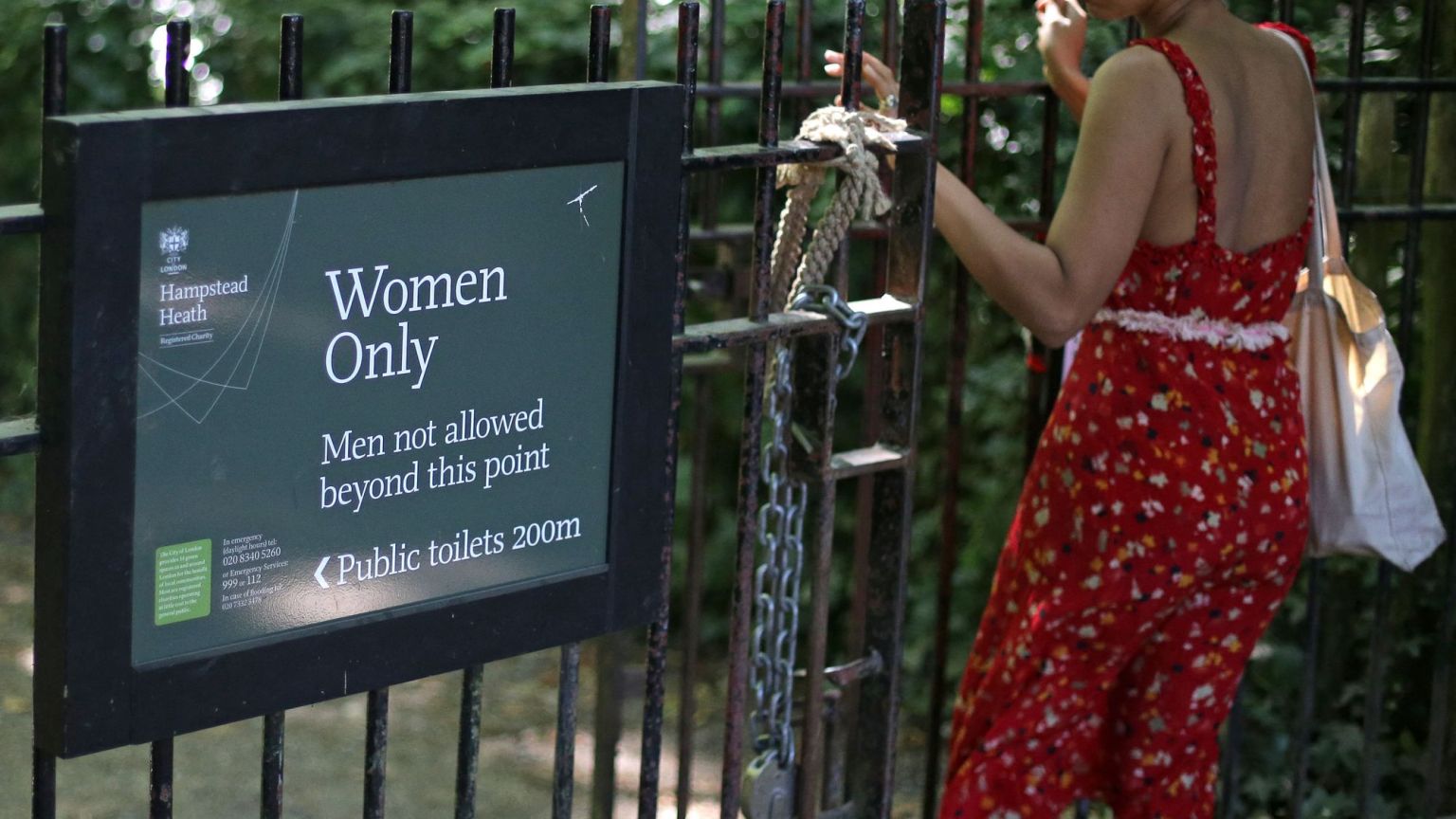
A group of women stood outside the Royal Courts of Justice in London in their bathing suits last week. Their aim? To remind the public that men are still allowed to swim in Hampstead Heath’s Kenwood Ladies’ Pond, despite a landmark Supreme Court ruling that should have put an end to that.
It was a brilliant publicity stunt. My first thought when I saw the photograph was: good for them, but they must be freezing. My second was: why should they have to?
Last year, the UK Supreme Court made it clear that ‘sex’, ‘woman’ and ‘man’ in the Equality Act refer to biological sex. Which should have settled who gets to swim where.
But the City of London Corporation, which runs the Hampstead ponds, appears to think it can carry on pretending the word ‘woman’ means whatever you want it to mean. It’s now defending its admissions policy in a court case brought by the human-rights charity Sex Matters.
The Hampstead ponds are the perfect example of how gender ideology can strip women of their sex-based rights. It’s so simple a child could understand it. You have three ponds: a men’s pond, a ladies’ pond and a mixed pond. The mixed pond is open to everyone.
But, under the current policy, men can also swim in the ladies’ pond. All they have to do is say ‘I’m a lady’ and they’re in. They get to use the women’s changing rooms, too. So a woman can choose the ladies’ pond because she wants to swim and get changed away from men, and still end up taking off her wet swimsuit in front of a man.
Apparently, giving men access to all three ponds is ‘inclusive’. Try telling that to the women who’ve been asking for years to keep one pond for themselves.
The media coverage doesn’t help. In January, the High Court refused Sex Matters permission to bring its challenge on procedural grounds. The Telegraph’s headline was ‘Trans swimmers can use Hampstead ladies’ pond’. The BBC and the Evening Standard framed the case as a challenge to ‘transgender access’ to the ponds.
Read those headlines and you might think it was about keeping trans people out of all three Hampstead ponds – not simply ensuring women have a pond of their own.
The Court of Appeal later gave Sex Matters permission to bring the case, which is why it’s being heard this week.
This week’s swimsuit stunt wasn’t the first. In May 2018, women from a group called Man Friday turned up at the men’s pond in fake beards and said they identified as men. One wore a mankini. The police came and escorted them out.

It was funny, and the point was simple. If all it takes to get into the men’s pond is to say you’re a man, what exactly is the men’s pond for?
Seven years later, after the Supreme Court ruling, around 30 women turned up at the men’s pond on the May bank holiday, some in swimsuits and fake beards, to make much the same point.
Women having to pull publicity stunts to get heard is nothing new. The Suffragettes knew how to give the newspapers a picture they’d want to print. At the 1911 Women’s Coronation Procession, Marjery Annan Bryce rode through London dressed as Joan of Arc.
Bathing suits and bare legs in November – it’s a picture the Suffragettes might have appreciated. But the Supreme Court has already settled what ‘woman’ means in the Equality Act. So why must women still stand outside a court in their swimsuits just to be heard?
Janet Murray is a freelance journalist and director of SEEN in Journalism.
You’ve hit your monthly free article limit.
Support spiked and get unlimited access.
Support spiked and get unlimited access
spiked is funded by readers like you. Only 0.1% of regular readers currently support us. If just 1% did, we could grow our team and step up the fight for free speech and democracy.
Become a spiked supporter and enjoy unlimited, ad-free access, bonus content and exclusive events – while helping to keep independent journalism alive.
Monthly support makes the biggest difference. Thank you.







Comments
Want to join the conversation?
Only spiked supporters and patrons, who donate regularly to us, can comment on our articles.