There is no future without oil and gas
The green-energy transition is a bridge to nowhere.
Want unlimited, ad-free access? Become a spiked supporter.
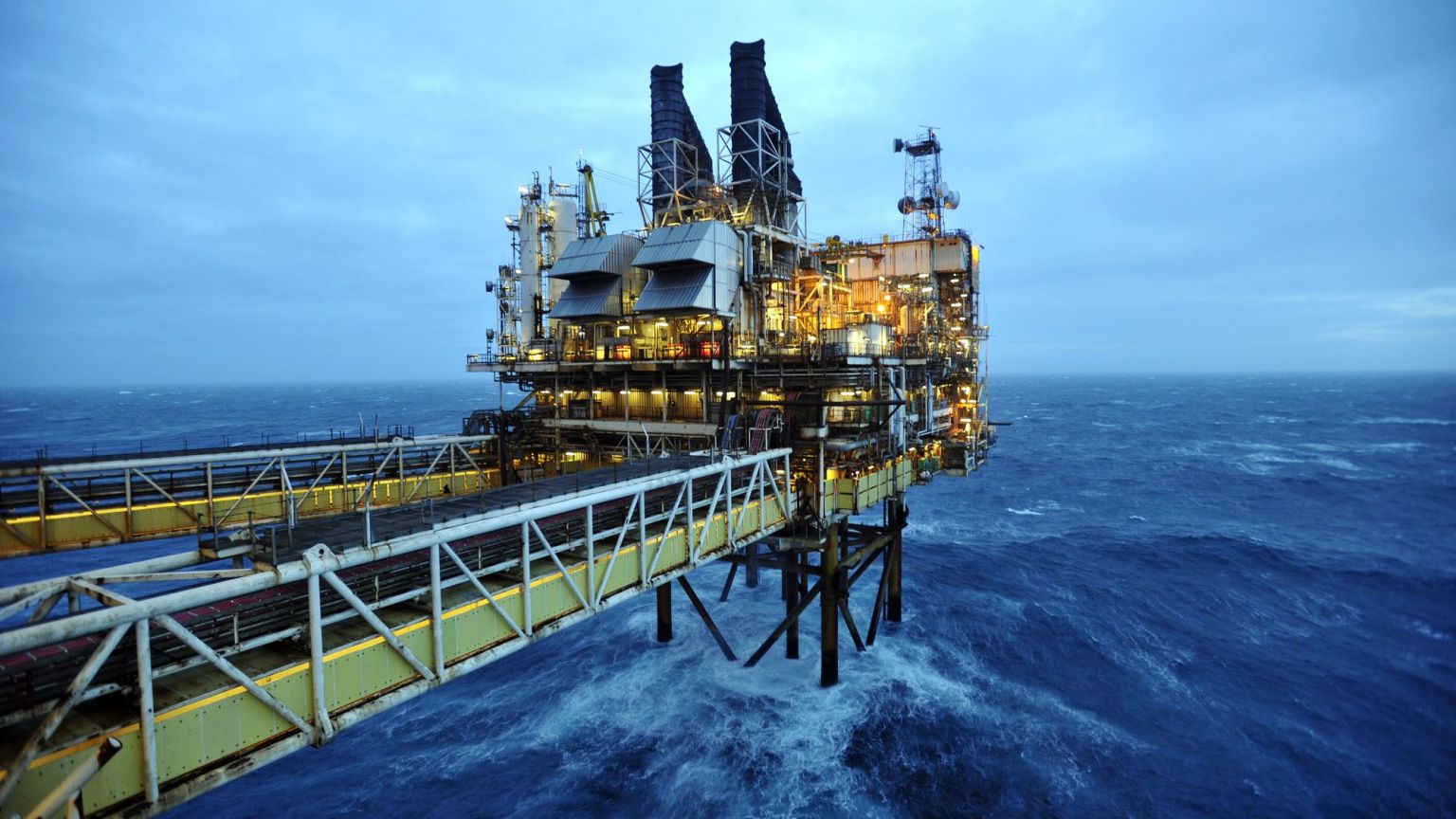
On 9 November, delegates from almost every country will gather in Antalya, on Turkey’s south coast, for COP 31, the United Nations’ annual climate summit. In 2023, at COP 28 in Dubai, they agreed on ‘transitioning away from fossil fuels in energy systems’, and that ‘transitional fuels can play a role’ along the way. Britain put that second line into practice on 21 October, when the Labour government announced its approval of the Jackdaw gas field in the North Sea.
The UK would ‘still require oil and gas as part of our energy needs for decades to come’, prime minister Andy Burnham said after the Jackdaw announcement. Energy secretary Miatta Fahnbulleh spoke of Britain’s continuing ‘transition to renewables and nuclear’. North Sea tax revenue is to go into a new Energy Wealth Fund for renewable and low-carbon power. Gas, on this account, is a bridge. It carries us over while the wind farms are built, and then we step off on the other side.
I trained as an electrical engineer and worked as a petroleum engineer, so I would like to take the idea at its word. A bridge is useful only if the far bank can bear the load you are carrying. Here, the far bank is an electricity system, and the test is whether electricity can do what oil and gas do now.
Three-quarters of the energy Britain uses arrives as oil, gas or coal. In 2025, based on the government’s own energy statistics, electricity supplied 19 per cent of all the energy used by homes, businesses, vehicles and factories. Oil supplied 46 per cent and gas 28 per cent. In our homes, we used more than two and a half times as much gas as electricity. Oil supplied 92 per cent of the energy used in transport, and electricity just over two per cent.
The gap is widest on a cold winter day. Britain’s gas network is built for the kind of cold day that comes once in 20 years. On that day, homes and smaller businesses would burn about two and a half times as much energy in gas as Britain drew from the electricity grid at its 2024 cold-weather peak, if that peak lasted all day. The pipes under our streets carry far more than the wires above them.
Those who back electricity have a good answer to this. Electric machines waste less energy. Electric technologies get more useful work from each unit of energy than the boilers and engines they replace, and a gas power station turns only about half of its fuel into electricity, as the Climate Change Committee – the government’s climate advisers – points out. So the far bank need not carry the whole load, unit for unit. The National Energy System Operator, which plans Britain’s electricity system, allows for all of this. Even so, its own Net Zero scenarios have peak electricity demand more than doubling by 2050, from 58 gigawatts in 2024 to between 120 and 144. That is to be built in 25 years, out of steel, copper and concrete.
Moreover, oil and gas are also raw materials. Most nitrogen fertiliser, and the basic ingredients of most paints and many medicines, start as oil or gas. Plastic is made from hydrocarbon molecules. There is not a single component in a wind turbine that does not need hydrocarbons to make it, nor in the equipment that makes the turbine, nor in the equipment that makes that equipment. Almost all new steel made from iron ore uses carbon, mostly from coal, to strip out the oxygen. Some uses need the fuel itself. Aircraft need fuel that carries a great deal of energy for its weight, and in 2025 aircraft refuelling in Britain used the equivalent of 13million tonnes of oil, and no electricity at all.

The most careful study I know of how far industry can run on electricity is by a team that included researchers at the Potsdam Institute for Climate Impact Research. Its summary reports that 78 per cent of European industry’s energy, based on 2015 figures, could be electrified with established technology. The body of the paper shows that figure leaves out the oil and gas that industry uses as raw material. Count them, and the figure falls to 50 per cent. Add technologies still being developed, and assume all steel is made from scrap, and it reaches 60 per cent. The rest, the authors write, ‘cannot be supplied directly with electricity’.
The UK government’s own Jackdaw documents are franker than its speeches. The press release, written for voters, presents gas as a passing stage whose tax revenue will pay for renewables, and says Jackdaw will help ‘heat millions of homes’. The decision document published alongside it says the field, at its peak, could supply ‘about 350,000 homes on a rare cold winter’s day’. And it says what the gas is for: oil and gas ‘will remain an important part of our energy mix for decades to come, including for home heating and power generation during cold winter days, especially when solar or wind power is unavailable’. It also expects Britain to keep buying more gas from abroad than it sells for the whole life of the field, up to 11 years, even with Jackdaw adding about six per cent to Britain’s gas output at the field’s peak.
If voters were told the truth, they would face a hard question. Given Britain will need oil and gas for as long as anyone can plan, how much of it should we produce at home, and how much should we buy from abroad?
Of the 20 items on COP 31’s provisional agenda, not one mentions oil, gas or coal. The delegates will discuss the far bank for 12 days. Meanwhile, the bridge to get there has never looked weaker.

Richard Lyon is a petroleum engineer and energy economist. His book, The Energy Trap, is published by Swift Press.
You’ve hit your monthly free article limit.
Support spiked and get unlimited access.
Support spiked and get unlimited access
spiked is funded by readers like you. Only 0.1% of regular readers currently support us. If just 1% did, we could grow our team and step up the fight for free speech and democracy.
Become a spiked supporter and enjoy unlimited, ad-free access, bonus content and exclusive events – while helping to keep independent journalism alive.
Monthly support makes the biggest difference. Thank you.







Comments
Want to join the conversation?
Only spiked supporters and patrons, who donate regularly to us, can comment on our articles.