Abdul El-Sayed and the march of Muslim identity politics
It was ‘Islamophobic’ to mention his religion during the campaign – now it’s all his fanboys want to talk about.
Want unlimited, ad-free access? Become a spiked supporter.
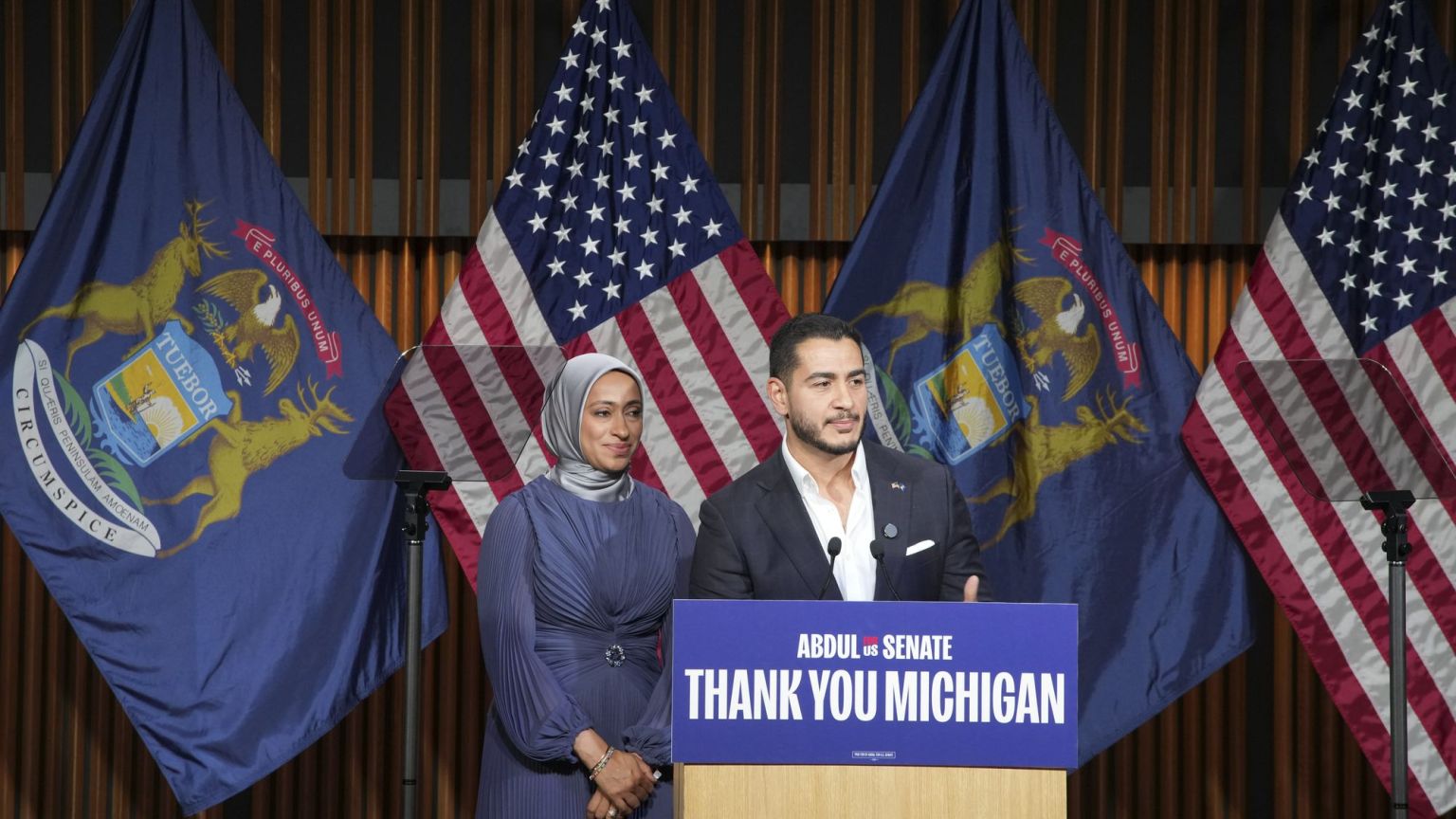
In mid-October, Abdul El-Sayed had a town hall in Michigan eating out of the palm of his hand when he batted away a question over his alleged links to the Muslim Brotherhood: ‘I’m not running to be a Muslim senator’, he said. ‘I’m running for the US Senate, and happen to be Muslim.’
El-Sayed, now the Democratic senator-elect, made it perfectly clear throughout the campaign that opponents who referenced his faith were ‘Islamophobic’. ‘You would think that [the Republican] campaign might want to talk about gas or groceries’, he said at a rally days before the Midterms. ‘But instead they just want to point to me and be like, “He’s Muslim!”’
El-Sayed is now striking a very different chord. On Wednesday night, shortly after his crushing victory over Republican rival Mike Rogers, he said, ‘Up until right about now, you might have noticed that I always say inshallah, or God willing…. But today, we can turn that inshallah into an alhamdulillah’ (all praise is due to Allah).
In fact, since election night, El-Sayed’s Muslim identity is now just about the only thing that matters. Especially to those who, just a few days ago, were insisting that it was haram for his opponents to mention it. Democrat Ilhan Omar said that she was ‘overwhelmed with gratitude knowing that we will have eight Muslims serving in Congress… Alhamdulillah.’ Meanwhile, woke foghorn Mehdi Hasan has been frothing with joy over the prospect of America’s ‘first Muslim senator’. ‘He won! Abdul El-Sayed – a left-wing, Muslim, anti-Zionist – is heading to the United States Senate’, Hasan said on election night. He concluded with two words of advice for the ‘Islamophobic’ Republicans and right-wing press: ‘Cry more.’
The celebrations of El-Sayed’s identity haven’t been limited to America, either. As PBS waxed lyrical: ‘From Michigan to the Middle East, Arabs are celebrating Abdul El-Sayed’s Senate win and delighting in his introduction of Arabic terms like “habibi” and “inshallah” to the American political lexicon.’ Abdul Mawgoud Dardery, a senior member of the Muslim Brotherhood, the world’s leading Islamist organisation, said El-Sayed’s victory showed what Muslims could do when they work ‘within the political systems’. Iran’s Tehran Times celebrated what it called ‘Operation Midterms Hammer’.
There is something deeply unsettling about all this. Donald Trump’s branding of El-Sayed as a ‘jihadist lunatic’ may well be inflammatory nonsense, but it is not and was never ‘Islamophobic’ to question the role Islam and Muslim identity politics might have played in the senator-elect’s politics and in the Michigan race.
After all, there appears to be a strong strain of Islamic sectarianism in El-Sayed’s views and strategy. He has been equivocal at best on Israel’s right to exist. He was associated with a campaign video portraying a despondent American couple, unable to afford eggs for their children because the government had spent its money helping Israel to ‘kill Palestinians’. When US-Israeli airstrikes killed Ayatollah Ali Khamenei in February, El-Sayed made no public comment. In a leaked campaign call he explained why: ‘There are a lot of people in Dearborn’ – the city with the highest proportion of Muslims in the US, whose support was crucial for El-Sayed in the primaries – ‘who are sad today’. Offending those who might sympathise with an Islamist tyrant was never an option for El-Sayed.
Then there is the vexed question of the Muslim Brotherhood. El-Sayed repeatedly denied any connection with the Brotherhood during the election campaign and claimed that to mention it was an attempt to stigmatise him. ‘What are you implying?’, he asked an audience member who quizzed him about it at the Michigan town hall last month.
But by then, it had already come to light that, in 2012, he had signed an open letter in support of the Muslim Brotherhood, when the Islamist movement ascended to power in Egypt. The letter urged Egypt’s new Islamist government to ‘purge’ elements of the media and the police who failed to toe the line. His mother, too, was a Muslim Brotherhood activist. Of course, El-Sayed might have changed his mind in the years since and he claims he is now estranged from his mother. But people were clearly entitled to ask about this without being smeared as ‘Islamophobes’.
Even more recently, El-Sayed has engaged in what can only be described as terror apologism. ‘Hurt people hurt people’, he said in response to a Hezbollah-inspired terrorist attack on Michigan’s biggest synagogue in March. During the election campaign, he appeared at two rallies alongside Hasan Piker, a popular American YouTuber who said America ‘deserved 9/11’ and claimed it ‘didn’t matter’ that Israeli women were raped on 7 October.
In the later stages of the Senate race, El-Sayed rowed back his response to the attempted synagogue attack. He tried to distance himself from Piker. And he disavowed the ad blaming Israel for grocery prices. But none of this was enough to reassure even some fellow Democrats. Haley Stevens, who he defeated in the primaries, withdrew her endorsement on the night before the election and urged Michigan voters to back Mike Rogers. The whiff of anti-Semitism around the El-Sayed camp, she argued, was simply too strong to ignore.
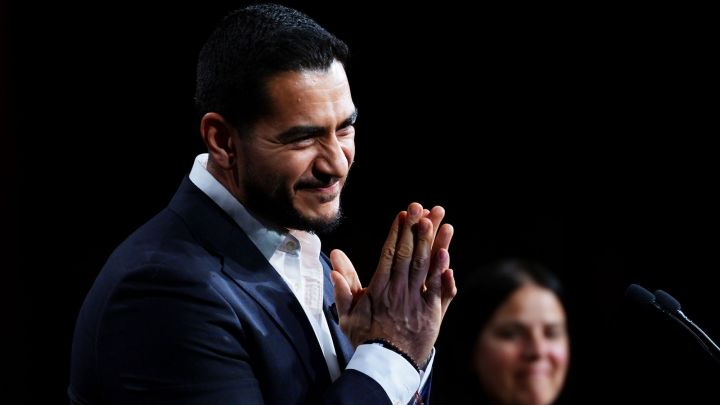
Abdul El-Sayed clearly has questions to answer. His Muslim identity cannot shield him from these forever.
Hugo Timms is a staff writer at spiked.
You’ve hit your monthly free article limit.
Support spiked and get unlimited access.
Support spiked and get unlimited access
spiked is funded by readers like you. Only 0.1% of regular readers currently support us. If just 1% did, we could grow our team and step up the fight for free speech and democracy.
Become a spiked supporter and enjoy unlimited, ad-free access, bonus content and exclusive events – while helping to keep independent journalism alive.
Monthly support makes the biggest difference. Thank you.

Comments
Want to join the conversation?
Only spiked supporters and patrons, who donate regularly to us, can comment on our articles.