Long-read
Must every child have a diagnosis or disorder?
A culture war on ‘normal’ is driving the crisis in special-educational needs.
Want unlimited, ad-free access? Become a spiked supporter.
Normal used to be the norm. As far as adults were concerned, certain standards of behaviour were to be expected – even if all children at some point, and some more than others, deviated from that expectation. Indeed, you might say that deviations from the norm were normal too.
As teachers have told me while writing my book, The Crisis in the Classroom, a degree of self-discipline, as well as broad agreement on where the boundary between acceptable and unacceptable behaviour lies, have long been the very foundation of young people’s learning – as surely as it is for their participation in the communities of which their schools are a part.
But do we know what normal is anymore? Do we punish misbehaviour, or even call it misbehaviour, anymore? Are we confident that we can impose a set of standards on young people or that they will feel obliged to behave in accordance with them?
Something’s significantly changed. I went to a bog-standard comprehensive school in the 1980s, but can only recall the one boy who, it was reputed, couldn’t read. There was no autism or ADHD, no learning disabilities. I don’t even remember dyslexia being a ‘thing’ back then.
I’m not saying they didn’t exist. No doubt they did. And there’s obviously an upside inasmuch as we have got better at identifying some of the problems our children face today. But have we gone too far in naming problems and given up on solving them?
Over the past decade alone, we’ve witnessed a huge expansion in the number of children and young people diagnosed with a mental-health condition or disorder. I should know – my own son was diagnosed with autism-spectrum disorder (ASD) and attention deficit hyperactivity disorder (ADHD) in 2021.
As reported by Policy Exchange last year, there has been a 48 per cent increase in children and young people accessing NHS mental-health services between 2021 and 2025. Nearly one in five children is now said to have special-educational needs or a disability. The number of children given education, health and care plans (EHCPs) – designed to support those with the most severe needs that schools cannot normally provide for – has increased by 83 per cent since 2015. And the number of 11- to 15-year-olds receiving Disability Living Allowance (DLA), in which the ‘main condition’ determining eligibility was a learning difficulty, increased by 70 per cent between 2018 and 2024.
In particular, both autism and ADHD diagnoses have expanded massively – with 1.2million and 2.2million people respectively diagnosed with these conditions in England. As Jessica Morris at think-tank the Nuffield Trust explains, there has been a ‘fivefold increase in the number of open suspected autism referrals since 2019’.
But why? Is there an increase in incidence of a condition like autism, or are more of us just more inclined to seek an assessment nowadays?
There is certainly a rise in parents seeking assessment for their children. As the Nuffield Trust’s chief executive explains, ‘for the majority of people who are on the autism or ADHD spectrum, the earlier they can be supported, the more likely it is that their lives are going to be easier’. It means that children ‘should learn better, be able to more easily sit in a classroom, be able to better navigate life and navigate relationships’.
The problem is that, by identifying an ever-increasing number of special-educational needs, we are exerting an incredible strain on available public resources. This is impacting the education of all children.
That doesn’t mean we shouldn’t try to meet young people’s genuine needs where they are having a significant impact on their lives. But it should at least prompt questions about what we mean by ‘needs’ and whether we are going the right way about meeting them.
Let’s look at the case of autism. Autism-spectrum disorder is the term used to describe neurodevelopmental disorders that are, according to the Royal College of Psychiatrists, ‘caused by abnormalities in the way the brain develops and works’. Over one in 100 of us in the UK is living with such a disorder. Professor Sir Simon Baron-Cohen, generally regarded as the world’s leading authority on the condition, claimed in a recent Triggernometry interview, that ‘something like three per cent of the population now has an autism diagnosis’.

These are lifelong conditions for which there is no cure. The autism spectrum includes everything from the severely learning disabled or non-verbal to the academically gifted. Nevertheless, despite these wide variations in presentation, those diagnosed with ASD have three sets of traits in common: difficulty with communication, problems ‘being around people socially’ and particular behavioural characteristics. ‘For a diagnosis of autism’, states the Royal College of Psychiatrists, ‘there must be evidence of unusual development in the first three years of life’.
According to the Diagnostic and Statistical Manual of Mental Disorders (DSM) – guidance produced by the American Psychiatric Association from which experts around the world tend to take their lead – a diagnosis of autism requires ‘persistent deficits in social communication and social interaction across multiple contexts, as manifested by the following: deficits in social-emotional reciprocity, in nonverbal communicative behaviours used for social interaction, and in developing, maintaining and understanding relationships’.
And again, there is the stipulation that: ‘Symptoms must be present in the early developmental period…’ However, for the World Health Organisation, there is already some slippage on this point: ‘Characteristics may be detected in early childhood, but autism is often not diagnosed until much later.’
Beyond these official accounts, what is autism really like? Those with the condition typically exhibit restricted, repetitive or obsessive behaviours. This can sometimes include sensory issues: perhaps eating the same ‘beige’ food every day, finding certain smells unbearable or a sensitivity to temperature, bright lights or certain textures – whether in the food they eat or the clothes they wear. They may struggle to empathise or become anxious in new situations. Other behaviours include masking and meltdowns.
Even Baron-Cohen is far from definitive in his account of what autism is. It is both a ‘disability and a difference’, he says. We no longer think of it as a ‘disorder or disease’. Similarly, we don’t think of autistic people as having abnormal brains anymore. Therefore, the idea of the ‘normal’ brain is also out of fashion. Asperger’s Syndrome – or autism ‘without any learning disability’ – is a term that has lost favour, too (not least, as Baron-Cohen acknowledges, because of Hans Asperger’s Nazi connections). But isn’t that a problem? Don’t we need precise terminology? He concedes that the notion of being on a spectrum is, in some ways, ‘not helpful’.
The important thing for Baron-Cohen, though, is that we do the right thing by autistic people and ‘we create the right environment for them to flourish’, and he stresses the ‘real need for better support services’ and better evidence of ‘what works and for whom’.
Many don’t appreciate that those we think of as having ‘severe’ autism are experiencing something more complex. Baron-Cohen explains that ‘autism often co-occurs with these other things’ – with learning disabilities, language delays, epilepsy, anxiety, depression, etc. These should be treated and prevented, if possible. Yet still, while these other conditions are clinically distinct, it is indisputable that in our (and their) ‘lived experience’ these two – the autism and ‘these other things’ – are inseparable. They come as a package. For the time being, at least.
The naturalist and broadcaster Chris Packham, himself diagnosed with Asperger’s Syndrome, spoke with autistic young people and adults for his two-part documentary, Inside Our Autistic Minds. Two young adults, Anton and Flo, came across, to the untrained eye, as ‘normal’, but they were seriously affected by their autism. Flo explains: ‘When I was born, I wasn’t given the handbook on being a normal human being.’ In fact, ‘it’s exhausting trying to be normal all the time’.
Anton’s mother, whose son’s football mates are surprised to learn he is autistic, remembers how as a child he would pull everything off the supermarket shelves. He was ‘screaming and crying and holding his head’. When she dyed her hair, he attacked her. ‘He couldn’t take change’, she remembers. All of which confirms my own sense that your child doesn’t have to have ‘profound’ autism for them and their family to be profoundly affected by it. For all the talk of ‘awareness’, the truth is that even us parents (not to mention the professionals) often don’t get it.
It is, explains Michael Fitzpatrick, a retired GP and the father of an autistic child, a ‘complex condition’, full of apparent contradictions in its expression. Individuals can be emotionally flat or experience intense eruptions of emotion; they may avoid eye contact or (like Fitzpatrick’s own son) have a very particular and intense gaze.
As if to make our attempts to grapple with this mysterious condition even harder, we also need to understand that it ‘exists in the realm of culture and society’ as much as it does in the worlds of medicine or therapy. Its ‘manifestations are in the domain of interactions between human beings’ and are, therefore, open to the influences these interactions entail. Indeed, it is only by understanding this that what Fitzpatrick describes as the ‘expanding range of diagnosis’ makes any sense.
This range has only widened as we have learned more about the condition. Lorna Wing developed the idea of the autism ‘spectrum’, popularised Asperger’s Syndrome, defined the ‘triad of impairments’ that autistic people have in common and created the diagnostic tools and institutions that continue to support people with autism. Through these advances, she also inevitably contributed to the expanding numbers of those identified with the condition. So, you might say there is a good reason why we’re seeing more diagnoses. But is it simply the case that ‘better diagnosis and greater awareness’ explain, as Baron-Cohen claims, the ‘skyrocketing’ of diagnoses?
I wonder if there are other factors impacting on our understanding of what we expect young people to cope with, and when we might seek out a diagnosis on their behalf. The emergence of ADHD in the UK is worth considering in this context.
ADHD is described by South London and Maudsley NHS Foundation Trust (the largest mental-health-training institution in the country) as affecting behaviour and including symptoms of restlessness, impulsiveness and difficulty concentrating. While the condition is usually diagnosed during infancy or in the early school years and symptoms tend to improve with age, there is something of an uptick, as we have seen, in adults being diagnosed with the condition, too. And, I think it is fair to say, there is more disagreement, and scepticism too, about its existence in both the expert and lay communities than is the case with autism.
While ADHD prevalence levels remain, according to the medical literature, at around three to five per cent of all children and young people, the enormous pressure on the system is evident from the waiting lists for assessments. According to evidence cited by the Independent ADHD Taskforce, 40 per cent of those referred for an assessment said they were still waiting two years later, with some waiting lists as long as 10 to 15 years.
Some experts remain sceptical about the condition. As consultant child and adolescent psychiatrist Dr Sami Timimi asks in his book, Searching for Normal: ‘Why are behaviours that are part of what I would consider everyday behaviours children show, at least to some degree, considered part of a medical condition?’ He describes it as a slippery, circular concept in which the description of a behaviour – hyperactivity – is treated as its cause. ‘Like autism’, argues Timimi, ‘ADHD has gone from a peripheral phenomenon in practice and culture to being something that just about anyone could have’.
The broad, shifting diagnostic categories of ASD and especially ADHD have certainly allowed for the rise in the number of children and young people diagnosed with these disorders. But just as striking is the desire among parents for their children to be diagnosed as such. For their child to have a label.
As clinical psychologist and author Dr Naomi Fisher argues, the attraction of a medical label is that ‘people around a child stop blaming them or their parents for their difficulties’. Sometimes it can seem that it’s the only way of resolving them. As Fisher explains:
‘Many families see a diagnosis as their only hope. In those circumstances, it is very hard to be the clinician who says no. There is a pressure to lean towards giving the diagnosis. When I worked in a neurodevelopmental service, I would talk to senior colleagues about tricky decisions and they would say, “Do they want the diagnosis? Then give it to them.” I know from talking to other psychologists that this isn’t uncommon.’
‘Now people cling to their diagnoses. They have become woven into their identities’, writes Timimi. While we shouldn’t underestimate the difficulties experienced by children on the autistic spectrum, from being unable to dress themselves to suffering from severe communication and learning difficulties, there is a danger of diagnostic drift. For consultant neuropsychiatrist Dr Alastair Santhouse, if the ‘socially awkward or idiosyncratic but broadly functioning in society, with careers and relationships’ are being described as autistic, then is it really any wonder that we face the SEN, or needs, crisis that we do?
Whether it’s the pathologising of normal emotions or the ‘blurring of boundaries and definitions’, there is increasing uncertainty about where to draw the line between what is normal and what is not. This isn’t only a clinical matter either – it’s also arguably a question for us all.
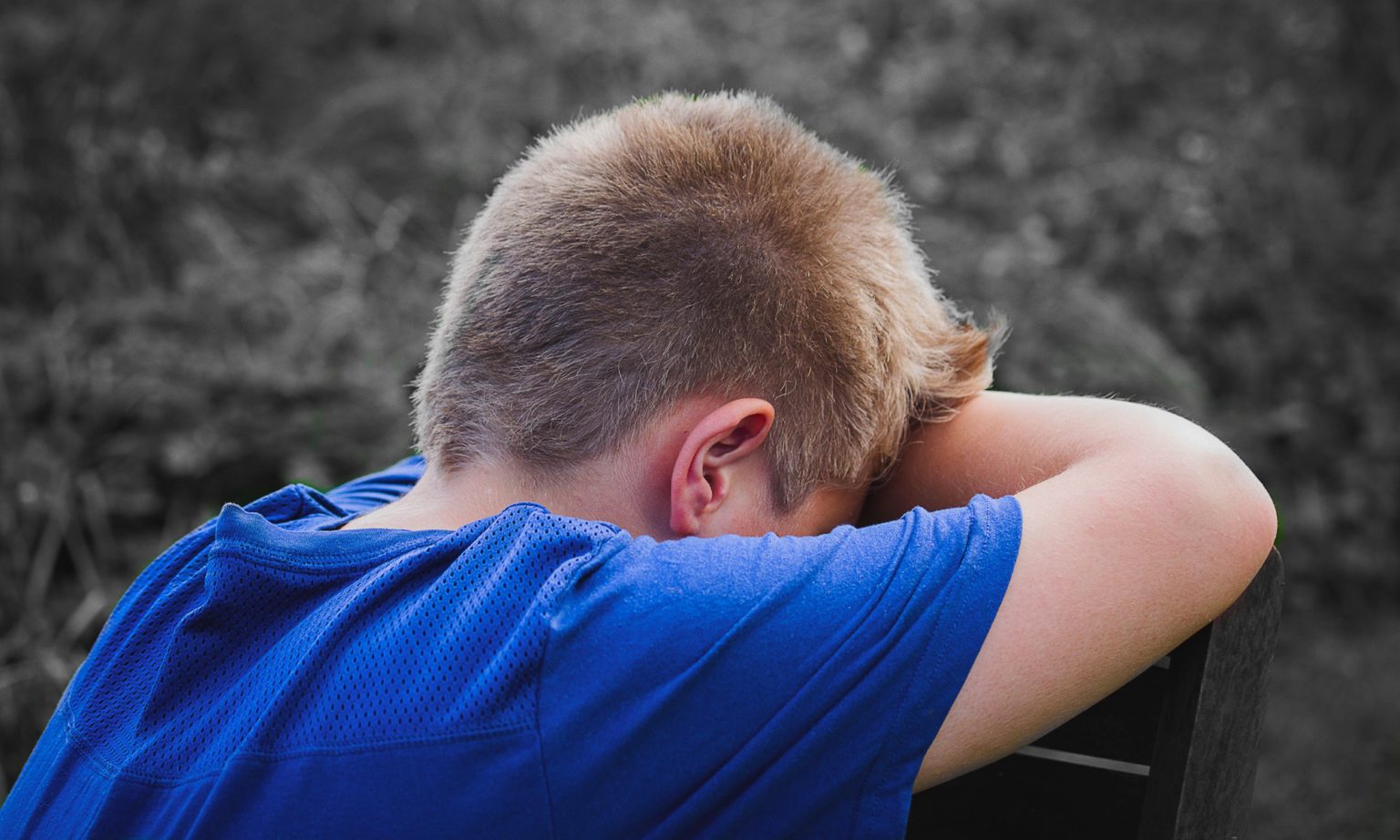
‘What counts as a diagnosis’, argues Santhouse, ‘and what counts as normal mental health are becoming more flexible’. This expansive dynamic in referrals and diagnoses is driven less by psychiatry or any other clinical practice and more by ‘social trends and appeals to emotion’ and the ‘language of wellness’, Santhouse explains. Medicine is often about trying to understand ‘subjective, internal and individual experience’, a task made harder when there is no ‘obvious visible or detectable bodily cause’. And yet, says Santhouse, we still have a need to know what normal is:
‘How much suspicion do you need before being considered paranoid? How often must you check something before being investigated for obsessive-compulsive disorder (OCD)? How sad can someone be after a bereavement before it becomes depression?’
Lucy Beney, a qualified counsellor and author of Suffer the Children for the Family Education Trust, writes of an ‘epidemic of self-diagnosis’ fuelled by ‘diagnostic inflation’ for mental-health and ‘neurodiverse’ conditions, and compounded by the authority lent to young people’s so-called ‘lived experience’. She argues: ‘To the detriment of those most severely affected, the criteria for diagnosis of both autism and ADHD are now so wide as to be almost practically meaningless.’
What were once treated (quite literally) as symptoms of disorders have escaped the bounds of clinical practice and been absorbed into the everyday. According to the Family Resources Survey, in 2023-24 one in four people (of all ages) was classified as disabled. The numbers of apparently disabled children (including those with ‘invisible’ disabilities like ADHD and autism) increased from seven per cent to 12 per cent between 2013-14 and 2023-24.
Some will say we’re just getting better at spotting these conditions. But here’s another possibility – namely, that ordinary life experiences are being medicalised, and ‘borderline’ cases are being given ‘ironclad diagnoses’. Could it be that normal differences are being pathologised? That the dividing line between normal and abnormal has shifted so far that it’s barely visible?
‘The pathologising of distress, the sanitising of the messy truth of life through biology, is a scientific and a social trend’, argues Suzanne O’Sullivan in The Age of Diagnosis. It’s a development that is ‘robbing us of control over our own destiny’, she writes, noting that ‘we are changed by the labels given to us’. This is a problem, not just because of the pressure it puts on resources and the demands it places on public services. There is also a tendency to misattribute the problems or the troubles our children may be dealing with. To seek out explanations in the wrong places. To obscure what is causing them and risk rendering ourselves helpless in addressing them. As O’Sullivan has it: ‘We are demanding answers and, in the absence of other sources of support, are looking to medical institutions for help.’
I do wonder if what we’re witnessing is a culture war on ‘normal’ in the name of neurodiversity. In a 2023 Guardian interview, Judy Singer explains that she coined the term ‘neurodiversity’ in 1997 because ‘diversity’ is a political term, originating ‘with the black American civil-rights movement’. From its inception, the ‘neurodiversity movement’ was meant to be, as she puts it, ‘a political movement for people who want their human rights’. She had a sense ‘that this was going to be the last great identity-politics movement to come out of the 20th century’.
It seems to me that identity politics is playing a significant role in the explosion of needs in the classroom. Indeed, we seem to be making identities out of disorders. Some parents can seem oddly eager for their children to be neurodiverse, and we’ve all had that conversation with somebody who claims to be ‘a bit OCD’. There is an unwillingness to accept differences in cognitive functioning as part of being a normal human.
More worrying still is the fact that proponents of neurodiversity are effectively downplaying or even setting themselves against alleviating the distress and disadvantages associated with conditions like autism.
It’s as if precisely those traits that allow autistic people to cope with their condition are being called into question. For instance, while of course it is a good thing that the ‘masking’ behaviour – particularly of girls – has been identified, there is a readiness to problematise it, too. A conviction that none of us should be imposing restraints on our innermost natures. Behind the genuine and welcome insight into understanding how some autistic people learn to cope with the demands the world places upon them (and at some personal cost, it should be added), there is now an argument that it’s always a bad thing to hide how we’re feeling.
This attack on coping – on adjusting to and living with everyday norms – is a key part of the problem. Most of the time, we all do need to do those things. To get on in life or even to just survive the day, we need to put on masks, don’t we? To protect ourselves and to take on the differing roles that society requires of us. While those with autism struggle much more than most, isn’t there something to be said for keeping things inside, for tempering our instincts with a bit of control? It is beginning to feel as if the neurodiversity narrative is an attack on reserve, resilience and restraint.
We need a radical rethink about how to tackle the needs crisis. There can be little doubt that there are real unmet needs out there. But this has been swamped by something quite different and much bigger. The needs crisis is ‘straining our systems of support across health, education and welfare’ say the authors of the Policy Exchange report, Out of Control. Pointing out the problem of overdiagnosis and overtreatment, the authors argue that those responsible for public services, whether politically or professionally, need to recognise that the current system may be encouraging ‘an escalation of need, rather than effectively targeting support where it is needed most’.
There are, without a doubt, genuine needs now being identified that we wouldn’t have picked up on before. However, there is also a cultural receptivity to being, or declaring oneself, neurodiverse. To do so is valued, encouraged and even celebrated. While there are positives to this approach in some cases, we need to get beyond the fluffy, relentlessly affirming (but none too reflective) language of neurodiversity-speak. Many of these children face very real disadvantages, both because of their conditions and because of society’s continued failure to accommodate or address their needs effectively.
Instead of creating identities and labels to explain away difficult experiences, we need to start taking our children’s problems – in all their complexity – seriously.
This is an edited extract from The Crisis in the Classroom: how the special needs explosion is destroying education, published by Luath Press.
Dave Clements is a writer and consultant with three decades’ experience working in and with local government and the public sector.
You’ve hit your monthly free article limit.
Support spiked and get unlimited access.
Support spiked and get unlimited access
spiked is funded by readers like you. Only 0.1% of regular readers currently support us. If just 1% did, we could grow our team and step up the fight for free speech and democracy.
Become a spiked supporter and enjoy unlimited, ad-free access, bonus content and exclusive events – while helping to keep independent journalism alive.
Monthly support makes the biggest difference. Thank you.

Comments
Want to join the conversation?
Only spiked supporters and patrons, who donate regularly to us, can comment on our articles.