When did Italian-Americans become ‘white’?
The woke assaults on Columbus Day and Little Italy erase what is unique about Italian-American history.
Want unlimited, ad-free access? Become a spiked supporter.
Debates about Italian identity in America are ubiquitous these days. Just watch the countless TikTok reels weighing in on whether Italians ‘really’ count as white. Broader debates about my people’s place in the United States’ cultural fabric have taken on a political edge, especially after the federal recognition of Indigenous Peoples’ Day (alongside Columbus Day) in 2021, as well as New York City mayor Zohran Mamdani’s recent decision to exclude Little Italy from a map of the city’s ethnic enclaves.
Some of this ‘erasure’ is the result of our own doing: over the span of a decade, the number of Italian-Americans who still identify with their heritage has dropped by seven per cent. And between 2001 and 2017, the number of families who spoke Italian at home dropped by 38 per cent – thus making it one of the fastest-dying languages in the United States.
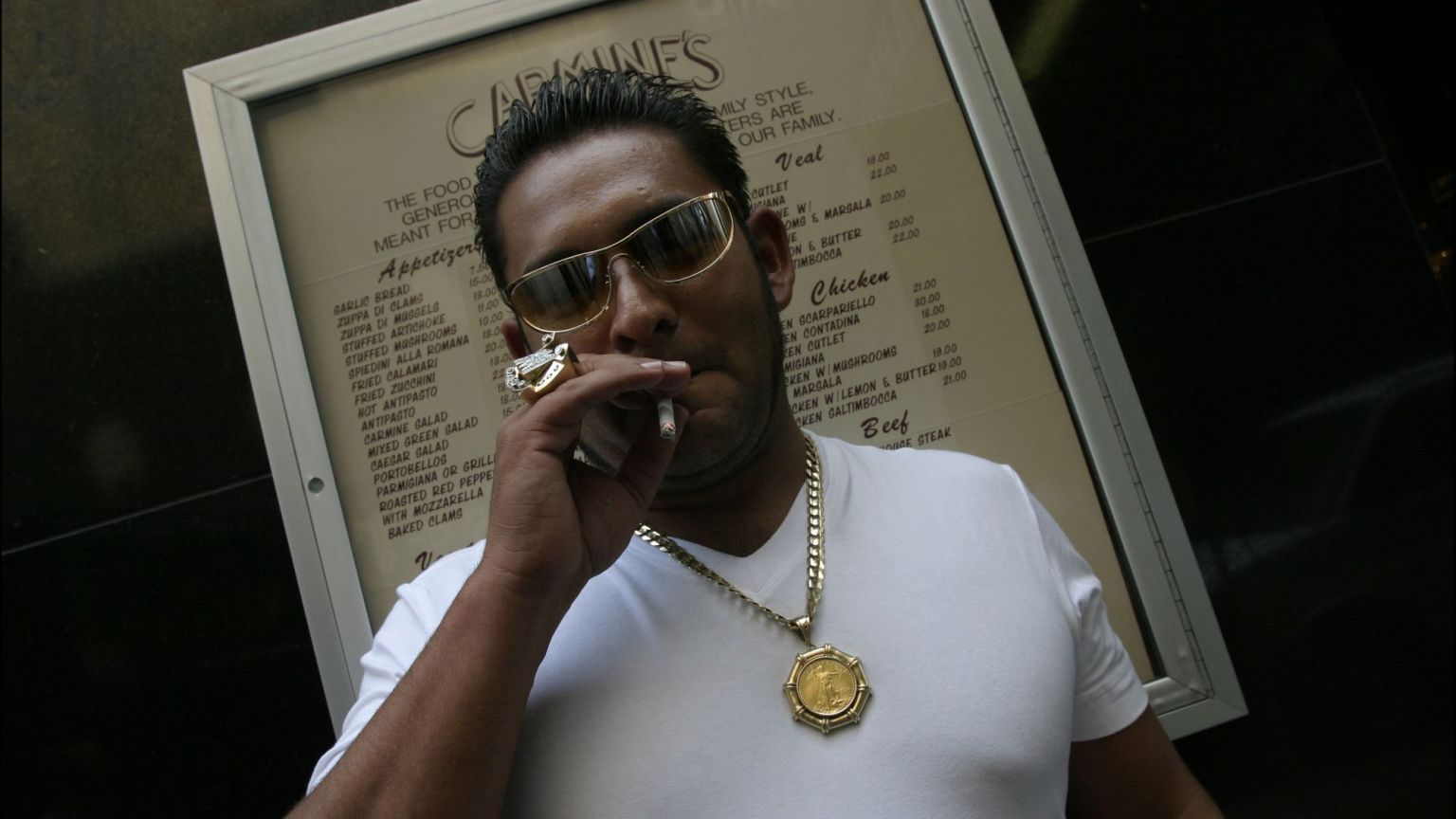
For many Italian-Americans, the process of assimilation from an ethnic white subgroup into generic ‘white Americans’ has been supercharged. When attending an Italian saint’s feast recently in Staten Island, I felt like I was at a county fair in the Deep South. The presence of American flags, bald eagle decorations, cowboy boots and hats (including numerous red MAGA hats), hamburgers and hot dogs, live country music and square dancing was a far cry from the saint feasts I grew up with in New Jersey, where singers performed Sinatra and Italo-disco classics, sausage and peppers sandwiches and zeppole were served, and red, white and green were everywhere you turned.
It’s not news to me that many Italians lean right politically – many do so as a reaction to the excessive political correctness of left-wingers like Mamdani. Rather, what shocked me was that they were opting to take on a clichéd, politically coded version of ‘white Americanness’ that has little to do with our actual heritage.
Whether Italians count as ‘white’ has never been black and white. Our cultural heritage doesn’t fit neatly into boxes. And simplistic, reductive notions of identity make it harder to appreciate Italian-Americans’ relationship with ‘whiteness’, which deserves to be parsed out beyond the confines of simplistic culture-war narratives.
Most debates about the racial identity of Italians typically begin with the history of Columbus Day. In an attempt to quell unrest among Italian-Americans and appease the Italian government after the infamous 1891 lynching of 11 Italians in New Orleans, then US president Benjamin Harrison proclaimed a one-off national celebration of the 400th anniversary of Columbus’s arrival in the ‘New World’ (the celebration of Columbus on every second Monday in October wouldn’t be recognised as a federal holiday until 1971). Italian-Americans then leveraged this to prove that we belonged in this country just as much as everyone else – that we were just as American as the Smiths and the Joneses. And yet many Italians have been quick to point out that we were discriminated against by the Anglo-Saxon majority, and that we – like blacks – were even victims of lynchings.
To this day, those who claim that ‘Italians aren’t white’ will point out all the ways our culture is vastly different from the Anglo-Saxon medigan – which, for many Italians, remains a point of pride. Yet others will point out that not only were Italians not subject to slavery or Jim Crow laws, but we also attempted to gain legitimacy in the eyes of the WASP establishment by repudiating blacks, rather than standing in solidarity with them. Indeed, it’s hard to deny that Italians have developed a reputation for harbouring racist sentiments.
The issue hits close to home for my family. In 1967, my grandfather, concerned about the growing anti-black sentiment among his fellow Italians in the aftermath of the race riots in Newark in the same year, built a multi-ethnic social service that aimed to forge a coalition between blacks, Italians and Puerto Ricans. He affirmed that Italians should be proud of our unique heritage. But he insisted that we shouldn’t turn that pride into a reason to look down on others. Instead, pride in your own culture should enable you to appreciate others’ cultures.
Although I’ll probably never have to worry about getting brutalised by a police officer and have plenty of privileges that darker-skinned people don’t have, I can’t help but hesitate when I tick the ‘white’ box on official documents. My Italian ancestors have a culture that is much richer and more complex than being merely ‘white’. And for that matter, blackness and Latinidad are far from monoliths, as there are a variety of subcultures behind the ‘black’ and ‘Hispanic’ check-boxes.
This is why identity categories like ‘Italian’ don’t register on the radar of woke millennials like Mamdani. If they aren’t oppressed racial minorities or immigrants from a developing country, they’re just ‘white’. Of course, the Italians who trade in their heritage for plain old ‘white American’ culture aren’t helping our cause, either.
Assimilation is a struggle all immigrant groups have to contend with – one fraught with challenging and painful questions about identity. The answers never arrive in a pre-packaged box. Yet I can’t help but feel frustrated with both woke identitarians and the reactionary right for ignoring the complexities that come with retaining elements of one’s heritage, while affirming their belonging to the greater whole.

Both sides do a disservice to all Americans by forcibly severing our roots and papering over those particular cultural markers that link us to a unique people. Without firm roots, it’s impossible to build a solid foundation for our future as a nation.
Stephen G Adubato is the founding editor of the Cracks in Postmodernity platform and an adjunct professor of philosophy and religion. His forthcoming book, Power Without a Face, will be published in early 2028.
You’ve hit your monthly free article limit.
Support spiked and get unlimited access.
Support spiked and get unlimited access
spiked is funded by readers like you. Only 0.1% of regular readers currently support us. If just 1% did, we could grow our team and step up the fight for free speech and democracy.
Become a spiked supporter and enjoy unlimited, ad-free access, bonus content and exclusive events – while helping to keep independent journalism alive.
Monthly support makes the biggest difference. Thank you.




Comments
Want to join the conversation?
Only spiked supporters and patrons, who donate regularly to us, can comment on our articles.