A nonbinary nepo-baby has ruined the new Sense and Sensibility
Hollywood’s pandering to actors’ trans identity is breaking the illusion of cinema.
Want unlimited, ad-free access? Become a spiked supporter.
I was thoroughly enjoying the new adaptation of Sense and Sensibility until Mr Palmer appeared on screen. ‘That’s a woman’, I thought. And just like that, the spell was broken. For the previous hour or so, I’d been happily transported into Jane Austen’s world. Suddenly, I felt like I was watching a sixth-form production at a girls’ school.
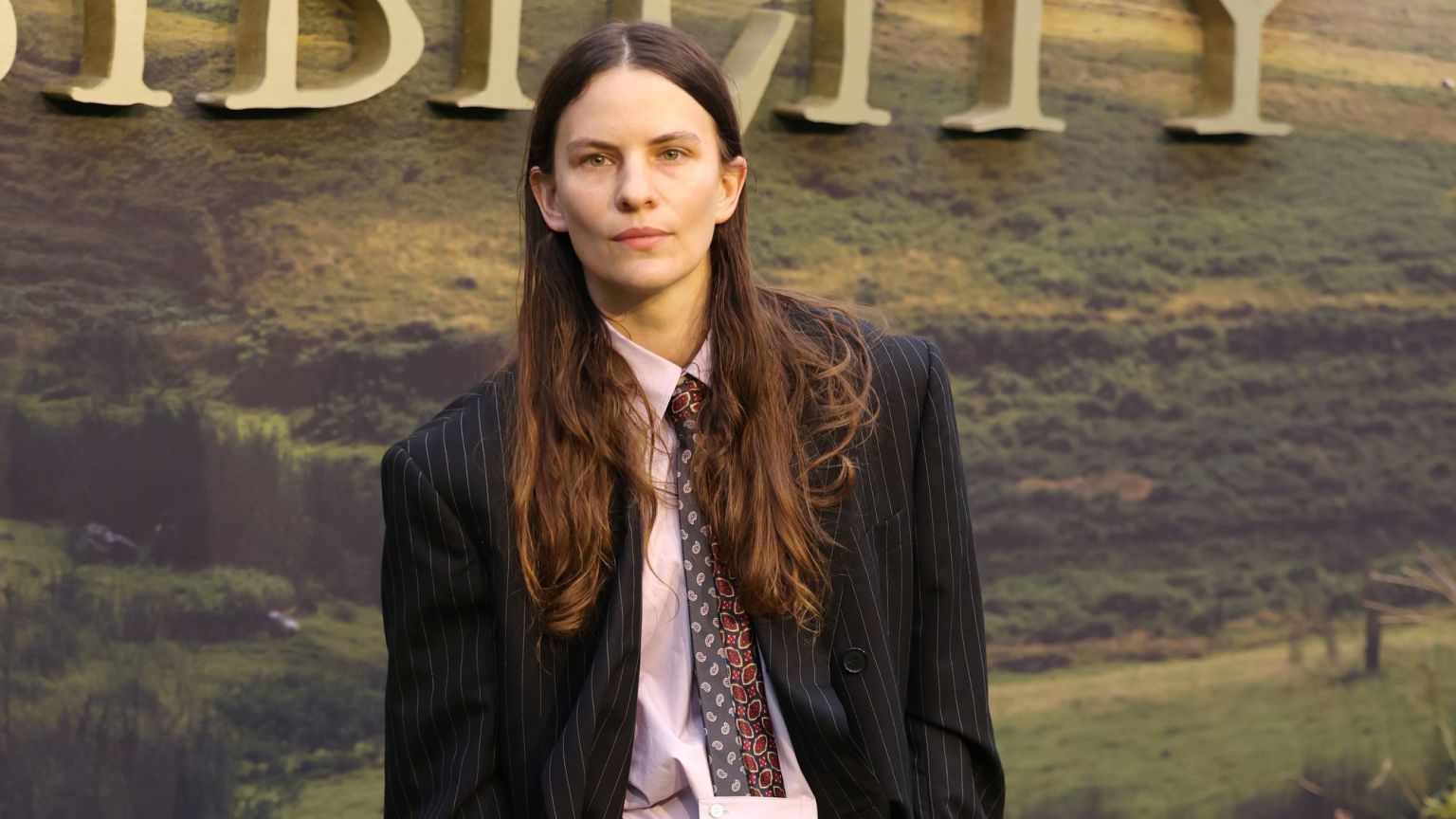
For the uninitiated, Mr Palmer is the sardonic, long-suffering husband of the relentlessly cheerful Charlotte Palmer. Many Austen fans believe Hugh Laurie absolutely nailed the character in Ang Lee’s 1995 version. They’re less impressed with the casting in Georgia Oakley’s 2026 version, where Mr Palmer is played by Eliot Sumner – a woman who identifies as nonbinary.
It’s not just her high-pitched voice that’s a problem. As soon as her face filled the screen, I was distracted by how pretty she was. She has fine, delicate features that even the most handsome male actor could never hope to match. Sumner is beautiful. She is, after all, the ‘they / them’ child of iconic musician Sting and actress Trudie Styler. Another nonbinary nepo-baby from the celebrity bubble.
I have no problem with actors playing people who are nothing like them. Surely that’s the whole point. It’s how millions of straight women fell for Anthony Bridgerton, played by the gay actor Jonathan Bailey. Bailey did exactly what actors are supposed to do. He made us believe.
And if a gay man can convince millions of straight women to fancy him, why the heck can’t a masculine-presenting woman put on a dress and wig and convincingly play a woman in a period drama – rather than being cast as a man and expecting audiences not to notice? Instead, audiences are apparently expected to pretend that a woman can put on a man’s suit, scrape back her hair in a bun and play a male part convincingly.
‘You do know you’re not supposed to notice, Janet’, a friend said to me. But I did notice – and it broke the spell of an otherwise excellent adaptation.
Of course, this isn’t an isolated example. Sumner was also cast in a male role in Netflix’s Ripley. For some viewers, that was also enough of a distraction to spoil another otherwise excellent adaptation.
There is suspension of disbelief – and then there is being expected to believe that a five-foot-one woman weighing less than 50kg is a Greek soldier fighting in the Trojan War. Yet Elliot Page was cast as Sinon, a Greek soldier, in Christopher Nolan’s The Odyssey. Page, formerly known as Ellen, made her name in Juno, a 2007 comedy about an unplanned pregnancy, before deciding she was actually a tiny man. She has since revealed that her ‘breakthrough’ appearance in The Odyssey has not led to a flood of new acting offers. Funny that.

Surely the make-believe world of TV and cinema is one place where we should be able to escape – including from identity politics. In a Hollywood-style film, actors are supposed to disappear. We are not meant to sit in the cinema thinking about their sexuality, gender identity or personal biography. We are supposed to believe they are somebody else. That’s their unique talent.
The whole magic of acting lies in the distance between the actor and the character. The skill is in making us forget that distance exists. Matt Damon did not need to have ‘lived experience’ of being a murderous social climber who steals another man’s identity to play Tom Ripley in The Talented Mr Ripley. Anthony Hopkins was so convincing as Hannibal Lecter – the cannibalistic serial killer – that he has joked in interviews about having to remind people he was only acting. And audiences had no difficulty believing Hugh Laurie as Mr Palmer. Indeed, judging by the number of people who responded to my comments about the new version by declaring Laurie the definitive Mr Palmer, quite the opposite.
But even the most skilled actor cannot override biological reality. If we see a female face – and hear a female voice – when we’re supposed to be seeing and hearing a man, the illusion fails. The moment Sumner appears on screen in Sense and Sensibility, we’re aware of the distance between the actor and the character. That’s what breaks the spell.
‘Identity’ casting doesn’t just ruin individual films or TV shows – it casts a shadow over the whole industry. Remember when casting announcements used to be fun – finding out who had been picked to play a role and speculating on what they would bring to it? Now they’re just another opportunity for virtue-signalling. Pre-release junkets are dreary too, because interviewers increasingly seem compelled to use them as ‘struggle sessions’ to check that actors hold the ‘correct’ views – rather than tell us about the flippin’ film.

Thankfully, some actors who identify as nonbinary are smart enough not to let identity politics ruin their careers. Emma Corrin, who identifies as nonbinary, played Princess Diana in The Crown. Bella Ramsey, also nonbinary, plays Ellie in The Last of Us. Emma D’Arcy plays Rhaenyra Targaryen in House of the Dragon. Fine. I might think the wider insistence that sex is somehow irrelevant is nonsense. But if I believe the character, I don’t care.
And that is precisely the point. The actor’s identity should be irrelevant. What matters is whether the performance works.
Janet Murray is a freelance journalist and director of SEEN in Journalism.
You’ve hit your monthly free article limit.
Support spiked and get unlimited access.
Support spiked and get unlimited access
spiked is funded by readers like you. Only 0.1% of regular readers currently support us. If just 1% did, we could grow our team and step up the fight for free speech and democracy.
Become a spiked supporter and enjoy unlimited, ad-free access, bonus content and exclusive events – while helping to keep independent journalism alive.
Monthly support makes the biggest difference. Thank you.






Comments
Want to join the conversation?
Only spiked supporters and patrons, who donate regularly to us, can comment on our articles.