Trade unions must stop pandering to trans fanatics
Even as gender ideology loses its grip on the Labour Party, unions are still throwing women under the bus.
Want unlimited, ad-free access? Become a spiked supporter.
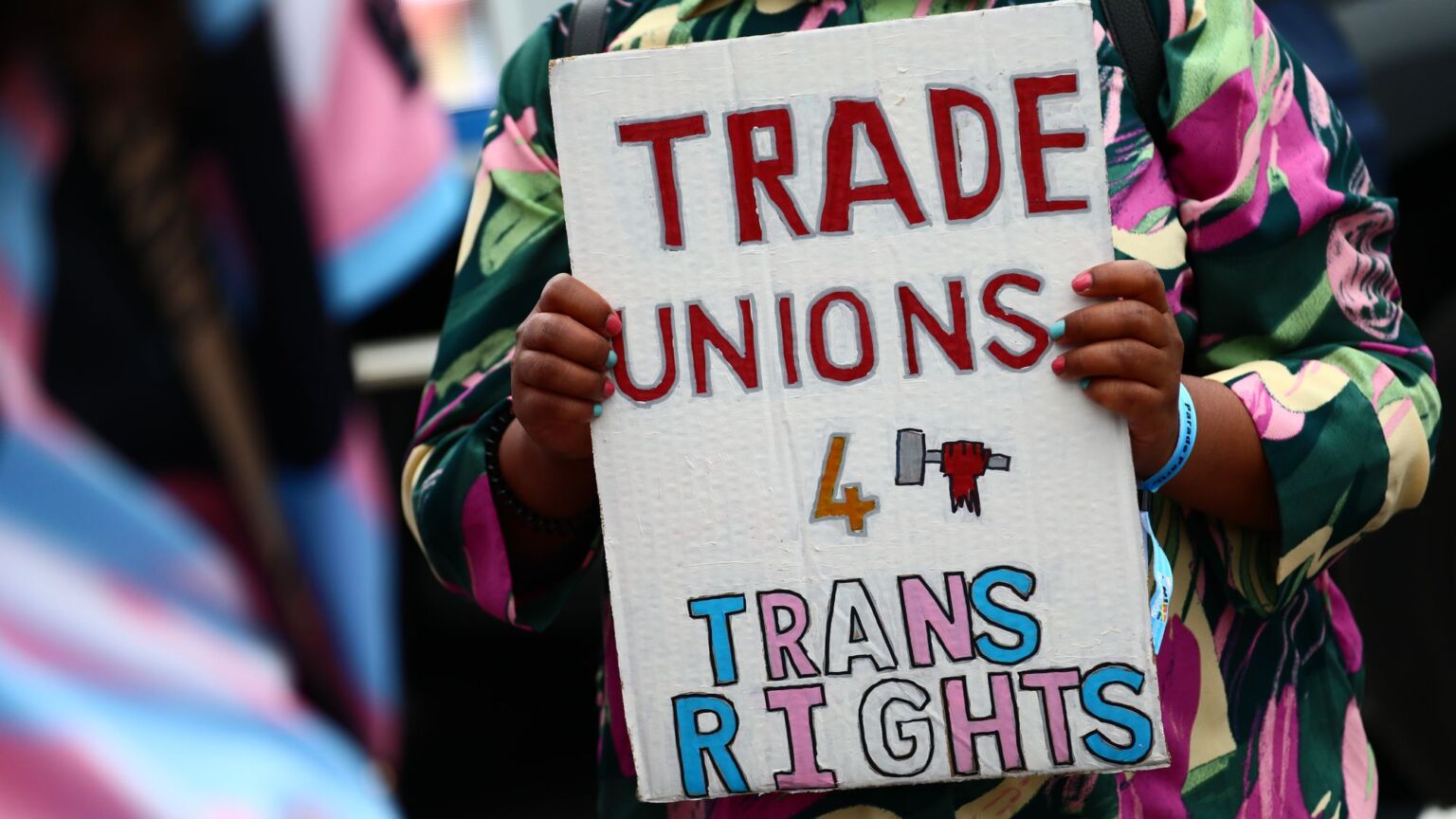
Liverpool was braced for a trans uprising. The Metro warned that activists from across the UK were preparing to descend on the Labour Women’s Conference on Saturday, furious that the Labour government had finally agreed to follow the Supreme Court’s ruling on single-sex spaces. Feminists due to speak were steeling themselves to run the gauntlet of snarling, balaclava-clad men, as has become the norm where women want to speak about our rights.
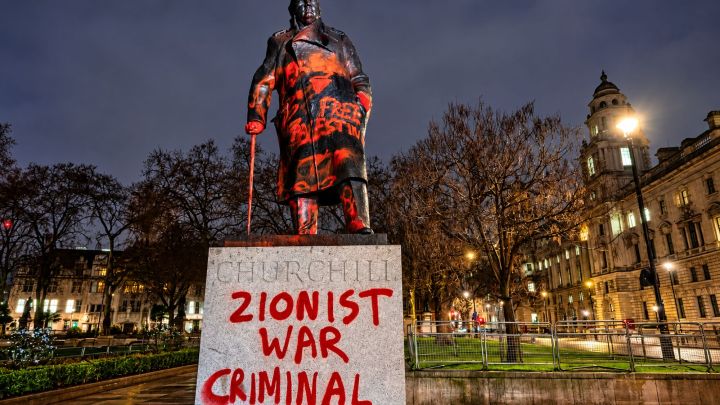
In the event, eyewitnesses put the revolutionary vanguard at around 11 people, including two elderly men in skirts. A large anti-Israel protest seemed to have lured the activists away. It seems standing with trannies is good, but hating ‘Zionists’ is better.
The organiser, veteran trans activist Steph Richards, handed out leaflets lamenting that, despite three terms as a Constituency Labour Party women’s officer, a stint as his CLP’s delegate to the 2022 National Women’s Conference and ‘loyal service to the Labour movement’, he had been barred for ‘being transgender’. He had apparently spent months on the campaign, noting on social media: ‘A few (happy and sad) tears this morning when I realised what we had achieved.’ To be fair, I’d cry if 11 people turned up, too.
He was accompanied by the aptly named Emily Brothers. Labour’s first ‘trans parliamentary candidate’ in 2014, a member of the Labour Women’s Network and participant in the inaugural Jo Cox Women in Leadership programme, Brothers demanded that ‘the party apologise to all the trans members impacted and reinstate me and the other trans women into our rightful positions’.
A small clutch of trade-union activists apparently didn’t realise they shouldn’t have crossed the picket line. Faces shining with smugness, they shared pictures of themselves inside the venue to show their solidarity with the sad transvestites outside.
The claim that Richards and Brothers were excluded for being transgender is stonking great lady balls. They were excluded because they are men, and Labour’s Women’s Conference is for women.
Nonetheless, Richards and Brothers found powerful allies in the trade-union movement. Joanne Thomas, chair of Labour Unions, coordinated a boycott backed by 11 unions. On social media, she declared: ‘Just because something is the law, does not mean it is right’, before comparing laws protecting single-sex spaces to Section 28. This was the 1988 law that barred councils from ‘promoting’ homosexuality and prevented maintained schools from teaching that homosexual relationships were acceptable as a ‘pretended family relationship’. It was a stigmatising law. But in the minds of modern activists, it has metastasised into an unqualified evil, a handy historical bogeyman to be invoked whenever women insist that sex is real.
The comparison is as glib as it is grotesque. For 16 years, the Equality Act has protected women from sex discrimination and allowed lesbians and gay men to meet on their own terms. The law did not suddenly change. Rather, trans lobby groups such as Stonewall spent a decade instructing employers and public bodies that trans people would suffer intolerably if required to use facilities corresponding to their sex. When employees, mostly women, challenged that proposition, they were labelled as bigots.
The consequences are now as impossible to miss as a five o’clock shadow on a ropey transvestite. Only last week, a tribunal heard from nurse Sandie Peggie, who was left unsupported by the Royal College of Nursing after objecting to a man in the women’s changing room. An RCN executive accepted that gender ideology could be said to place ‘a high value on the rights of men who say they are women, and little to no value on the needs of women’. The Darlington nurses reached the same conclusion and formed their own union. Tribunals are now stacked with cases where employees have been harmed by ‘inclusion policies’ and then let down by their unions.
The vibe shift is being felt within the Labour Party. Labour Women’s Declaration, now finally permitted a presence at the main party conference, organised well-attended fringe events and a stall. Sex-realist members from LGB Labour and Lesbian Labour joined in, too. Though they are still sneered at and derided by trans-activist politicians, this is a marked change from the days when the gender-critical Rosie Duffield MP needed security merely to attend.
Had the unions listened to the women they sidelined, rather than chasing the moral cachet of ‘standing with a minority’, their moribund movement might have remained relevant. Instead, they are left cosplaying battles of the past: Temu revolutionaries who imagine themselves staging Lesbians and Gays Support the Miners II, while literally shilling for the man.
Jo Bartosch is a journalist campaigning for the rights of women and girls.
You’ve hit your monthly free article limit.
Support spiked and get unlimited access.
Support spiked and get unlimited access
spiked is funded by readers like you. Only 0.1% of regular readers currently support us. If just 1% did, we could grow our team and step up the fight for free speech and democracy.
Become a spiked supporter and enjoy unlimited, ad-free access, bonus content and exclusive events – while helping to keep independent journalism alive.
Monthly support makes the biggest difference. Thank you.



Comments
Want to join the conversation?
Only spiked supporters and patrons, who donate regularly to us, can comment on our articles.