Will the discovery of newts and bats block the Piddington asylum camp?
The unstoppable force of illegal migration could soon meet the immovable object of England’s planning laws.

Want unlimited, ad-free access? Become a spiked supporter.
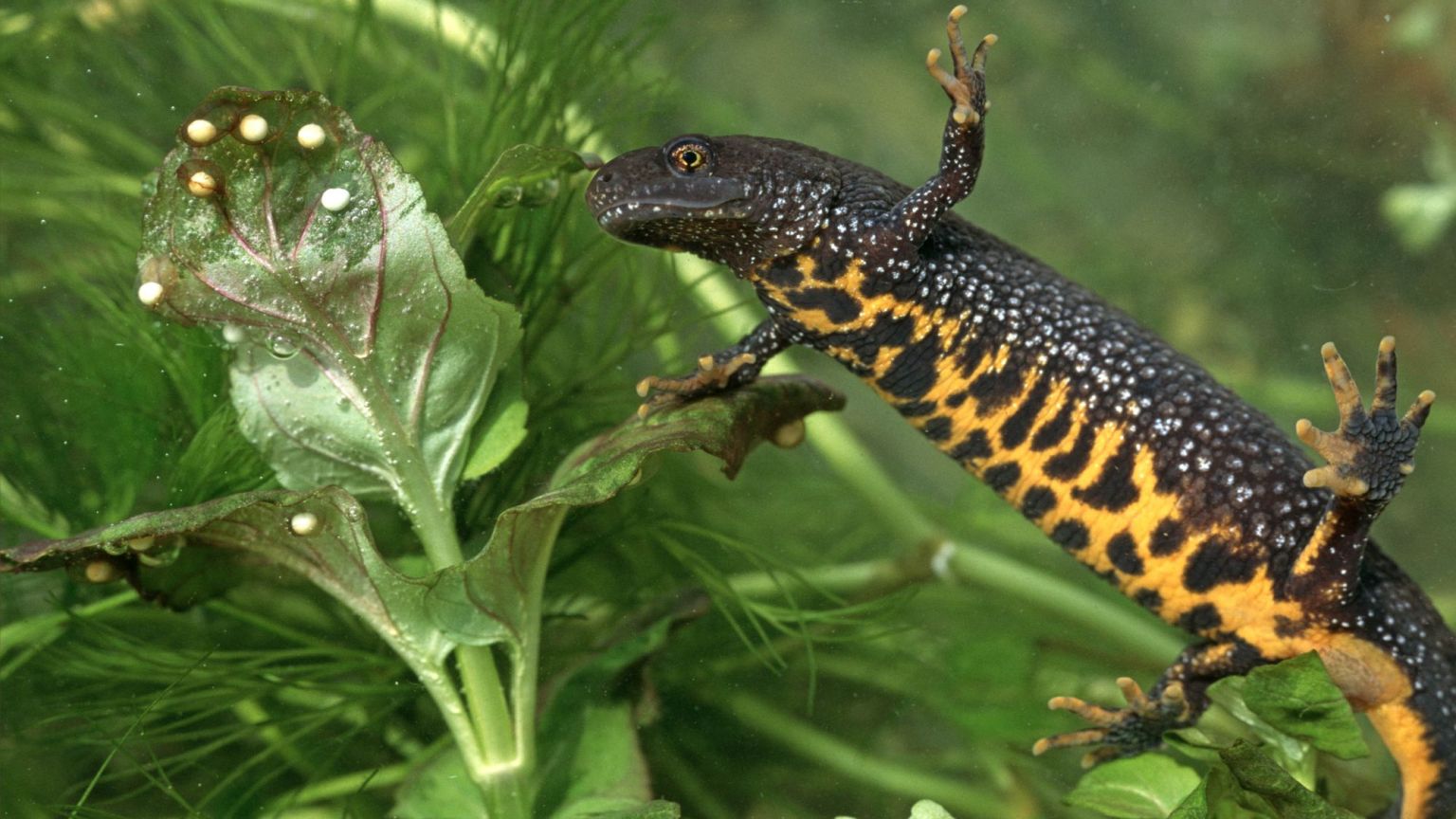
Will the great crested newt, or the barbastelle bat, be able to do what the collective voice of a nation cannot? So far, objections to the conversion of military bases into accommodation for illegal immigrants have been dismissed by the Home Office. Yet the government’s plans for migrant camps have now run into a far more formidable foe: the UK’s suffocating planning and environmental laws.
It turns out that the small village of Piddington in Oxfordshire is not only home to the protected great crested newt – the enemy of many housing developments in recent years. It may also be a habitat for barbastelle bats, a species reportedly so endangered that their discovery torpedoed the £274million Norwich Western Link railway in Norfolk last year.
The bat’s presence at the Bicester Garrison, the site of the proposed asylum accommodation, was detected by ecologist Pedro Collins using echolocation technology. He said he was ‘pretty much 100 per cent certain’ that the ‘short, hard smacks and pulses’ were evidence of bats. If Collins is right, the government will need approval from Natural England if it wants to continue renovating the garrison before it welcomes its 1,250 new guests.
The UK government might have an even bigger problem than a 40-millimetre bat at RAF Barnham in Suffolk, where it also plans to house 1,250 illegal immigrants. That’s because the site sits within the Breckland special protection area, which is a sanctuary for 200 breeding pairs of stone curlews. Current wildlife regulations prevent any development within a mile of nesting sites for stone curlews. If development is to proceed, it must be proven ‘beyond reasonable scientific doubt’ that the birds will not be harmed.
The government need only look at some recently derailed projects to see what it’s up against. Take HS2’s £100million ‘bat shed’ – a tunnel the high-speed rail’s developers were forced to build to protect a colony of Bechstein bats in Buckinghamshire. Or the 360,000-page planning application to build the Lower Thames Crossing connecting Essex and Kent, most of which dealt with environmental concerns.
While it would be amusing to see the British government hoist by its own green petard, it isn’t easy to take sides in this battle. The Home Office consistently puts the interests of illegal immigrants ahead of the wishes of the British people, who have repeatedly voted for secure borders. On the other hand, the green bureaucracy regularly prioritises preserving the habitats of animals – most of which no one has ever heard of – over building the homes we humans need to live in. The unstoppable force of illegal immigration may soon meet the immovable object of eco-NIMBYism.
Whatever happens next, it’s clear that those living near these proposed asylum centres do not figure at all in the government’s calculations. Piddington – which recently declared its independence from the UK – has a population of under 400. The population of Barnham is less than 600. Yet both towns will be expected to absorb 1,250 male asylum seekers each. Such a patently unfair, absurd and frankly dangerous proposal should never have seen the light of day. It should be common sense, not arcane planning laws, that put a stop to this insanity.

Residents of these communities would no doubt be relieved if these migrant camps could be blocked by an obscure environmental regulation, but the immediate consolation would leave a bitter aftertaste. It would confirm that the views of British citizens count for less than the so-called rights of animals, and that fears for the safety of women and girls would carry less weight than the safety of a pug-faced bat.
Hugo Timms is a staff writer at spiked.
You’ve hit your monthly free article limit.
Support spiked and get unlimited access.
Support spiked and get unlimited access
spiked is funded by readers like you. Only 0.1% of regular readers currently support us. If just 1% did, we could grow our team and step up the fight for free speech and democracy.
Become a spiked supporter and enjoy unlimited, ad-free access, bonus content and exclusive events – while helping to keep independent journalism alive.
Monthly support makes the biggest difference. Thank you.


Comments
Want to join the conversation?
Only spiked supporters and patrons, who donate regularly to us, can comment on our articles.