How Britain is pricing free speech out of citizens’ reach
The time and money needed to defend one's rights in courts and tribunals are encouraging self-censorship.
Want unlimited, ad-free access? Become a spiked supporter.
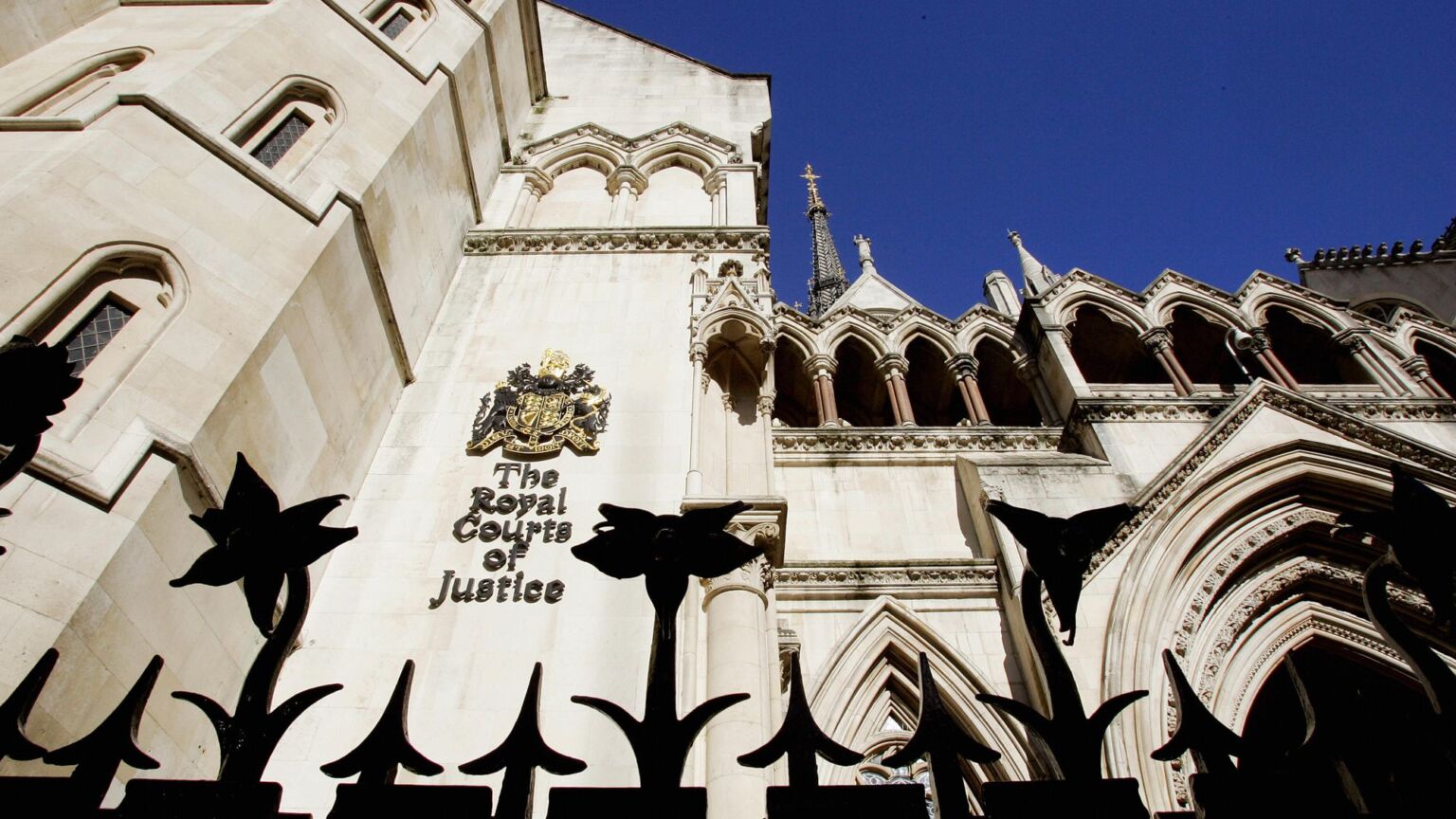
Kristie Higgs lost her school job in January 2019 over Facebook posts expressing her Christian beliefs about sex and education. In February 2025, the Court of Appeal held her dismissal unlawful. It therefore took more than six years to establish that she should not have been sacked. Before congratulating ourselves on the strength of British free-speech protections, we might consider how many people could afford to wait that long.
Britain possesses a remarkable variety of mechanisms by which it can ruin you for speaking your mind. Criminal prosecution is the most conspicuous. For someone with a professional qualification, a complaint to the profession’s regulator may be quite sufficient. For an employee, the threat of dismissal does the work. The people watching these cases need no instruction in what to do next. They keep quiet.
Consider Hamit Coşkun, who burned a Koran outside the Turkish consulate in London in February 2025 while shouting hostile remarks about Islam. He was attacked by a man carrying a knife. He was also prosecuted and convicted of a religiously aggravated public-order offence. The conviction was overturned on appeal; in February 2026, the High Court upheld his acquittal. His case had passed through three courts.
Burning a religious book is deliberately offensive. People are entitled to condemn it, and believers are entitled to protection from violence. But a religion cannot acquire immunity from public contempt because somebody reacts violently to its critics. Anyone who thinks this principle obvious should ask why Coşkun needed to defend himself through successive legal proceedings.
These cases sit within a formidable body of speech law. The Times’s freedom-of-information investigation reported 12,183 arrests in 2023 under two communications statutes, across 37 responding police forces. That’s roughly 33 a day. Those laws cover threats and abuse as well as offensive messages. The figure cannot tell us how many arrests were justified. It does tell us that policing communications is hardly a marginal activity.
A threat to kill and an offensive opinion require different legal treatment. Yet words such as ‘offensive’ invite an altogether more subjective assessment. People disagree about what is offensive because they disagree about religion, politics and how to live. Making such disagreements a matter for criminal proceedings is a dangerous road down which to travel.
Nor does avoiding the criminal law leave you safe. Barrister Jon Holbrook received a warning and a £500 fine over a tweet. Both were set aside on appeal in March 2022. He won, as Higgs eventually won. That is an important protection under existing law. It is also a warning about how much effort can be required to obtain it.
A professional has spent years acquiring the right to earn a living. Place that livelihood in doubt and a regulator need not win every case to discourage speech. An employee watching a colleague fight a dismissal will question whether he or she can afford to mount a similar defence. Abstract assurances about rights will not pay the rent.
Employers must be able to deal with mistreatment at work; regulators must deal with professional misconduct. Neither group should be deciding whether a lawful opinion expressed away from work should call into question a professional’s fitness to do the job. A doctor’s political views do not, by themselves, tell us whether he can treat a patient. A lawyer’s unpopular beliefs do not establish that he cannot represent a client.
The internet adds another means of restriction. The Online Safety Act exposes companies to maximum penalties of £18million or 10 per cent of qualifying worldwide revenue, whichever is greater. Faced with penalties on that scale, a business has a powerful incentive to remove doubtful material before anyone has settled whether it is unlawful. The user whose lawful contribution disappears may never get near a court.
This is how a formally free society can become a place where people scarcely dare to speak. Nobody has to prohibit every contentious opinion. It is enough to make the consequences uncertain and the defence expensive. Those with the least money have the strongest reason to keep their heads down, although they have as much right to be heard as any newspaper columnist.
That is why I helped draft the Freedom of Speech Bill, with Preston Byrne and Elijah Granet, published by the Adam Smith Institute. It is model legislation for parliament to take up. Its purpose is to make protection available before someone has lost years of his or her life establishing that he or she was entitled to speak.
The bill would replace broad speech restrictions with narrower rules directed at such things as threats, serious harassment and incitement. It would restrain public authorities and professional regulators from penalising lawful expression, and protect speech outside work while allowing employers to justify proportionate action for legitimate business reasons. It would also prevent ideological assent from being made a condition of employment or professional admission.
It would repeal the Online Safety Act and protect services from civil liability merely for hosting other people’s words. But it would retain criminal liability and a duty to report child sexual abuse material. Platforms would remain free to make their own editorial choices. The aim is to give people room to speak without making every intermediary responsible for policing their opinions.
Parliament can argue over the drafting. It ought to be rather harder to defend a system in which a woman must spend more than six years establishing that her Facebook posts were not a proper reason to sack her. Freedom of speech should be something an ordinary person can exercise, not a reward for surviving litigation.
Michael C R Reiners is a lawyer, writer and architectural historian who tweets @mcrreiners. He is co-author of the Freedom of Speech Bill (2026), published by the Adam Smith Institute.
You’ve hit your monthly free article limit.
Support spiked and get unlimited access.
Support spiked and get unlimited access
spiked is funded by readers like you. Only 0.1% of regular readers currently support us. If just 1% did, we could grow our team and step up the fight for free speech and democracy.
Become a spiked supporter and enjoy unlimited, ad-free access, bonus content and exclusive events – while helping to keep independent journalism alive.
Monthly support makes the biggest difference. Thank you.


Comments
Want to join the conversation?
Only spiked supporters and patrons, who donate regularly to us, can comment on our articles.