Anthony Albanese’s Ministry of Truth
Australia is fast becoming the censorship capital of the West.
Want unlimited, ad-free access? Become a spiked supporter.
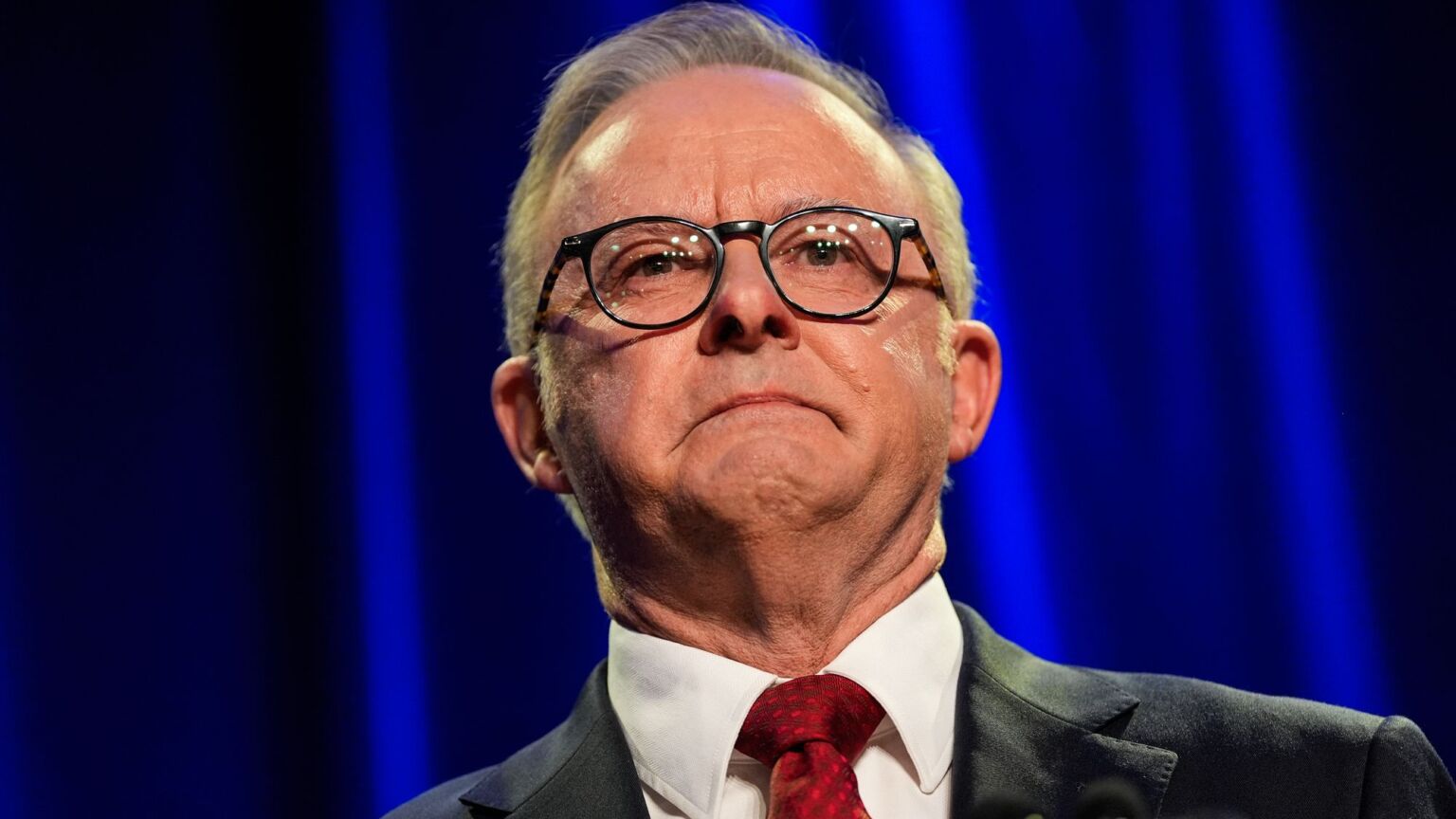
Having failed in its recent attempts, Australia’s Labor government is having another go at imposing internet censorship – this time under the guise of the Digital Duty of Care Bill. The bill’s seemingly benign title betrays what is perhaps the most significant power grab over the internet by any government in the West.
The bill will require news websites and social-media platforms to take down ‘seriously harmful material and conduct’. Clearly, such a vague term could be used as a catch-all to force social-media platforms to proactively restrict content that the government considers ‘harmful’. If you think this sounds suspiciously like a Ministry of Truth, you are correct. Journalist Michael Shellenberger has described the proposed law as the most radical internet censorship ever proposed in the West.
Australia’s ‘eSafety commissioner’, Julie Inman Grant, has already proved that she cannot be trusted with adjudicating what people can and can’t see online. In 2024, the unelected bureaucrat took legal action against X in order to block footage of an Orthodox bishop in Sydney being attacked with a knife – not only in Australia, but across the world. In the same year, she tried to censor an X post by Canadian activist Chris Elston, which exposed the unsavoury proclivities of a transgender Australian who had been appointed to a World Health Organisation panel. Inman Grant even took a single mother to court for voicing her objections to a ‘queer club’ at a Melbourne primary school.
Mercifully, Inman Grant failed in all of these cases. So you might think this would give her and the Labor government pause for thought. Unfortunately, they have doubled down instead.
In 2024, in what was described at the time as a 21st-century version of blasphemy laws, the Australian Labor government introduced a mis- and disinformation bill. This bill was envisaged to help silence people who spread ‘false, misleading or deceptive information’ online. In November of that year, it was rejected by the Senate on the grounds that it posed an unacceptable risk to freedom of speech. Yet the lust for censorship continued, and last year Labor banned social media for under-16s.
Nothing appears to haunt Labor’s dreams quite like social media. After the terrible attack on federal MP Helen Haines last month, prime minister Anthony Albanese’s first instinct was to blame social media. This is the same Albanese who, only weeks before the attack, said this about the populist One Nation party: ‘Across the world, hard-right populists are on the march, peddling politics that is dangerous, divisive and downright dishonest. We simply must defeat them. We owe it to history. And we will defeat them.’ Nor did he condemn protests by school students against One Nation and its leader, Pauline Hanson, who was the subject of vile placards, the language of which will not be repeated here.
The truth is that Labor’s growing obsession with social media is closely linked to its waning popularity. The government’s polling has been heading south since the Bondi massacre in December last year, with One Nation now among the most popular parties in Australia. The government is very worried that social media is driving this change.
At the end of the day, lies can be rebutted and cranks ignored. The strongest safeguard against misinformation isn’t censorship. It is an informed and empowered public. Exactly what Albanese and his ministers seemingly want to avoid.
Trust in our institutions is at historic lows, mainly due to the fact that governments have failed to treat the public with respect, dealing in misinformation themselves. Any attempt to silence so-called misinformation will only erode that trust even further.
Rocco Loiacono is a Perth-based legal academic and host of the Rocco Report podcast on YouTube.
You’ve hit your monthly free article limit.
Support spiked and get unlimited access.
Support spiked and get unlimited access
spiked is funded by readers like you. Only 0.1% of regular readers currently support us. If just 1% did, we could grow our team and step up the fight for free speech and democracy.
Become a spiked supporter and enjoy unlimited, ad-free access, bonus content and exclusive events – while helping to keep independent journalism alive.
Monthly support makes the biggest difference. Thank you.


Comments
Want to join the conversation?
Only spiked supporters and patrons, who donate regularly to us, can comment on our articles.