Orwell taught us to beware the technocrats
Soulless utilitarians are just as deluded and dangerous as naive idealists.
Want unlimited, ad-free access? Become a spiked supporter.
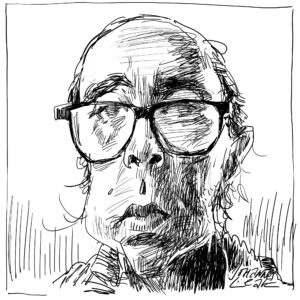
Whenever the patrician concerns, fringe obsessions or neurotic fixations of lifestyle leftists make the news, it invariably brings to mind George Orwell’s withering observations of a similar demographic he identified in the 1930s. So when it emerged last week that the Department of Education had issued new food guidance banning fish and chips, fried eggs and pastries from schools, and recommending in their stead dishes with lentils and other pulses, I won’t have been alone in recalling the repeated complaints he made in The Road to Wigan Pier (1937) about a type of ‘fruit-juice drinker, nudist, sandal-wearer, sex-maniac, Quaker, “Nature Cure” quack, pacifist and feminist’ then found on the British left.
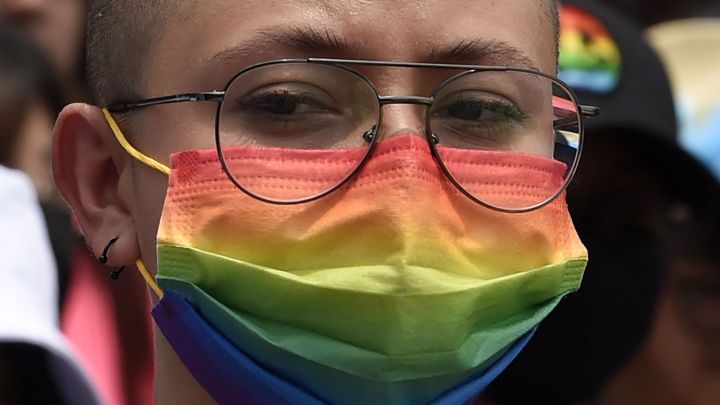
This variety of upper-middle-class leftist still lives on. You’ll find him – or, more likely, her – looking for the ethically sourced, environmentally friendly vegan foods in Waitrose, flying the Progress Pride Flag or wearing a keffiyeh, repeating platitudes about ‘equity and inclusion’ or publicly atoning for their ‘white privilege’.
Yet it’s sometimes forgotten that Orwell discerned a second species of refined socialist, whose aloof idealism was also removed from the everyday concerns of ordinary people. These were the materialist, technocratic, future-orientated visionaries like HG Wells and Aldous Huxley, who thought that a new world could be created in the Soviet Union. Even worse were the likes of Beatrice Webb and Labour intellectual Harold Laski, who believed that a socialist utopia was already being established in the USSR. This was an upper echelon, Orwell wrote, who reeked of ‘crankishness, machine-worship and the stupid cult of Russia’. Their socialism evoked in the minds of the common man ‘a picture of aeroplanes, tractors and huge glittering factories of glass’ – to use a description Huxley gave in his most famous book, Brave New World. For Orwell, it was a vision advanced by a ‘large army of scientists and technicians… marching along the road of “progress” with the blind persistence of a column of ants’.
That kind of inhuman, utilitarian, leftist and – in modern parlance – centrist also survives today. They were the Blairite neophiliacs who deprecated ‘the past’. They’re the GDP-fetishists who told us in the 2016 Brexit referendum that ‘the economy’ was more important than the nation, democracy and self-determination. They’re the pedantic and robotic lawyers who believe obedience to international treaties overrides the concerns of British people.
They’re the ones, like education secretary Lucy Powell, who want to remove the classical and humanistic elements from the school curriculum in the pursuit of ‘skills’. They believe that public bodies have a socioeconomic duty to implement equality in the workplace. They’re the DEI-obsessed bureaucrats forever calculating the racial composition of public-sector bodies.
They favour immigration because they think people are identical, replaceable units. They resort to graphs and statistics to prove a point. These are the Net Zero ideologues who focus on an abstract future while ignoring the needs of the present. They treat society as a machine to be corrected, fixed and made perfect.
Orwell never found this type of deluded socialist remotely amusing, and neither should we.
Cate Blanchett is right – put your phone away
It’s heartening to see more famous people recommending that we liberate ourselves from smartphones. Last Friday, Cate Blanchett became the latest theatre star to ask her audience to stop filming during performances. Her fellow thespian, the globe-trotter Michael Palin, has also suggested that tourists should learn to savour the moment. As he told the Telegraph on Saturday:
'The problem is everybody gets to a wonderful place where all the cameras go out. So you’ve immediately got a screen between you and what you’re seeing. Just use your eyes and ears. Take it in yourself.'
I confess that I’m no better than most, having taken the opportunity of a day trip to Bruges on Sunday to photograph the Belgian town’s beautiful and historic buildings – and then put the results online. But I also like taking photos of tourists taking photos.
I couldn’t help doing so in London last week as I passed through Westminster Square, having spotted a long line of people waiting to have their picture taken next to a classic, decommissioned red telephone kiosk facing Big Ben.
Just as wokery isn’t dead, this indicates that we also still live in a postmodern society – even though postmodernism was similarly pronounced finished decades ago. Here were people queuing in front of an object that no longer had a function and only served now as an unmoored signifier (of ‘historic Britishness’), to synthesise an event, rather than experience it, in order to place a representation of it in a hyperreal realm to prove that they existed in the corporeal one.

The French sociologist Jean Baudrillard, who sadly never lived to see the dawn of social media, would have been fascinated by this performative simulation of actual living. He might even have been interested in my photo of these tourists taking photos, which I also put up online. Very ‘meta’, as they say these days.
The myth of ‘Brexit travel chaos’
Ever since Britain officially left the EU in 2020, there has been a certain type of tedious Remainer who forever posts pictures of being stuck in queues at continental airports, whining about the indignity of being a second-class, non-EU citizen. In their minds, a single lived experience seems to constitute a coherent argument. Unfortunately, it also implies that they believe that convenience is more important than democracy or sovereignty.
When I passed through passport control at Dover Port on Sunday, on my first visit to the continent since we left the EU, I had no such trouble. We all waited in line for 10 minutes. The French official at the desk didn’t look inside my passport or even look me in the eye. I might as well have said, Alan Partridge-style: ‘Hello, I’m a Communist with a gun.’
While there were two tiers of passport control at Dunkirk on the return leg, getting through it took even less time than it used to. The French official didn’t ask me to remove my spectacles – as was mandatory pre-Brexit – and he even smiled! The British official addressed me by my first name as we parted.
I know I’m not alone. One friend remarks that while he has faced delays entering Poland and at Amsterdam’s Schiphol airport, there were none in Rotterdam. He has made his way seamlessly through the eGates at Barcelona Airport. Another regular visitor to Italy also reports no holdups.
So much for the ‘nightmare’ of travelling to the EU. In my ‘lived experience’, the only thing that has changed tangibly, and for the better, is the return of duty-free shopping.
Patrick West is a spiked columnist and author of Get Over Yourself: Nietzsche For Our Times.
You’ve hit your monthly free article limit.
Support spiked and get unlimited access.
Support spiked and get unlimited access
spiked is funded by readers like you. Only 0.1% of regular readers currently support us. If just 1% did, we could grow our team and step up the fight for free speech and democracy.
Become a spiked supporter and enjoy unlimited, ad-free access, bonus content and exclusive events – while helping to keep independent journalism alive.
Monthly support makes the biggest difference. Thank you.


Comments
Want to join the conversation?
Only spiked supporters and patrons, who donate regularly to us, can comment on our articles.