Starmer’s social-media ban is driven by pure hysteria
The PM’s crackdown on teens’ social-media use is illiberal, irrational and will have vast unintended consequences.

Read our latest coverage of the French riots here – paywall-free all of this week..
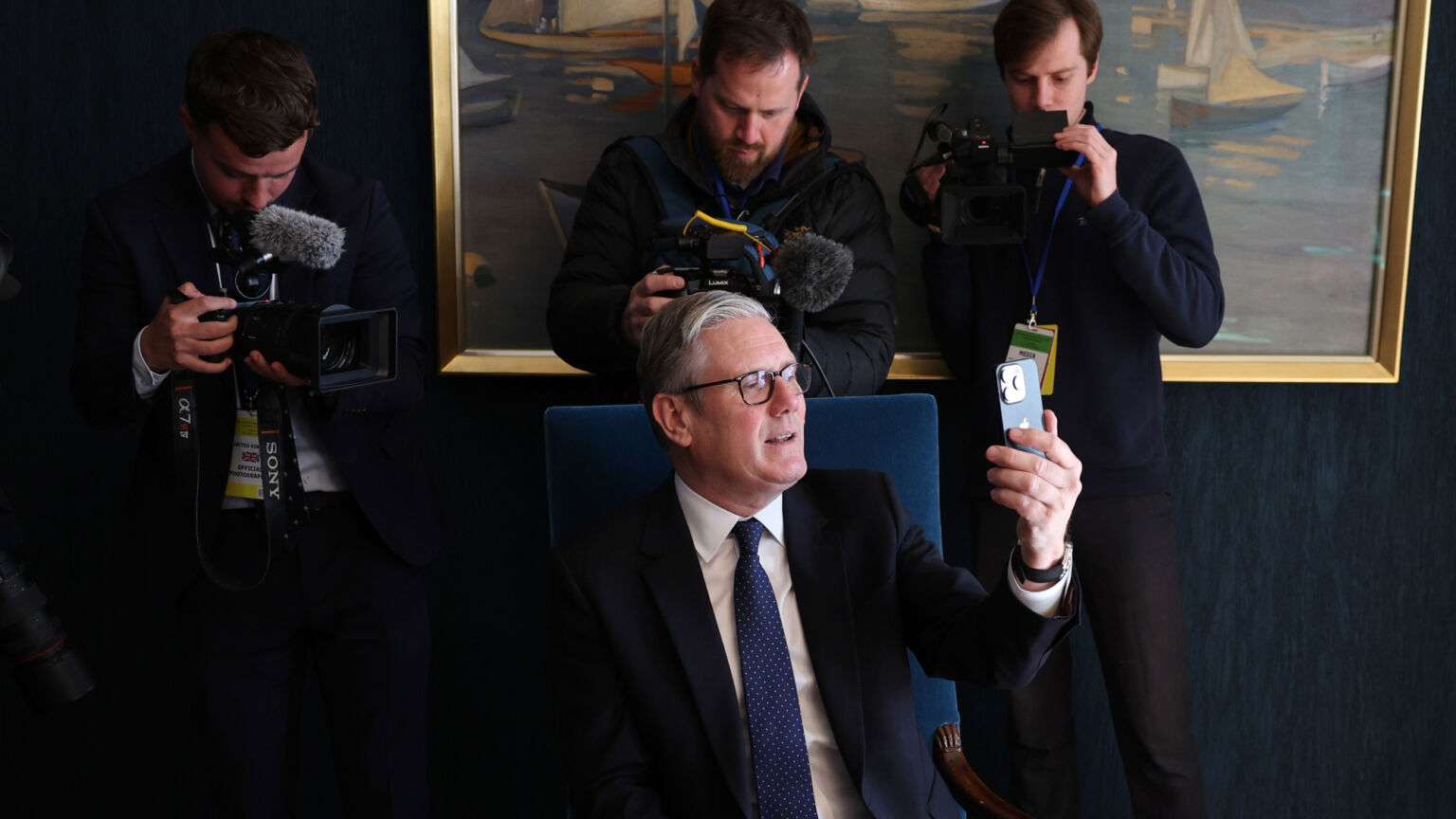
UK prime minister Keir Starmer may be dithering over the details, but some form of social-media ban for under-16s now seems inevitable. According to Downing Street aides, Keir Starmer will announce restrictions on ‘harmful’ social-media platforms just days before the Makerfield by-election on 18 June.
This is quite the about-turn. Two years ago, Starmer rejected calls to ban children from having smartphones or using social media. Back then, he sensibly pointed out that, ‘the term “age appropriateness” is being thrown around all the time, but what age is appropriate?’.
So, what has changed? Officially, the government line is that the prime minister is taking a tougher approach following conversations with bereaved parents and after assessing evidence from Australia, which banned children from social media in December last year. But the timing of Starmer’s announcement is no coincidence. If Labour’s Andy Burnham wins in Makerfield, his next step will be to launch a leadership bid. Sir Keir, aware his days in charge are numbered, wants restrictions on social media to form part of his legacy. In other words, this is less about children’s wellbeing and more about politics.
Starmer’s initial rejection of a ban was never likely to hold. Over the past couple of years, discussion about children and social media has become increasingly hysterical. Almost every problem teenagers might experience is now blamed on phone use, including mental-health difficulties (such as depression and anxiety), obesity, loneliness, reduced attention span and poor body image. Beyond childhood, researchers point the finger at social media for causing the falling birth rate and youth unemployment. So extensive is the list of ills laid at social media’s door that the children’s commissioner is now calling for any ban to be extended to 17-year-olds. This would mean that, one day soon, 16-year-olds may be able vote in elections, but not share a selfie online.
Yet despite the scale of the panic, there is no conclusive evidence directly linking any of these problems to social-media use. Extensive surveys have repeatedly failed to identify a causal relationship between time spent on social media and worse mental-health outcomes. Some problems have undoubtedly increased since smartphones became ubiquitous, but correlation does not equal causation. Social-media platforms have become an easy target, the focus for a moral panic, and a way of avoiding deeper discussion of the changed expectations we have of children today.
The term ‘social media’ is a catch-all label that masks huge differences across sites and in the ways people use them. An Australian-style ban would cover YouTube and TikTok. But what is the difference between watching short videos on one of those platforms and watching a longer one on a streaming service such as Netflix? What’s the difference between interacting with friends on Instagram (which would be banned) and through WhatsApp group chats (which would be allowed)? What’s wrong with engaging in debates on Reddit or coming across interesting articles on X?
Starmer claims his target is ‘harmful’ social-media platforms, but even though advocates of a ban use the language of addiction, TikTok is not like cigarettes. Today’s ‘Just Say No’ message might echo the anti-drugs campaigns of the 1980s, but Instagram is not like heroin. We are all capable of ignoring algorithms. We need to remind ourselves that the overwhelming majority of teenagers use social media without any negative impact whatsoever. Indeed, Starmer once told MPs that this was true for his own children. The onus is on adults to make the world sufficiently interesting that children want to put their phones down.
Sadly, having curtailed children’s freedom outside of the home, many adults are now determined to curtail their freedom online, too. But there are good arguments against banning under-16s from social media.
For a start, it should be parents, not the state, who decide what is right for children. When mum and dad must defer to government ministers in setting the rules in their own home, children quickly realise their parents lack authority. Later this year, Downing Street is set to issue guidance to parents outlining the minimum age at which children should be given a smartphone, as well as advice on what constitutes ‘healthy screen use’ for children aged between five and 16. But children are all different and ‘one size fits all’ advice on phones is no more appropriate than the prime minister declaring a national bedtime.
Then there’s the question of enforcement. Pushing social-media companies to introduce facial-recognition checks or other forms of age verification will affect everyone, regardless of age. People should be free to interact online without being subjected to digital identification. With anonymity removed, the internet will become a less free place.
Finally, there is little evidence to suggest a social media ban will work. Research from Australia suggests that six out of 10 children aged between 12 and 15 who had accounts on now-banned platforms had maintained access to at least one of their sites of choice. This non-compliance matters, not because teens will be harmed by spending time on TikTok, but because they learn that the law is not to be complied with but to be worked around, mocked and, ultimately, ignored.
So why is Keir Starmer backtracking? Partly, because it is easier to acquiesce to the panic-mongers than it is to reason with hysteria. And, like other prime ministers before him, Starmer is discovering that bans are the last resort of politicians with nothing else to offer.
Joanna Williams is a spiked columnist and author of How Woke Won. Follow her on Substack: cieo.substack.com/
spiked summit 2026 – SOLD OUT
Saturday 27 June 2026
10am-6pm, Saturday 27 June
Emmanuel Centre, London, SW1P 3DW
With Lionel Shriver, Brendan O’Neill, Katharine Birbalsingh, Toby Young, Allison Pearson, Paul Embery, Tom Slater, Andrew Doyle, Fiyaz Mughal and more
The spiked summit has now SOLD OUT. To join the waitlist, email:
[email protected]
£80 or £50 for supporters
You’ve hit your monthly free article limit.
Support spiked and get unlimited access.
Support spiked and get unlimited access
spiked is funded by readers like you. Only 0.1% of regular readers currently support us. If just 1% did, we could grow our team and step up the fight for free speech and democracy.
Become a spiked supporter and enjoy unlimited, ad-free access, bonus content and exclusive events – while helping to keep independent journalism alive.
Monthly support makes the biggest difference. Thank you.

Comments
Want to join the conversation?
Only spiked supporters and patrons, who donate regularly to us, can comment on our articles.