Digital ID will spell the death of the individual
Labour’s technocratic dystopia will overturn centuries of hard-won liberties.
Want unlimited, ad-free access? Become a spiked supporter.
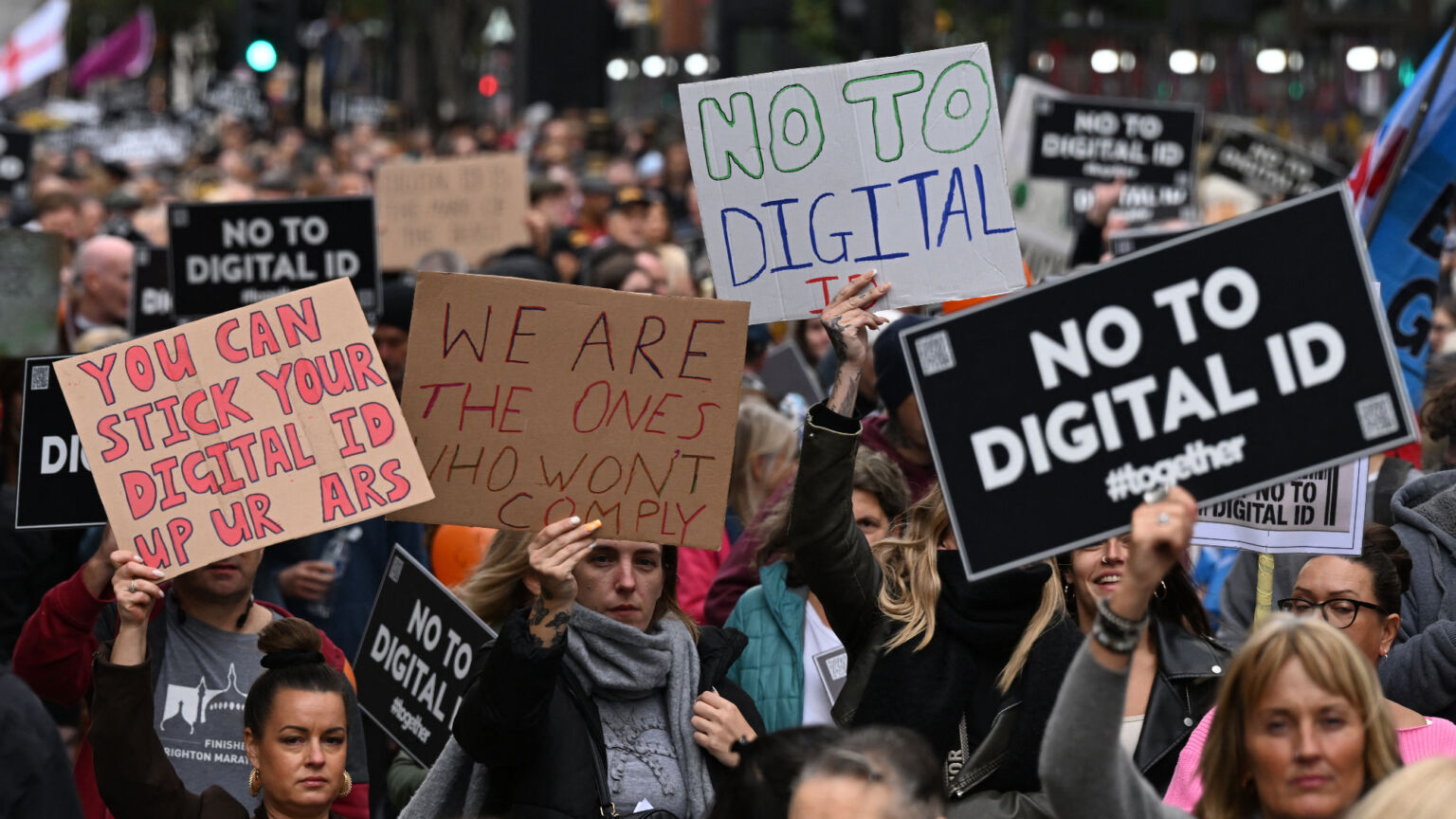
Beyond the immediate political drama surrounding prime minister Keir Starmer’s future, a far more unsettling development in the British state is quietly gathering pace. The King’s Speech last month confirmed that Labour intends to press ahead with digital ID.
The concept of a digital ID has been lurking in the background of British politics ever since physical ID cards were first pitched by the Blair government in the mid-2000s. Voters hated the idea, and it was one of the first things ditched by David Cameron’s Tory-Lib Dem coalition in 2010. Yet Starmer, following in the footsteps of his New Labour technocratic forebears, has resuscitated the deeply unpopular policy under the new title of ‘BritCard’.
Digital ID is in many ways the essence of Starmerism, and the misguided belief that the state can manage away the country’s myriad problems by bureaucratic means. It speaks to a philosophy that views the population not as citizens with inherent rights, but as passive datasets to be administered. As the recent introduction of the government’s ‘UK Wallet’ app shows, the British public is also being encircled by an encroaching system of state surveillance by more means than digital ID.
Ministers have naturally sought to assuage public fears regarding digital ID by framing its introduction as a matter of administrative efficiency and even a means of reducing illegal immigration. But the reality is far more ominous: if introduced, it will herald the inversion of our entire legal tradition. In Britain, the individual has historically been free to act unless expressly forbidden. Under an expanding digital ID regime, however, this will be turned on its head. The long-term implication of this policy is a society where some form of digital approval is a prerequisite for healthcare, housing and employment – and where an opaque algorithm could effectively flag or delete a ‘user’ from the British economy. We will become a ‘papers, please’ society for the first time in our history.
This creeping authoritarianism is already clear in other areas of society. Across the UK, police forces are now routinely using biometric cameras to scan passers-by in real time – and erroneously arresting individuals as part of the process. Such surveillance has never been subjected to a parliamentary mandate.
While the government presents digital ID as a necessary step for security, centralising the personal data of the entire population is fraught with risk. It creates a valuable target for criminals and foreign intelligence services. It is baffling that, instead of mitigating exposure through decentralisation, Labour seems intent on building something that bad actors will inevitably hack or leak.
These external risks, though, pale in comparison to the expansion of state oversight and control it represents. Government departments are wittingly or inadvertently creating a system where those who cannot, or will not, engage with the digital state are relegated to a second-class existence. The setup would allow for a level of social control previously unthinkable. And all of it would be done by a series of unnoticed, incremental software updates.

With the architecture for such a system now formally in play, MPs and peers have an opportunity to stand with the public in opposition and to reassert the role of parliament as a vital check on executive overreach.
Having missed previous opportunities to curtail the scaling of a ‘Big Brother’ state, members of both houses should put aside their party differences and come together to insist on red lines regarding surveillance architecture. This could be achieved through coordinated amendments to legislation, alongside the introduction of separate, standalone bills that provide definitive vetoes on the use of such technology.
There is also a case to be made for a statutory ‘right to be anonymous’ in public spaces. This would legally define the biometric signature of the face as a private asset, and ensure that it cannot be used without explicit, individual consent. It would also mean greater checks and full transparency on the deepening integration of Big Tech into the NHS, Home Office and other government departments. Among the most important considerations must be a legal guarantee that no citizen can be denied essential services for choosing to remain ‘offline’.
Without a decisive intervention, the UK risks drifting into a digital panopticon where liberty ceases to be an inherent right and instead becomes a conditional privilege granted by the state. The British constitutional tradition, which is defined by the hard-won freedom of the individual, should serve as a guiding star for both houses in the coming period.

David Yorath is a communications professional and a former advisor to a Member of Parliament.
You’ve hit your monthly free article limit.
Support spiked and get unlimited access.
Support spiked and get unlimited access
spiked is funded by readers like you. Only 0.1% of regular readers currently support us. If just 1% did, we could grow our team and step up the fight for free speech and democracy.
Become a spiked supporter and enjoy unlimited, ad-free access, bonus content and exclusive events – while helping to keep independent journalism alive.
Monthly support makes the biggest difference. Thank you.






Comments
Want to join the conversation?
Only spiked supporters and patrons, who donate regularly to us, can comment on our articles.