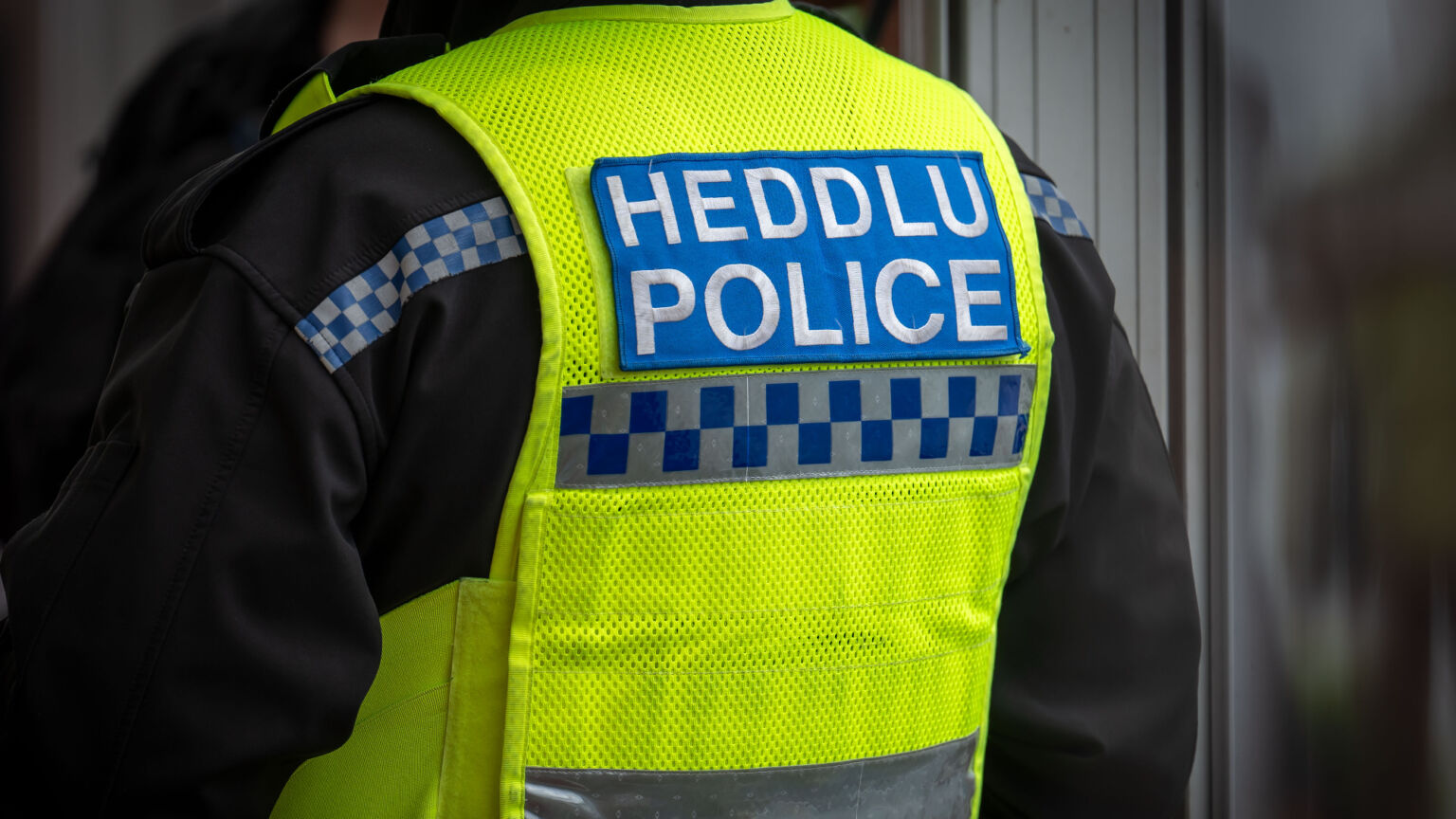
Why does a Welsh police force have an Islamic blasphemy unit?
South Wales Police’s logging of ‘anti-Islam’ conversations is an intolerable assault on free speech.
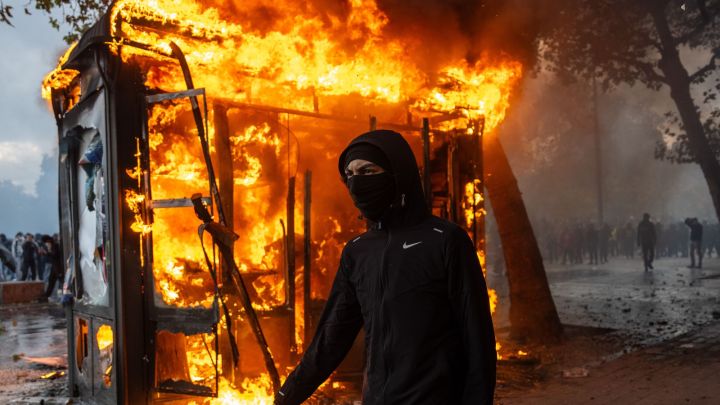
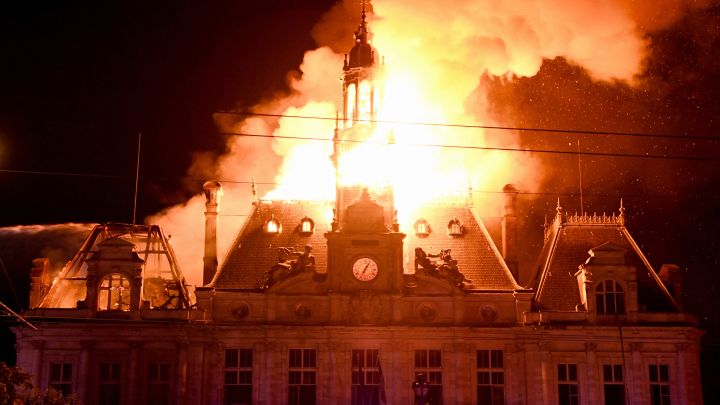
Read our latest coverage of the French riots here – paywall-free all of this week..
Henry Nowak’s inhumane treatment at the hands of police in his dying moments has reignited the debate over two-tier policing in Britain. The political establishment – led by UK prime minister Keir Starmer – has been quick to pour water on this suggestion. But the evidence that some cultures are treated more equally than others by the authorities continues to mount.
It was revealed this week that South Wales Police has told officers it must record ‘anti-Islam’ conversations muttered privately or in public. According to the Free Speech Union, this includes anything that goes beyond what the police consider ‘legitimate’ criticism of Islam. If a member of the public is found to have crossed this line, they will likely have an ‘anti-social behaviour incident’ recorded against them. Do we need to remind South Wales Police that we do not have blasphemy laws in any form or shape in this country?
You could be forgiven for thinking that the feelings of British Muslims are high on the agenda of both our police and political class – certainly higher than any other religious group. After all, it was only in March that the Labour government announced its statutory definition of ‘anti-Muslim hostility’ – a watered-down version of its original ‘Islamophobia’ definition. It goes without saying that this state-sanctioned decree gives Islam protections and recognition above those enjoyed by any other religion.
South Wales Police’s blasphemy unit looks bad enough in isolation. Viewed in light of recent years, however, and the picture begins to look downright ominous.
In 2021, a teacher at Batley Grammar School in West Yorkshire was forced into hiding after showing pupils a cartoon of the Prophet Muhammad. That the cartoons – the same published by Charlie Hebdo in 2015 – had been on the school syllabus for years mattered little. Mobs of irate Muslims descended on the school; some even sent the teacher death threats. While the teacher has a new name and continues to live under police protection, none of his persecutors faced charges.
A similar story played out at a school in Wakefield in 2023, when four students were suspended for ‘desecrating’ a copy of the Koran. At least one of the students was sent death threats. Yet it was the ‘blasphemers’ – not those issuing the threats – who were punished. The police even recorded a ‘hate incident’ against the students, one of whom was autistic.
Perhaps the most morbid example of two-tier policing – at least as it concerns Islam – occurred in London last year. Hamit Coskun burnt a copy of the Koran outside the Turkish embassy in London to protest against the increasingly hardline Islamic regime of Turkish president Recep Tayyip Erdoğan. Not only was Coskun charged and convicted for what was effectively blasphemy (although he was cleared on appeal), he initially received a harsher sentence than a member of the public – a Muslim shopowner named Moussa Kadri – who attacked him with a knife and threatened to kill him. Coskun was eventually able to overturn his conviction, but scandalously, the Crown Prosecution Service has signalled that it intends to fight the acquittal, such is its determination to punish blasphemy against Islam.
In a free society, no idea, including religious beliefs, should receive undue privilege or preferential treatment. Yet, time and again, we see the police bowing to the pressure applied by Muslims.
This points to a noticeable shift in society. We are more compliant and less willing to stand up for what we believe in. Much of this can be put down to the ferocity of cancel culture that has poisoned the West over the past 10 years. Our collective reluctance to engage honestly and freely stems from the sheer fear of being unjustly labelled as bigoted or racist.
Absurdly, this two-tier approach has been done in the name of ‘cohesion’. Yet the outraged response to Henry Nowak’s death shows that this has acheieved the opposite. It is dividing people more along ethnic and religious lines, not less. We must put an end to it.
Khadija Khan is a journalist and commentator, originally from Pakistan and now based in the UK.
spiked summit 2026 – SOLD OUT
Saturday 27 June 2026
10am-6pm, Saturday 27 June
Emmanuel Centre, London, SW1P 3DW
With Lionel Shriver, Brendan O’Neill, Katharine Birbalsingh, Toby Young, Allison Pearson, Paul Embery, Tom Slater, Andrew Doyle, Fiyaz Mughal and more
The spiked summit has now SOLD OUT. To join the waitlist, email:
[email protected]
£80 or £50 for supporters
You’ve hit your monthly free article limit.
Support spiked and get unlimited access.
Support spiked and get unlimited access
spiked is funded by readers like you. Only 0.1% of regular readers currently support us. If just 1% did, we could grow our team and step up the fight for free speech and democracy.
Become a spiked supporter and enjoy unlimited, ad-free access, bonus content and exclusive events – while helping to keep independent journalism alive.
Monthly support makes the biggest difference. Thank you.
Comments
Want to join the conversation?
Only spiked supporters and patrons, who donate regularly to us, can comment on our articles.