There is no such thing as an AI ‘artist’
However impressive an AI-generated poem or image, it is only ever a pale imitation of human creativity.
Want unlimited, ad-free access? Become a spiked supporter.
Richard Dawkins has been back in the news lately, telling us that he believes AI to be conscious. In fact, every few weeks now, someone or other seems to be announcing that artificial intelligence is beginning to think, to feel, perhaps even to awaken into true consciousness (whatever that may be). The evidence usually revolves around things which Turing spoke of 80 years ago – that AI can hold a conversation, can imitate emotion, can generate art. It can even write poetry convincing enough to briefly unsettle us.
This last point niggles. AI can imitate language into certain predetermined patterns. ‘Poetry’, perhaps. But only if you want to rob it of everything that makes it worthwhile.
What I want to know is whether AI wants to write poetry. After all, human beings do not create art simply because we possess the linguistic, creative, and technical competence to do so. We do it because something deep within us presses outwards and demands expression.
I’ve written a couple of children’s novels. Not because it made logical sense to do so. It’s a difficult field to get into. It’s a slog to write. It’s battering to the ego. And there is easier money to be made elsewhere. I wrote them because I couldn’t not. I continue to write because I can’t not, as poncy as that sounds.
AI produces language through prediction, as most of us know. It does not write because it is overwhelmed by beauty or haunted by memory or crushed by grief or because it wants to poke fun at something. It does not wake in the night with a sudden urge to get a few lines down. It neither fears death nor falls in love. It has no humiliations it wishes to redeem, no losses it can only articulate on the page. It simply processes prompts and generates statistically plausible responses based on patterns found in enormous datasets.
It may trick you. I’m sure there are AI poems out there that would trick me. But it is a hollow sham, an imitation, because AI has no existence to make sense of. It does not yearn to create and has nothing it yearns to put into words. It can only mine human work and give us a pale simulacrum. This distinction matters.
Take almost any great artist and you will find something more at work than simple technical proficiency. William Blake wrote from visionary intensity. Sylvia Plath wrote from psychic anguish. Folk songs emerged from labour, migration, oppression, heartbreak, war, hunger. Even bad poetry, if written sincerely, can carry emotional force. This is because behind it is an actual human being attempting, however clumsily, to make sense of existence. I give you William McGonagall and RH Sin: both bad poets, both titans compared to any AI program.
We are very susceptible to anthropomorphism. I say this as a father who’s used to playing PAW Patrol with my five-year-old daughter. We are very capable of projecting consciousness onto anything half capable of convincing interaction. We Brits apologise to inanimate objects when we bump into them. We give our cars names (mine is Rhonda the Honda, to the aforementioned five-year-old’s delight). Reports abound of people self-therapising to chatbots and feeling guilt when shutting them down. When I’ve used AI tools, I’ve always been scrupulously polite – partly so that AI looks favourably on me when it takes over the world, but mostly because it’s deeply ingrained in me to do so with anything that seems even vaguely sentient. I’m the same with my dog.
The smoother the imitation becomes, the easier it is to assume there must be someone in there – a soul, to use yesterday’s language. However, fluent simulation is not evidence of interior life. Curious, I took the liberty of reaching out to ChatGPT itself for comment on this. I asked it, ‘Do you long to create or consume art?’ It replied:
‘I can generate art, but I don’t yearn to create or consume it. Human art usually begins in pressure – grief, love, loneliness, awe, mortality – a need to express something felt. I can imitate that expression convincingly, but I do not feel relief, longing, or transformation through art itself.’
From the horse’s mouth, then. A calculator can solve mathematical problems without understanding mathematics. Likewise, AI can generate poetry without possessing imagination in the human sense.
None of this is to belittle AI. It is what it is and does what it does, to be a little trite. AI-generated writing often shows an impressive grasp of craft. It can imitate rhythm and structure and imagery, and sometimes there may even be some emotional cadence to it. But art’s crucial mystery remains, to me, why? Why on Earth do we feel compelled to create it in the first place?
The real cultural question around AI and the arts is not whether machines will replace artists outright. The greater risk may be a gradual passivity among human beings themselves. If an image, poem, story, or song can be generated instantaneously, there is a temptation to skip the slower, messier process of making something ourselves. But art has never only been about the finished product. Much of its value lies in the struggle involved in making it. Writing forces us to confront our own thoughts – thoughts we perhaps didn’t know we were having. Painting teaches us to observe things differently. Parisians rioted the first time Manet displayed his work because they feared the new world he forced them to see. Music gives shape to emotion before we fully understand it. Creativity is as much exploratory as anything else, and I would submit that it should rarely be allowed to be efficient.
In all, art helps us to reach the numinous – a perhaps outdated, religiously fraught term which I, an agnostic, think it’s important to revive. It’s a gestalt thing – longing, wonderment, pride, desire, all those messy bits and pieces. And unless AI develops these things, and suffers from them, and marvels at them, then whatever it creates will only ever be a hollow facsimile.
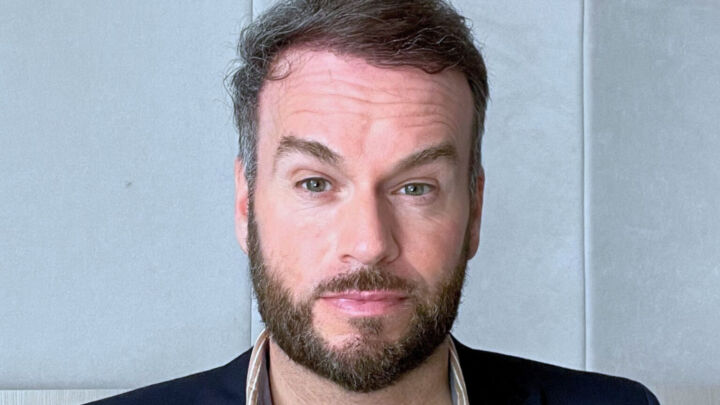
James Dixon is a Glasgow-based novelist, poet and playwright.
You’ve hit your monthly free article limit.
Support spiked and get unlimited access.
Support spiked and get unlimited access
spiked is funded by readers like you. Only 0.1% of regular readers currently support us. If just 1% did, we could grow our team and step up the fight for free speech and democracy.
Become a spiked supporter and enjoy unlimited, ad-free access, bonus content and exclusive events – while helping to keep independent journalism alive.
Monthly support makes the biggest difference. Thank you.

Comments
Want to join the conversation?
Only spiked supporters and patrons, who donate regularly to us, can comment on our articles.