Omer Bartov is whitewashing Israel’s enemies
Israel: What Went Wrong downplays the threats of Hamas, Hezbollah and Iran to serve a familiar anti-Israel narrative.
Read our latest coverage of the French riots here – paywall-free all of this week..
‘When someone says to you that he wants to kill you – believe him.’ Israeli novelist Roni Gelbfish was quoting her grandmother, a Holocaust survivor, during a radio interview shortly after Hamas’s pogrom on 7 October 2023. Most people would empathise with Gelbfish’s grandmother in the aftermath of the atrocities of that terrible day. Hamas had once again shown, in the most horrific way imaginable, that it should be believed when it says it wants to slaughter Jews.
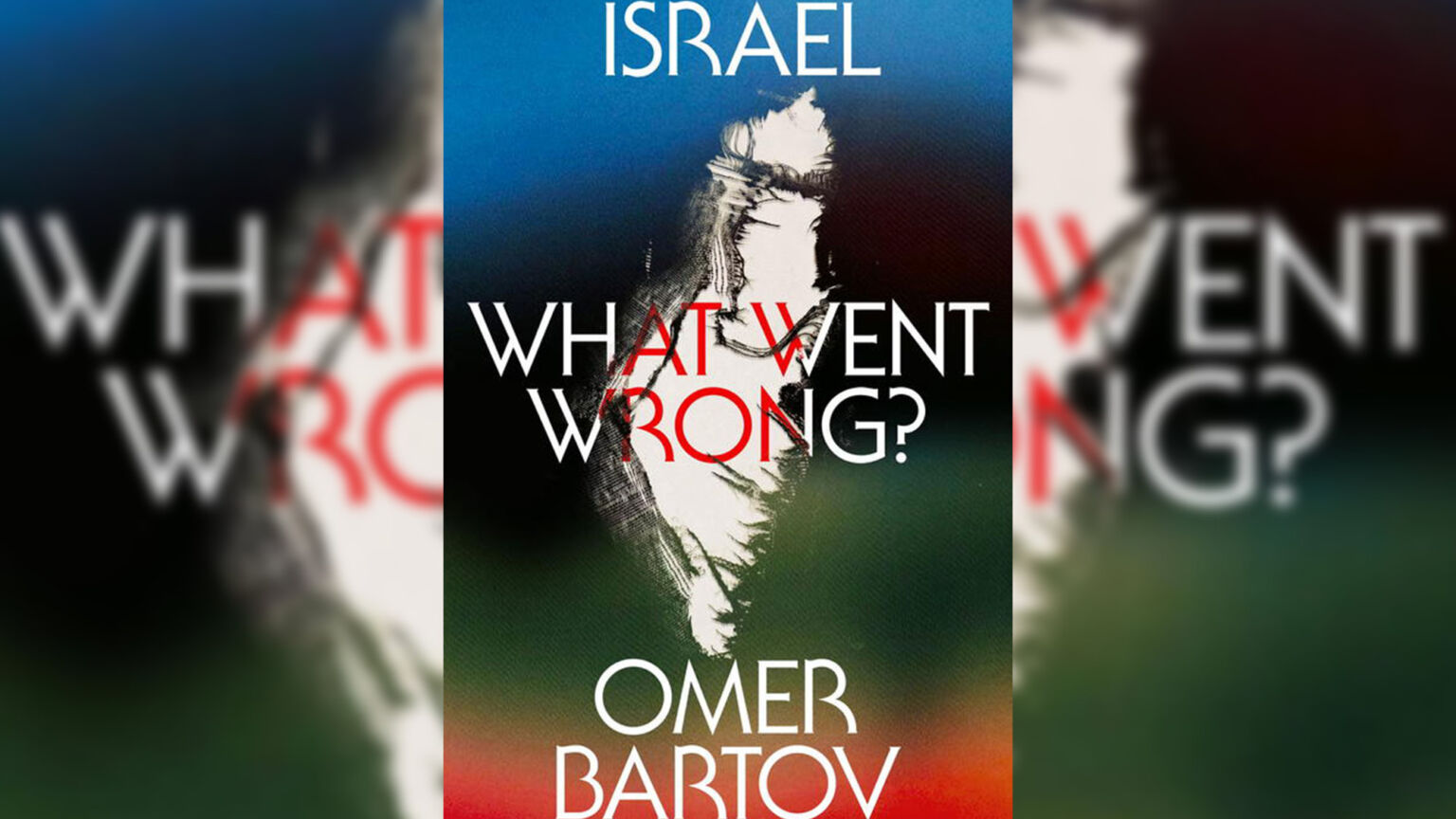
But if Omer Bartov feels any empathy with Gelbfish’s grandmother, he hides it well. In his new book, Israel: What Went Wrong, the American-Israeli professor at Brown University cites the quote as an example of Shoatiyut, which he translates from Hebrew as ‘Holocaustism’. This is the tendency, he argues, to interpret and exaggerate the threats facing Israel through the prism of the Holocaust and anti-Semitism more broadly.
Although Bartov offers a cursory criticism of the Hamas pogrom, he is really interested in condemning the Israeli reaction. He claims that framing 7 October as a Nazi-like attack on Jews is little more than an attempt to justify what he calls the ‘genocidal’ assault on Gaza.
Bartov’s argument is of a piece with that of Israel’s enemies in the Middle East and beyond. They view the Jewish State as evil incarnate, a prime representative of a malign West. They claim that Israel cynically weaponises the Holocaust and the charge of anti-Semitism to deflect what they call ‘legitimate criticism’ of its actions – in this case, the ‘genocide’ in Gaza.
To make this argument, Israel’s enemies deny and downplay the very real anti-Semitic threats it faces, from the assorted Islamist groups like Hamas, hell-bent on its destruction, to their nation-state supporters, Iran, Pakistan, Qatar and Turkey. By minimising and erasing these formidable threats, Israel can be portrayed as a singularly malevolent nation, killing for killing’s sake. Anyone who has followed the conflict in Gaza and the broader Middle East – and not just on the Qatar-funded Al-Jazeera but also on the BBC and Sky – should be familiar with this portrayal. Israel appears to be fighting a war for no good reason, rather than what it’s actually doing – defending itself against an all too real, annihilationist threat.
In What Went Wrong, Bartov lends credibility to this anti-Israel case, from the denial of the anti-Semitic threat to the accusation of genocide. After all, he’s a professor of Holocaust studies at an Ivy League university and he served as a company commander in an Israel Defence Forces (IDF) combat unit in the 1970s. His credentials have turned him into a valued guest on anti-Israel media. He’s written articles for the Guardian and the New York Times and has appeared on the virulent anti-Israel podcasts of Owen Jones and Mehdi Hasan.
But What Went Wrong is no dispassionate academic analysis. It is the work of a professor-activist who, at the very least, is willing to omit key facts to make his case.
Despite the implication of its title, What Went Wrong argues that the Zionist movement was, on balance, always wrong and deeply flawed. Zionism began, Bartov argues, as an ethno-nationalist, settler-colonial movement in the 19th century, and has only gone downhill since the establishment of Israel in 1948.

Denying the threat of anti-Semitism is at the centre of Bartov’s argument. Take his much-changed view of Hamas. In a 2004 article for New Republic, he argued correctly that Hamas poses a Nazi-like threat to Israel and the Jews: ‘The charter of the Hamas movement, issued in 1988 as the fundamental document of this Palestinian branch of the Muslim Brotherhood, must be read to be believed. It contains, among its fundamentalist Islamic preachings, the most blatant anti-Semitic statements made in a publicly available document since Hitler’s own pronouncements.’
Despite occasional claims by anti-Israel activists, Hamas has not rescinded its charter. The Islamist terror group did publish a policy document in 2017, which toned down the anti-Semitic language. But Hamas has made clear the charter still remains in force. Additionally, several Hamas leaders have said they would like to repeat the 7 October pogrom.
Yet Bartov now seems willing to efface the anti-Semitic threat of Hamas, writ large in its charter. He condemns arguments similar to those he made in 2004 as Holocaustism – an attempt, that is, to weaponise anti-Semitism against Israel’s critics.
Or look at the way Bartov claims that anti-Semitism is predominantly a right-wing threat, the preserve of skinheads or neo-Nazis. ‘The roots of anti-Semitism have always been on the right’, he asserts. Yet while it’s true that right-wing anti-Semitism has historically been a real threat, so has left-wing anti-Semitism. Something that continues to be true today.

Indeed, many 19th-century leftists in the German-speaking world, including in Austria and Germany, identified capitalism as an essentially Jewish force. From their perspective, being anti-capitalist meant being against the Jews – a move that prompted a rebuke from August Bebel, a founder of Germany’s Social Democratic Party, who called left-wing anti-Semitism ‘the socialism of fools’ (a phrase likely coined by Ferdinand Kronawetter, a leftist Austrian politician). This is something that will be well known to any academic specialising in anti-Semitism and German history, as Bartov himself does.
He also does nothing to correct the erroneous claim that Benjamin Netanyahu, the Israeli prime minister, has called for genocide against the Palestinians. The argument usually relies on a speech he gave on 28 October 2023, as Israeli troops were entering Gaza, in which he said, ‘Remember what Amalek did to you’ – a reference to the biblical enemy who attempted to wipe out the Jewish people. Anti-Israel activists such as Owen Jones, cosplaying as experts in Jewish theology, claim this as an example of Netanyahu’s genocidal intent against the Palestinians.
Bartov goes along with this claim, but he surely knows it is misleading. It’s true that in one passage of the speech – available on the Israeli government website – Netanyahu references Amalek, but in the same speech, he also insists ‘the IDF does everything to avoid harming non-combatants’. That suggests the reference to fighting Amalek refers to Hamas rather than the whole Gazan population. But Bartov fails to raise this possibility. Such one-sidedness is arguably to be expected from a political activist but not from a learned academic.
Netanyahu is not a religious man. He invoked Amalek as a metaphor for the anti-Semitic threat posed today by Islamism. This is completely consistent with Hamas’s frequent promises since its foundation to slaughter Jews. In that respect, ‘remember what Amalek did to you’ is a sensible maxim for any contemporary Israeli leader.
The problem here is not Israel, but its myopic, disingenuous critics. What went wrong, indeed.
Daniel Ben-Ami is an author and journalist. He runs Radicalism of Fools, a website dedicated to rethinking anti-Semitism.
Israel: What Went Wrong, by Omer Bartov, is published by Fern Press.
spiked summit 2026 – SOLD OUT
Saturday 27 June 2026
10am-6pm, Saturday 27 June
Emmanuel Centre, London, SW1P 3DW
With Lionel Shriver, Brendan O’Neill, Katharine Birbalsingh, Toby Young, Allison Pearson, Paul Embery, Tom Slater, Andrew Doyle, Fiyaz Mughal and more
The spiked summit has now SOLD OUT. To join the waitlist, email:
[email protected]
£80 or £50 for supporters
You’ve hit your monthly free article limit.
Support spiked and get unlimited access.
Support spiked and get unlimited access
spiked is funded by readers like you. Only 0.1% of regular readers currently support us. If just 1% did, we could grow our team and step up the fight for free speech and democracy.
Become a spiked supporter and enjoy unlimited, ad-free access, bonus content and exclusive events – while helping to keep independent journalism alive.
Monthly support makes the biggest difference. Thank you.





Comments
Want to join the conversation?
Only spiked supporters and patrons, who donate regularly to us, can comment on our articles.