How the Blob keeps trans activism on life support
Vast sums of taxpayer cash are still being funnelled into NGOs promoting dangerous medical misinformation to kids.
Want unlimited, ad-free access? Become a spiked supporter.
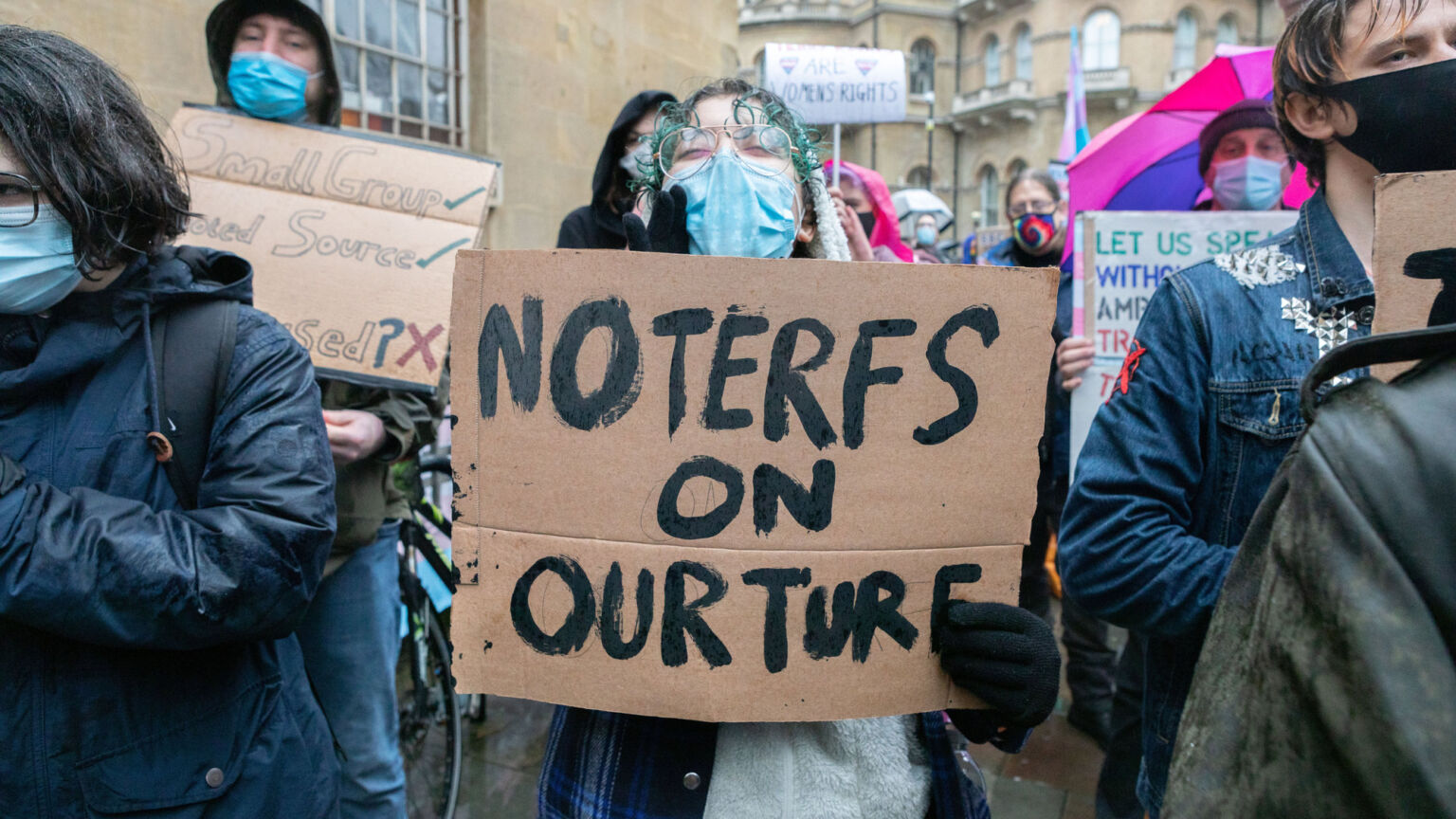
It’s easy to feel like the trans lobby has been on the retreat for a while now. In the past few years, gender ideology in the UK has taken blow after blow.
But an upcoming report suggests this narrative is far too comforting. ‘Breaking the Blob: A study and antidote to British ungovernability’ is produced by new data-based think-tank Cambridge Circus Research. The paper examines how NGOs, charities and legal campaigners work together to shape public policy, often in defiance of what voters have asked for. The report’s section on the trans lobby shows how this machine operates in practice.
At first glance, that might seem hard to square with the past couple of years, which have delivered one public defeat after another to the trans movement. Most recently, the Supreme Court ruled last year that, under UK equality law, a woman must be defined by biological sex, and not so-called gender identity. The ruling (at least in theory) forced public bodies, employers and service providers to treat sex-based rights as real and enforceable. In practice, it made it far harder for institutions to claim that gender identity should override women-only spaces.
A year before that, in 2024, came Dr Hilary Cass’s final review into the NHS’s treatment of gender-nonconforming kids. Anyone who has been following the trans debate will be familiar with the deeply concerning conclusions of her report – namely, that puberty blockers carry unknown, long-term risks and have not been shown to reliably improve children’s mental-health outcomes or gender-related distress. Cass’s 2022 interim report even prompted NHS England to close the Tavistock and Portman’s Gender Identity Development Service (GIDS) – then England’s only specialist NHS gender clinic for children – and replace it with a network of smaller regional services.
Later that same year, the Charity Commission launched a full-scale inquiry into Mermaids, a charity dedicated to promoting the idea that children can change their sex.
This investigation was a long time coming, and was launched off the back of a series of horrifying scandals within the charity. Staff had been caught sending chestbinders to children as young as 13 without their parents’ consent. In Mermaids chatrooms, young teens were found to have received advice on how to obtain money for hormones and puberty blockers (which the charity’s website falsely described as ‘reversible’). It was uncovered that one of the charity’s trustees, Jacob Breslow, had spoken at a conference hosted by an organisation promoting services for paedophiles (or ‘minor-attracted persons’, as Breslow called them in his talk). Images surfaced of Mermaids’ digital-engagement officer, Darren Mew, posing nude for an online magazine and dressed as a sexy schoolgirl on his public Instagram account.
All of this painted a grim picture for a charity supposedly dedicated to working with children. In what was perhaps the understatement of the century, the Charity Commission found that Mermaids was guilty of ‘mismanagement’, but not ‘misconduct’.
Despite the somewhat underwhelming Charity Commission findings, the investigation was crucial in bringing to light some of the grotesque safeguarding failures, both of Mermaids specifically and of the trans movement more broadly.

Importantly, Mermaids was one of the many trans charities that had been receiving millions of pounds worth of funding from non-departmental public bodies and major charitable grant-makers. Much of this appeared to have stopped following the Charity Commission investigation. But Cambridge Circus Research’s new report, due to be released next month, uncovers the full extent of how institutional funding did not leave the trans lobby after Mermaids became toxic – it simply moved elsewhere.
You might think that, after all this, it would be curtains for Mermaids and the trans lobby. But like a cockroach emerging from the rubble of a post-apocalyptic wasteland, the whole sordid movement continued to crawl along.
Prior to the investigation, Mermaids received at least £1.3million from various government / arms-length public bodies and major charitable grant-makers between 2015 and 2022. That included over half a million pounds from the National Lottery Community Fund, an executive non-departmental public body sponsored by the Department for Culture, Media and Sport (DCMS), as well as an extra £15,000 directly from DCMS itself.
On the surface, Mermaids stepped back and much of its funding dried up. But in reality, the same bodies that had previously been funding Mermaids, simply started funnelling their money into another trans charity instead – Gendered Intelligence.

Gendered Intelligence has historically had a much lower public profile than Mermaids, although it received broadly the same amount of institutional funding (£1.39million between 2015 and 2022 vs Mermaids’ £1.27million).
Since 2022, Gendered Intelligence has been given £2.5million from institutional funders. That includes more than half a million pounds from state-linked sources – £257,000 from the National Lottery, £134,000 from DCMS and £151,000 from Sport England. Even more strikingly, the report notes that several major funders entered this space for the first time only after the Mermaids scandal, including Comic Relief, BBC Children in Need, City Bridge Foundation, Trust for London and Sport England.
What exactly is this money supporting? Like Mermaids, Gendered Intelligence focusses on supporting trans-identifying youth, as well as providing ‘trans awareness’ training. Its influence can be found in schools, the courts, the NHS, sports and even theatres. A Policy Exchange report from last year found that, between 2020 and 2024, six councils across England paid Gendered Intelligence to provide trans-related training services to their employees.
Gendered Intelligence’s aim, at its core, is to normalise the idea that children can be transgender, and to encourage their social and medical ‘transition’ to the opposite sex. Some of Gendered Intelligence’s ‘advice’ to schools and other institutions includes telling staff that that being trans is ‘not, inherently, a safeguarding matter’, that parents should usually only be told about a child’s gender confusion with the child’s consent, and that young people should be allowed to use names, pronouns, uniforms, toilets, accommodation and sports teams that correspond to their self-declared gender identity.
At one point, the Gendered Intelligence site offered detailed guidance for young people on how to buy dangerous and unhealthy chestbinders online, and proclaimed a belief that children should be able to decide for themselves whether to medically transition, so as to make the ‘inside’ match the ‘outside’. It also used to offer trans-friendly swimming sessions in London for those aged between eight and 25 years old. Why a transgender 25-year-old would need or want to be in the same swimming group as an eight-year-old child is anyone’s guess. But don’t worry – Gendered Intelligence realised the error of its ways on this specific issue. It now offers those same swimming sessions for 11- to 25-year-olds.
Far from weakening the trans lobby, the scandal at Mermaids actually strengthened and institutionalised it. The Charity Commission investigation ended up diverting funding away from one highly public, now toxic-looking trans charity and towards another one with a lower profile. Nor did Mermaids’ funding disappear. According to the report, it still received more than £2million in individual donations in the two years after the inquiry.
The issue is not simply that Gendered Intelligence (or Mermaids, for that matter) has been handed money by the millions. It is that a charity promoting a highly contested – and demonstrably dangerous – ideology has become increasingly embedded in institutions that are supposed to be neutral. A charity that believes children can consent to life-changing and unnecessary medical procedures is being pumped with money to influence policy and public institutions.
None of this has been put to voters. There has been no democratic mandate for embedding gender ideology in councils, schools, sports bodies or judicial training. Yet through grants, training contracts and institutional partnerships, these ideas have continued to spread.
Gendered Intelligence is only one example of a much wider problem identified by the report. Britain’s charity and NGO sector has become a vast web of policy influence. These charities are being given large amounts of money, which allows them to function as lobby groups. They sell their activism as supposedly neutral, ‘expert’ commentary in the media, and dress up their legal opposition to government policy as a noble defence of social justice or the rule of law. In many cases, the funding for this comes directly from government departments.
This is what the Cambridge Circus Research report exposes. Policy is increasingly being shaped by a well-funded activist infrastructure operating just out of sight. The trans lobby is just one example of this – but this problem also extends to pro-open borders, pro-Net Zero and ‘anti-racism’ NGOs, and many more industries.
From the outside, it might look like the battle against gender lunacy is almost won. But the machinery that facilitated this pernicious ideology in the first place is still very much functioning. Until all this is dismantled, every victory can only be temporary. The Blob will simply regroup, rebrand and carry on.
Lauren Smith is a writer based in London.

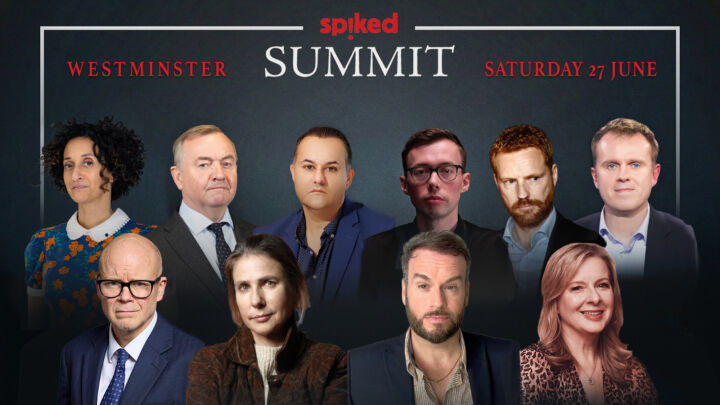
spiked summit 2026
10am-5pm, Saturday 27 June
Emmanuel Centre, London, SW1P 3DW
With Lionel Shriver, Brendan O'Neill, Katharine Birbalsingh, Toby Young, Allison Pearson, Paul Embery, Tom Slater, Andrew Doyle, Fiyaz Mughal and more
Become a spiked supporter to get a discounted ticket
£80 or £50 for supporters
You’ve hit your monthly free article limit.
Support spiked and get unlimited access.
Support spiked and get unlimited access
spiked is funded by readers like you. Only 0.1% of regular readers currently support us. If just 1% did, we could grow our team and step up the fight for free speech and democracy.
Become a spiked supporter and enjoy unlimited, ad-free access, bonus content and exclusive events – while helping to keep independent journalism alive.
Monthly support makes the biggest difference. Thank you.




Comments
Want to join the conversation?
Only spiked supporters and patrons, who donate regularly to us, can comment on our articles.