Will trans activists now stop taking the p*ss?
The EHRC guidance on single-sex spaces is a blow for women’s rights over the shrieking demands of entitled men.
Want unlimited, ad-free access? Become a spiked supporter.
Most people feel awkward when they realise they are somewhere they’re not wanted. But for a certain type of trans activist, the discomfort of others is the whole point.
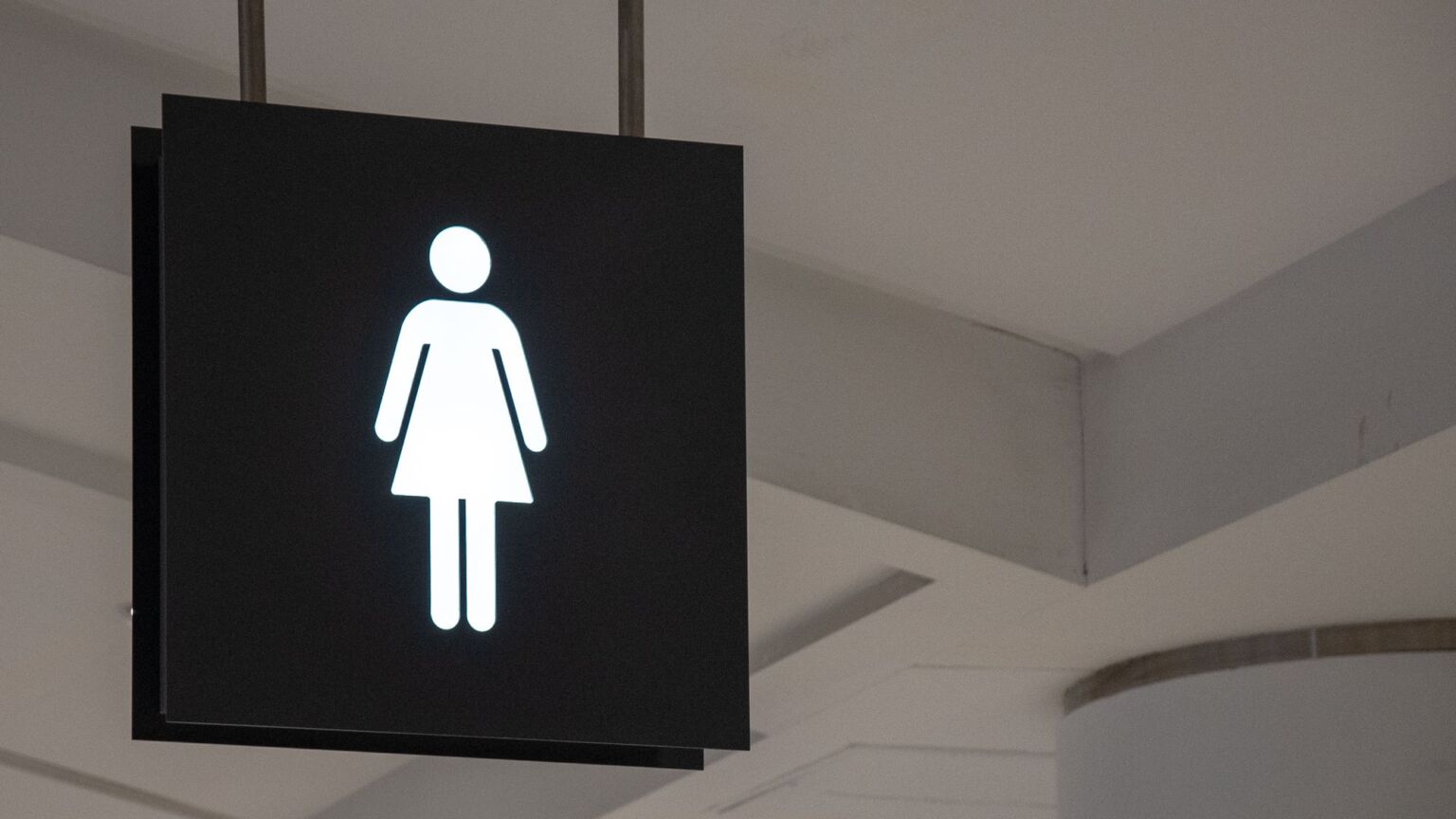
Let’s be clear, Tiffany, the male trucker in a wig taking selfies in a ladies’ loo, is not there by accident. He is likely enjoying the provocation – willy-waving at women who are expected to shut up and take it. In some cases, these men are acting out ‘sissification’ fetishes, sexual humiliation games in which they are set tasks, sometimes by a dominatrix, such as applying lipstick or wearing sanitary towels in women’s toilets.
For over a decade, institutions abetted this behaviour. Business owners were worried about being sued or dropping down the Stonewall league table. Women brave enough to confront such men knew they might find themselves reported for a hate crime.
Most remain blissfully clueless about the fetishistic side to male trans identities. This happened in part because of 2011 guidance from the Equality and Human Rights Commission (EHRC) code, which said that in Great Britain, ‘transsexual people’ should be treated ‘according to the gender role in which they present’.
Now, there is no excuse for inaction. The EHRC’s updated code, placed before parliament this week, confirms that including men in women-only services ‘very likely’ constitutes unlawful sex discrimination. If a service is provided to both women and transwomen, it is no longer considered a single-sex service under the Equality Act 2010. The guidance also warns that including men in women’s spaces could amount to unlawful discrimination or harassment against female users. Similar principles apply to male-only services.
Naturally, trans activists are in a lather about this. But then, when aren’t they? The Good Law Project’s trans-rights lead, Jess O’Thomson, complained that the EHRC code ‘treats trans people as a third sex, suggesting they should be made to use separate spaces – entirely ignoring the harm this causes, and human rights law’.
Let’s be clear, gender self-identification has never been legal in the UK. Last year, the Supreme Court finally delivered a ruling that confirmed this. But even after that judgment, many service providers have remained paralysed with fear. Duty bearers (ie, organisations responsible for upholding equality law) have spent months pretending to be baffled by the apparently impossible task of ensuring that men use men’s facilities and women use women’s. They claimed to be waiting on the EHRC guidance, and the minister for equalities, Bridget Phillipson, appeared too frightened of upsetting the trans-activist unions to lay it before parliament.
Surely anyone who cares about women’s rights ought to be broadly pleased that the EHRC’s updated guidance has finally been put forward. Yet it is hard to feel much beyond rage at the delay and cowardice that preceded it.

Phillipson sat on the revised guidance for eight months while organisations continued operating unlawful self-identification policies. During that time, she smeared the EHRC’s former chair, Baroness Falkner, for supposedly ‘grandstanding’. Yet Phillipson said virtually nothing about the people harmed by those policies. Not a word, for example, about the mentally ill female patient placed on a male psychiatric ward at the South London and Maudsley NHS Trust because she identified as male, and was raped within an hour of arriving there. Nor did Phillipson remind organisations continuing to operate gender self-identification that they were breaking the law and had a legal, not to mention moral, duty to stop.
The EHRC can’t be accused of rushing the guidance out. It undertook two public consultations and sifted through 50,000 responses. This is because it knew that whatever it said would be picked apart by gender obsessives, within and outside government, no matter how reasonable or evidence-based it was.
Yes, the guidance is welcome. But the fact that civil society opened the door to women’s wards, changing rooms and refuges to men remains astonishing. Managers, HR departments and public bodies behaved as though women’s rights were negotiable while the feelings of entitled creeps in lipstick were sacrosanct. The EHRC has finally spelled out, in painstaking detail, how the law must be enforced. That there are two sexes in law is about as obvious as the phallus on the Cerne Abbas Giant. The test for organisations is simple: are they more frightened of the sane majority, or of Tiffany the trucker and his fellow gender zealots?
Jo Bartosch is co-author of Pornocracy. Order it here.
spiked summit 2026 – SOLD OUT
Saturday 27 June 2026
10am-6pm, Saturday 27 June
Emmanuel Centre, London, SW1P 3DW
With Lionel Shriver, Brendan O’Neill, Katharine Birbalsingh, Toby Young, Allison Pearson, Paul Embery, Tom Slater, Andrew Doyle, Fiyaz Mughal and more
The spiked summit has now SOLD OUT. To join the waitlist, email:
[email protected]
£80 or £50 for supporters
You’ve hit your monthly free article limit.
Support spiked and get unlimited access.
Support spiked and get unlimited access
spiked is funded by readers like you. Only 0.1% of regular readers currently support us. If just 1% did, we could grow our team and step up the fight for free speech and democracy.
Become a spiked supporter and enjoy unlimited, ad-free access, bonus content and exclusive events – while helping to keep independent journalism alive.
Monthly support makes the biggest difference. Thank you.



Comments
Want to join the conversation?
Only spiked supporters and patrons, who donate regularly to us, can comment on our articles.