Islamic sectarianism is warping democracy
British Muslims are being exhorted to put Islamic interests first.

Want unlimited, ad-free access? Become a spiked supporter.
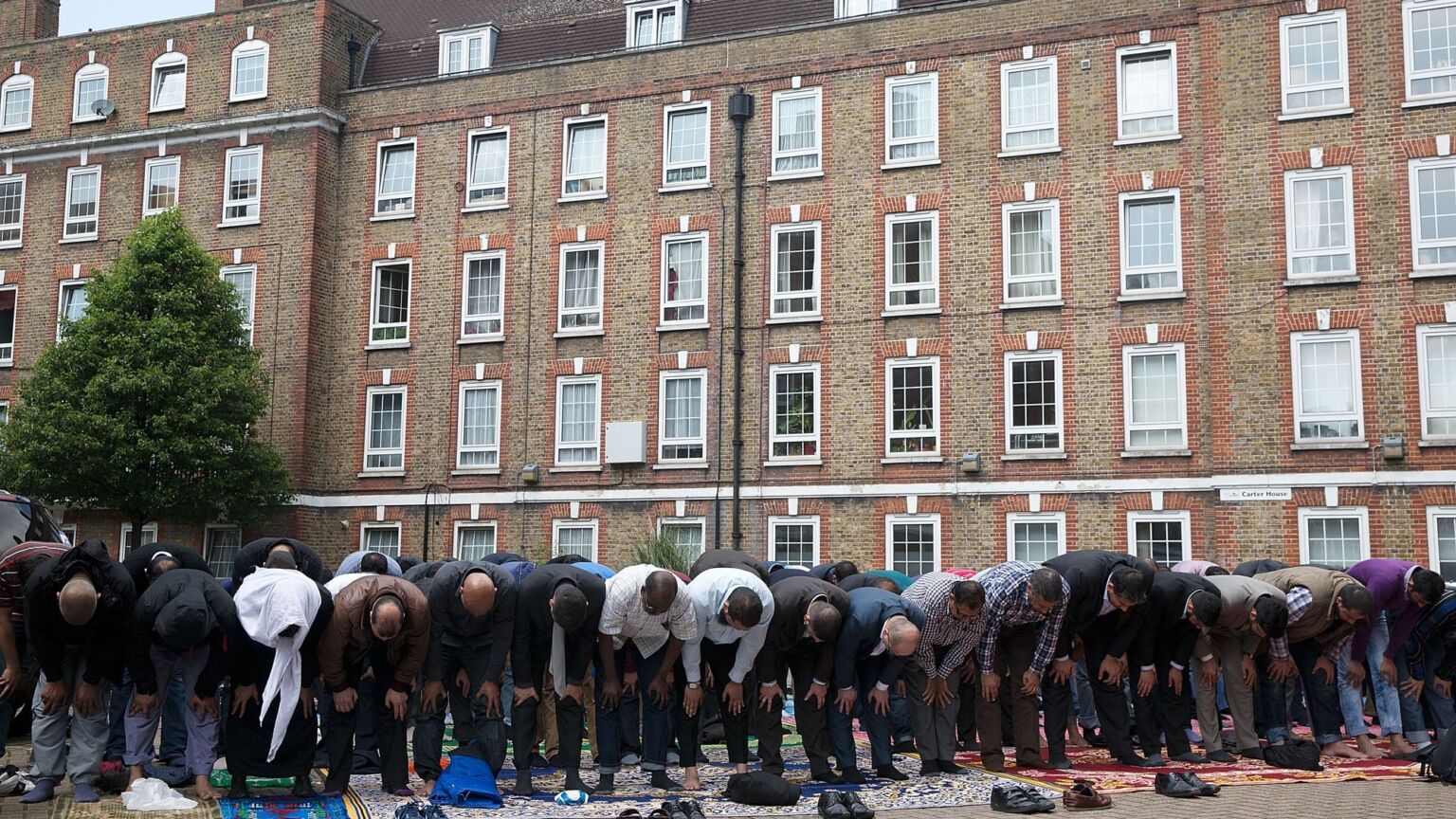
Even before a single ballot has been counted, Islamic sectarianism has already emerged as one of the defining stories of these English local elections. Significant proportions of Muslim voters are expected to swing towards Green or Muslim independent candidates, and away from a Labour Party that could once depend on their vote. A new report by spiked columnist Rakib Ehsan for the Policy Exchange think-tank explains why.
‘Understanding Islamopopulism’ looks at the distance between Muslim voters and the British mainstream, and what this might mean for British democracy. Policy Exchange commissioned pollsters JL Partners to survey the views of more than 1,000 British Muslims. And the results are stark. According to the polling, the most important concern for Muslim voters is not the economy, education, housing or healthcare, but Gaza. The poll also found that 63 per cent – nearly two-thirds – prioritise their Muslim identity over their British identity.
This has been something of an open secret in British politics for some time. And although the left furiously denies this is the case, the Green Party and Muslim independent candidates have made major gains by presenting themselves as the vehicles for Muslim interests. Most notoriously, in February this year, the Greens’ Hannah Spencer triumphed in the Gorton and Denton by-election on the back of an unashamedly sectarian campaign. Campaign leaflets and videos were produced in Urdu (the national language of Pakistan), warning of Reform UK’s ‘Islamophobia’ and painting the Labour government as overly supportive of Israel.
The report also found shockingly high levels of anti-Semitism. The Muslims surveyed were more than twice as likely as the average Briton to believe that Jews have ‘too much power’ over banking, parliament, the media, the legal system and the entertainment industry. A quarter of respondents also had a ‘favourable’ view of Hamas – a proscribed terrorist organisation in the UK, and a group committed to the violent destruction of Israel and the expulsion of Jews from the Middle East.
Given this hostility towards Jews, it is hardly a surprise that the Greens – having established themselves as the new face of the Islamo-left alliance – are now attracting so many anti-Semites. Just last week, two candidates were arrested on suspicion of stirring up racial hatred against Jews. Just as disturbing is that, if recent polling is anything to go by, the anti-Semitism scandals swirling around the Greens have not made much of a dent in their electoral prospects.
Other cultural attitudes uncovered by the report are just as alarming. Polling found that a majority of British Muslims are in favour of criminalising depictions of the Prophet Muhammad and the desecration of the Koran. In an age when hostile mobs have forced schoolteachers into hiding for showing a cartoon of Muhammad, and when the authorities are already arresting dissidents for burning the Koran, these are not academic questions.
The consequences of ‘Islamopopulism’ will be profound. Already, we are witnessing the strange spectacle of a Middle Eastern conflict taking centre stage in local elections that, until recently, had far more to do with potholes than Palestine. Where prospective councillors might once have sought the support of their communities by promising cleaner streets or more frequent buses, they now promise to be the ‘voice’ of Gaza and to sever whatever (minimal or non-existent) ties their area has with Israel.
Should they persist until the next General Election and beyond, the forces of sectarianism will be even more damaging to British democracy. It isn’t clear how parliament can be expected to act in the interests of Britons as a whole if an increasing number of representatives are elected solely to advance the concerns of one religious group.
It should go without saying that most British Muslims are proud and productive members of society. And as the report confirms, most are not anti-Semites and do not support Islamist terrorism. But the rise of Islamic identity politics seems almost guaranteed to drown out those voices who are closest to the British mainstream. Unless it is defeated, the new sectarianism could prove poisonous to society and democracy.
Hugo Timms is a staff writer at spiked.
You’ve hit your monthly free article limit.
Support spiked and get unlimited access.
Support spiked and get unlimited access
spiked is funded by readers like you. Only 0.1% of regular readers currently support us. If just 1% did, we could grow our team and step up the fight for free speech and democracy.
Become a spiked supporter and enjoy unlimited, ad-free access, bonus content and exclusive events – while helping to keep independent journalism alive.
Monthly support makes the biggest difference. Thank you.





Comments
Want to join the conversation?
Only spiked supporters and patrons, who donate regularly to us, can comment on our articles.