Let us hang on to our turbulent priests
Public life can benefit enormously from arguments between popes and presidents.
Want unlimited, ad-free access? Become a spiked supporter.
This past weekend has been a good one for peacemakers, but disappointing for those of us who were enjoying the medieval-style spat between the papacy and the secular powers in the person of the American presidency.
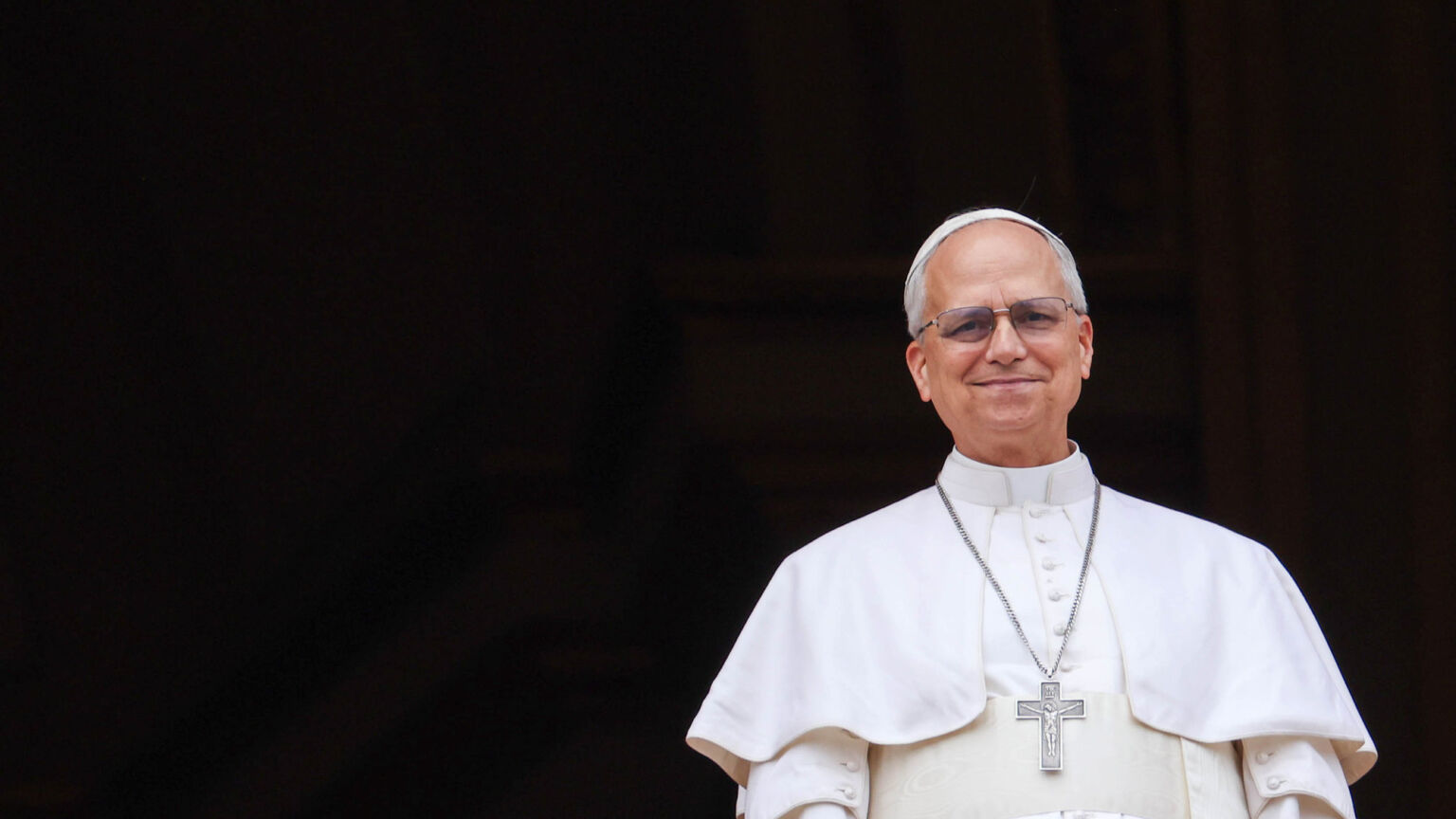
Having been told by US president Donald Trump that he was ‘WEAK on crime and terrible on foreign policy’, Pope Leo offered a textbook display of turning the other cheek. He assured reporters on Saturday that his recent comments about the world ‘ravaged by a handful of tyrants’ had not been made in response to Trump’s earlier outpourings, but had been written separately, a fortnight beforehand, ‘well before the president ever commented on myself’. It was ‘not in my interest at all’ to debate the president, he added.
On Sunday, US vice-president JD Vance thanked the Pope for his pacific remarks. ‘While the media narrative’, he tweeted, ‘constantly gins up conflict – and yes, real disagreements have happened and will happen – the reality is often much more complicated. Pope Leo preaches the gospel, as he should, and that will inevitably mean he offers his opinions on the moral issues of the day… He will be in our prayers, and I hope that we’ll be in his.’
This outbreak of amity among the three men – just as Isaiah prophesied, the ‘calf and the young lion and the fatling’ dwelling together again in concord – may be a blessed relief for those who find it a trifle undignified for the Vicar of Christ and the Leader of the Free World to be engaged in a social-media slugging match. However, we should not be too enticed by the desire for seemliness. The clash is stimulating, epitomising the worth of the resurgent presence of Christianity in politics, both for church and state alike.
Of course, no one wants an overbearing church, like the 12th-century papacy, locked in a bloody struggle with secular authorities. We are not calling for heavies to chase after archbishops, or Keir Starmer, like Henry II, to be whipped by monks through the streets of Canterbury in his underclothes for his manifold offences (the prime minister would surely find such a prospect displeasing). But spats like that between Trump and Leo show that the church is contributing to political debate in a way that other actors are not able to manage.
The frequent fury directed towards the church and Christian advocates demonstrates that their messages – even in this apparently post-Christian age – are still able to pique the conscience. Consider the permanent rage directed towards Christians by Humanists UK and the National Secular Society during the assisted-suicide and late-stage-abortion debates. Christian statements about fundamental human dignity and freedom from coercion are met not with reasoned rebuttals and debate but rather hysterical eruptions warning of Christians in public life bringing an ‘ultra-conservative form of religious nationalism’.
The resort to an ad hominem response demonstrates the hollowness of their own position, aware that these Christian contributions to the debate are forcing people to think seriously about the fundamental origins of the right to life. Can they be tied to mere assurances given by governments in human-rights conventions, or do they need a more serious metaphysical foundation?

The Christian contribution to the debate about the merits of the Iran War has been equally important. Even for a doctrinaire supporter of war to bring about regime change in Tehran, it would still have been worthwhile to have listened to Rowan Williams’s warning based on the formal Christian criteria for a just war. Such a war would require, among other things, ‘a clear and immediate need for self-defence’, and ‘a clear definition of what would count as a successful outcome’.
He also cautioned that, ‘The real urgency in Iran is for a new political order that responds to what Iranian people are actually hoping for themselves – not some kind of covert annexation designed to serve geopolitical manoeuvring, not a puppet government, not a military protectorate’. Perhaps the rumblings of politicians against the churches are merely a grudging acknowledgement that they should have thought more carefully about political and military strategy.
However, these quarrels are also invigorating for the church. It is easy for any institution to fall into a comfortable consensus, and the churches are not immune. Their clashes with politicians are a salutary reminder for them to examine and challenge their own ethical pronouncements, which might not always be fully thought through.
One example is in the field of migration. In the US, Catholic cardinals have lined up to complain about the rigorous enforcement of the border by ICE. In the UK, Anglican bishops recently made Nigel Farage the target of their opprobrium after he announced his intention to deport 600,000 migrants over five years. ‘I heard no compassion in what you said for those who are at risk from people traffickers…’, wrote the Bishop of Oxford in an open letter. ‘The British people, as I understand them, want public policies founded on the deeply British and Christian values of compassion and care for those in need.’
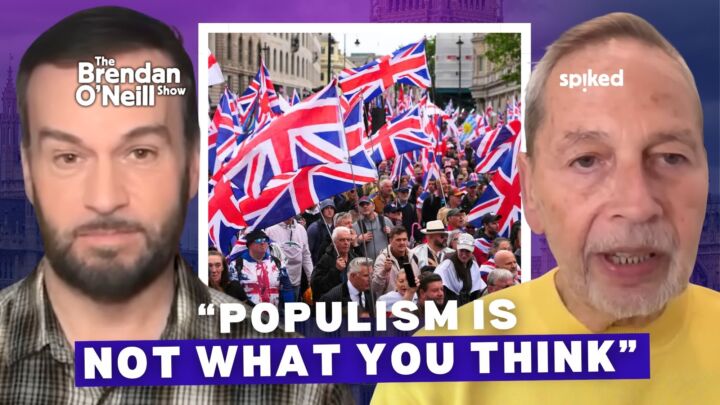
The bishop, like the American cardinals and the Pope himself, is quite right to insist on Christian ideas of human dignity and compassion, and to ensure their presence in the debate. However, the stridency of the reply is an unconscious acknowledgement that Farage and like-minded politicians have a point, even in terms of a strand of Christian thought that the churches have so far been reluctant to acknowledge.
Christians owe a duty of compassion – protect the stranger, says scripture – but this compassion is owed as part of a wider matrix of obligation: one must also protect the widow and fatherless at the same time. How does one balance the duty of compassion towards the vulnerable in one’s own society and to those further afield? And what of the biblical injunctions to respect and preserve the laws and customs of one’s own society, and for guests to behave respectfully to their hosts? The engagement between politicians and the church puts questions in the air that it behoves the churches to answer properly.
One does not need to be a medieval fetishist to see that there is a benefit for public life in a creative tension between a confident, politically engaged church, and politicians who, like Trump, are bold enough to say, ‘Tell that to the Pope’. Let us hang on to our turbulent priests.
Bijan Omrani is the author of God is an Englishman: Christianity and the Creation of England.
You’ve hit your monthly free article limit.
Support spiked and get unlimited access.
Support spiked and get unlimited access
spiked is funded by readers like you. Only 0.1% of regular readers currently support us. If just 1% did, we could grow our team and step up the fight for free speech and democracy.
Become a spiked supporter and enjoy unlimited, ad-free access, bonus content and exclusive events – while helping to keep independent journalism alive.
Monthly support makes the biggest difference. Thank you.



Comments
Want to join the conversation?
Only spiked supporters and patrons, who donate regularly to us, can comment on our articles.