Long-read
The eternal English revolt
When the Chartists amassed on Kennington Common 175 years ago, they issued a demand that still resonates today.
Want unlimited, ad-free access? Become a spiked supporter.
I came to Kennington Park, in south London, on a mild April morning, which was appropriate, since it was April that made the place. The plane trees are just coming into leaf, that tentative, almost apologetic green that English spring offers before committing to anything. Dog-walkers moved across the grass with the practised indifference of Londoners in a shared space. Children shrieked on the climbing frames. A man ate a Greggs sausage roll on a bench with the philosophical resignation of a man eating a Greggs sausage roll on a bench. Ordinary life, entirely ordinary. And yet.
Stand here on 10 April and you stand where – 175 years ago this year – somewhere between 20,000 and 200,000 people once gathered to demand something that no Englishman or woman should ever have had to demand: the right to vote. To have their voice count. To be, in the elementary constitutional sense, a person, a citizen and not a subject.
The Chartists came to Kennington Common – as it then was, an open heath rather than an enclosed park – to present their third and final great petition: a document of nearly two million signatures asking parliament to implement the six points of the People’s Charter. Parliament, needless to say, declined. But something happened that day that could not be undeclined, something that resonates in ways that our current political class would find distinctly uncomfortable if they ever paused long enough from their consultations and reviews to notice.
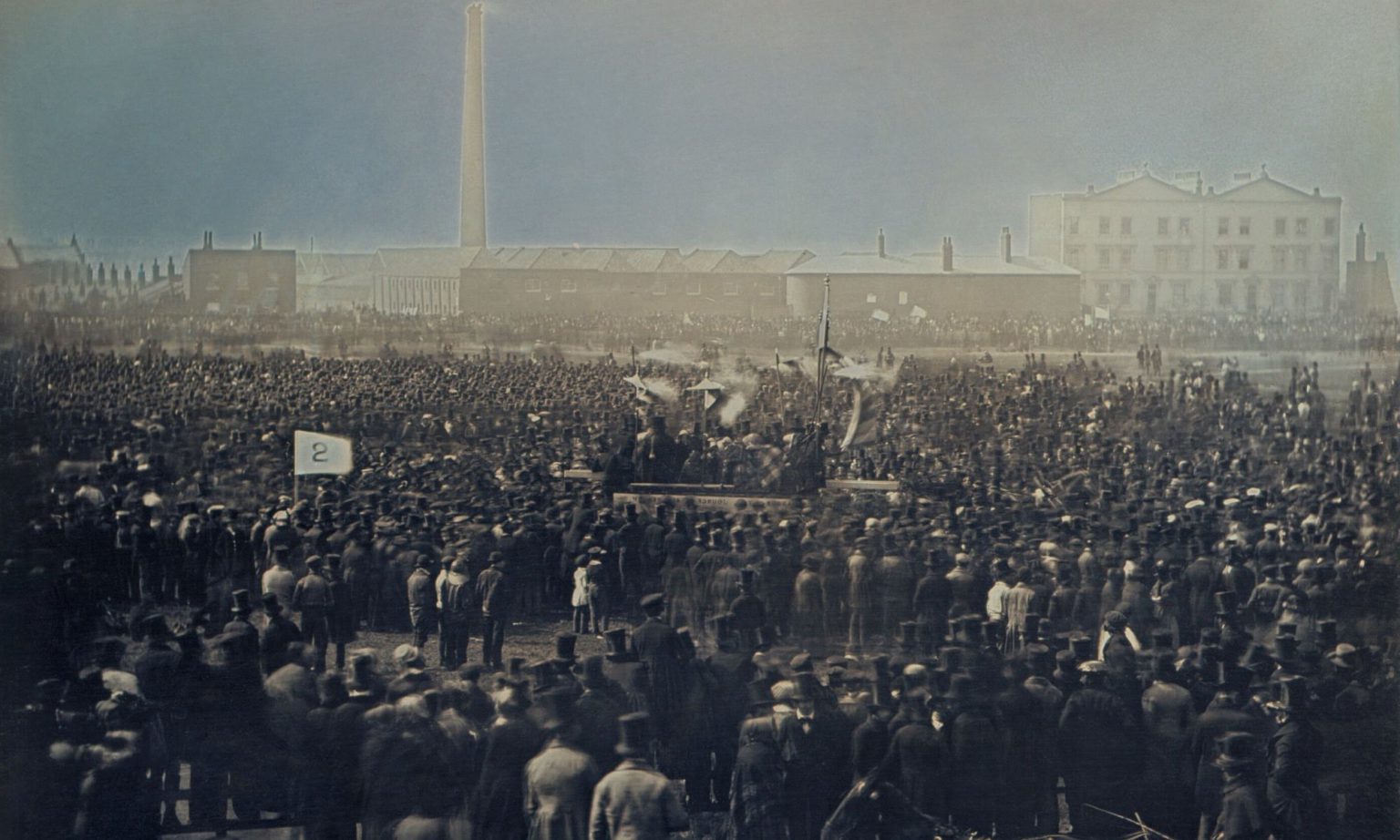
We know what that April morning looked like. This is what makes that day in 1848 at Kennington so peculiarly haunting: we have photographs. Not paintings. Not woodcuts derived from artists’ impressions. But two daguerreotypes. These were two silver-salt emulsions on copper plate, made by William Edward Kilburn, a Regent Street photographer who had, the previous year, made the first daguerreotype portraits of the royal family.
Kilburn set up, probably on the first floor of the Horns Tavern, now a bleak concrete jobcentre, occupied that day by police authorities and military officers carefully monitoring the proceedings. He proceeded to capture the crowd below him in the clear morning light before the rain broke and dispersed the crowd in the afternoon. The images are laterally inverted, mirror images of the actual scene, as daguerreotypes always are. In the background looms a factory chimney belonging to Farmer’s vitriol works. In the foreground, men on horseback. Across the common, a sea of hats and upturned faces. A platform for speakers. Banners.
These two small plates, 107 by 147 millimetres each, are among the earliest photographs ever taken of a crowd. They are the only images we have of any Chartist meeting, from a movement that held thousands. They show us, with the eerie directness of early photography, the faces of the London working class at the precise moment of their greatest constitutional agitation. And then they disappear from history.
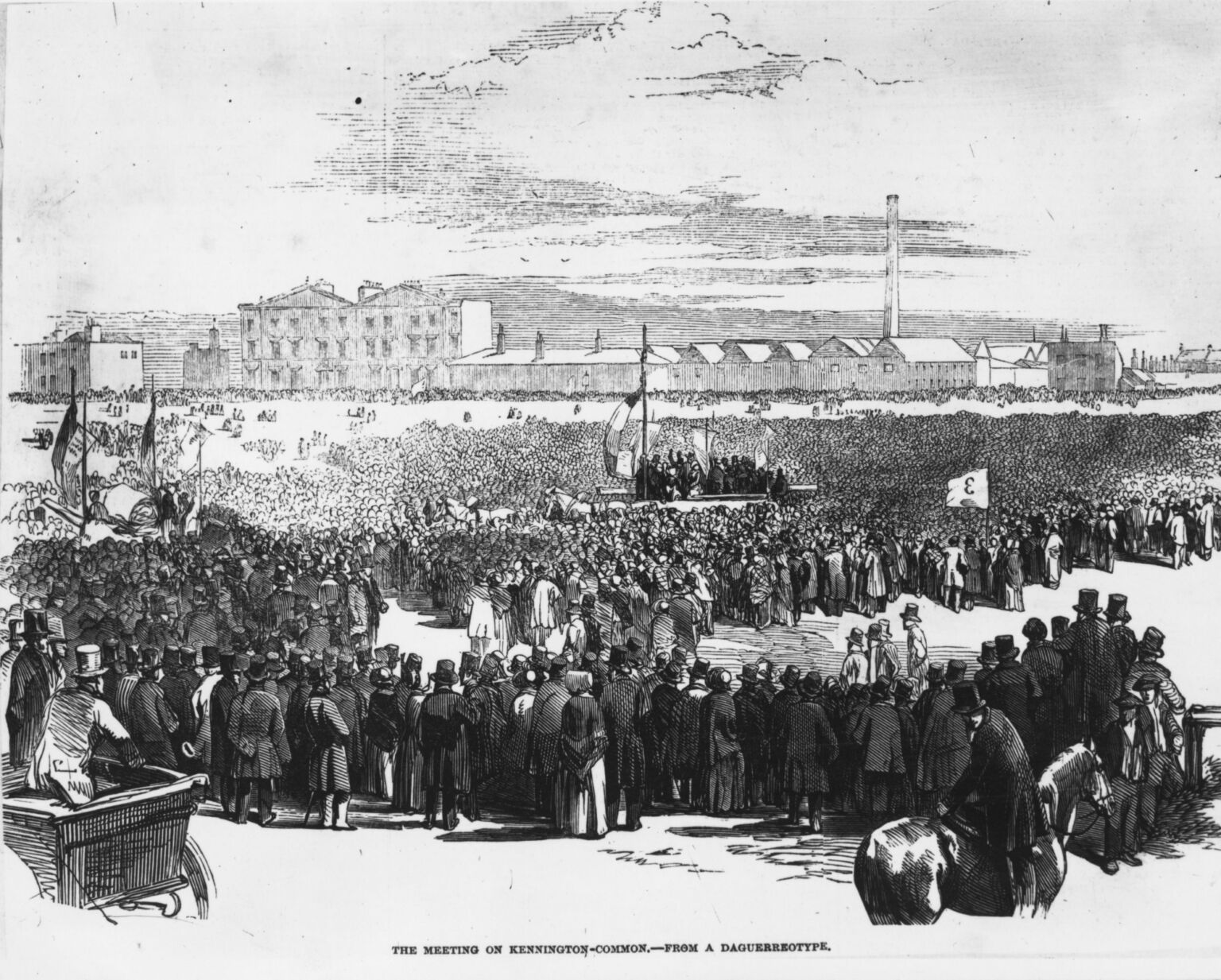
The purchaser of the two photographs was Prince Albert. On the back of one daguerreotype, in Queen Victoria’s own handwriting, it reads: ‘Great Chartist Meeting at Kennington. April 10 1848. Taken from nature.’ Albert bought them from Kilburn, filed them in the Royal Collection, and there they remained, lost from public view until rediscovered in 1977, mislaid in plain sight, a movement’s finest hour preserved by the very class it was petitioning. There is a woodcut too, made for the Illustrated London News, derived from a third daguerreotype that has since vanished. It is thought to be the first wood engraving ever made from a photograph and published in a newspaper. History’s first photojournalism, and its subject was ordinary working people demanding ordinary democratic rights.
Why did Albert buy them? He was, by all accounts, a man who felt genuinely and rather unfashionably for the condition of the labouring poor. He was president of the Society for Improving the Conditions of the Labouring Classes, and he commissioned the architect Henry Roberts to build model homes for working families, exhibited outside the Crystal Palace at the Great Exhibition of 1851. The Exhibition commissioners had declined to host anything so pointed, and those homes, dismantled after the exhibition, were brought south of the river and rebuilt on the edge of the very common where the Chartists had gathered. Kennington Common had by then been fenced off and made into Kennington Park, south London’s first public park. Prince Albert’s model cottage stands there still, on the Kennington Park Road side, with the letters V and A intertwined in mosaic tile on its walls and the inscription reading ‘Model houses for families. Erected by HRH Prince Albert.’ The establishment’s answer to democratic demands: not the vote, but better drainage. Not power, but improved ventilation.
It is almost too neat. Almost too English. The crowd gathers, the petition is refused, and three years later, the same ground is enclosed, the people’s common made a park, and on its edge a model cottage built to show the poor how nicely they might live if only they were contented with niceness.
The establishment fears that attended the Kennington rally might seem, to the modern reader, somewhat theatrical. The Duke of Wellington stationed troops at bridges across London. The royal family was evacuated to Osborne House on the Isle of Wight. Special constables were sworn in by the tens of thousands. And the home secretary worried about revolution, as well he might given the genuinely convulsive events of 1848 on the continent. France had just had its February Revolution, leading to the collapse of the July Monarchy; the Habsburg Empire was shaking and Metternich had fled Vienna.
But England was not Vienna. The Chartist leadership knew it was not Vienna and, crucially, had no desire for it to be. This is the point that the establishment consistently missed and that posterity has tended to underplay.
Chartism was a constitutional movement. It operated through petition, through the discipline of the mass meeting, through the moral pressure of demonstrated popular will. The General Convention of the Industrious Classes, called regularly from 1839 onwards, styled itself a parliament of the people, not to overthrow parliament but to remind it of its obligation to the people. When three petitions, each signed by millions, were presented and each contemptuously refused, the movement’s response was not insurrection but reorganisation, continued agitation, education and, eventually, decades later, the slow grinding of history through the machinery of genuine reform. Five of the six Chartist demands are now simply the unremarkable fabric of democratic life: universal suffrage, secret ballot, payment of MPs, no property qualification for membership of parliament and equal electoral districts. We have them all. The sixth, annual parliaments, we decided against, and probably wisely so.
The movement’s slogans carried on banners at Kennington had the quality of things stated by people who have thought very hard about what they believe and why. ‘Vote by Ballot.’ ‘Universal Suffrage.’ Plain and specific. But there were others that resounded with deeper sentiments: ‘Who would be a slave that could be free?’, ‘Liberty is worth living for, and worth dying for’, ‘The people are the only legitimate source of power’, ‘We are millions, and demand our rights’, and ‘The voice of knowledge will silence the cannon’s roar’.
That last one is extraordinary. Not the voice of the mob, not the voice of grievance, but the voice of knowledge, disciplined, educated, constitutionally expressed popular sovereignty, claiming the moral advantage over state force. These were not revolutionaries. They were people who believed, with a faith that looks almost touching from this distance, that if they made their case with sufficient clarity and in sufficient numbers, the democratic logic of the thing would eventually prevail.
They were right. It just took the rest of the century.
The English have always done this, which is the thing about Chartism that its chroniclers tend to understate. The great popular revolts of English history are not, on inspection, particularly revolutionary in character. They are small-c conservative movements of people who feel that something has been taken from them and who want it back. They clothe their demands in the language of restoration, of ancient right, of the constitution betrayed. They are not storming the Bastille. They are petitioning, in very firm terms, to have their Magna Carta actually honoured.
Wat Tyler’s men in 1381 marched on London to demand the abolition of serfdom and the repeal of the poll tax. They did not want revolution; they wanted the king to be good. The Pilgrimage of Grace in 1536 was 30,000 northerners marching under the banner of the Five Wounds of Christ to protest Henry VIII’s dissolution of the monasteries – it was not a rebellion against the Crown but a petition to it, in arms, to reconsider. The Prayer Book Rebellion of 1549 involved Cornish and Devon men refusing the new Protestant liturgy, and dying in considerable numbers for the right to pray as their fathers had. The Covenanters of Scotland fought not for novelty but for a particular understanding of the proper ordering of church and state. The Duke of Monmouth’s rebellion in 1685 was a Protestant constitutional protest dressed as a dynastic claim. The Glorious Revolution of 1688, that driest and most English of upheavals, resulted not in a republic but in a constitutional settlement – William III was invited in from the Netherlands not to overthrow the monarchy but to regularise it, to make parliament sovereign without making it supreme over everything that mattered to ordinary people. Each of these movements sought not the destruction of the existing order but its correction, its return to a lost and better version of itself.
The Chartists sit squarely in this tradition. What they wanted was not new. The rights they demanded had a genealogy that stretched back through Thomas Paine to the Levellers to the barons at Runnymede, where the Magna Carta was sealed. Each generation of the English popular movement has had to rediscover that the constitutional ground gained by one era tends, mysteriously, to be lost by the next, that the establishment has an almost geological patience in the slow work of reclaiming power from the people who briefly forced it to concede.
Which brings us, by a route that should by now feel inevitable, to the present.
It would be too easy, and probably too glib, to nominate a single villain for the story of contemporary democratic erosion. But if we are looking for the moment when the current settlement was deliberately constructed, the New Labour government of Tony Blair is the obvious place to start. This is not a partisan point, the transformation was enthusiastically continued by Gordon Brown, adopted with modifications by the Tory governments of David Cameron, Theresa May and Boris Johnson, and entrenched by Rishi Sunak. Democratic erosion is now being expanded, with something that looks remarkably like ideological commitment, by Keir Starmer.
Blair’s project, something that political scientist Peter Burnham called the ‘politics of depoliticisation’ way back in 2001, was the deliberate placement of decision-making at one remove from democratic accountability. The theory sounded respectable enough: ‘evidence-based policymaking’ should be insulated from the crude pressures of electoral politics. And so the Bank of England was made independent in 1997, the Supreme Court was created in 2009 and quango after quango was established to manage everything from the environment to equalities to infrastructure. Each new body had its board of appointed experts. Each operated at what officials lovingly called ‘arm’s length’ from government. And each commanded portions of the huge (now £353million) budget that the quango sector disposes of annually.
All of this is, crucially, beyond the reach of the voter. You cannot elect a quango. You cannot dismiss one at the ballot box. You can elect a government that promises to reform them, but successive governments of all colours have discovered that the institutional inertia of the quangocracy is approximately equal to the force of a General Election mandate. Cameron promised a bonfire of bureaucracy in the early 2010s, yet five in six quangocrats kept their positions. Starmer has, since taking office, established approximately 30 new quangos while abolishing one large one.
What this produces, in the aggregate, is a democratic system in which the act of voting changes less and less of what actually governs your life. The decisions about planning, about energy, about immigration, about the standards by which public life is conducted, about the allocation of resources between regions and classes – all of these have been progressively moved into bodies that elected politicians can, in theory, direct but in practice rarely control, and that citizens cannot touch at all. The constitutional entrenchment of this settlement, through statutory duties, through international treaty obligations, through the creation of bodies whose independence is legally guaranteed, means that even a government with a clear mandate finds itself hedged about by structures that no majority voted for and no majority can dismantle in the course of a single parliament.
The Chartists would have found this familiar, with one important difference. The exclusion they faced was open: property qualifications for the vote, no secret ballot and rotten boroughs. Everyone could see the mechanism of exclusion. The contemporary version is more sophisticated and correspondingly harder to fight. It presents itself as neutral, expert, rational. It dresses the democratic deficit as institutional wisdom. It calls the removal of power from the people ‘good governance’. The establishment has learned, in the 175 years since Kennington, that it is far easier to drain democracy of content while preserving its form than it is to deny the vote outright.
And yet, and yet. The Chartist spirit persists. It persisted through Kennington and through the refusals and through the years when the movement seemed spent. It persisted into the franchise reforms of 1867 and 1884, into the great suffragette mobilisations of the early 20th century, into the postwar settlement that briefly seemed to redeem the promise of popular sovereignty. It persisted, most recently and in ways that confounded every comfortable analysis, in the Brexit referendum of 2016.
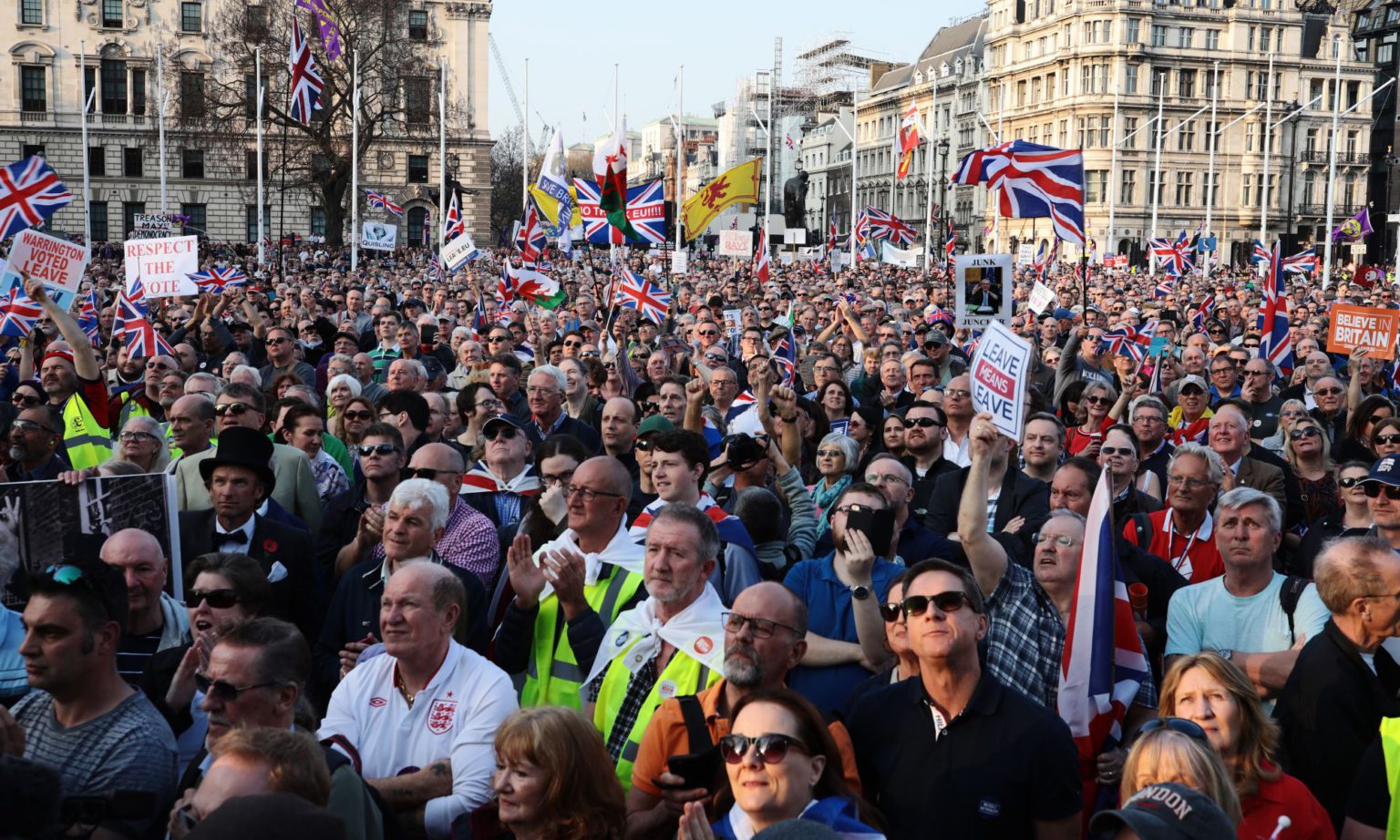
Whatever one thinks of Brexit as policy, its sociology is unmistakeable. The Leave vote was disproportionately the vote of the working class, of post-industrial towns, of people whose lives had been managed and mismanaged for 30 years by institutions they had never chosen and could not remove. The slogan ‘Take Back Control’ did not mean, to most of the people who responded to it, a position paper on parliamentary sovereignty. It meant what it said: a demand for the restoration of democratic grip, the return of decisions to a place where the vote could reach them. It was, in every essential particular, a Chartist demand. It was, in the tradition, running back through Monmouth and the Prayer Book rebels and Wat Tyler, a conservative revolt, people asking not for revolution but for their liberties back.
The current establishment has not absorbed this lesson. It has, rather, concluded that the problem is too much democracy – which is historically the establishment’s standard conclusion whenever it has been briefly inconvenienced by the popular will. The response is more quangos, more arm’s length bodies, more constitutional entrenchment, more insulation of policy from electoral accountability. More, in short, of the conditions that produced the revolt in the first place.
I left Kennington Park in the mid-morning, the dog-walkers still at their circuits, the sausage-roll man gone. The Prince Consort’s model cottage stood on its corner as it always stands, small and oddly touching, its Victorian and Albert tiles still intertwined, still readable. Built on the ground where the people gathered. Built to show them, in the establishment’s infinite paternalistic benevolence, how to live better, just not how to govern.
Somewhere in the Royal Collection are those two small copper plates bearing the silver traces of a crowd that came here to ask for something simple and were refused. The back of one plate carries the queen’s inscription: ‘taken from nature’. The crowd in the image is blurred slightly, they were alive, they moved during the exposure, they could not quite hold still. Which seems right. The living are never quite still. The demand they carried is not still either.
Vote by Ballot. Universal Suffrage. The voice of knowledge will silence the cannon’s roar.
They were right, in the end. They are still right. The cannon, these days, wears a quango badge and a lanyard, sits on an advisory board, and publishes its findings in a consultation document. But it is still a cannon. And the voice of knowledge, constitutionally applied, by people who abide by the rule of law and who want not revolution but their liberties back, is still the thing most likely to silence it.
One hundred and seventy-five years is a long time to keep making the same argument. But then, the other side has been making the same counter-argument for considerably longer.
Gawain Towler is a commentator and an elected board member of Reform UK. Follow his Substack here.
You’ve hit your monthly free article limit.
Support spiked and get unlimited access.
Support spiked and get unlimited access
spiked is funded by readers like you. Only 0.1% of regular readers currently support us. If just 1% did, we could grow our team and step up the fight for free speech and democracy.
Become a spiked supporter and enjoy unlimited, ad-free access, bonus content and exclusive events – while helping to keep independent journalism alive.
Monthly support makes the biggest difference. Thank you.

Comments
Want to join the conversation?
Only spiked supporters and patrons, who donate regularly to us, can comment on our articles.