‘Her penis’? Journalists have given up on telling the truth
The Observer is not alone in swapping accurate reporting for trans-activist campaigning.
Read our latest coverage of the French riots here – paywall-free all of this week..
What would you think if you were told that a six-year-old boy had tried to cut off his penis because he could no longer join Girlguiding? Would you blame the new admissions policy – which no longer allows boys to join, even if they identify as girls – or would you think this was a child in serious distress?
This is not a hypothetical question. It was, in effect, the framing of a recent Observer article, which presented this deeply troubling account as evidence of the harms caused by the girls-only admissions policy. It also used the phrase ‘her penis’ and she / her pronouns throughout to describe a six-year-old boy.
I was already aware of this case through my Sunday Telegraph reporting on the troubles within Girlguiding, and made a conscious decision not to include it, because it involved a very young child and raised serious ethical questions about how such situations should be reported. Four days ago, I raised concerns about the piece – both publicly and with the Observer directly – but it remains online, unchanged.
Of course, this isn’t an isolated case. Inaccurate reporting on sex and gender is a persistent problem in journalism, with fresh examples appearing weekly. In recent weeks, the Manchester Evening News reported a violent murder committed by a male as having been carried out by a woman. STV reported a 23-year-old man found guilty of possessing indecent images as a woman. Shortly after the Observer article, Metro published a feature about a ‘devastated’ 10-year-old boy who can no longer be in Girlguiding – built almost entirely around this single emotive account.
Part of the problem, I think, is that the line between reporting and opinion has become blurred. Journalists can – and should – write opinion. I’m doing it here. But when reporting on a contested issue, the basic rules still apply.
This isn’t just about individual journalists or articles, however. It raises serious questions about what is being taught on journalism courses – and what standards are being upheld in newsrooms.
I trained in journalism in the early 2000s at the London College of Printing (now the London College of Communication). My tutors – both experienced hacks – didn’t pull any punches, and they didn’t worry about hurting your feelings either. If your copy wasn’t good enough, or something was missing, you were told to fix it.

I wrote mainly for the Guardian for many years, and my regular editor was uncompromising. While it drove me mad at times, it made me a much better journalist. If I had filed a piece like the Observer or Metro articles, I would have been told to go back and find at least one more person to interview – to establish whether this was part of a wider pattern – and to include at least one counterview to ensure the piece was fair and balanced.
When I later became an editor, those were the same standards I expected of others. Because good journalism is not about reinforcing a narrative. It is about testing it – with accuracy, balance and a willingness to ask difficult questions.
Balance doesn’t mean giving both sides equal space. But it does mean acknowledging that another side exists. Otherwise, readers aren’t being informed – they’re being led.
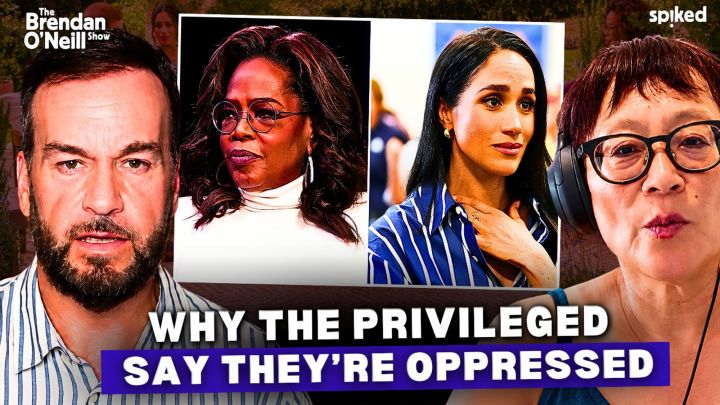
And that’s activism, not journalism. Nowhere is this clearer than in the language increasingly used in reporting on sex and gender. As Brendan O’Neill put it in a 2024 spiked article, the phrase ‘her penis’ is ‘the most Orwellian phrase of our age’. It asks both journalists and readers to accept something that is plainly untrue – not for the sake of clarity, but in the service of a particular ideology.
And once you start noticing it, you see it everywhere. Recent Metro headlines are a case in point: ‘I’m a trans non-binary Pakistani Muslim woman – all my identities co-exist’ and ‘I want to see more hairy, brown, gender non-conforming bodies like mine’. These may be opinion pieces, but the language – and the assumptions that underpin it – are increasingly treated as ‘neutral’ across journalism more broadly, when they clearly are not.
I don’t place all the blame on individual reporters. They should be able to rely on their university lecturers to teach them journalism, not activism – God knows they’re paying enough – and on more experienced journalists to model what good practice looks like.
If I sound invested in what education can do, that’s because I am. Education was my beat for many years, and I’ve also taught journalism at a number of UK universities. I loved it – and I’d love to do so again. With 25 years’ experience and a formal teaching qualification, I should be in demand. But I’m not naive enough to think I’d be hired now. As a woman with openly gender-critical views, why would a university take that risk – knowing students might find my views ‘problematic’, or even try to bully me out?
This is not hyperbole. I used to teach at Goldsmiths, which has a notoriously political student body and ran a #ThisGirlCan campaign in 2024 celebrating women’s sport – featuring a man who identified as a woman. One look at my X feed and I suspect I’d have a target on my back for the ‘Kathleen Stock’ treatment.
For the uninitiated, Stock was forced to quit her role at Sussex University in 2021 after sustained pressure from students over her gender-critical views. That alone should give us pause. Because if people with certain views are effectively excluded from journalism education, it raises a very obvious question: what exactly are students being taught – and what are they not being encouraged to question? Particularly in universities, which have traditionally championed free speech.
Journalism does not just reflect reality – it helps shape how we understand it. If basic facts are blurred, or language is used in a way that obscures rather than clarifies, the consequences go far beyond a single article. They affect how we understand issues such as crime, safeguarding and public policy – and whether people trust what they are being told.
None of this is complicated. Journalists are not required to take a particular view on contested issues. But they are required to report them clearly, accurately and with enough balance, so that audiences can make up their own minds.
If journalism is to retain public trust, it needs to get back to basics: accuracy, clarity and a willingness to test claims rather than reinforce them.
Janet Murray is a journalist writing on women, culture and public policy. Follow her on X: @jan_murray.
spiked summit 2026 – SOLD OUT
Saturday 27 June 2026
10am-6pm, Saturday 27 June
Emmanuel Centre, London, SW1P 3DW
With Lionel Shriver, Brendan O’Neill, Katharine Birbalsingh, Toby Young, Allison Pearson, Paul Embery, Tom Slater, Andrew Doyle, Fiyaz Mughal and more
The spiked summit has now SOLD OUT. To join the waitlist, email:
[email protected]
£80 or £50 for supporters
You’ve hit your monthly free article limit.
Support spiked and get unlimited access.
Support spiked and get unlimited access
spiked is funded by readers like you. Only 0.1% of regular readers currently support us. If just 1% did, we could grow our team and step up the fight for free speech and democracy.
Become a spiked supporter and enjoy unlimited, ad-free access, bonus content and exclusive events – while helping to keep independent journalism alive.
Monthly support makes the biggest difference. Thank you.


Comments
Want to join the conversation?
Only spiked supporters and patrons, who donate regularly to us, can comment on our articles.