How the West became a hostile environment for Jews
Jews are being marginalised and menaced in a way not seen since the 1940s.
Read our latest coverage of the French riots here – paywall-free all of this week..
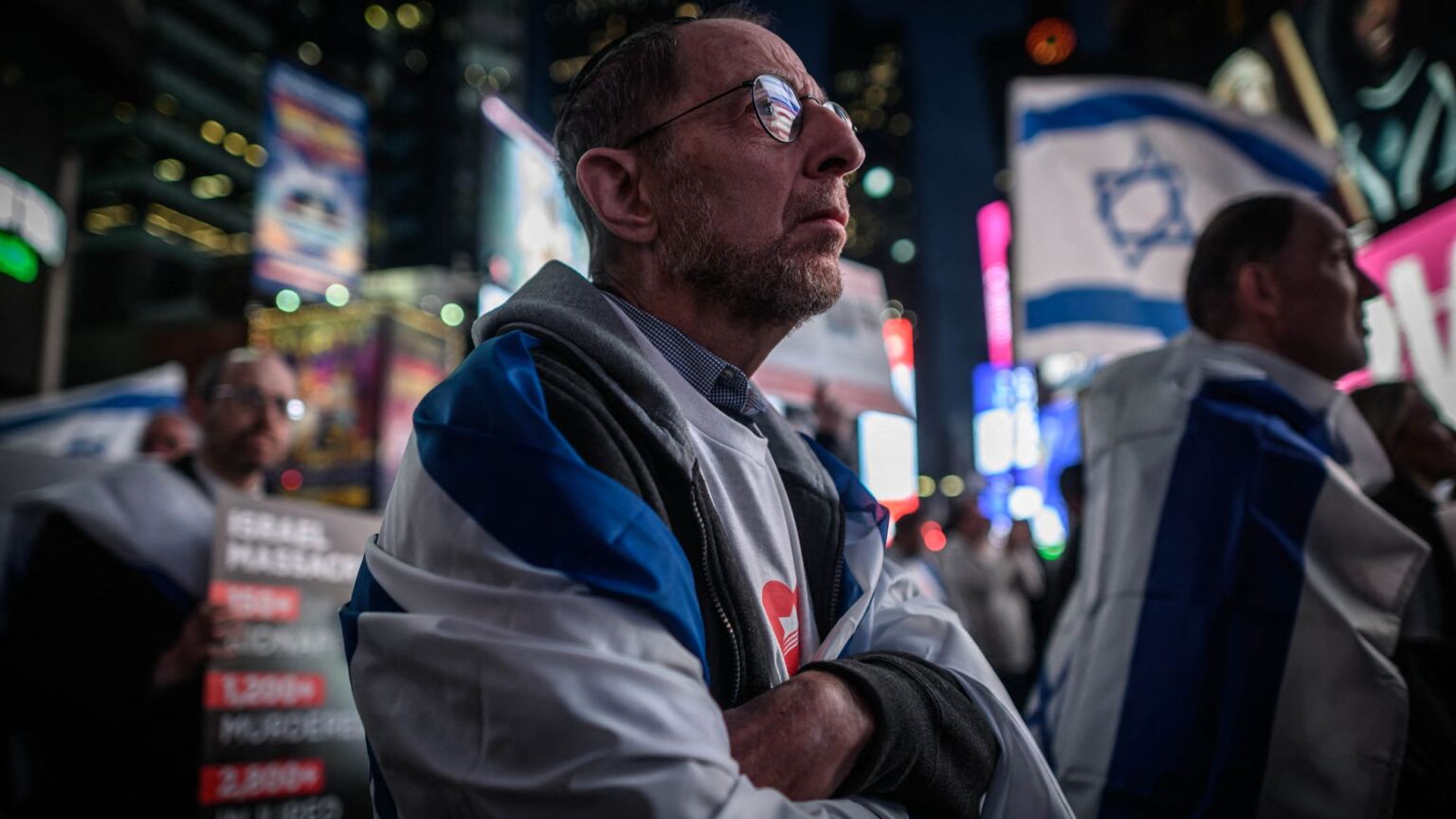
I now feel what earlier generations of Jews felt – a sense of belonging to a marginalised and constantly imperiled people. During Hanukkah, I went to as many public lightings as possible, my small act of defiance. But many others stayed away, particularly after the Bondi Beach attack in Australia.
Looking at American Jews today, one observer notes, is ‘akin to watching a shriveled brown leaf fluttering aimlessly in the wind in the midst of a cold and bitter winter’. Anti-Semitic incidents in the United States have risen nearly ninefold over the past decade. In Canada, Australia and especially Europe, casual anti-Semitism now appears everywhere – from leading newspapers to graffiti in coffee-shop toilets to college campuses.
Anti-Semitism’s resurgence has many roots. Some clearly stem from Soviet-style indoctrination of young people – particularly on college campuses – against Zionism, a trend that easily bleeds into anti-Semitism. This is amplified not only by the Qatar-funded broadcaster, Al Jazeera, but also by once-respected institutions like the BBC.
This new anti-Semitic wave differs from that of the Nazi era. Jews are no longer marginalised and politically weak, living in impoverished shtetls in places like Poland. Instead, today’s flashpoints of anti-Semitism are often centres of Jewish success, at levels not seen since the golden age of Spanish Jewry during the Middle Ages.
After the Holocaust, most Jews, as historian Paul Johnson observed, ‘accepted oppression and second-class status’ outside the ghetto in exchange for being left alone. In the decades that followed, however, the formerly marginalised entered what Yuri Slezkine famously called the Jewish Century. Jews became disproportionately represented among Nobel Prize winners, and in the arts, media, Hollywood and leadership circles. After centuries of restraint, there emerged a sense of confidence, even chutzpah, among diaspora Jews, which draws also from Israel’s remarkable, albeit controversial, technological and military triumphs.
Today, this very success has helped fuel the rise of anti-Semitism. The pattern is not new. As historian Ivan Marcus has shown, early medieval anti-Semitism was often sparked by resentment toward Jews as ‘assertive agents’ – a community that combined economic power with an unshakable belief in being God’s chosen people. Spain’s Jews, after all, were not expelled because they were poor or burdensome, but in part because they were skilled in medicine and the trades, and wielded influence even at court.
Similarly, after the 7 October 2023 pogrom had reignited the anti-Semitic spark, attacks on the so-called Jewish lobby quickly focused on Jews’ supposed power and ample financial resources. When Jewish donors fund campaigns against members of the ‘Squad’, a left-wing faction of the Democratic Caucus in the House of Representatives, they are excoriated by the likes of Ilhan Omar for wielding the power of ‘Benjamins’ – $50 bills – to get their way.

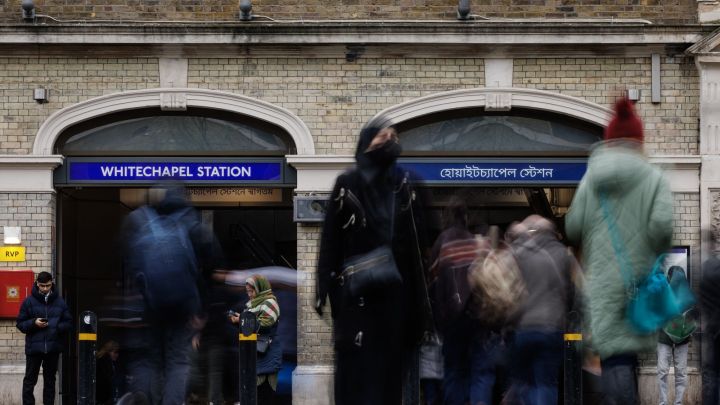
The process of stigmatisation is most advanced in Europe, where the Jewish population has shrunk by more than half since 1945, to just 1.5million. Though Jews remain disproportionately successful, their communities have declined or stagnated while being overwhelmed by populations largely from the Middle East. In France and the UK, Muslim populations, which are generally both strongly anti-Israel and anti-Jewish, are now up to 10 times larger than Jewish ones.
As Muslim political power, allied with the left, grows, Jews again find themselves, as Victor Davis Hanson notes, ‘the hunted’. This was clear during the recent ‘Jew hunt’ in Amsterdam, where police were conspicuously lax in protecting Jewish residents and visitors, with some officers reportedly allowed to opt out of such duties.
Britain, once considered a safe haven, now offers little reassurance. Jews are targets at openly hostile cultural events, as at Glastonbury. Fans of Israeli football teams are banned by police. Jewish schools, shops, restaurants and institutions are attacked. Like their Dutch counterparts, British Jews increasingly doubt that law enforcement will protect them. Nine out of 10 British Jews fear going into city centres during demonstrations by Islamists and their left-wing allies. The situation is now so bad that one writer has suggested America should take in Britain’s Jews, likening them to ‘Russian dissidents, Vietnamese boat people and Afghan translators’.
Tragically, anti-Semitism has also spread throughout the old colonies. Australia witnessed numerous anti-Semitic incidents even before Bondi. But its Labor government, eager to court Muslim voters, ignored repeated warnings and failed to act. In Canada, where Jews are vastly also outnumbered by Muslim populations, cities such as Toronto, and many college campuses, have witnessed openly anti-Semitic events, including attacks on synagogues and Jewish businesses.

Even the US is not immune. Its first president, George Washington, famously embraced the tiny Jewish community and religious tolerance in the new nation. Many founders viewed the American Revolution as rooted in ‘Hebraic’ ideas. As recently as the 1950s, New York City was home to two million Jews – more than any city on Earth – who shaped its culture from top to bottom. Delis and pizza – that is, Jews alongside Italians – defined its everyday cuisine. Others rose in publishing, finance and law, founding firms such as Goldman Sachs.
Today, New York City – once governed by four Jewish mayors, including the half-Italian Fiorello LaGuardia – is led by a vehemently anti-Zionist radical, Zohran Mamdani. He has refused to distance himself from the slogan ‘globalise the intifada’, which legitimises attacks on Jewish institutions and individuals, as seen at Bondi.
The son of famed Holocaust survivor Elie Wiesel, Elisha Wiesel, suggests that Mamdani ‘seeks to other us’. One of the new mayor’s first moves was to roll back security protections for the Jewish community proposed by his predecessor, Eric Adams. This has prompted at least one Queens synagogue to suspend services and close its school. Mamdani-aligned unions now pressure bakeries, including kosher ones, to cease support for Israel. Rabbi Elliot Cosgrove of the Park Avenue Synagogue has openly asked: ‘If there’s a celebration of Israel and 10,000 people show up, will they be safe under Mamdani?’
If New York’s Columbia University is occupied again by pro-Palestine protesters harassing Jewish students and faculty, no one expects Mamdani to intervene. He is deeply influenced by his stridently anti-Zionist father, Mahmood Mamdani, who holds the Herbert Lehman Chair at Columbia – named after a committed Zionist who served New York as senator and governor. At Columbia today, anti-Semitism has become almost a badge of honour. Manan Ahmed, filmed blocking Jewish students from campus during the 2024 encampment, was last month rewarded with a full professorship.
As in Europe, demographic change drives this marginalisation. The Jewish population is barely half its former size, while New York’s Muslim population – now around 750,000 – may soon match or surpass it.
This is hardly unique to New York. California, once dubbed ‘the Jews’ earthly paradise’, has experienced similar changes. With 1.2million Jews – roughly as many as France, Britain and Canada combined – the state produced Levi Strauss, and numerous Hollywood and Silicon Valley billionaires. Yet Jews now face mounting hostility in politics, universities, schools, the streets and cultural life. Former centres of Jewish influence, especially Hollywood and Silicon Valley, have remained conspicuously silent since the 7 October massacre.
No Mamdani-type figure has yet won statewide office, but Democratic Socialists of America-style politics dominates many city councils. Pro-Palestinian activists nearly shut down last year’s state Democratic convention. Ethnic-studies programmes shaped by critical race theory often frame Jews as merely another class of white oppressors, dismissing Zionism entirely. To run for office in parts of the state, such as San Francisco, it’s de rigeur to denounce ‘Israeli genocide’ even if the candidate is nominally Jewish.
Historically, Jews have responded to danger by moving – to Italy, Holland or Turkey after the Inquisition, and westward after Tsarist pogroms. Today, University of Miami demographer Ira Sheskin notes, Jews are again relocating, this time southward to Dallas, Houston, Austin, Raleigh-Durham as well as Las Vegas. These are the places that Jewish communities are growing fastest.
Some ‘progressive’ Jews welcome the new political climate. Mamdani won roughly one-third of the Jewish vote, largely from younger, less-committed Jews and a small number of anti-Zionist Haredi groups. Still, anti-Zionist Jews remain a minority even on campus – perhaps 15 per cent, according to Tufts researcher Eitan Hersh – and are often from less observant backgrounds, intermarried families and disproportionately identifying as nonbinary.
Yet there is no Jewish future without attachment to Israel. One may dislike its current government, but Jewish identity and history are inseparable from the land. Jewish liturgy has expressed the longing to return for millennia. At the Passover seder we say, ‘Next year in Jerusalem’ – not next year in Portland, Brooklyn or London.
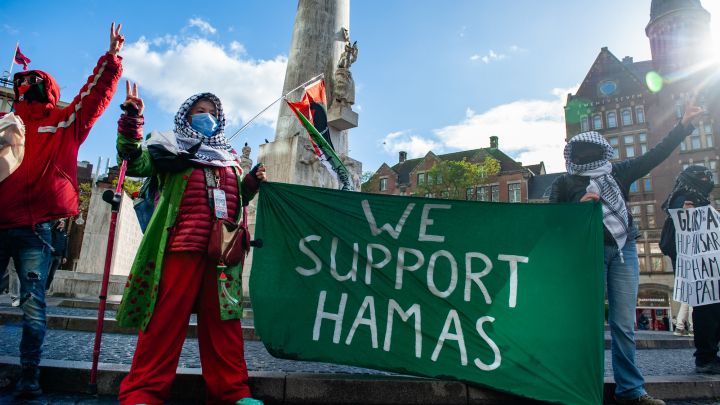
As Jewish ‘useful idiots’ offer cover for open anti-Semites, the consequences fall hardest on the young. My daughters – descendants of Holocaust survivors – encounter hostility from friends, coworkers, classmates and professors. Surveys show that many younger and minority voters deny the Holocaust and even support eliminating Israel. Some even show sympathy for Hamas, especially those under age 25.
The prospects for Jews on the left, where they once felt most at home, are especially bleak. Unions (particularly teaching unions), once often led by Jews, have increasingly turned against them. It is difficult to imagine a Jewish presidential candidate in this climate. Anti-Jewish sentiment may even have influenced Kamala Harris’s decision to choose the inept knucklehead Tim Walz over the far more accomplished Josh Shapiro.
Opposition to Israel and the ‘Jewish lobby’ now animates far-left challenges to pro-Israel Democrats, such as Ritchie Torres and Dan Goldman. Pennsylvania senator John Fetterman will likely face similar attacks in 2028.
Republicans, sadly, offer little comfort. Donald Trump, along with George W Bush, may be among the most pro-Israel presidents in modern history. Yet his likely successor, JD Vance, has pandered to MAGA’s fringes, refusing to break with figures like Tucker Carlson, who has associated with Holocaust revisionists and outright anti-Semites. Nor is it reassuring that Candace Owens, a particularly virulent former MAGA figure, commands millions of online followers.
Jews cannot ignore these trends. The fight against anti-Semitism remains essential, but it cannot be partisan. Survival has always required nimble pragmatic alliances – with aristocrats, merchants, social democrats or even the church.
In the coming decades, some Jews will retreat into de facto ghettos – parts of Brooklyn, the Catskills, parts of West Los Angeles or northern New Jersey. This shift favours the Orthodox, who now make up nearly two-thirds of New York’s Jewish children. Chabad, the most prominent traditionalist movement, has expanded beyond historic enclaves into campuses and professional circles.
Still, the Orthodox – about 10 per cent of the Jewish population – cannot sustain diaspora life alone. Encouragingly, less-traditional Jews have shown renewed engagement since 7 October, moving beyond nostalgia or cuisine toward a Jewish identity worth preserving.
I see hope in my own synagogue. Membership, once lagging, has grown under our rabbi, a convert, whose sermons emphasise solidarity and joy as tools of resilience. The startling Jewish ascendancy of the past century may be over. Yet our heritage still offers the resources to survive – and perhaps quietly thrive – in an increasingly unwelcoming exile.
Joel Kotkin is a spiked columnist, a presidential fellow in Urban Studies at Chapman University in Orange, California, and a senior research fellow at the University of Texas’ Civitas Institute. Find him on Substack here.
You’ve hit your monthly free article limit.
Support spiked and get unlimited access.
Support spiked and get unlimited access
spiked is funded by readers like you. Only 0.1% of regular readers currently support us. If just 1% did, we could grow our team and step up the fight for free speech and democracy.
Become a spiked supporter and enjoy unlimited, ad-free access, bonus content and exclusive events – while helping to keep independent journalism alive.
Monthly support makes the biggest difference. Thank you.





Comments
Want to join the conversation?
Only spiked supporters and patrons, who donate regularly to us, can comment on our articles.